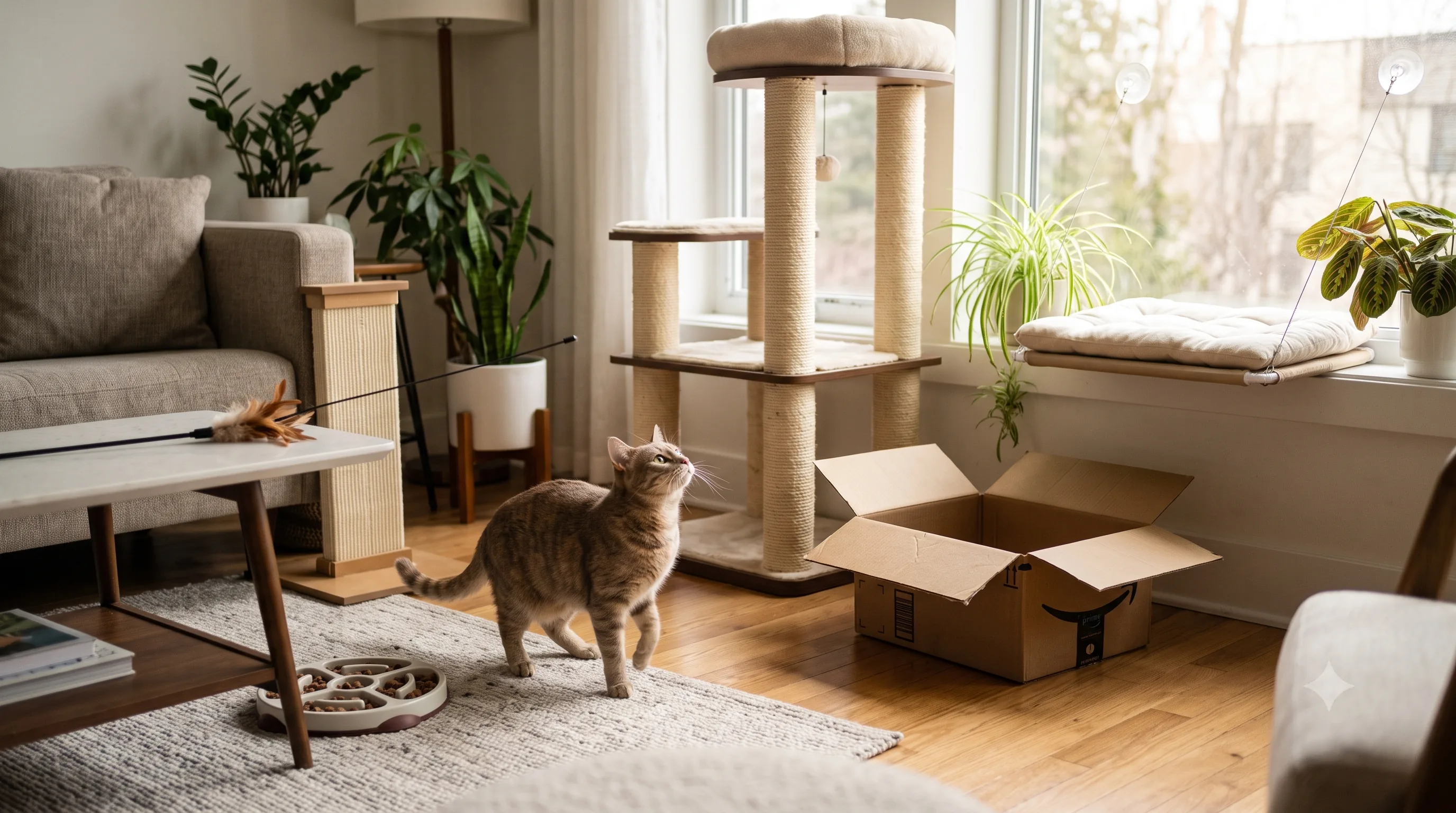
Indoor cats may be safe from traffic, fights, and many outdoor dangers, but that doesn't mean they can't get bored. If you've ever found your cat staring at the wall, attacking your feet, knocking things off shelves, or suddenly racing around the house at 2 AM, boredom might be part of the reason.
The good news is that you don't need a huge house or a pile of expensive toys to keep an indoor cat happy. Simple activities like interactive play, puzzle feeders, climbing spaces, scratching posts, and window watching can provide plenty of physical and mental stimulation.
In this guide, you'll discover 14 easy ways to keep an indoor cat entertained, plus signs of boredom, a simple daily enrichment routine, and common mistakes to avoid.
Why Do Indoor Cats Get Bored?
Cats are natural hunters. Even though your indoor cat gets its food from a bowl, its brain still wants opportunities to stalk, chase, pounce, scratch, climb, and explore.
Indoor living removes many of the challenges cats would naturally encounter outside. They don't have to search for food, track prey, explore new territory, or find different places to rest.
Without enough stimulation, some cats may become bored or find their own ways to stay busy.
Unfortunately, that can sometimes mean knocking things off shelves, scratching furniture, waking you up at night, or constantly demanding attention.
This is where cat enrichment comes in.
Cat enrichment means giving your cat safe opportunities to use their natural behaviors and keep their body and mind active.
Signs Your Indoor Cat May Be Bored
Every cat is different, so these behaviors don't always mean boredom. However, a noticeable change in behavior can be worth paying attention to.
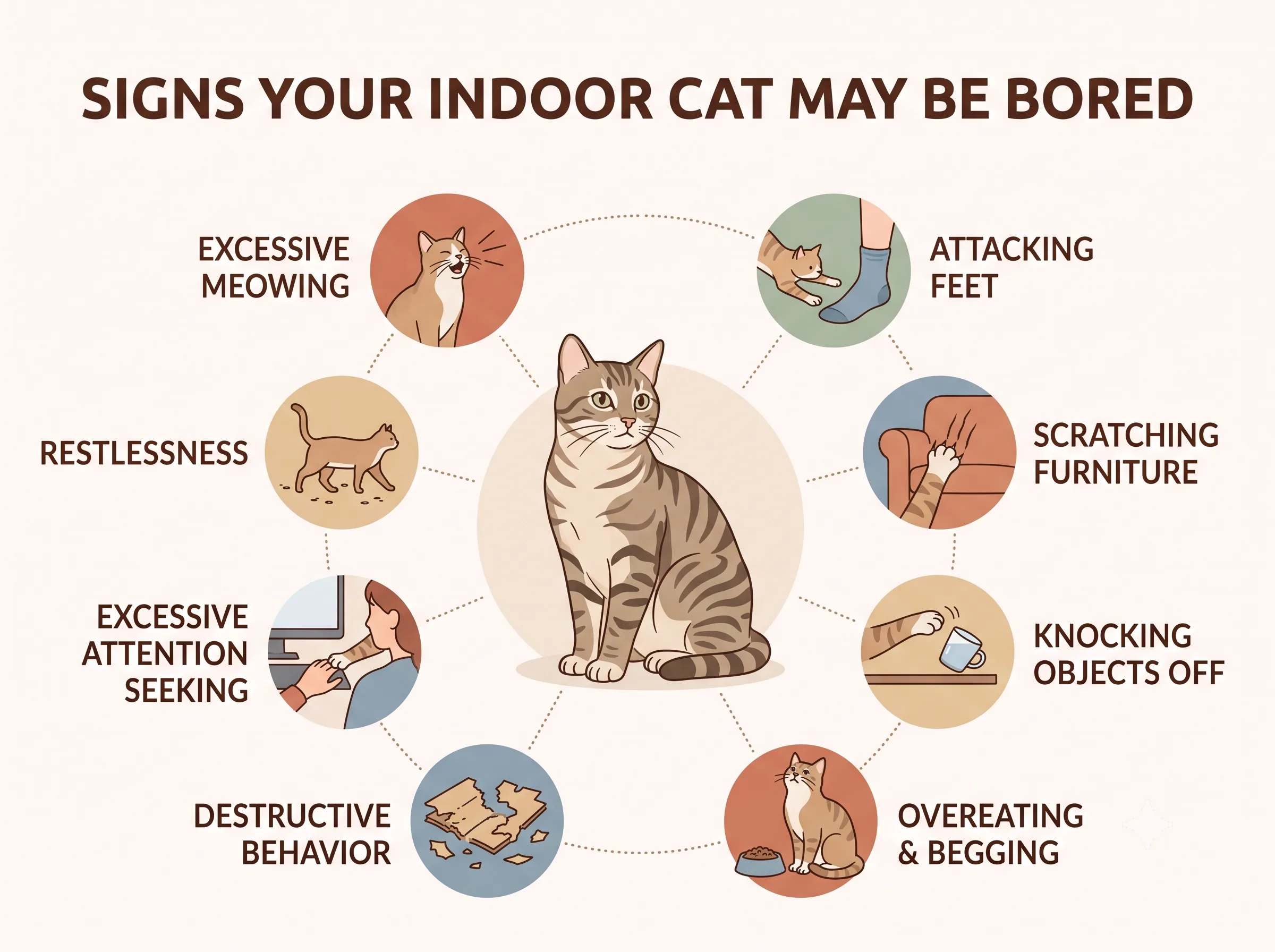
Signs that your indoor cat may need more stimulation include:
- Sleeping much more than usual when awake time is available
- Chasing or attacking your feet
- Excessive meowing for attention
- Scratching furniture more often
- Knocking objects off tables and shelves
- Overeating or begging for food
- Suddenly becoming destructive
- Showing little interest in their usual surroundings
- Constantly demanding attention
- Seeming restless or unable to settle
If you notice a sudden or significant change in your cat's behavior, don't automatically assume it's boredom. Changes in appetite, grooming, movement, sleeping, litter box habits, or social behavior can sometimes indicate an underlying health problem. If something seems unusual or persistent, speak with your veterinarian.
14 Easy Ways to Keep an Indoor Cat Entertained
You don't need to entertain your cat every minute of the day.
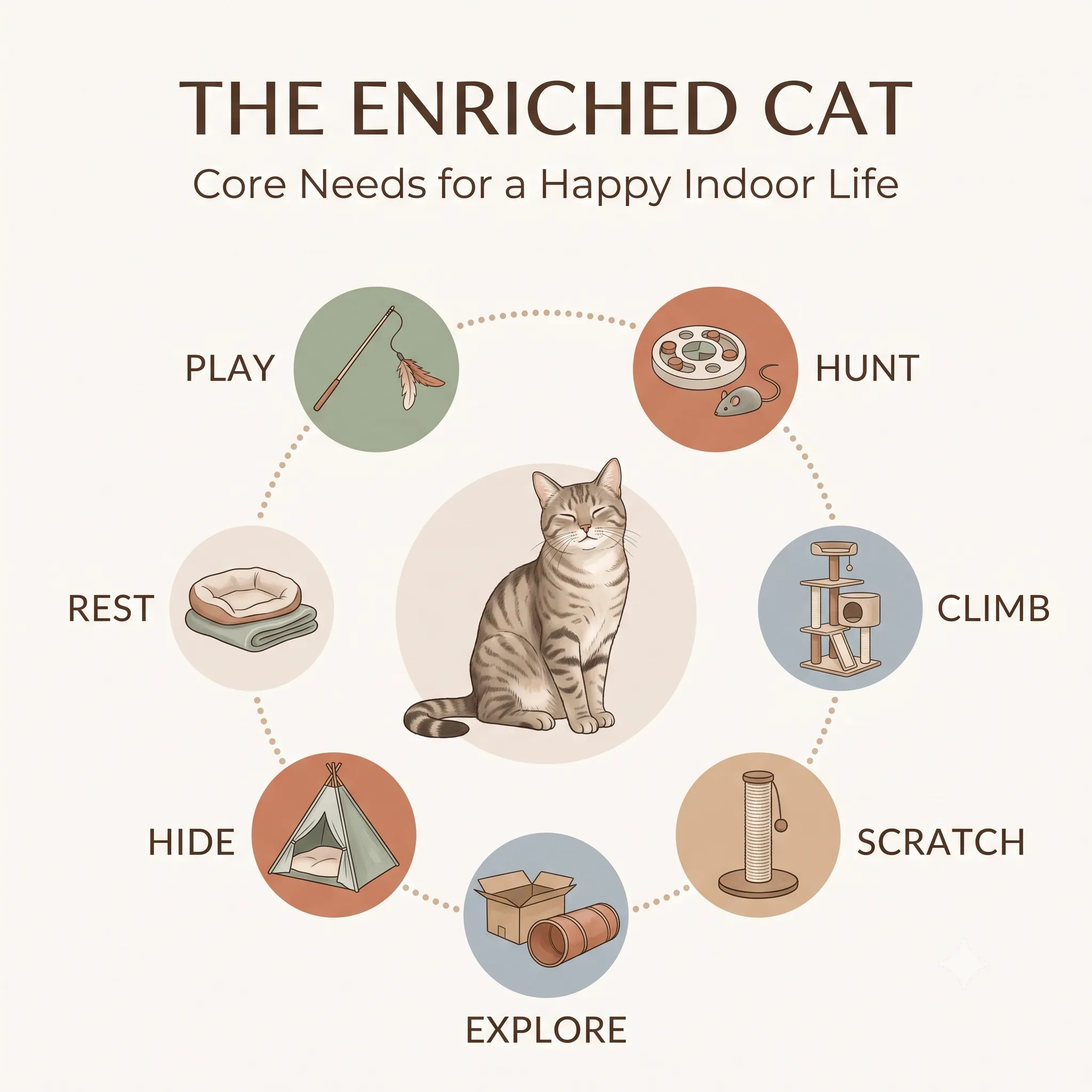
The goal is to create a home environment where your cat has different ways to play, explore, climb, scratch, hunt, hide, and rest.
Here are some simple ways to do that.
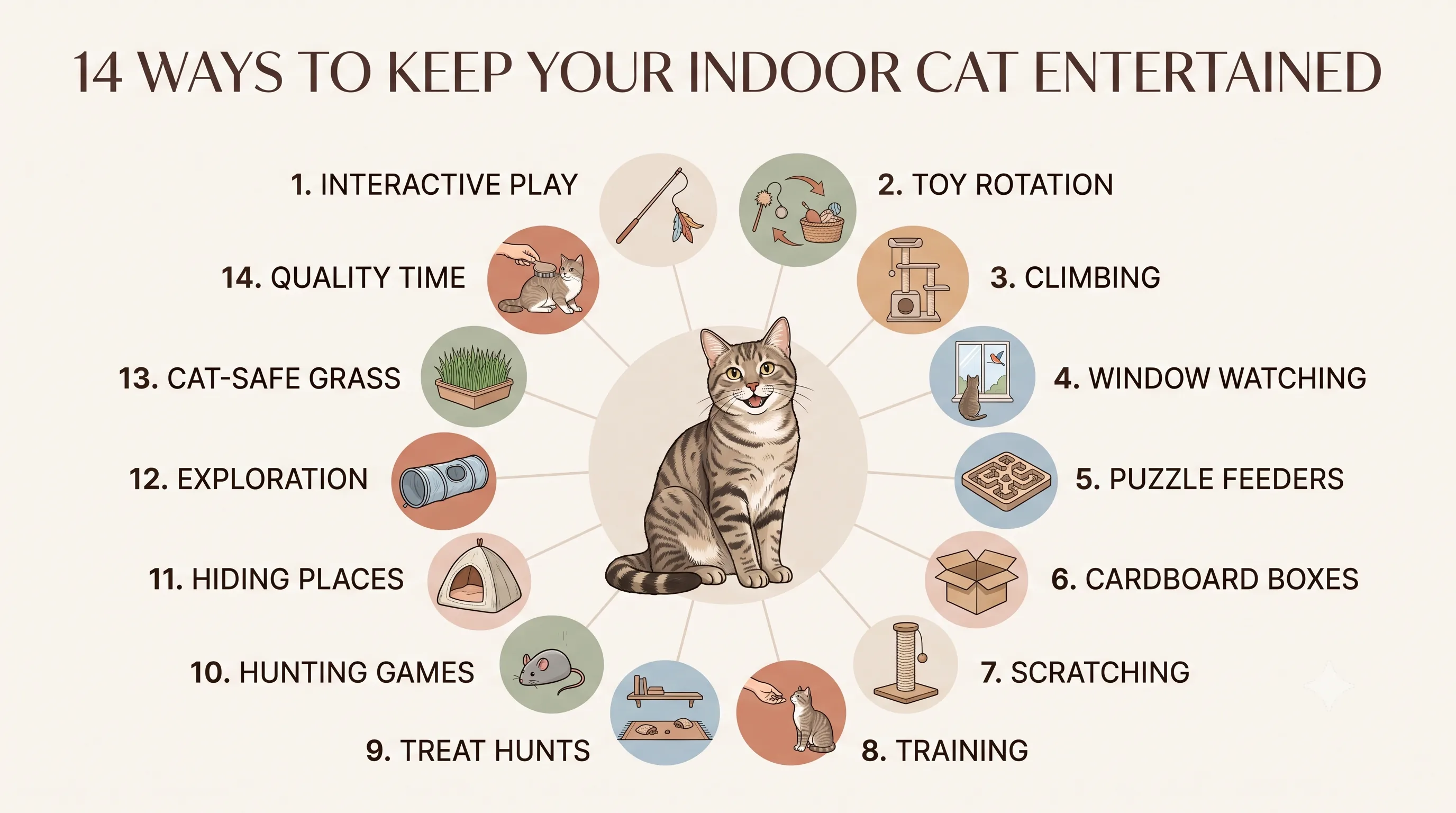
1. Make Time for Interactive Play
One of the easiest ways to entertain your cat is to actually play with them.
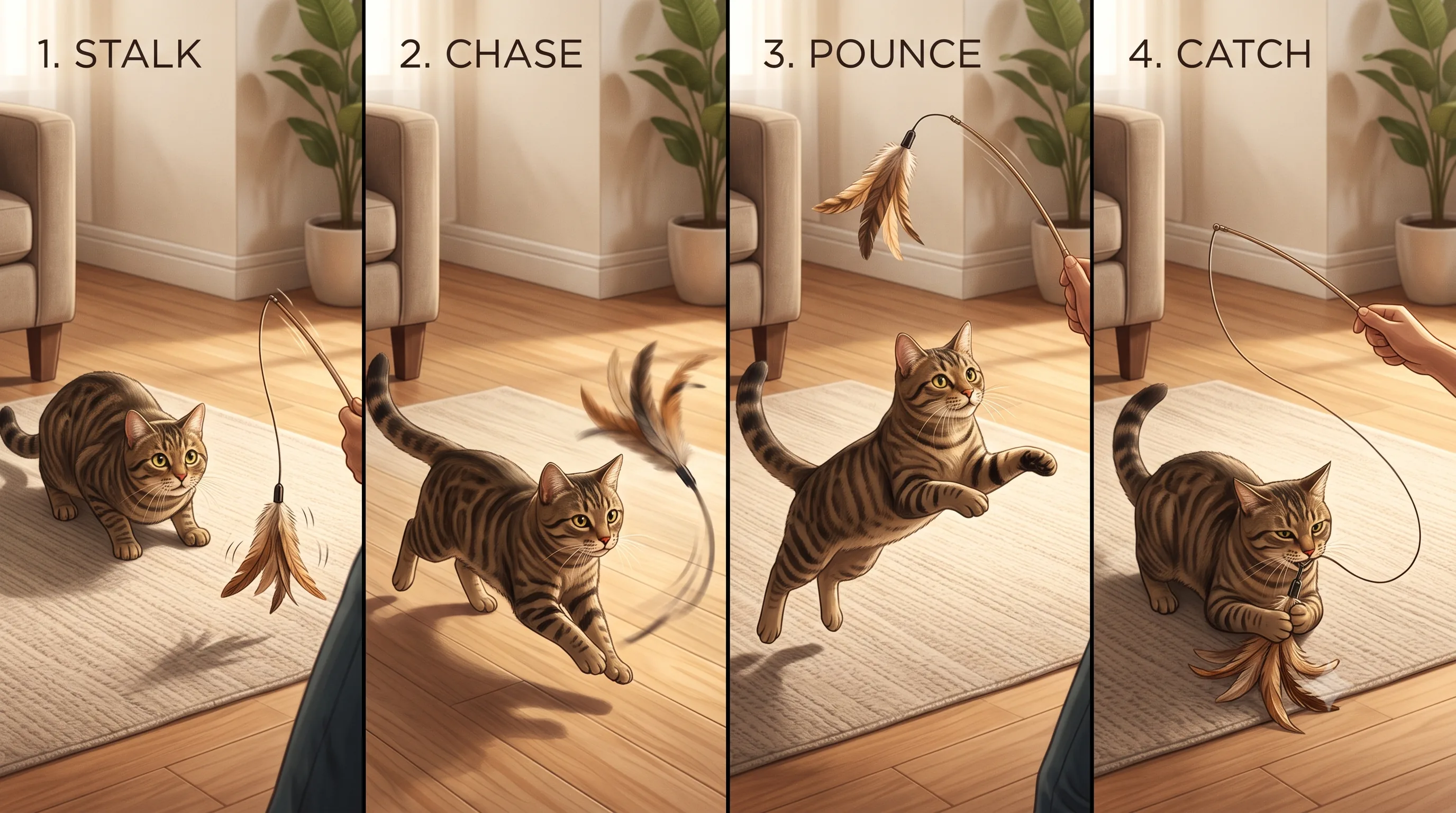
A wand toy, feather toy, or other interactive toy can turn your living room into a mini hunting ground. Instead of simply waving the toy around in front of your cat, try moving it like prey.
Try:
- Moving it slowly behind furniture
- Stopping suddenly
- Hiding it around corners
- Moving it across the floor
- Letting your cat stalk it
- Giving them a chance to chase and pounce
Short play sessions can work better than one long session.
Try playing with your cat for around 10–15 minutes once or twice a day, depending on their age, personality, energy level, and individual needs.
And don't forget the most important part: let your cat catch the "prey" sometimes.
Constantly chasing something they can never catch can become frustrating.
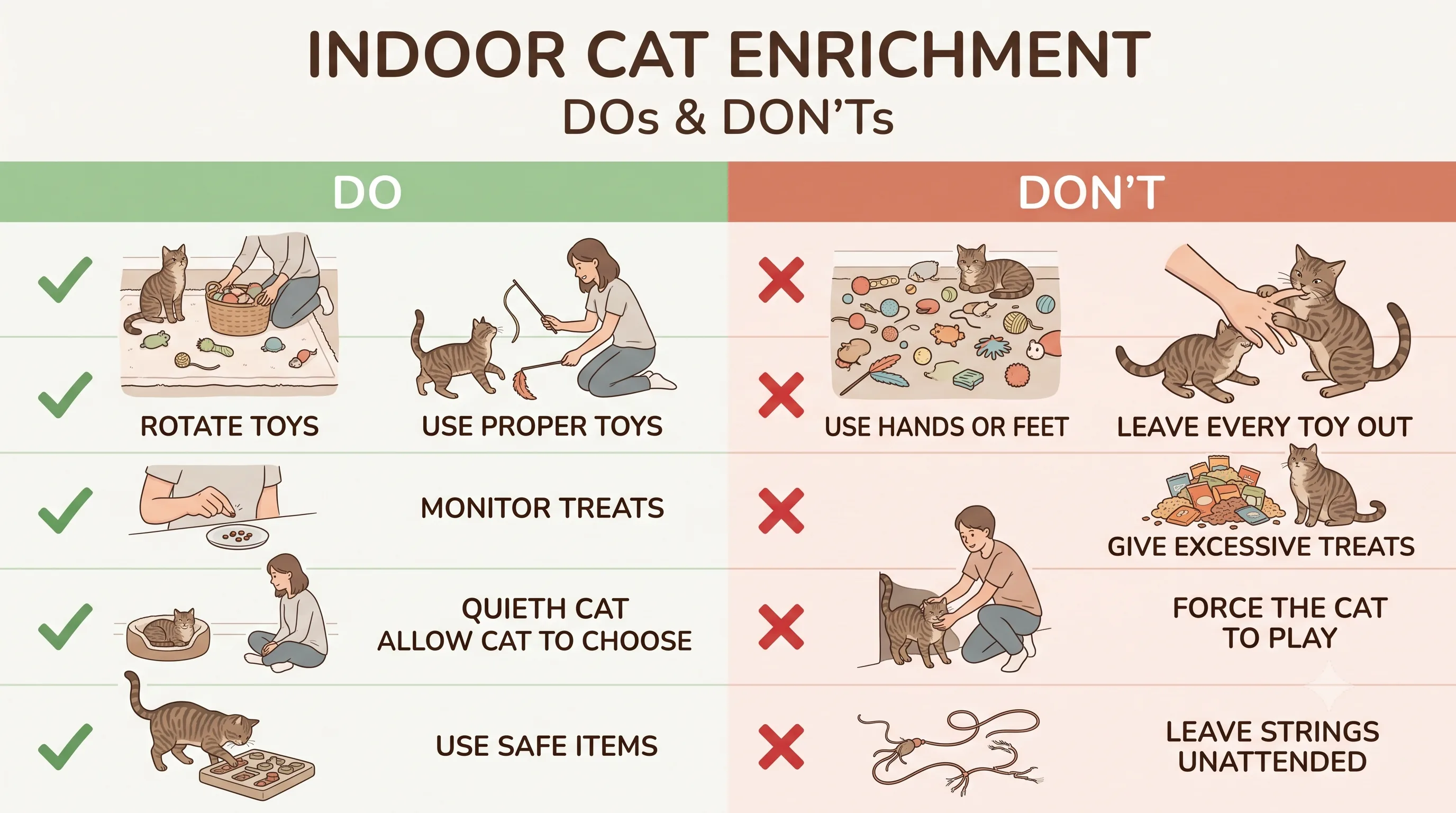
2. Rotate Your Cat's Toys
Does your cat ignore a toy that used to be their favorite?
Don't throw it away just yet.
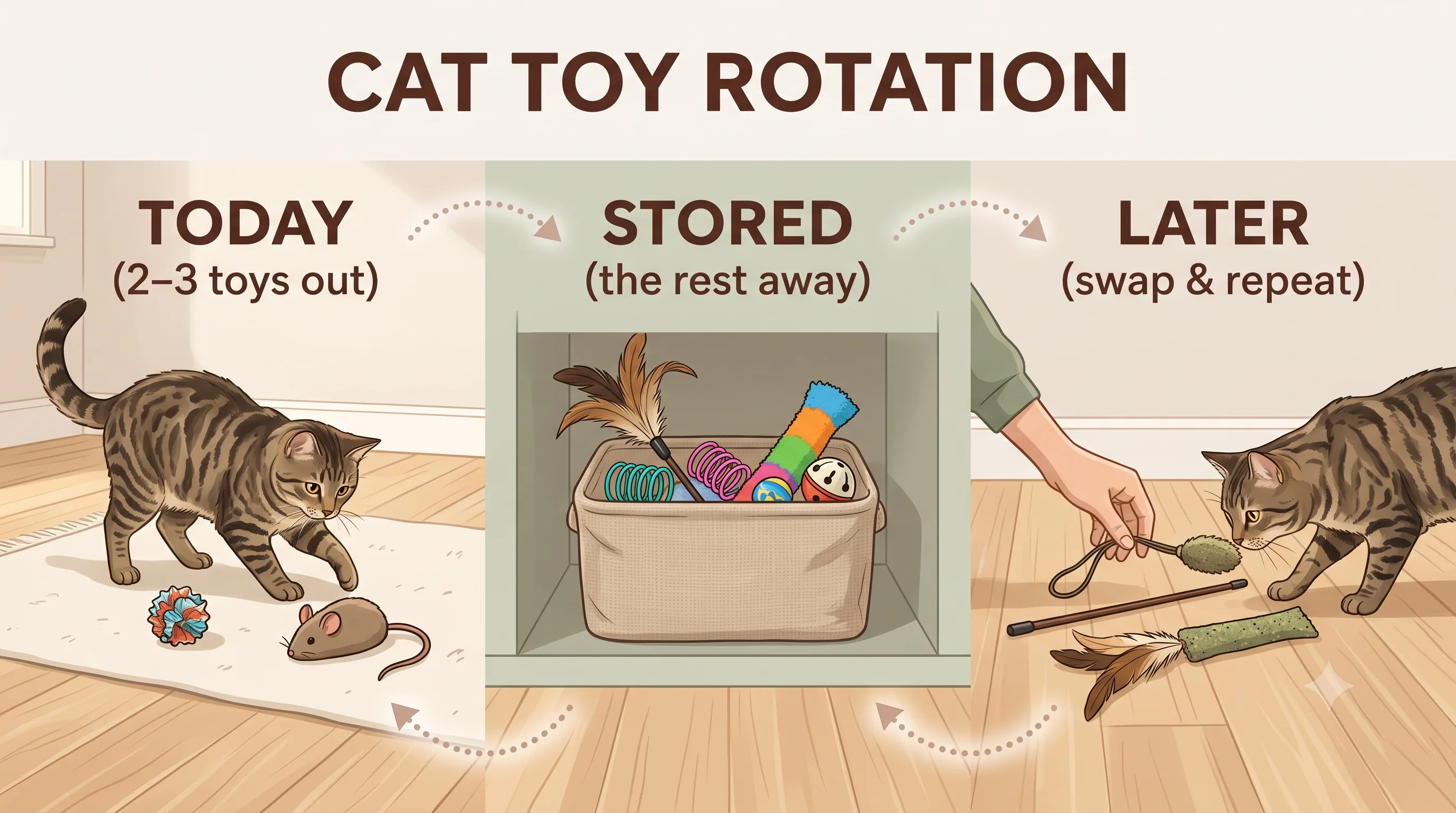
Cats can become less interested in toys when they see the same ones every day. Instead of leaving every toy on the floor, keep some stored away and rotate them every few days.
For example, you could keep:
- Two or three toys available today
- A few toys stored away
- Different toys brought out later in the week
When an old toy suddenly appears again, it can feel surprisingly interesting to your cat.
Toy rotation also means you don't have to keep buying new toys every week.
3. Give Your Cat Something to Climb
Cats love being up high.
A tall cat tree, shelf, or secure window perch can give your cat a completely different view of their environment.
A high resting spot can also provide a place where your cat feels safe and comfortable.
You don't necessarily need to buy an expensive cat tree. A sturdy, safely installed shelf can work too, as long as it can support your cat's weight and won't tip or fall.
A good climbing area can provide:
- Exercise
- A place to nap
- Mental stimulation
- A safe observation point
- Extra territory to explore
Just make sure anything your cat climbs on is stable and secure.
4. Create a Window Watching Spot
For many cats, a window is better than television.
Birds, people, cars, insects, trees, and changing weather can keep a curious cat occupied for surprisingly long periods.
Place a comfortable cat bed, cushion, or secure perch near a window where your cat can safely watch what's happening outside.
If you have a window with a view of birds or trees, even better.
Just remember to keep windows properly secured. A curious cat should never have access to an unsafe open window or an unsecured balcony.
5. Use Puzzle Feeders
Mealtime doesn't always have to mean putting food in a bowl.
Puzzle feeders and food-dispensing toys can make your cat work a little for their meal. They encourage natural behaviors such as searching, pawing, and problem-solving.
You can start with an easy puzzle and gradually introduce something more challenging if your cat enjoys it.
Puzzle feeding can be especially useful for cats that eat too quickly or seem constantly interested in food.
However, don't make the puzzle so difficult that your cat gives up.
The goal is to make mealtime interesting, not frustrating.
6. Turn Cardboard Boxes Into Cat Entertainment
Never underestimate the power of a cardboard box.
You can spend money on fancy cat furniture and your cat may still choose the box that came with it.
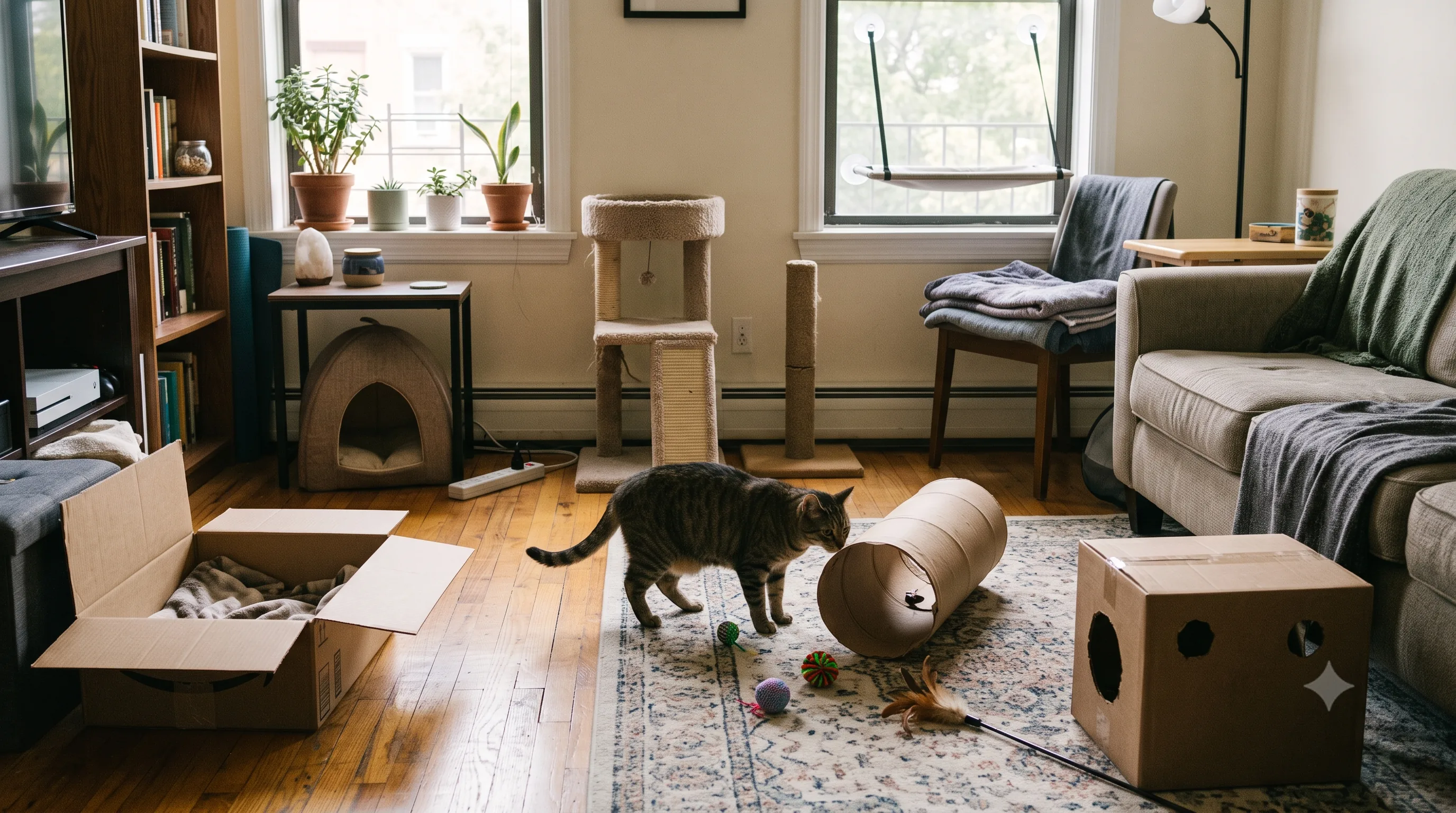
Boxes give cats a place to hide, explore, jump into, and investigate. You can even place a blanket inside and turn one into a cozy little hiding spot.
Want to make it more interesting?
Try combining a few boxes to create a simple DIY cat maze.
You can cut small openings between boxes and place a toy inside. Your cat gets something new to explore, and you get to watch them figure it out.
Before giving a box to your cat, remove staples, tape, plastic handles, strings, or anything else that could be dangerous.
7. Give Your Cat a Scratching Area
Scratching isn't just about damaging your sofa.
Cats scratch to stretch their bodies, maintain their claws, mark territory, and release energy. Giving them an appropriate scratching surface can satisfy this natural behavior while helping protect your furniture.
Try providing different types of scratching surfaces, such as:
- Vertical scratching posts
- Horizontal cardboard scratchers
- Scratching mats
- Sisal-covered posts
Place scratching areas near places your cat already likes to spend time.
If your cat keeps scratching one particular piece of furniture, placing a scratching post nearby may make it easier to redirect the behavior.
8. Teach Your Cat Simple Tricks
Training isn't just for dogs.
Teaching your cat simple behaviors can provide mental stimulation, strengthen your bond, and give them something new to focus on.
Some cats enjoy training just as much as dogs do, especially when treats or other rewards are involved.
Start with something simple, such as:
- Responding to their name
- Touching your hand with their nose
- Sitting on cue
- Coming when called
- Going into their carrier
Keep training sessions short and positive. A few minutes at a time is enough.
Use small treats or another reward your cat enjoys, and stop before they become frustrated or lose interest.
The goal isn't to turn your cat into a circus performer.
It's simply another way to give their brain something interesting to do.
9. Hide Treats Around the House
Want to turn your home into a treasure hunt?
Hide a few small treats in easy-to-find places around the house and let your cat search for them.
Start with obvious locations and gradually make the game more challenging if your cat enjoys it.
You can hide treats:
- Near a scratching post
- Inside a simple puzzle toy
- Behind furniture
- Near their favorite climbing area
- Inside an open cardboard box
Keep the treats small and make sure they're included in your cat's daily food intake so you're not accidentally overfeeding them.
You can also use a portion of your cat's regular food instead of additional treats.
10. Create a Safe Indoor Hunting Game
You can make playtime more interesting by letting your cat follow a little hunting sequence.
For example, move a toy behind the sofa, let your cat stalk it, then move it across the floor and allow them to pounce.
Think of it as:
Stalk → Chase → Pounce → Catch → Reward
This type of play can be much more engaging than simply throwing a toy across the room.
It also gives your cat an outlet for behaviors they would naturally use when hunting.
The key is to make the toy behave like something your cat might actually want to chase.
Move it unpredictably, give your cat opportunities to hide and watch, and occasionally let them catch it.
11. Give Your Cat Different Places to Hide
Cats love having places where they can disappear for a while.
A cat tunnel, covered bed, cardboard box, or even a blanket tent can give your cat a private space to relax.
Having multiple hiding places around the home can be particularly helpful in busy households where there are lots of people, children, or other pets.
Don't worry if your cat spends some time hiding.
A comfortable hiding spot can actually help them feel more secure.
Just make sure they can come and go freely and aren't being forced into the space.
12. Let Your Cat Explore New Things
Cats don't need to leave the house to experience something new.
You can occasionally change the environment by introducing a new cardboard box, moving a cat-safe toy to a different room, or creating a new climbing route.
Even something as simple as moving a scratching post to another suitable location can give your cat something new to investigate.
You can also introduce safe new textures, sounds, or objects for your cat to investigate at their own pace.
Cats are naturally curious, so small changes can sometimes provide more stimulation than you'd expect.
Just avoid making too many changes at once. Some cats prefer gradual changes and may become stressed by a completely rearranged environment.
13. Offer Safe Cat Grass and Enrichment
Some cats enjoy chewing on grass.
If your cat likes plants, consider providing cat-safe grass rather than allowing them to chew on random houseplants. Many common household plants can be harmful to cats.
Cat grass can give your cat something safe to investigate and nibble on.
You can also provide other safe enrichment items, such as:
- Paper bags without handles
- Cardboard tubes
- Cat-safe toys
- New cardboard boxes
- Different textures to investigate
If you're unsure whether a plant is safe for cats, don't assume it is. Check its safety before bringing it into your home.
14. Spend Quality Time Together
Not every form of entertainment needs to involve a toy.
Sometimes your cat simply wants to be around you.
You can sit together while your cat watches the world from a window, gently brush them if they enjoy grooming, or simply spend some quiet time beside them.
Some cats love cuddling.
Others prefer sitting a few feet away while keeping you company.
That's okay.
Pay attention to what your cat actually enjoys rather than assuming every cat wants the same kind of attention.
Learning to recognize your cat's body language can also help you understand when they're enjoying interaction and when they'd rather have some space.
How Much Playtime Does an Indoor Cat Need?
There isn't one perfect amount of playtime for every cat.
A young, energetic cat may want several play sessions throughout the day, while an older cat may prefer shorter and gentler activities.
As a starting point, try two or three interactive play sessions of around 10–15 minutes each and see how your cat responds.
You can increase or decrease the amount depending on your cat's energy level, age, health, personality, and individual preferences.
The important thing is consistency.
A few minutes of meaningful interaction every day is usually more useful than a huge play session once a week.
Also remember that play isn't the only form of enrichment. Climbing, scratching, exploring, puzzle feeding, watching through a window, and having safe places to hide can all add variety to your cat's day.
How to Keep Your Cat Entertained While You're Away
You don't have to be home all day for your cat to have an interesting environment.
Before leaving, you can set up a few safe activities that allow your cat to entertain themselves.
Try:
- Leaving out a puzzle feeder
- Providing a secure window perch
- Making sure scratching posts are accessible
- Leaving a cardboard box or tunnel available
- Rotating a few safe toys
- Providing comfortable hiding and resting areas
Avoid leaving toys with strings, loose parts, or other potential hazards unattended.
You also don't need to leave every toy out at once.
A small selection of safe enrichment items can be more interesting than a floor covered with toys.
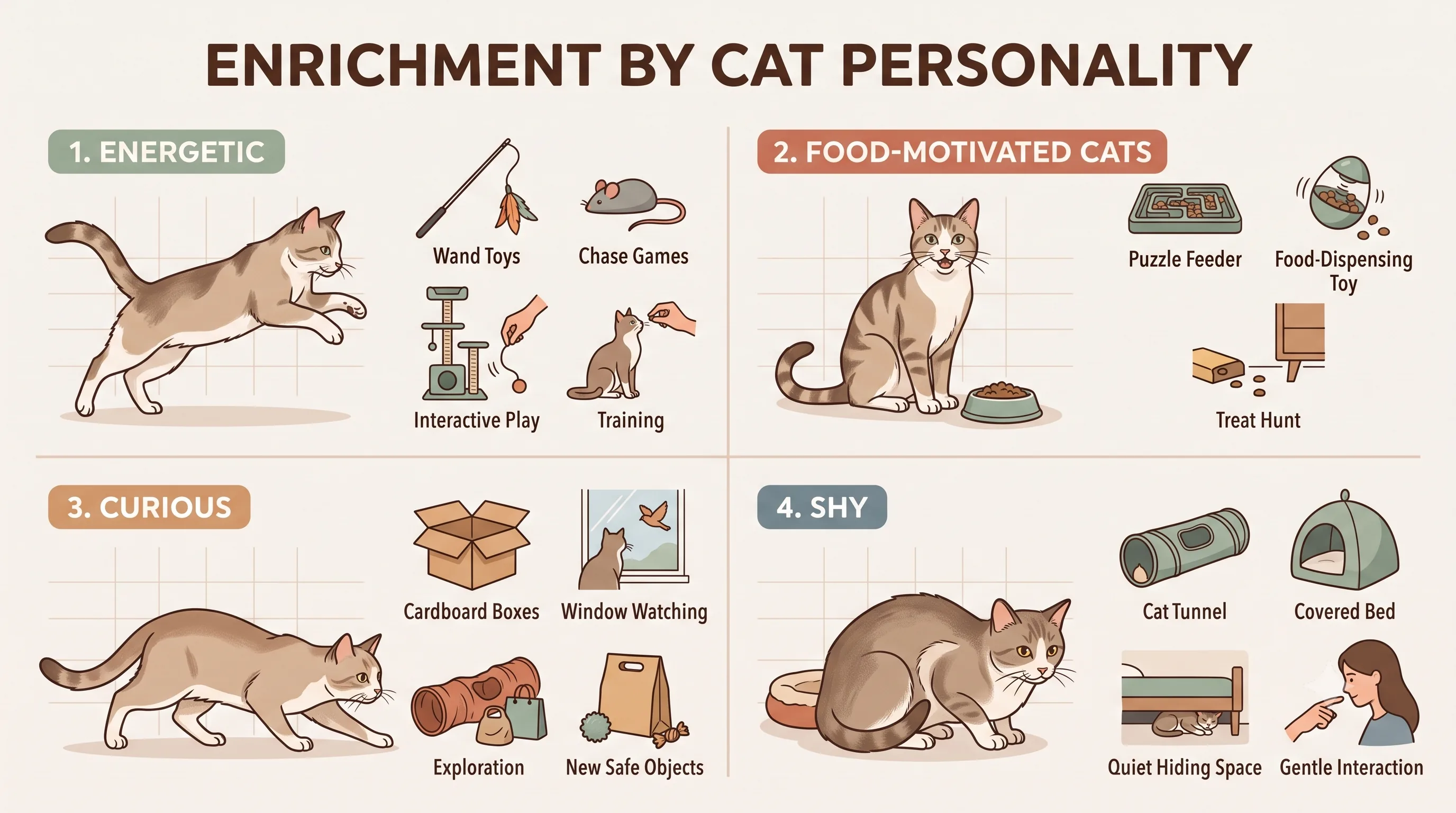
Indoor Cat Activities Based on Personality
Not every cat enjoys the same kind of entertainment.
The best enrichment is the kind your individual cat actually enjoys.
For Energetic Cats
Try:
- Wand toys
- Chase games
- Cat trees
- Interactive play
- Short training sessions
For Food-Motivated Cats
Try:
- Puzzle feeders
- Food-dispensing toys
- Treat hunts
- Using part of their normal meal for enrichment
For Curious Cats
Try:
- Cardboard boxes
- Window watching
- New safe objects
- Exploration games
- Changing the location of suitable enrichment items
For Shy Cats
Try:
- Cat tunnels
- Covered beds
- Cardboard boxes
- Quiet hiding spaces
- Gentle, low-pressure interaction
The goal isn't to make your cat enjoy every activity.
It's to discover what makes your cat curious, active, relaxed, and engaged.
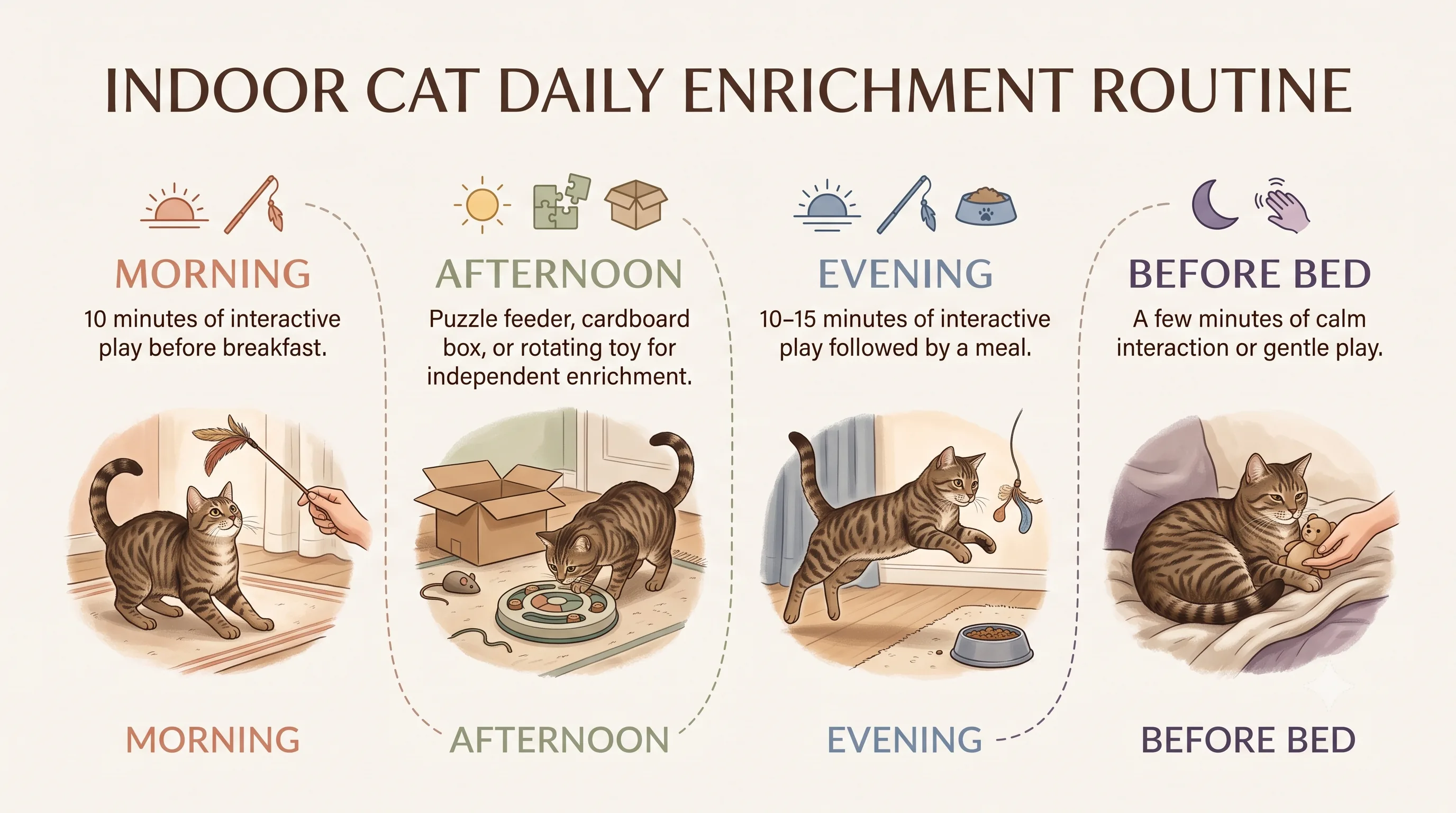
A Simple Daily Entertainment Routine
You don't need to spend the entire day entertaining your cat.
A simple routine could look like this:
Morning: 10 minutes of interactive play before breakfast.
Afternoon: Leave out a puzzle feeder, cardboard box, or rotating toy for independent entertainment.
Evening: Another 10–15 minute interactive play session followed by their meal.
Before bed: A few minutes of calm interaction or gentle play to help them settle down.
You can adjust this routine based on your cat and your schedule.
The goal is to create a mix of:
- Physical activity
- Mental stimulation
- Exploration
- Natural hunting behaviors
- Scratching
- Rest
- Quality time with you
You don't need a complicated schedule.
Consistency matters more than perfection.
Common Indoor Cat Enrichment Mistakes to Avoid
Keeping an indoor cat entertained doesn't mean filling your home with toys.
Avoid these common mistakes:
- Leaving every toy out all the time
- Making every play session too intense
- Using your hands or feet as toys
- Ignoring scratching behavior instead of redirecting it
- Giving too many treats during enrichment games
- Leaving unsafe toys unattended
- Forcing your cat to play when they aren't interested
- Assuming every cat enjoys the same activities
- Making puzzle feeders so difficult that your cat gives up
- Changing the environment too quickly
Most importantly, never use your hands as a substitute for toys during rough play.
A kitten that learns to attack hands may continue that habit as an adult.
Instead, use appropriate toys to create distance between your hands and your cat's teeth and claws.
What If My Cat Still Seems Bored?
If you've introduced play, climbing areas, scratching posts, puzzle feeders, and other enrichment but your cat still seems unusually inactive or uninterested, pay attention to any other changes.
A sudden change in behavior isn't always boredom.
Changes in appetite, grooming, sleeping, movement, litter box habits, or social behavior can sometimes indicate an underlying health problem.
If something seems unusual or persistent, speak with your veterinarian.
It's better to check than to assume that a significant behavior change is simply your cat being bored.
Frequently Asked Questions
How do I keep my indoor cat entertained?
Give your cat a variety of activities that encourage natural behaviors. Interactive play, puzzle feeders, scratching posts, climbing areas, window watching, cardboard boxes, hiding spaces, and toy rotation are all simple ways to provide enrichment.
How do I know if my indoor cat is bored?
Signs can include destructive behavior, excessive attention-seeking, increased meowing, attacking your feet, scratching furniture, overeating, knocking objects down, or showing little interest in their surroundings. However, sudden behavior changes can also have other causes, so speak with your veterinarian if you're concerned.
How much playtime does an indoor cat need?
There isn't one amount that works for every cat. As a starting point, try two or three interactive play sessions of around 10–15 minutes each and adjust based on your cat's age, energy level, personality, health, and response.
What if my cat doesn't like toys?
Try different types of enrichment rather than assuming your cat doesn't like playing. Some cats prefer food puzzles, cardboard boxes, climbing, window watching, scratching, or simple hunting games. Experiment with different activities and pay attention to what captures your cat's interest.
Do indoor cats need enrichment?
Yes. Indoor cats still have natural instincts to hunt, explore, scratch, climb, hide, and investigate their surroundings. Enrichment provides safe opportunities for them to express these behaviors and stay mentally and physically engaged.
How can I entertain my cat while I'm away?
Provide safe independent activities such as puzzle feeders, scratching posts, a secure window perch, cardboard boxes, tunnels, and a small selection of safe toys. Avoid leaving toys with strings or loose parts unattended.
Can a cardboard box really entertain a cat?
Absolutely. Many cats enjoy boxes because they provide opportunities to hide, investigate, scratch, jump, and explore. Sometimes the simplest enrichment item is the one your cat finds most interesting.
Final Thoughts
Keeping an indoor cat entertained doesn't have to be complicated or expensive.
A cardboard box, a window perch, a scratching post, a puzzle feeder, and a few minutes of interactive play can provide plenty of stimulation when used creatively.
The biggest thing to remember is that your cat doesn't need constant entertainment.
They need opportunities to behave like a cat: to stalk, chase, scratch, climb, explore, hide, and rest.
Pay attention to what your cat actually enjoys and build enrichment around their personality.
And honestly, watching your cat completely ignore the expensive toy you bought and choose the cardboard box instead is part of the fun.
What's your cat's favorite indoor activity? Is it chasing a wand toy, watching birds from the window, climbing to the highest place in the house, or—of course—destroying a cardboard box?
Tell us in the comments!
Related articles
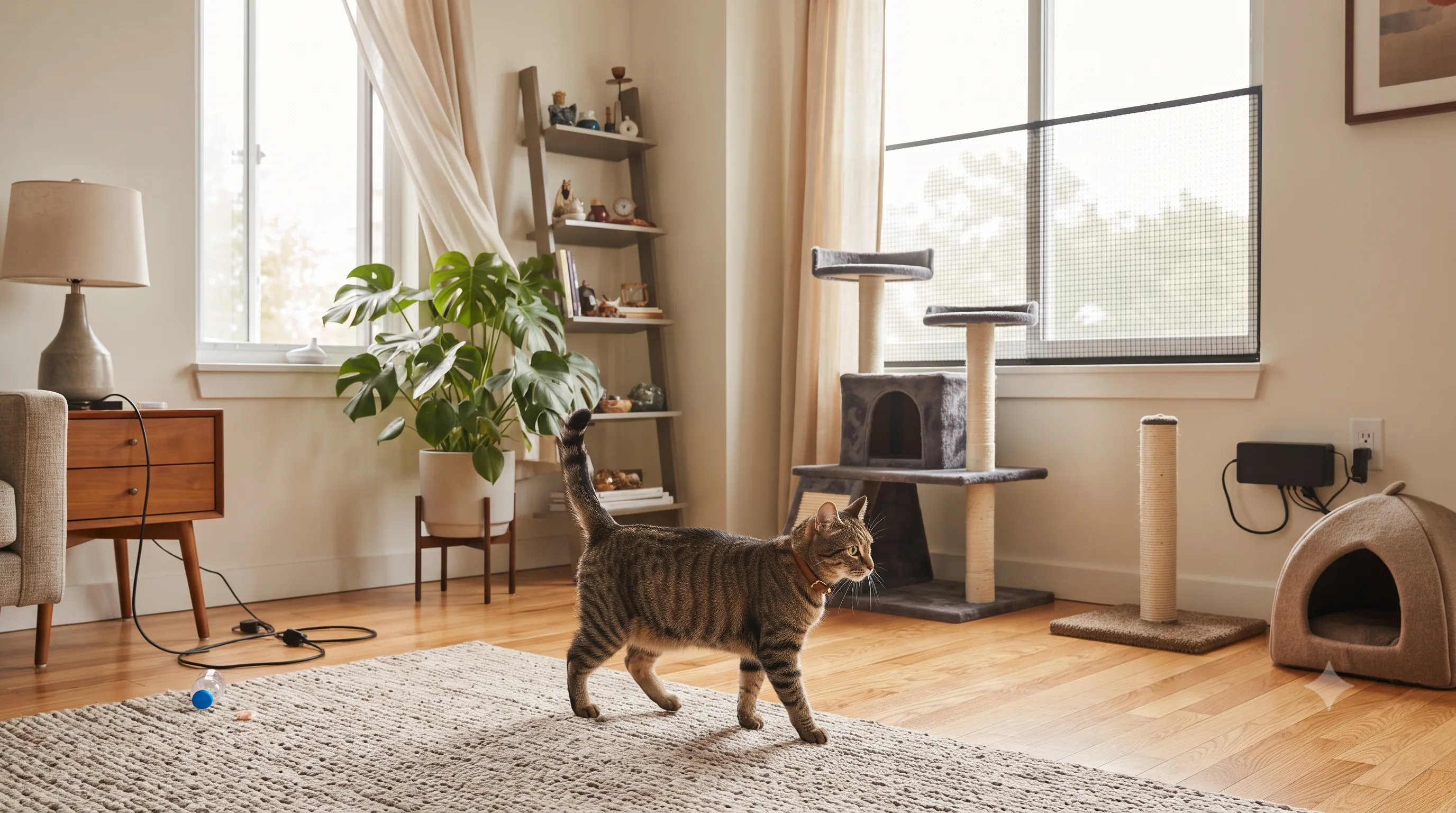
How to Cat-Proof Your Home: A Simple Guide to Keeping Your Cat Safe
Learn how to cat-proof your home and protect your cat from common household dangers, toxic plants, unsafe windows, electrical cords, and other hidden hazards.
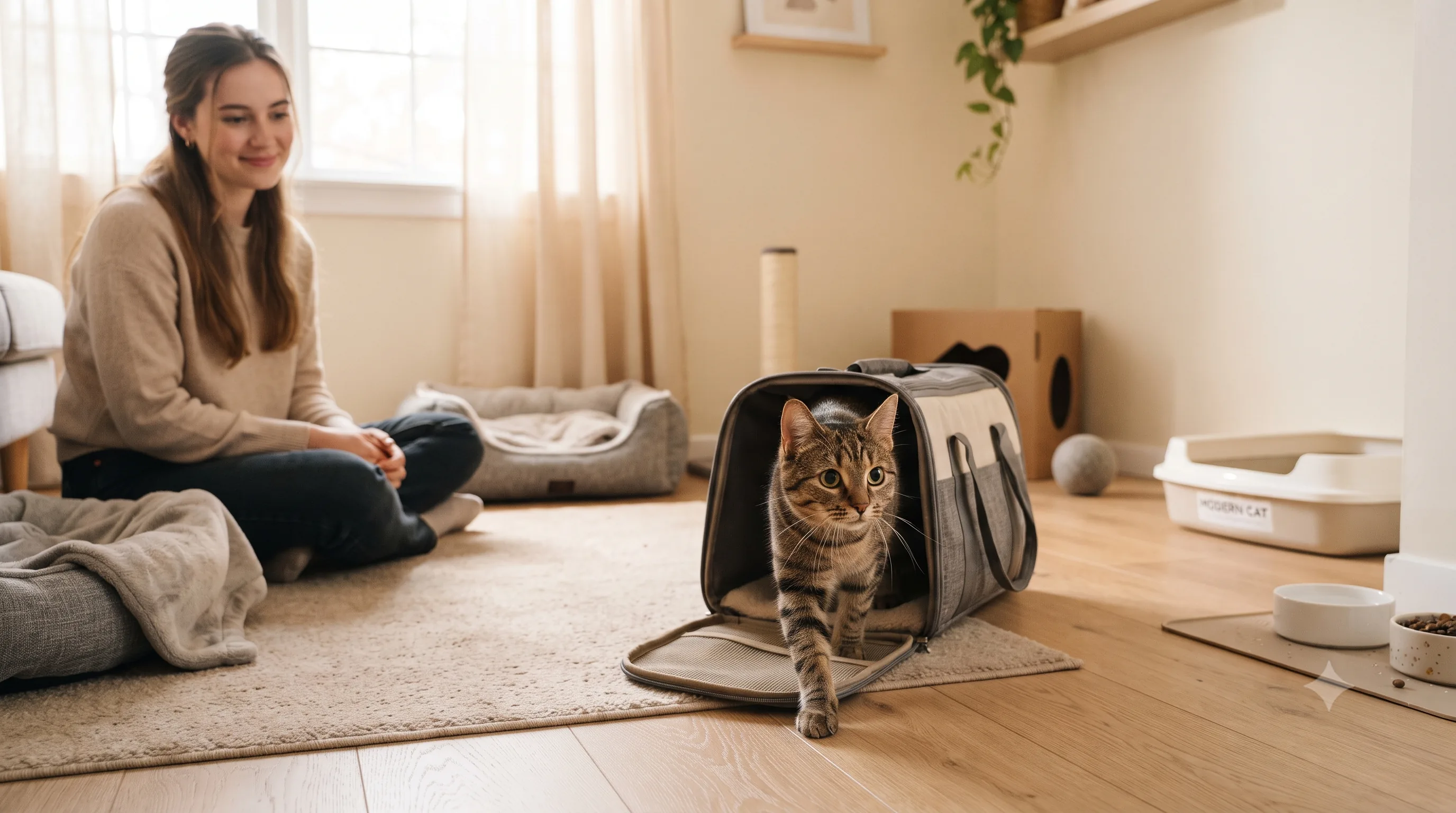
How to Introduce a New Cat to Your Home
Bringing home a new cat? Learn how to introduce a new cat safely and calmly, from preparing a safe room to building trust and introducing other pets.
How Often Should You Clean a Cat Litter Box?
How often should you clean a cat litter box? Learn when to scoop, change litter, wash the box, control odors, and keep your cat's litter area clean.