
Bringing a new cat home is exciting. You have probably already imagined them exploring the house, jumping on the sofa, playing with their new toys, and eventually curling up next to you.
Then you open the carrier—and they disappear under the bed.
If that happens, don't panic.
For a cat, moving into a new home can feel completely different from how it feels to us. New smells, unfamiliar people, strange sounds, and other pets can all be overwhelming.
The good news is that you don't need to rush the process.
The best way to introduce a new cat to your home is to give them a safe place to settle, allow them to explore gradually, and let them decide when they are ready to interact with you.
In this guide, we'll walk through how to introduce a new cat step by step, including what to do during the first 24 hours, how to build trust, how to introduce cats and dogs, and how to recognize signs that your cat is settling in.
Quick Guide: What to Do During the First 24 Hours
The first day doesn't need to be complicated.
Focus on making your new cat feel safe rather than trying to make them comfortable with the entire house immediately.
Here's a simple checklist:
- Prepare one quiet room before your cat arrives.
- Set up food, fresh water, a litter box, bedding, and a hiding place.
- Take your cat directly to this room when you arrive home.
- Open the carrier and let your cat come out when they're ready.
- Keep interaction calm and gentle.
- Don't force your cat out of hiding.
- Keep other pets separated at first.
- Give your cat time to observe and explore at their own pace.
- Keep the house as quiet and predictable as possible.
- Watch their behavior rather than expecting them to become affectionate immediately.
The goal of the first day isn't to make your cat love their new home.
It's simply to help them feel safe enough to begin adjusting.
Prepare Your Home Before Your Cat Arrives
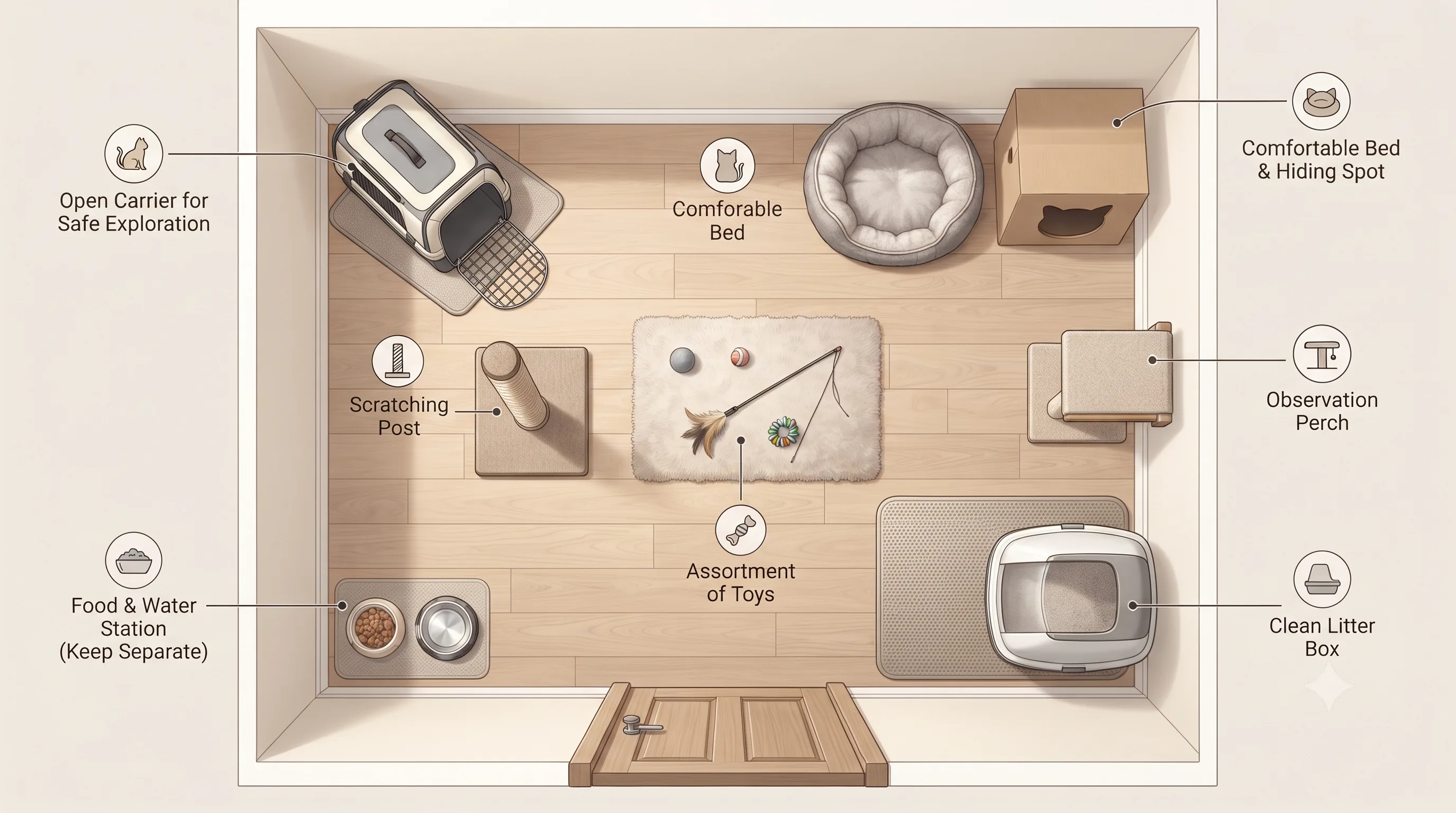
Before bringing your new cat through the front door, prepare a quiet space where they can settle in.
You don't need to give them access to the entire house immediately. In fact, a smaller space can help your cat feel less overwhelmed during the first few days.
Choose a quiet, low-traffic room where your cat can have some privacy. A spare bedroom or another suitable room can work well.

Make sure the room has everything they need:
- Food and fresh water
- A clean litter box
- A comfortable bed or blanket
- A scratching post
- A few toys
- A safe hiding place
- A safe place to climb or observe their surroundings
Keep food and water away from the litter box. Most cats prefer their eating and toilet areas to be separate.
Before your cat arrives, also look around the room for anything they could chew, swallow, knock over, or become trapped behind.
A little preparation can make the first few days much easier for both of you.
Create a Safe Room for Your New Cat
Think of the safe room as your cat's temporary home base.
Instead of suddenly asking them to understand an entire house, you're giving them one smaller environment where they can gradually become familiar with new sights, sounds, and smells.
The room should be comfortable but not overwhelming.
Your cat should have easy access to their litter box, food, water, sleeping area, toys, and hiding place.
Don't worry if they spend a lot of time in that room at first.
The safe room isn't a punishment or a place to keep your cat isolated forever. It's simply a place where they can decompress before exploring more of the house.
As your cat becomes more confident, you can gradually give them access to additional areas.
What to Do When You First Bring Your Cat Home
When you arrive home, resist the temptation to carry your cat around the house and introduce them to everyone immediately.
Instead, take the carrier directly to their prepared room.
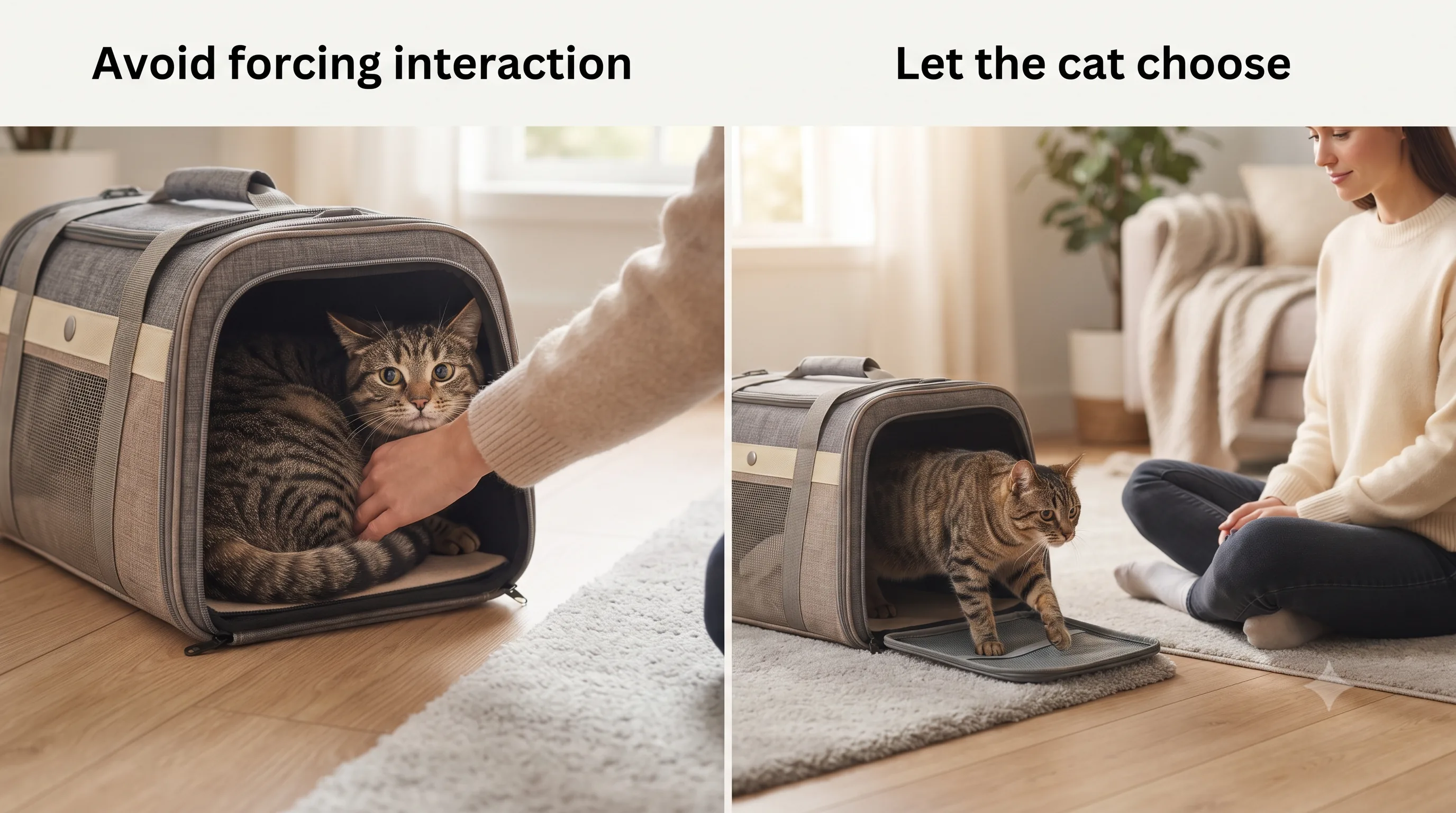
Place the carrier on the floor, open the door, and give your cat time to come out on their own.
Some cats will walk out immediately and start investigating.
Others may stay inside the carrier.
Some may quickly find a hiding place and refuse to come out.
All of these reactions can happen when a cat is experiencing a completely unfamiliar environment.
Sit quietly nearby if your cat seems comfortable with your presence. You can talk softly to them, but don't force interaction.
Your job at this stage is simple:
Be present without being overwhelming.
Let Your New Cat Explore at Their Own Pace
Once your cat feels comfortable enough to leave their hiding place, let them explore gradually.
Don't carry them from room to room expecting them to immediately feel comfortable.
Instead, allow them to investigate their surroundings when they're ready.
Your cat may spend several minutes sniffing everything. They may walk around cautiously, hide again, or return to their safe room.
That's okay.
Cats often need time to process a new environment.
Why Should You Avoid Rushing?
A new home contains a huge amount of unfamiliar information.
Your cat has to become familiar with:
- New smells
- Household sounds
- Your voice
- Your daily routine
- New people
- Other animals
- Their sleeping area
- Their food and water locations
- Their litter box
- New rooms and furniture
Giving them time to process these changes can help them gradually become more confident.
A cat that feels safe is more likely to explore and interact with you naturally.
What to Do on Your Cat's First Night
The first night can be one of the strangest parts of bringing home a new cat.
Your cat may hide, meow more than usual, explore while everyone is asleep, or simply spend most of the night in one quiet spot.
Try not to expect them to behave like a settled-in cat immediately.
Keep them in their safe room if they aren't ready to explore the rest of the house.
Make sure they have:
- Fresh water
- Food
- A clean litter box
- A comfortable sleeping area
- A safe hiding place

Keep the environment relatively quiet.
You don't need to repeatedly wake your cat, pull them out of hiding, or try to cuddle them.
Instead, check on them calmly and give them the opportunity to approach you when they feel ready.
If your cat is hiding on the first night, that doesn't necessarily mean something is wrong.
They're simply experiencing a lot of change at once.
Give Your Cat a Safe Hiding Spot
Don't worry if your new cat spends a lot of time hiding during the first few days.
Hiding is one way cats cope with unfamiliar situations.
Instead of pulling your cat out of their hiding place, make the area comfortable and let them come out on their own.
You can provide:
- A cardboard box
- A covered cat bed
- A carrier with the door open
- A quiet corner
- Another safe hiding area
If your cat chooses to hide under furniture, make sure the area is safe and free from hazards such as electrical cords, small objects, or places where they could become trapped.
A hiding place can actually make a new environment feel less intimidating.
Your cat knows they have somewhere to retreat when they need a break.
Help Your New Cat Get Used to Your Scent
Your scent is one of the easiest ways to help a new cat become familiar with you.
You can leave a recently worn T-shirt or a small blanket with your scent in their room.
Place it somewhere comfortable where your cat can investigate it without pressure.
Don't push the item toward your cat or try to make them interact with it.

Over time, your smell can become associated with their safe environment.
This can be particularly useful for shy or nervous cats.
Build Trust Without Forcing It
One of the biggest mistakes new cat owners make is trying too hard to become friends immediately.
You may want to pet your new cat, pick them up, or play with them as soon as possible.
But your cat may need more time.
Let them set the pace.
Try sitting nearby while reading, working, or simply relaxing.
Your cat can observe you without feeling pressured to interact.
When they approach you, allow them to sniff your hand before trying to pet them.
If they walk away, let them.
If they stay nearby, that's a positive sign.
Building trust isn't about getting your cat to interact with you as quickly as possible.
It's about showing them that you are safe, predictable, and respectful of their boundaries.
Follow Your Cat's Body Language
Learning basic cat body language can help you understand when your new cat wants interaction and when they need space.
A relaxed cat may:
- Slowly blink at you
- Keep their body relaxed
- Walk toward you
- Rub against you
- Sit or lie down nearby
- Show interest in toys or food
A nervous or stressed cat may:
- Flatten their ears
- Hiss or growl
- Hide
- Keep their body very low
- Have a puffed-up tail
- Avoid interaction
- Move away when approached
If your cat seems uncomfortable, give them some space and try again later.
Respecting these signals is one of the simplest ways to build trust.
Introduce Your Cat to Other Family Members
If you have other people living in the house, introduce them gradually.
You don't want several people surrounding your cat at the same time.
Let family members enter the room calmly and allow the cat to decide whether they want to approach.
Young children in particular may be excited about the new cat and want to touch, carry, or play with them constantly.
Explain that the cat needs time to settle in.
Teach children to:
- Approach quietly
- Avoid chasing the cat
- Never pull their tail or ears
- Let the cat walk away
- Pet gently
- Avoid picking the cat up unless an adult has determined it's appropriate
- Never disturb the cat while eating or using the litter box
- Give the cat space when they're hiding
This helps both the child and the cat have a positive first experience.
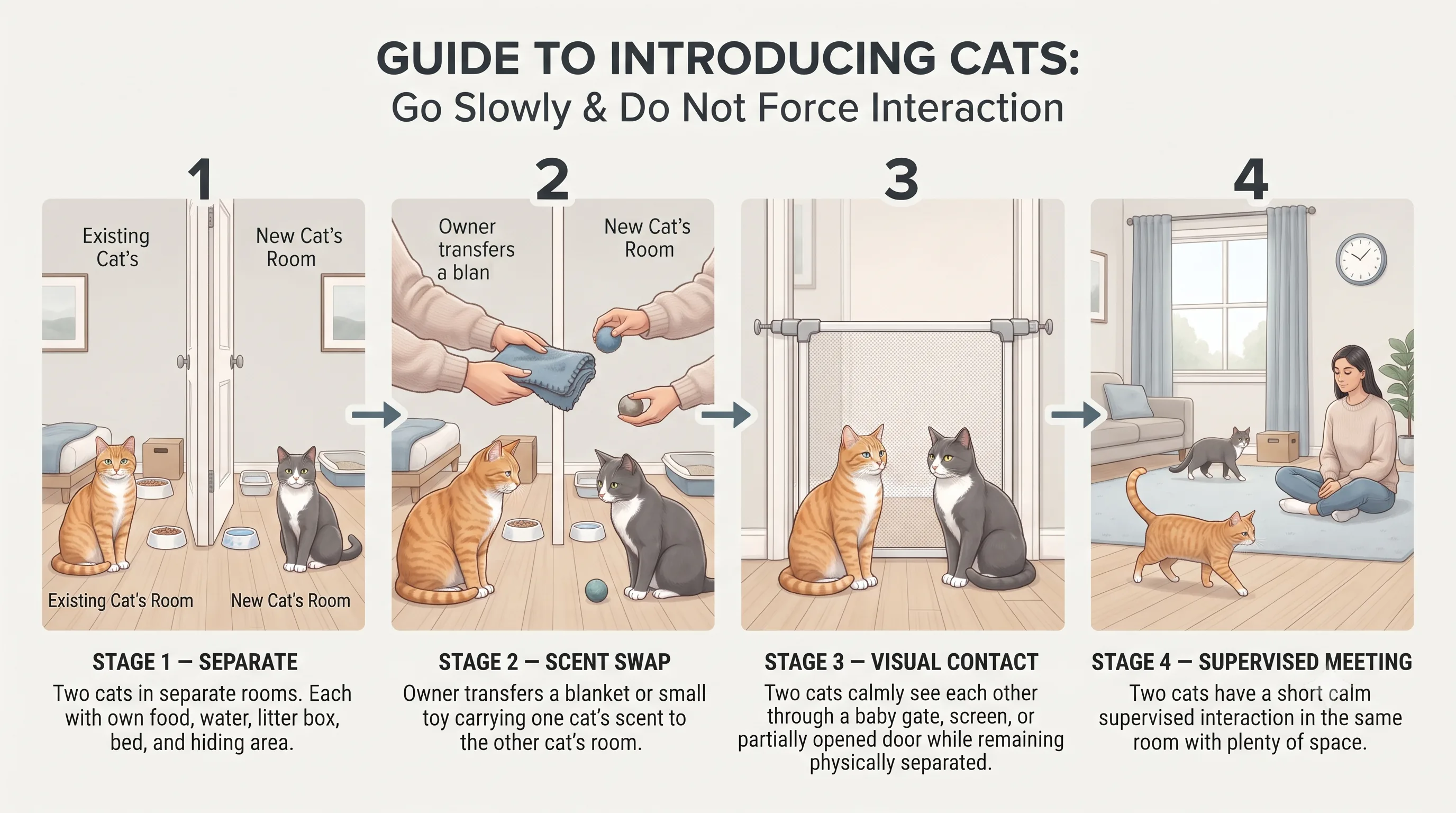
How to Introduce a New Cat to Another Cat
If you already have a cat, don't put the two cats together immediately.
Even friendly cats can become territorial when another cat suddenly enters their space.
A gradual introduction gives both cats time to become familiar with each other without being forced into close contact.
Step 1: Keep the Cats Separate
Start by keeping the cats in separate rooms.
Each cat should have their own food, water, litter box, sleeping area, and hiding place.
Allow them to hear each other without direct contact.
This gives both cats time to understand that another animal is nearby without feeling threatened by an immediate face-to-face meeting.
Step 2: Try a Scent Swap
Scent is extremely important to cats.
Take a blanket, towel, or toy that has been used by one cat and place it near the other cat's sleeping area.
You can do the same in reverse.
This allows each cat to become familiar with the other's scent before they meet face-to-face.
If either cat reacts strongly, give them more time and try again later.
Step 3: Let Them See Each Other
Once the cats are comfortable with each other's scent, you can gradually allow them to see each other through a barrier.
A baby gate, screen, or partially opened door can provide some separation.
Keep these early visual interactions short and calm.
Don't force the cats to move closer to each other.
Step 4: Have Short Supervised Meetings
When both cats appear comfortable with the earlier stages, you can begin short supervised meetings.
Keep the sessions calm and end them before either cat becomes extremely stressed.
If one cat becomes aggressive or highly anxious, separate them and slow the process down.
Successful introductions can take time.
The goal isn't to make the cats become best friends immediately.
The goal is to help them eventually feel safe sharing the same home.
How to Introduce a New Cat to a Dog
Dogs and cats can live together very happily, but their first meeting should be carefully managed.
Start with physical separation and allow both animals to become familiar with each other's presence.

When you're ready for an initial face-to-face introduction:
- Keep your dog on a leash
- Make sure your cat has somewhere safe to retreat
- Allow the animals to observe each other from a comfortable distance
- Never force the cat to approach the dog
- Reward calm behavior with treats and praise
- Keep early meetings short
Your cat should always have an escape route or elevated area where the dog cannot follow.
Over several carefully managed meetings, they may become more comfortable around each other.
Some cats and dogs become best friends.
Others simply learn to peacefully share the same home.
Both outcomes are perfectly fine.
Keep the First Few Days Predictable
Cats usually do well with routines.
Try to keep feeding, playtime, cleaning, and bedtime relatively consistent.
A predictable routine helps your cat understand what to expect.
During the first few days, avoid making too many changes at once.
If possible, keep loud visitors, parties, construction, and major household disruptions to a minimum.
Your new cat is already dealing with plenty of unfamiliar things.
A calm environment can make the adjustment easier.
Signs Your New Cat Is Settling In
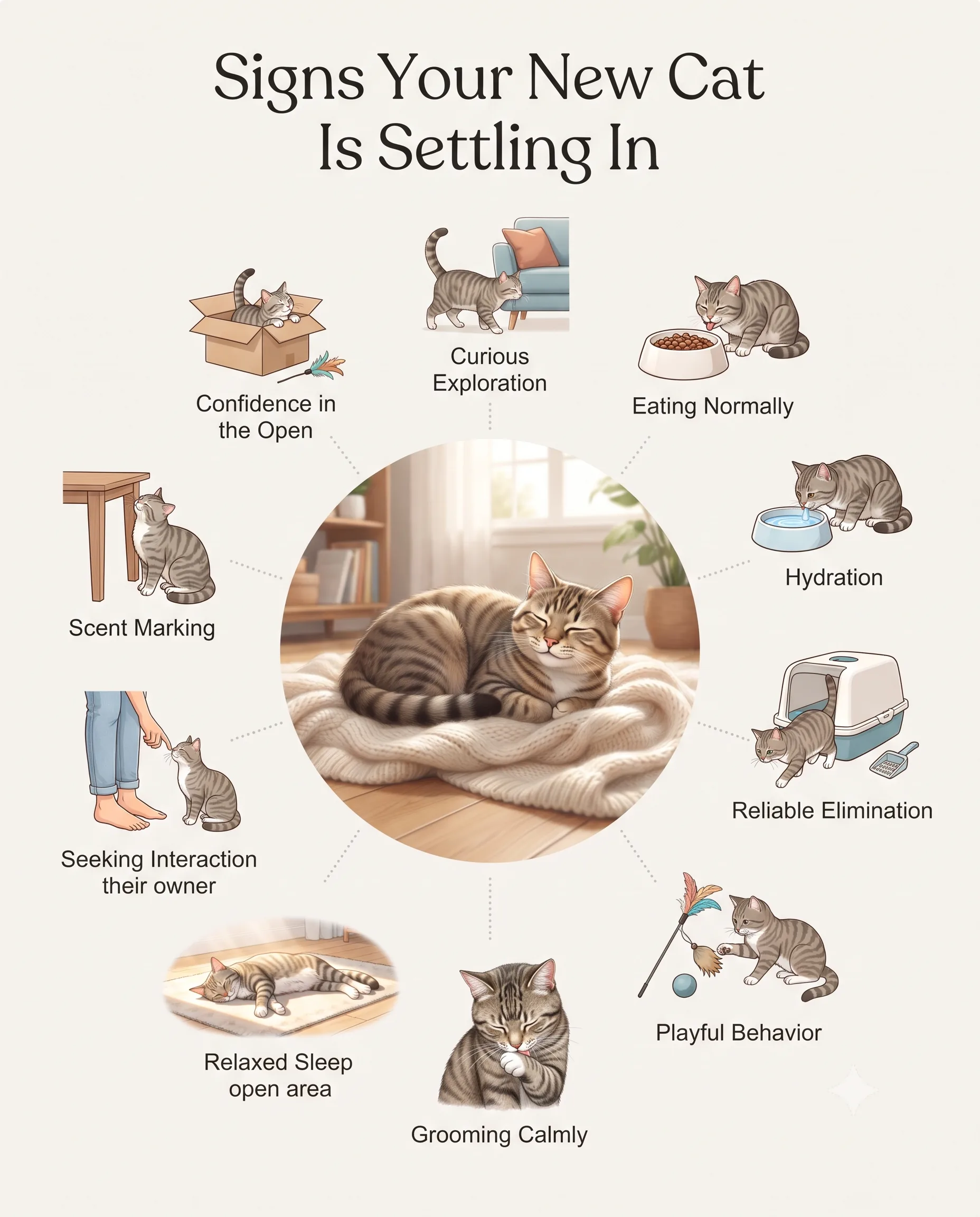
Every cat adjusts differently, so look for gradual changes rather than expecting one dramatic moment when your cat suddenly becomes comfortable.
You may notice your cat:
- Exploring more often
- Eating and drinking normally
- Using the litter box consistently
- Playing with toys
- Grooming themselves
- Sleeping in more open areas
- Approaching you
- Rubbing against furniture or people
- Showing curiosity about the house
- Spending less time hiding
These are encouraging signs that your cat is becoming more comfortable.
Progress doesn't always happen in a straight line.
Your cat may explore one day and spend more time hiding the next.
That's okay.
Signs Your New Cat May Be Stressed
Some nervousness is normal when a cat enters a new environment.
However, it's useful to recognize signs that your cat may be struggling with the adjustment.
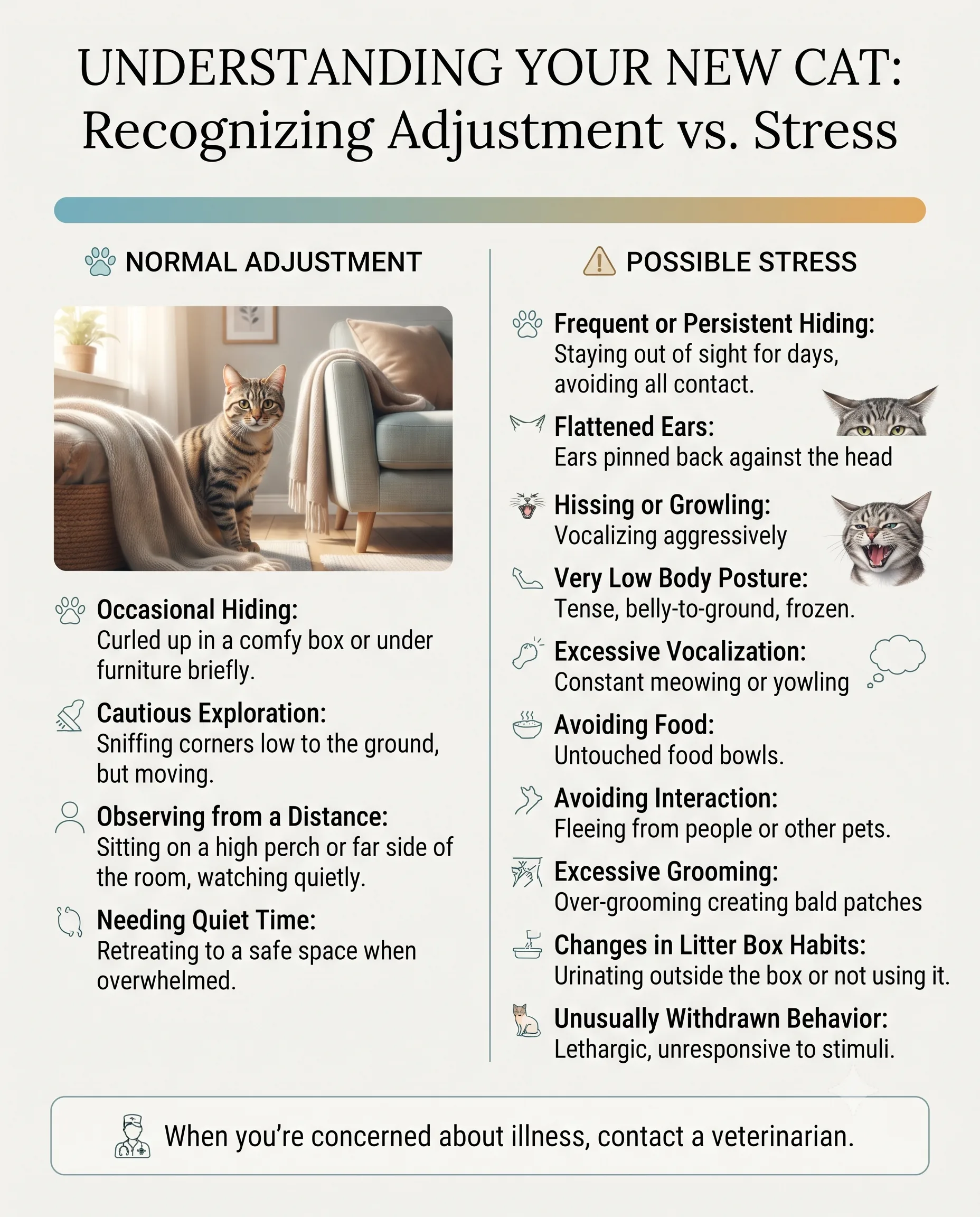
Possible signs of stress include:
- Frequent hiding
- Hissing or growling
- Flattened ears
- A very low body posture
- Excessive vocalization
- Avoiding food
- Avoiding interaction
- Excessive grooming
- Changes in litter box habits
- Becoming unusually withdrawn
If your cat seems stressed, don't respond by forcing more interaction.
Instead, reduce the pressure.
Give them access to a quiet hiding place, keep their routine predictable, and allow them more time.
If you're concerned that the behavior may be related to illness rather than normal adjustment, contact a veterinarian.
Slowly Give Your Cat More Freedom
Once your cat is eating normally, using the litter box, exploring their room, and showing signs of confidence, you can gradually introduce them to more areas of the house.
Leave the door open and allow them to explore at their own pace.
You don't need to carry them from room to room.
Let your cat decide when they're ready to investigate.
Some cats will explore quickly.
Others may take several weeks.
There's no need to compare your cat's progress with another cat.
One cat might confidently explore the hallway on the second day, while another may spend a week hiding under the bed.
Both can be completely normal.
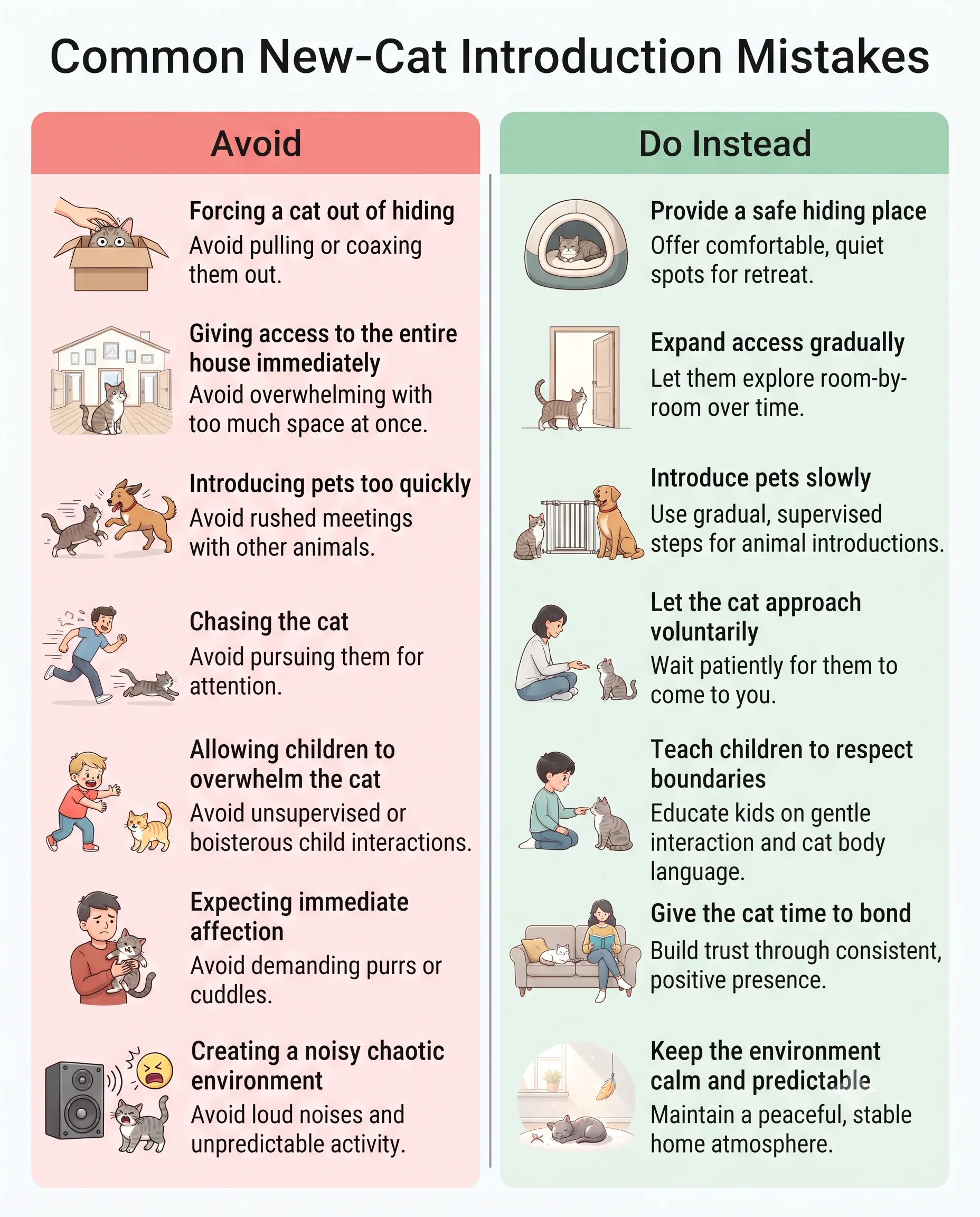
Common Mistakes to Avoid
Introducing a new cat doesn't have to be complicated, but a few common mistakes can make the adjustment harder.
Avoid:
- Giving your cat the entire house immediately
- Forcing them out of hiding
- Introducing pets too quickly
- Allowing children to overwhelm them
- Chasing them around the house
- Picking them up when they clearly don't want it
- Changing their food unnecessarily
- Ignoring signs of stress
- Expecting them to become affectionate immediately
- Creating a noisy or chaotic environment during the first few days
The most important thing is to let your cat adjust at their own pace.
You don't need to force progress.
Give them time, consistency, and a safe place to retreat.
How Long Does It Take for a Cat to Adjust?
There isn't one exact timeline for every cat.
Some cats become comfortable within a few days, while others need several weeks.
Adult cats that have experienced major changes in the past may take longer.
Kittens may sometimes adjust more quickly, but every cat is different.
Instead of focusing on a specific number of days, pay attention to your cat's behavior.
If they're gradually becoming more curious, eating normally, using the litter box, grooming themselves, and interacting with you, they're likely moving in the right direction.
Remember, adjustment isn't a race.
Your cat doesn't have to become completely comfortable overnight.
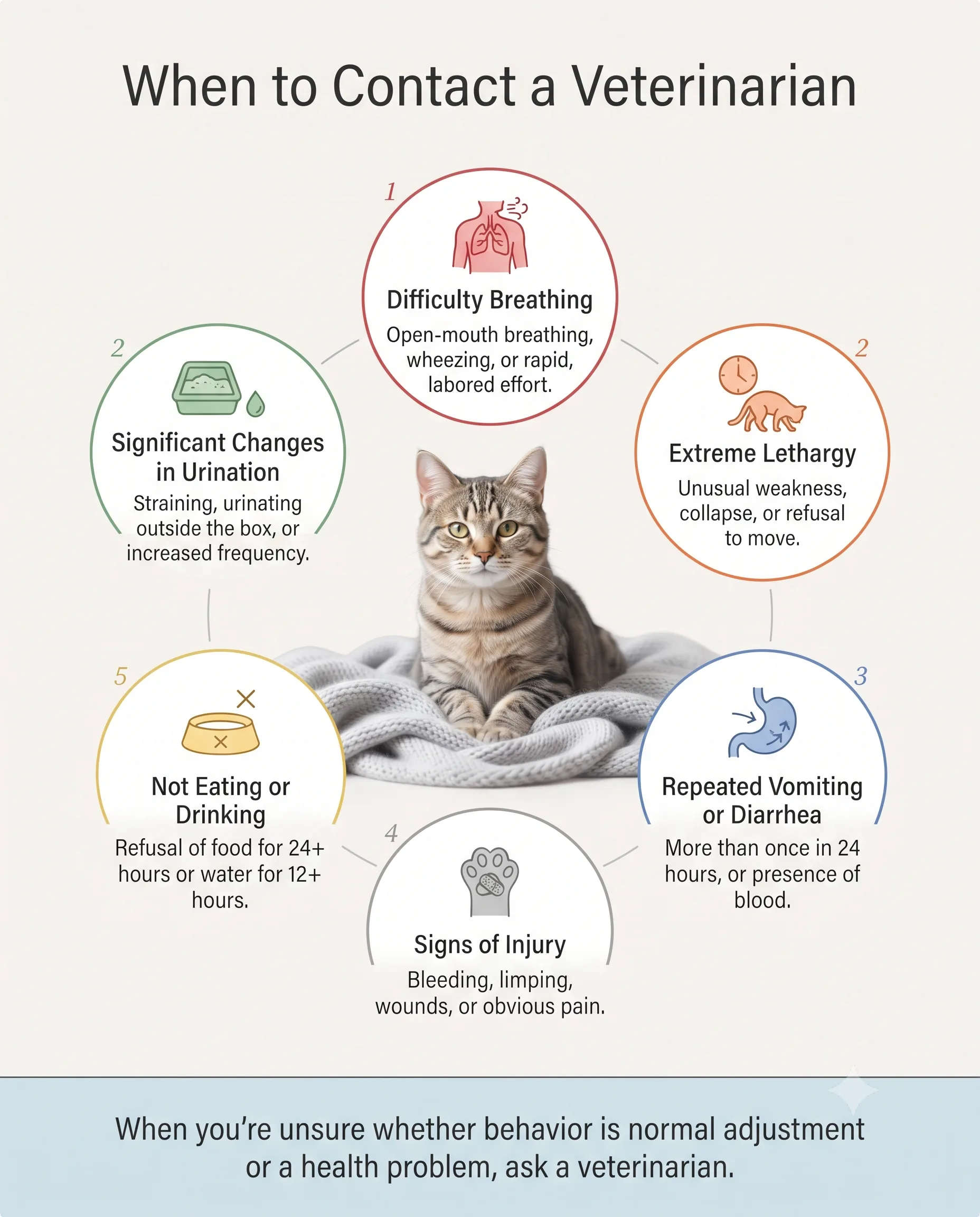
When Should You Contact a Veterinarian?
A little nervousness is normal after moving to a new home.
However, some symptoms shouldn't simply be assumed to be stress.
Contact a veterinarian if your cat:
- Has difficulty breathing
- Seems extremely lethargic
- Has repeated vomiting or diarrhea
- Shows signs of injury
- Isn't eating or drinking
- Has significant changes in urination
- Shows other concerning symptoms
It's also a good idea to schedule a veterinary checkup for a newly adopted cat, especially if you don't have a complete medical history.
If you're unsure whether something you're seeing is normal adjustment or a possible health problem, it's safer to ask a veterinarian.
Don't Worry If Your Cat Doesn't Bond With You Immediately
Every cat has a different personality.
Some cats will sit on your lap within hours.
Others may take days, weeks, or even longer before they become comfortable enough to seek affection.
That doesn't mean your cat doesn't like you.
Trust takes time.
Instead of trying to force a bond, focus on being predictable, gentle, and patient.
Feed them.
Play with them.
Respect their boundaries.
Give them a safe place to relax.
Over time, your cat may start coming to you on their own.
And honestly, that first time they voluntarily curl up beside you can feel pretty special.
Final Thoughts
Bringing a new cat home is the beginning of a relationship, not a one-day event.
Give your cat a quiet place to settle, introduce new people and pets slowly, and let them decide when they're ready to explore.
Don't worry if they hide on the first day.
Don't worry if they don't immediately want to be held.
And don't worry if another cat seems to adjust faster.
Every cat has their own personality and their own pace.
The most important things you can give them are patience, consistency, safety, and time.
Before you know it, that nervous little cat hiding in the corner may be following you around the house, waiting for dinner, or claiming your favorite spot on the sofa.
And that's when you'll know they're starting to feel at home.
Have you ever introduced a new cat to your home? How long did it take for your cat to feel comfortable? Share your experience in the comments!
Related articles
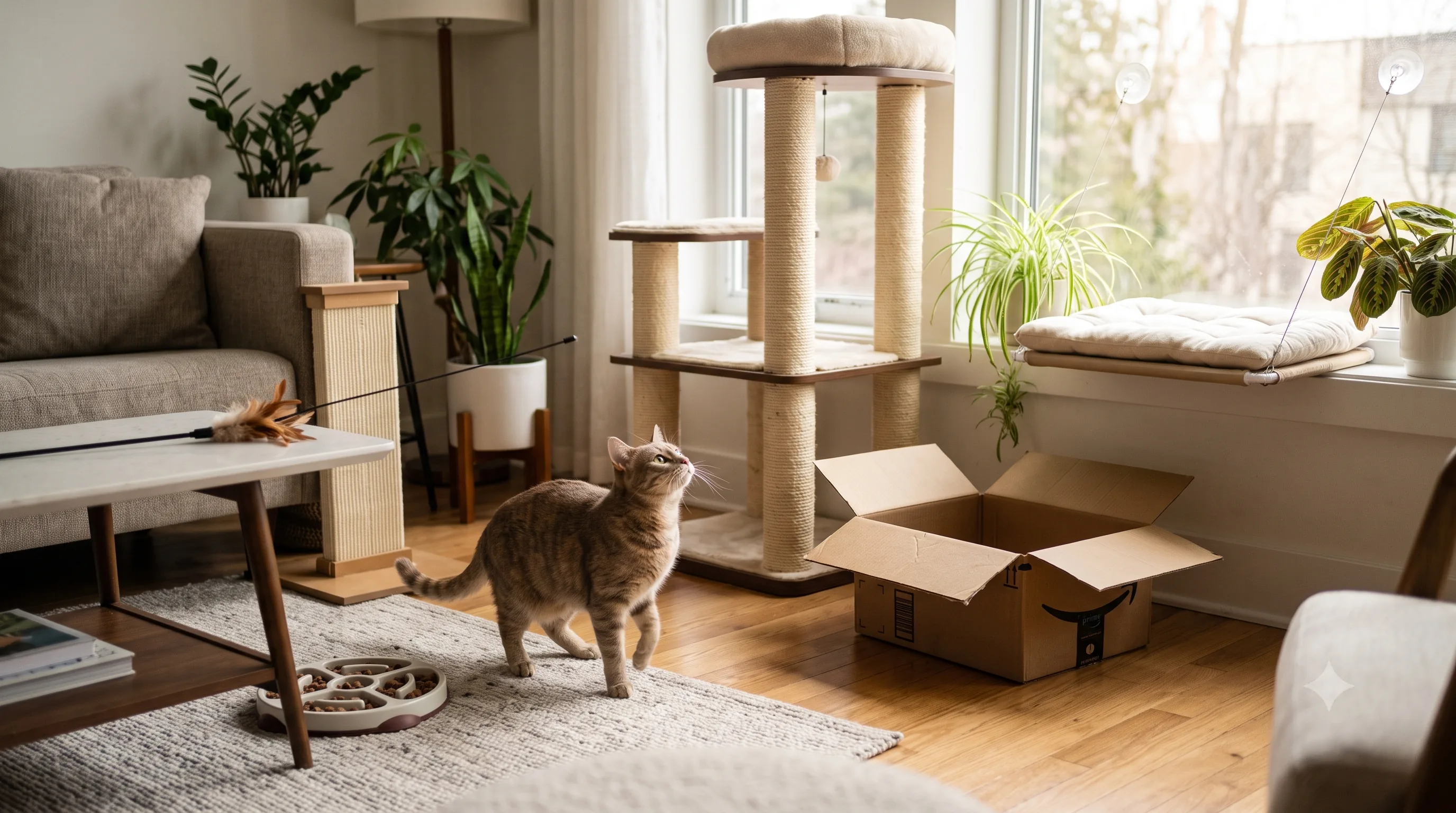
How to Keep an Indoor Cat Entertained: 14 Easy Ways to Prevent Boredom
Learn how to keep an indoor cat entertained with 14 easy enrichment ideas, including interactive play, puzzle feeders, climbing spaces, toys, and more.

How Often Should You Clean a Cat Litter Box?
How often should you clean a cat litter box? Learn when to scoop, change litter, wash the box, control odors, and keep your cat's litter area clean.

How to Cat-Proof Your Home: A Simple Guide to Keeping Your Cat Safe
Learn how to cat-proof your home and protect your cat from common household dangers, toxic plants, unsafe windows, electrical cords, and other hidden hazards.