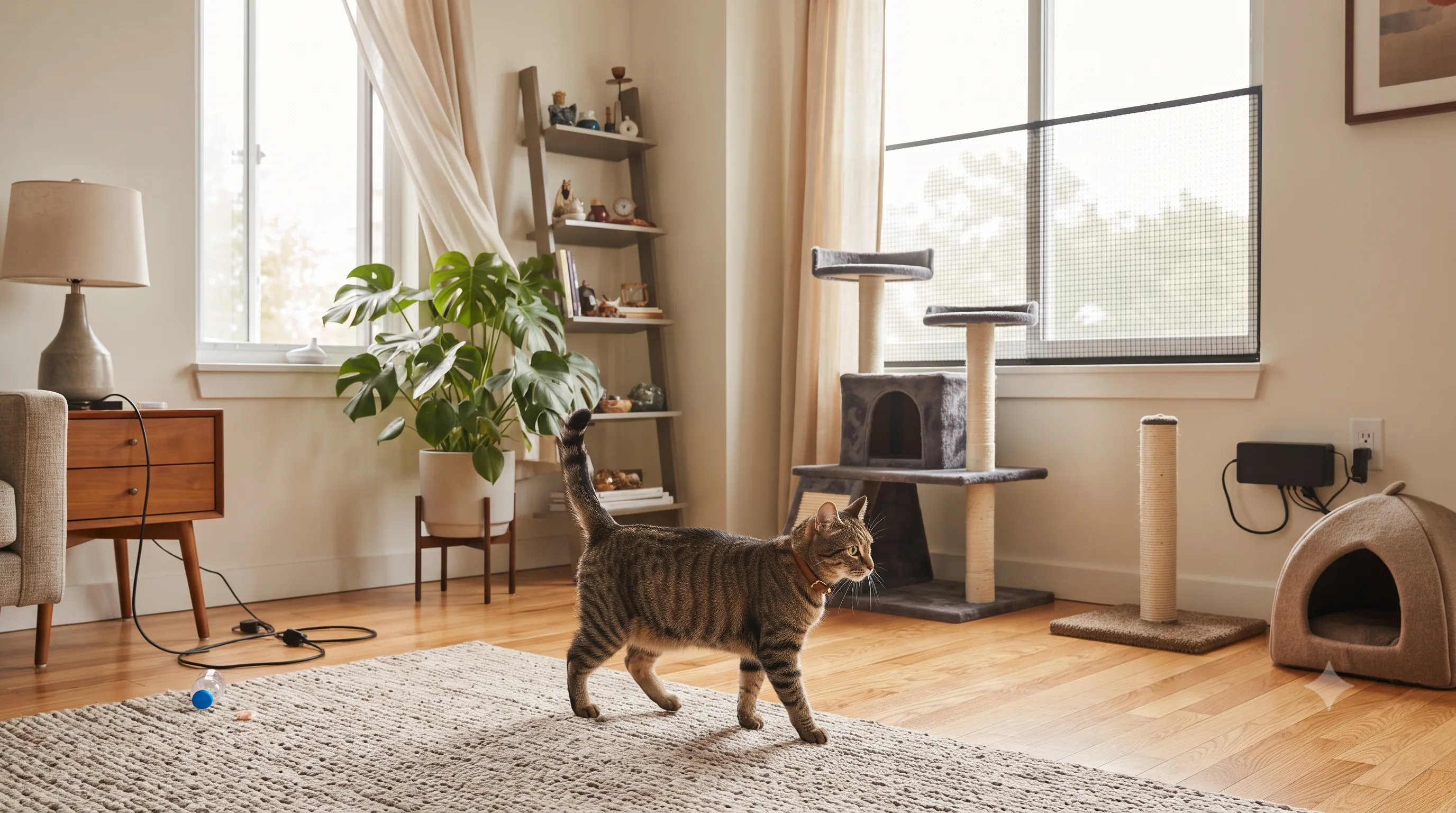
Cats are naturally curious. If there is a cupboard they cannot open, a box they cannot fit into, or something sitting on a high shelf, chances are they will eventually investigate it.
That curiosity is part of what makes cats so lovable—but it can also lead them straight into trouble.
Everyday items around your home can become dangerous when a cat decides to climb, chew, knock, squeeze, or hide its way into places it should not be.
The good news is that you do not need to completely change your home to make it safer.
A few simple changes can prevent many common accidents while still giving your cat plenty of freedom to explore, climb, scratch, and play.
In this guide, we will look at how to cat-proof your home, from securing windows and electrical cords to choosing safer plants, storing household chemicals, protecting furniture, and creating safe alternatives for your cat.
10 Things to Cat-Proof Right Now
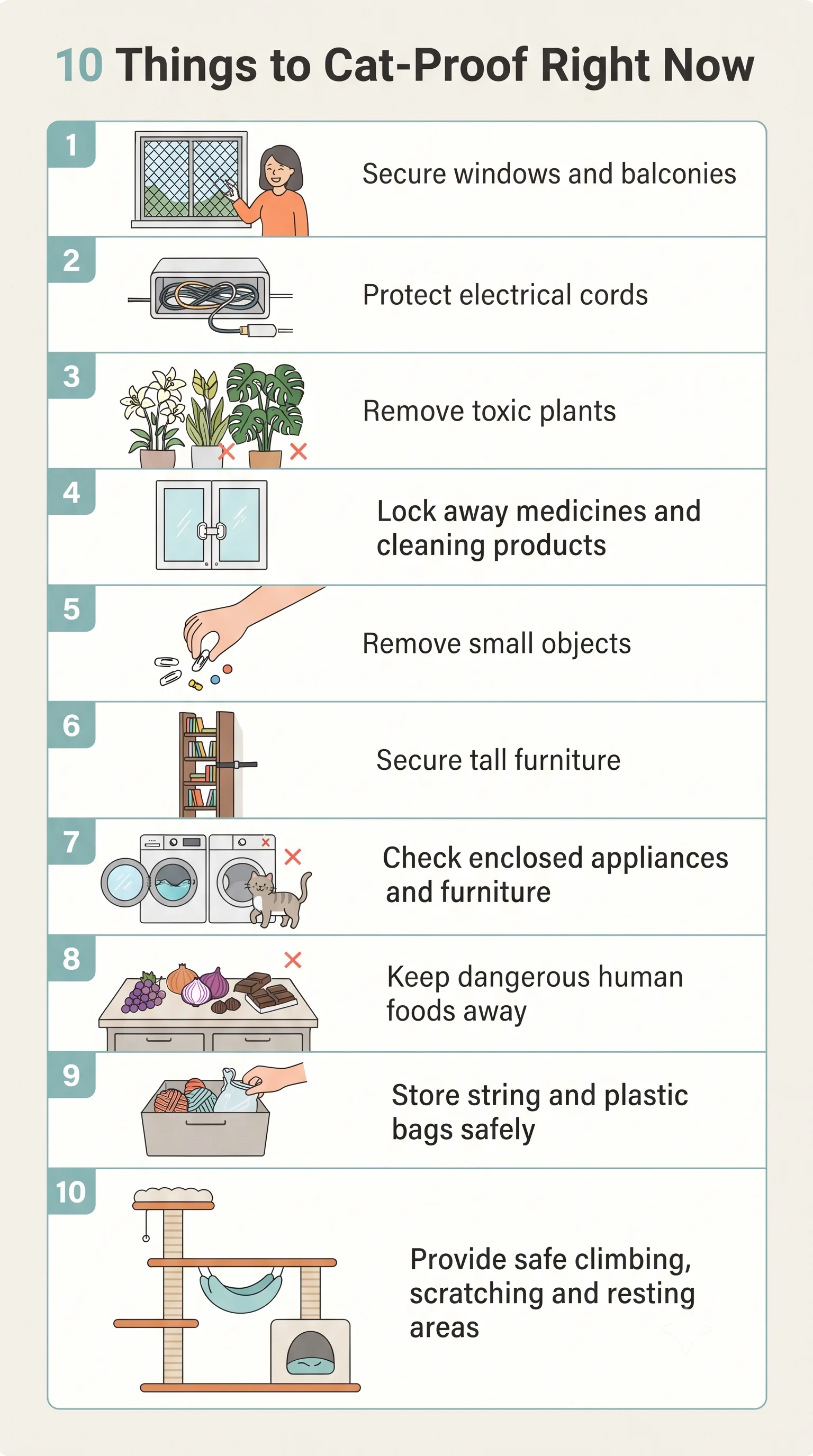
If you want to make your home safer quickly, start with these ten areas:
- Secure open windows and balconies.
- Hide or protect electrical cords and chargers.
- Remove toxic plants from areas your cat can access.
- Store medicines and cleaning products inside closed cabinets.
- Remove small objects that your cat could swallow.
- Secure unstable bookshelves, cabinets, and other tall furniture.
- Check washing machines, dryers, recliners, and other enclosed spaces before using them.
- Keep dangerous human foods away from your cat.
- Store plastic bags, string, thread, and similar items safely.
- Give your cat safe places to climb, scratch, hide, and rest.
You do not have to make your entire home perfect in one afternoon. Start with the biggest risks and work your way through the rest.
Why Is Cat-Proofing Your Home Important?
Cats are excellent climbers, jumpers, and explorers. They can reach places that seem completely inaccessible to us.
A kitchen counter, bookshelf, open window, or loose electrical cable may look harmless to you, but your cat may see it as something interesting to investigate.
Kittens can be even more challenging because they are constantly learning about their surroundings. They may chew on wires, crawl behind furniture, or squeeze into tiny spaces simply because they can.
Cat-proofing helps reduce these risks while still allowing your cat to explore and play.
The goal is not to make your home boring. It is to remove dangerous opportunities and replace them with safer ones.
Think Like a Cat: How to Find Hidden Hazards
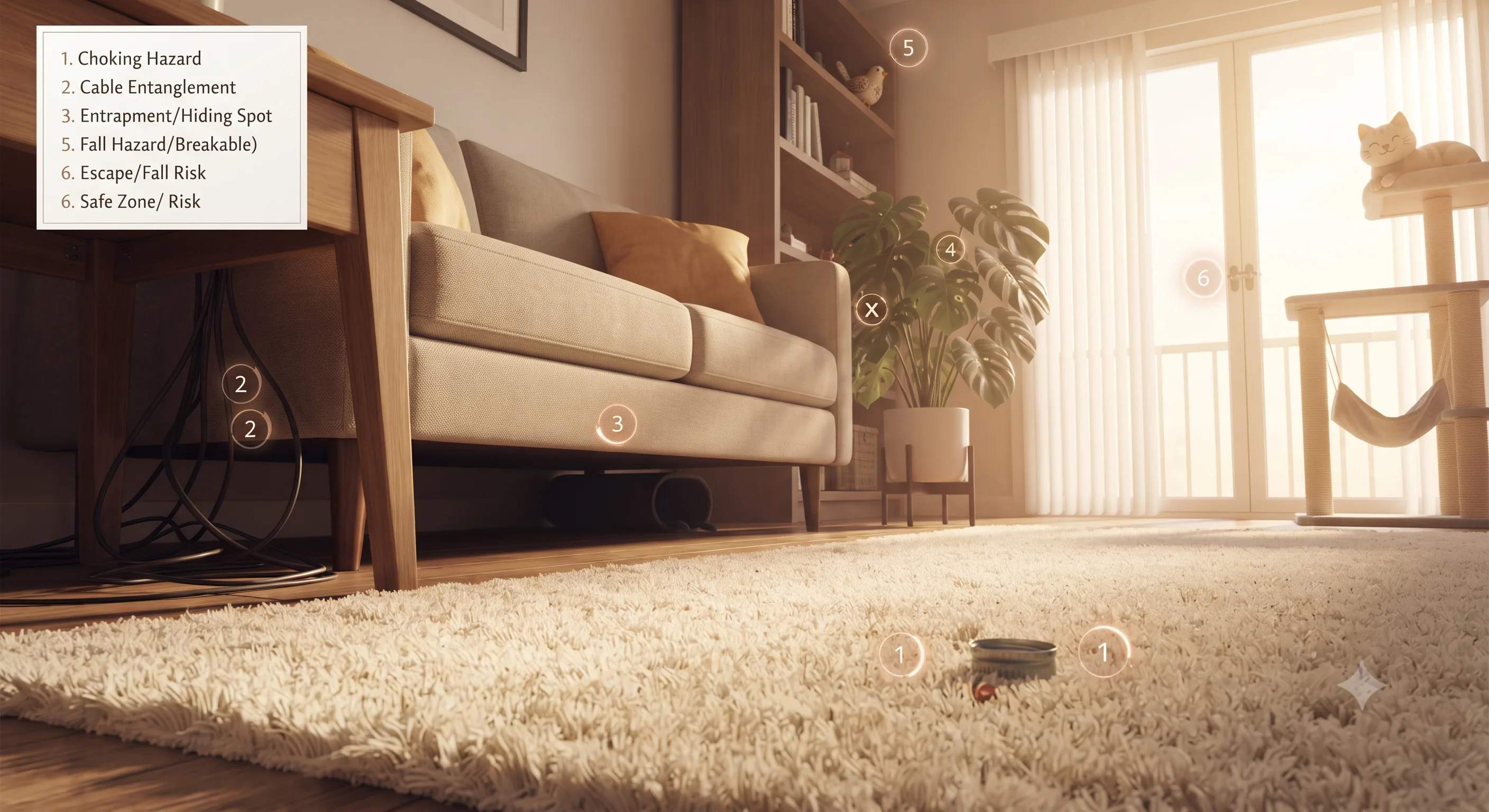
One of the easiest ways to find hazards is to think like a cat.
Get down close to the floor and look around each room. Check behind furniture, under cabinets, around windows, near electrical outlets, and inside spaces where your cat likes to hide.
Ask yourself:
- Can my cat reach this?
- Could my cat chew this?
- Could my cat knock this over?
- Could my cat get trapped here?
- Is this poisonous if eaten?
- Could my cat fall from here?
You may notice hazards that you normally ignore because they are not a problem for humans.
A loose string behind a cabinet might be invisible to you but extremely interesting to a curious cat.
A small gap underneath an appliance might look insignificant until you discover that your kitten has somehow managed to squeeze inside it.
When cat-proofing your home, think about what your cat can reach, chew, swallow, climb, knock over, squeeze into, or fall from.
Cat-Proof Electrical Cords and Chargers
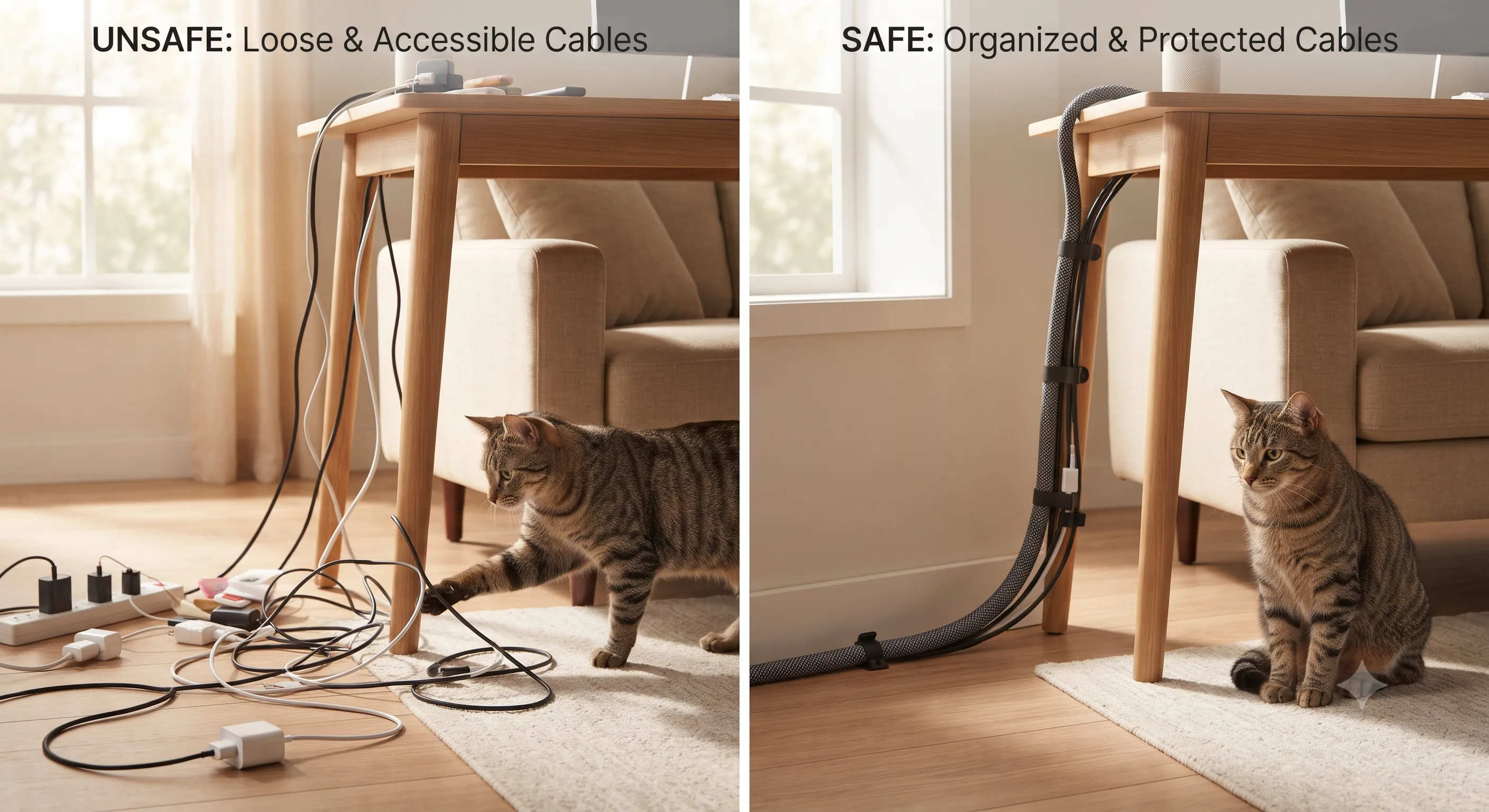
Electrical cables are one of the most common things cats may try to chew, especially kittens.
Don't assume your cat will eventually lose interest. A single bite through an electrical cord can cause serious injury.
Keep loose cables organized and, where possible, route them behind furniture or through protective cable covers.
Pay particular attention to:
- Phone and laptop chargers
- TV cables
- Extension cords
- Computer cables
- Gaming console cables
- Cables near beds and sofas
If your cat likes chewing cables, use cord protectors and remove unnecessary cables from areas your cat can access.
Never leave a damaged electrical cord within your cat's reach.
Cat-Proof Windows and Balconies

Open windows can be extremely dangerous for cats.
Cats may be excellent climbers, but they can still lose their balance or become distracted by a bird, insect, or another animal outside.
Use secure window screens or specially designed pet-safe barriers where appropriate.
Do not assume that a mosquito net is automatically strong enough to prevent a cat from falling. Some lightweight screens can tear or come loose under pressure.
How to Make Your Balcony Safe
If your cat has access to a balcony, make sure there is a secure barrier that prevents them from squeezing through gaps or climbing over the edge.
Cat-proof balcony netting can be useful, but it should be properly installed and checked regularly for loose sections or damage.
A balcony may look safe from your perspective, but cats can fit through surprisingly small openings.
Never rely on your cat simply being afraid of heights.
Keep Toxic Plants Away From Your Cat
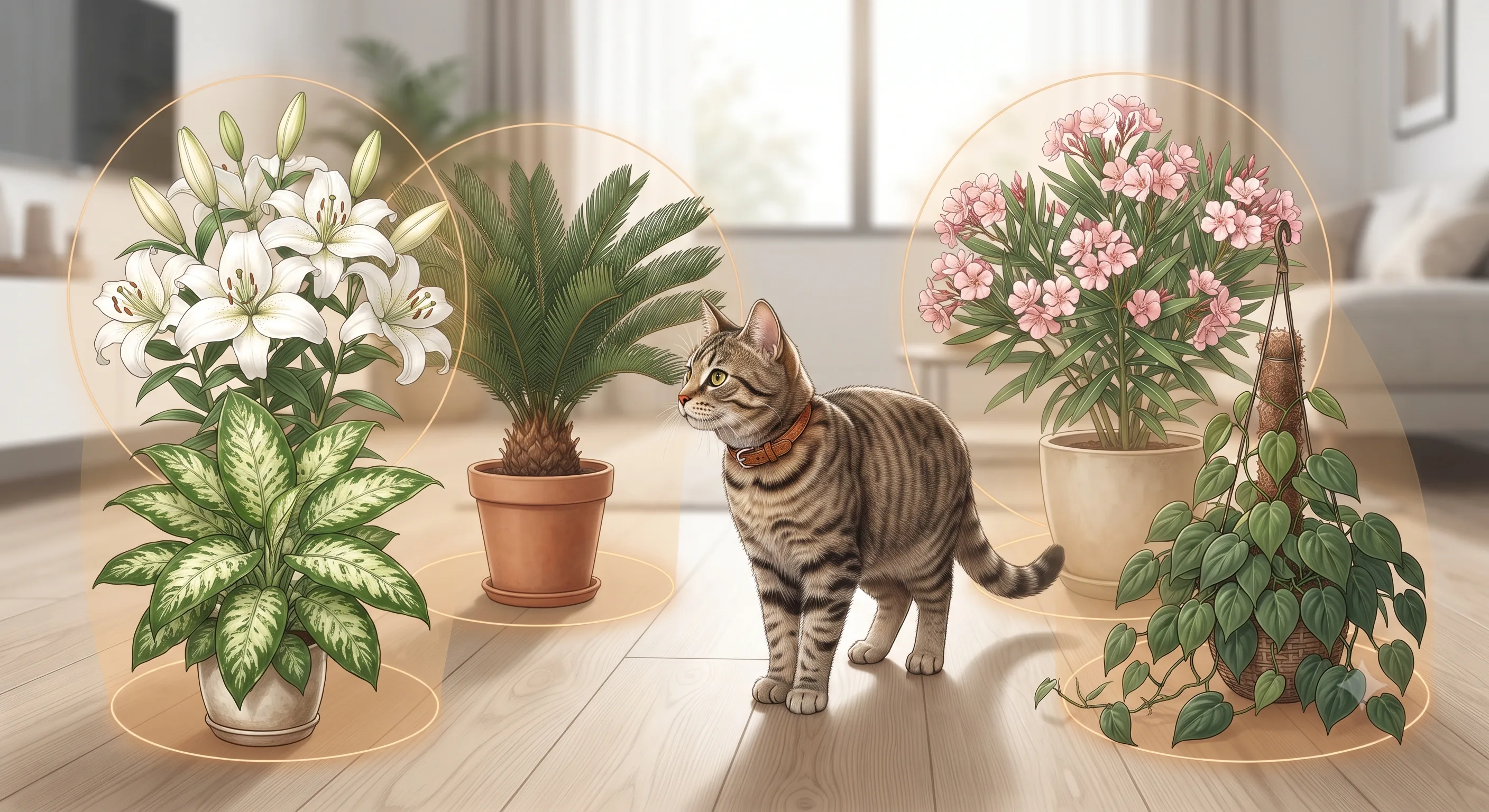
To your cat, a houseplant can look like the perfect snack—but some plants can be dangerous or toxic if eaten.
Before bringing a new plant into your home, check whether it is considered safe for cats.
Keep potentially dangerous plants completely out of your cat's reach, or better yet, avoid keeping them in areas your cat can access.
Some plants that cat owners commonly need to be cautious about include:
- Lilies
- Sago palm
- Dieffenbachia
- Oleander
- Certain types of philodendrons
- Some decorative plants and flowers
Lilies deserve particular attention because they can be extremely dangerous to cats.
If you are unsure whether a plant is safe, do not let your cat chew on it until you have confirmed its safety with a reliable veterinary or animal poison resource.
Lock Away Cleaning Products and Medicines
Cleaning products and medicines may seem harmless when they are sitting inside a closed cupboard, but spills, leaks, or an accidentally opened container can create serious hazards.
Store Cleaning Products Safely
Store detergents, disinfectants, bleach, bathroom cleaners, and other chemicals in closed cabinets that your cat cannot access.
Remember to check the floor after cleaning as well. Some cleaning products can leave residues that your cat may later walk through and lick from its paws.
Keep bottles tightly closed and clean up spills immediately.
Keep Human Medicines Away From Your Cat
Medicine should never be left somewhere your cat can reach it.
That tablet you accidentally dropped on the floor may look like nothing to you, but a curious cat may investigate it.
Some human medications can be extremely dangerous to pets even in small amounts.
Store medicines inside closed drawers or cabinets.
This includes:
- Painkillers
- Cold and flu medicines
- Vitamins
- Supplements
- Prescription medicines
- Creams and ointments
If you accidentally drop a pill, look for it immediately instead of assuming your cat will ignore it.
Remove Small Objects and Dangerous String
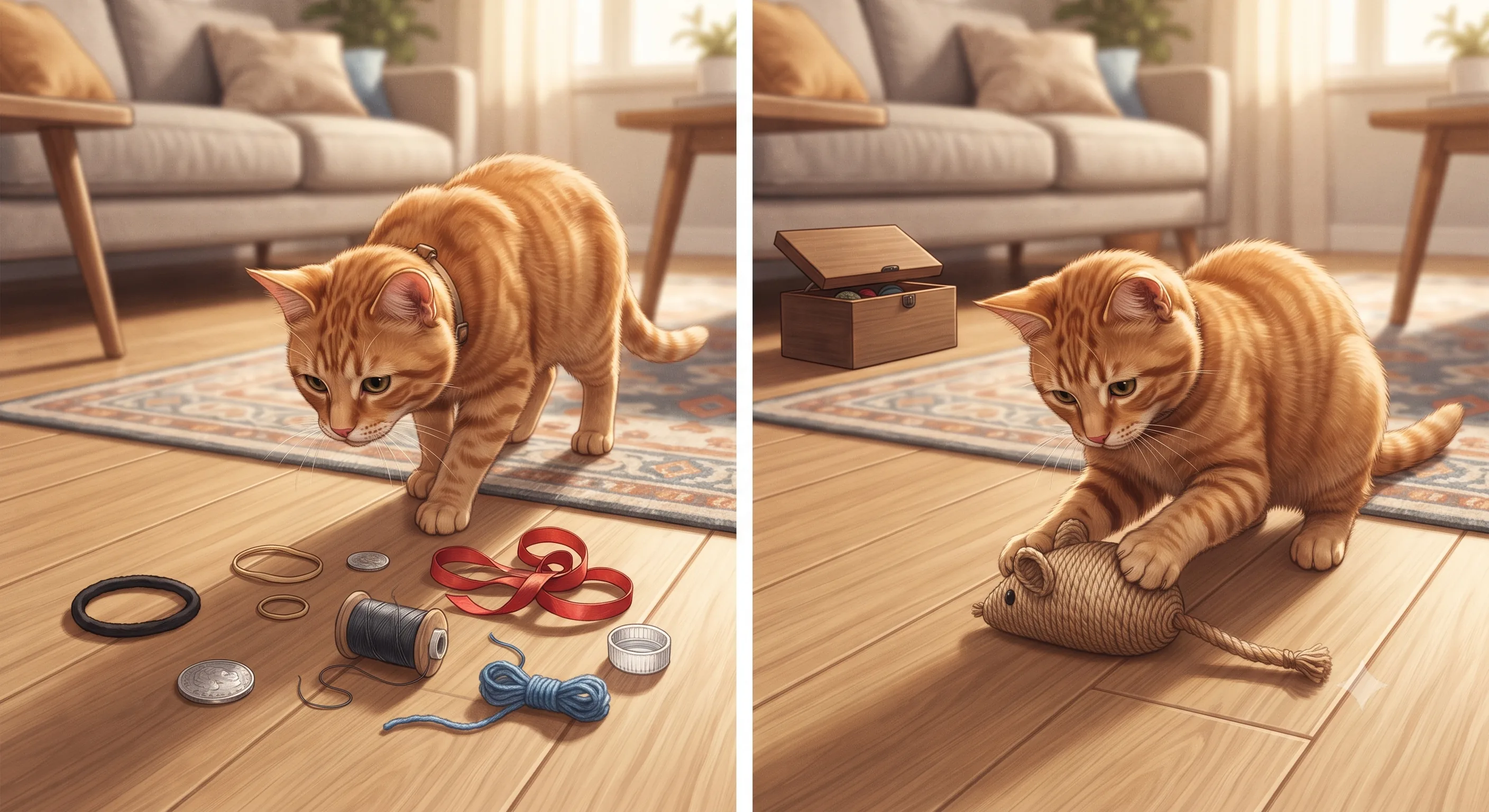
That tiny hair tie on the floor may look harmless to you. To a cat, it can look like a new toy—or something worth swallowing.
Keep things such as rubber bands, hair ties, coins, small plastic pieces, sewing materials, and other tiny objects away from curious cats.
Be especially careful with string-like objects.
Why Is String Dangerous for Cats?
String, thread, ribbon, yarn, and similar objects can be fascinating to cats, but they can also cause serious problems if swallowed.
A cat may start playing with a piece of thread and accidentally swallow it.
For this reason, string-based toys should be used during supervised play and stored away afterward.
If you think your cat has swallowed string, contact a veterinarian rather than trying to pull it out yourself.
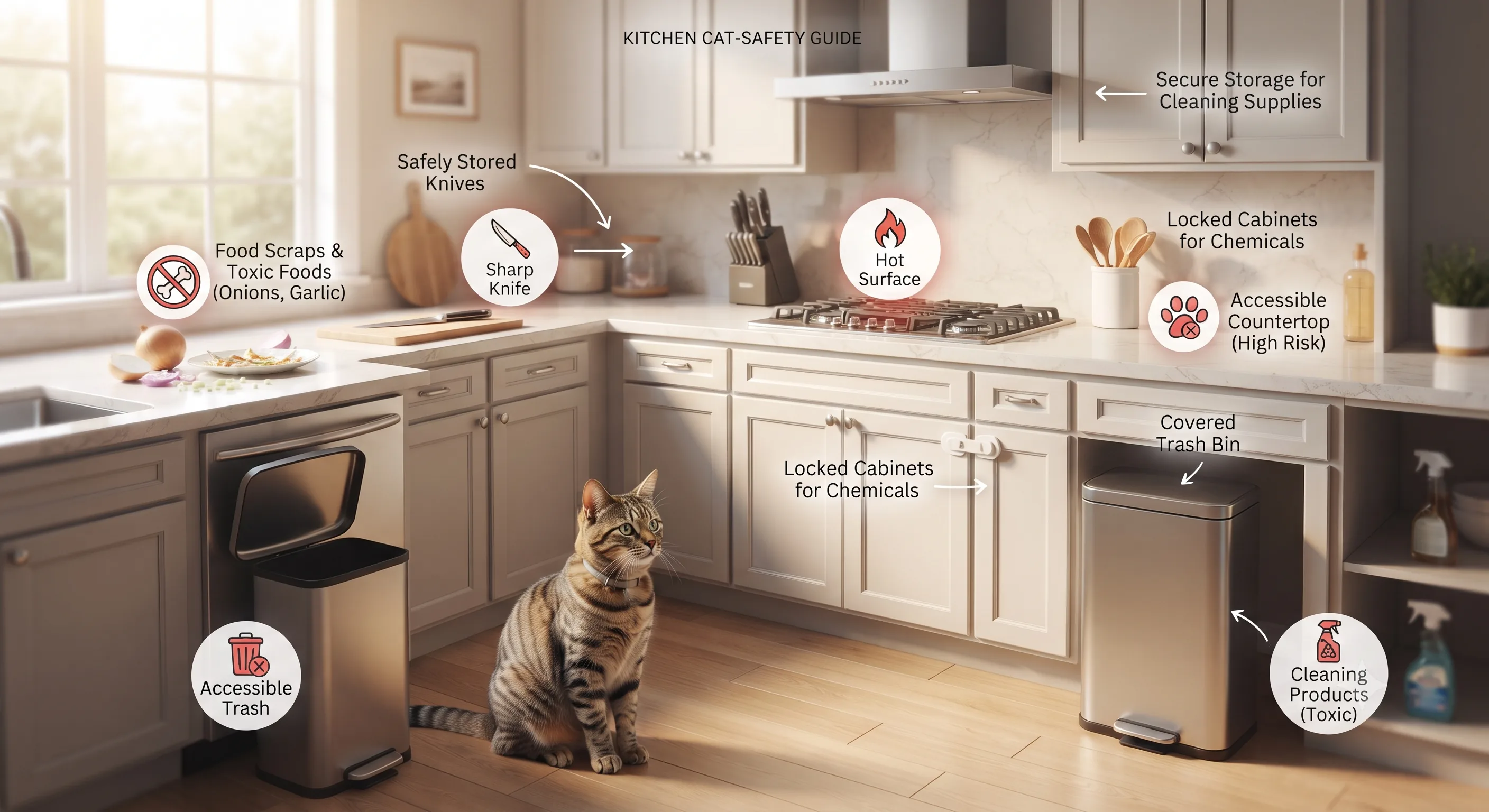
Make Your Kitchen Cat-Safe
Your kitchen may be one of the most dangerous rooms in the house for a curious cat.
Hot surfaces, sharp objects, food scraps, plastic packaging, cleaning products, and certain foods can all cause problems.
Keep knives and other sharp utensils stored safely.
Make sure your cat cannot jump onto a hot stove or reach hot cookware. Remember that a recently used cooking surface may remain hot even after it has been switched off.
Keep food waste inside a closed bin if your cat likes exploring the trash.
Keep Dangerous Foods Away From Cats
Some foods that are perfectly normal for humans can be harmful to cats.
Avoid allowing your cat to eat foods such as:
- Chocolate
- Onions and garlic
- Alcohol
- Caffeinated drinks
- Grapes and raisins
- Foods containing xylitol
Your cat does not need to understand that something is dangerous.
That is your job as the responsible human in the house.
Make Your Bathroom Cat-Safe
The bathroom is full of small, chewable, and potentially dangerous things that can attract a curious cat.
Keep toilet lids closed if your cat likes drinking from the toilet.
Store cleaning products, medicines, cosmetics, and personal-care products inside closed cabinets.
Keep razors, dental floss, cotton swabs, and other small items away from curious paws.
Also check the bathroom trash can. Cats that like exploring bins can easily pull out items that should not be eaten.
Secure Cabinets, Drawers and Small Spaces
Some cats learn how to open cabinets and drawers surprisingly quickly.
If your cat has discovered that a particular cabinet contains interesting things, you may find yourself repeatedly finding it open.
Use childproof or pet-safe cabinet locks when necessary, particularly for cabinets containing:
- Cleaning products
- Medicines
- Chemicals
- Sharp objects
- Small items
- Human food
You do not need to lock every cabinet in the house.
Focus on the ones containing anything potentially dangerous.
Block Dangerous Hiding Spots and Small Gaps
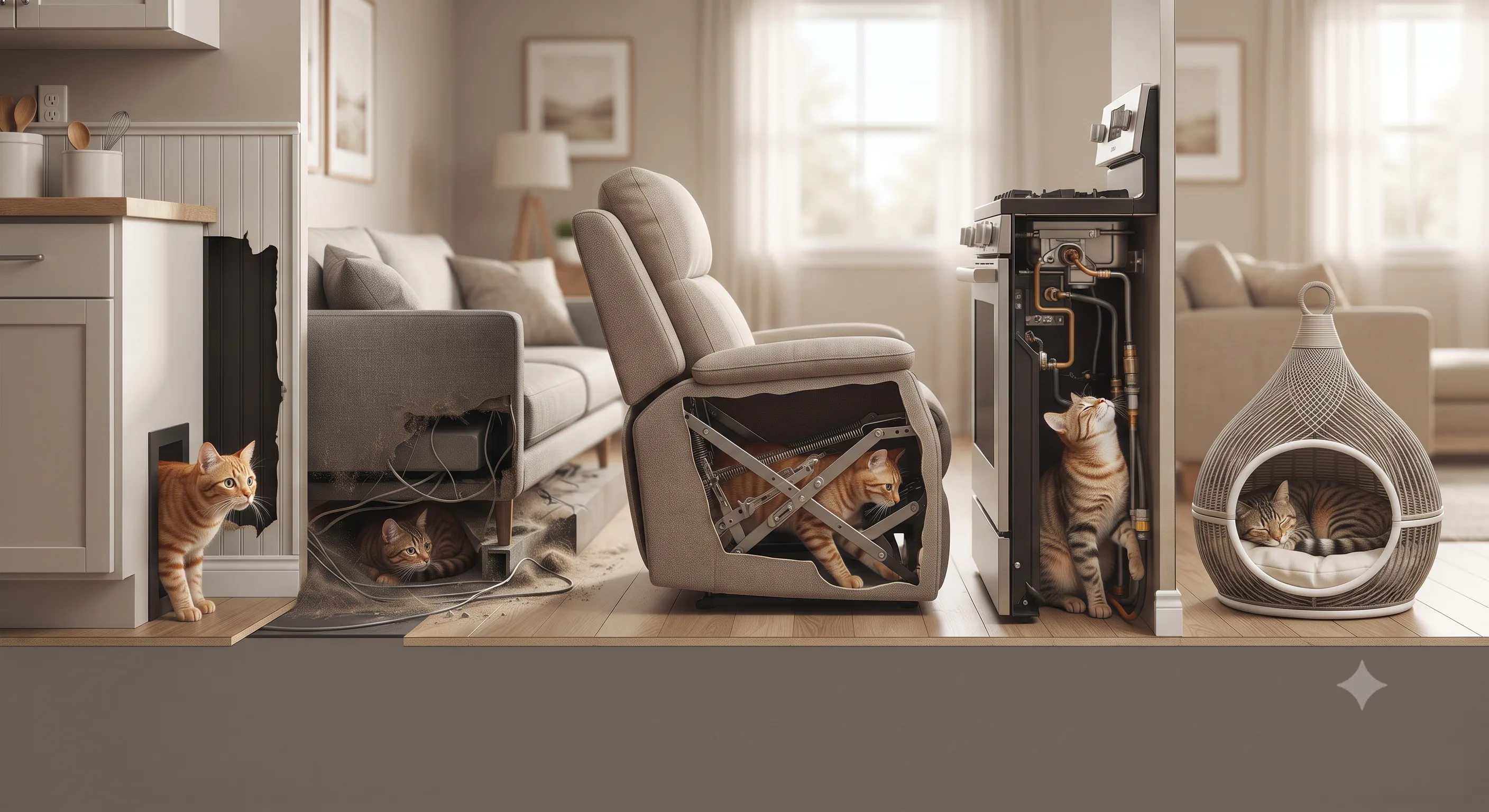
Cats are experts at squeezing themselves into places you would never expect.
Check spaces behind appliances, inside recliners, under furniture, and around cabinets.
Before moving a heavy piece of furniture or using a reclining chair, make sure your cat is not hiding underneath or inside it.
This is particularly important with kittens because they can disappear into surprisingly small gaps.
If there is a dangerous gap that your cat repeatedly tries to enter, block it safely.
Secure Tall Furniture and Shelves
Cats love climbing furniture, especially tall shelves and bookcases.
If a piece of furniture can easily tip over, secure it to the wall.
This is particularly important for:
- Tall bookshelves
- TV stands
- Storage units
- Lightweight cabinets
- Large floor lamps
A cat jumping onto a shelf can shift its center of gravity.
What looks stable when nobody is touching it may not remain stable when a cat starts climbing.
Be Careful With Recliners and Foldable Furniture
Reclining chairs, sofa beds, folding furniture, and similar items can contain moving parts that are dangerous for cats.
Before opening, closing, reclining, or moving these pieces of furniture, check where your cat is.
Make this a habit.
Cats often sleep in quiet places and may not move when they hear you approaching.
Check Washing Machines, Dryers and Closed Spaces
Cats are masters of disappearing at exactly the wrong moment.
Before closing doors, cupboards, closets, washing machines, dryers, or other enclosed spaces, check that your cat is not inside.
Always check washing machines and dryers before turning them on.
A warm, dark machine can look like a surprisingly comfortable sleeping spot to a cat.
Keep appliance doors closed when they are not being used.
Store Plastic Bags and Packaging Safely
Paper bags can be great enrichment for cats, but plastic bags can be dangerous.
Handles can become tangled around a cat's neck or legs, and pieces of plastic may be chewed or swallowed.
If you let your cat play with a paper bag, remove handles first and supervise the activity.
Store plastic shopping bags and packaging somewhere your cat cannot access them.
Keep Heat Sources and Open Flames Safe
Cats love warm places.
You may find your cat sleeping beside a heater, near a radiator, or in a sunny spot for hours.
Make sure heating appliances are stable and that your cat cannot accidentally knock them over.
Keep your cat away from open flames, candles, fireplaces, and hot cooking surfaces.
Never leave an open flame unattended around a curious cat.
Give Your Cat Safe Places to Climb
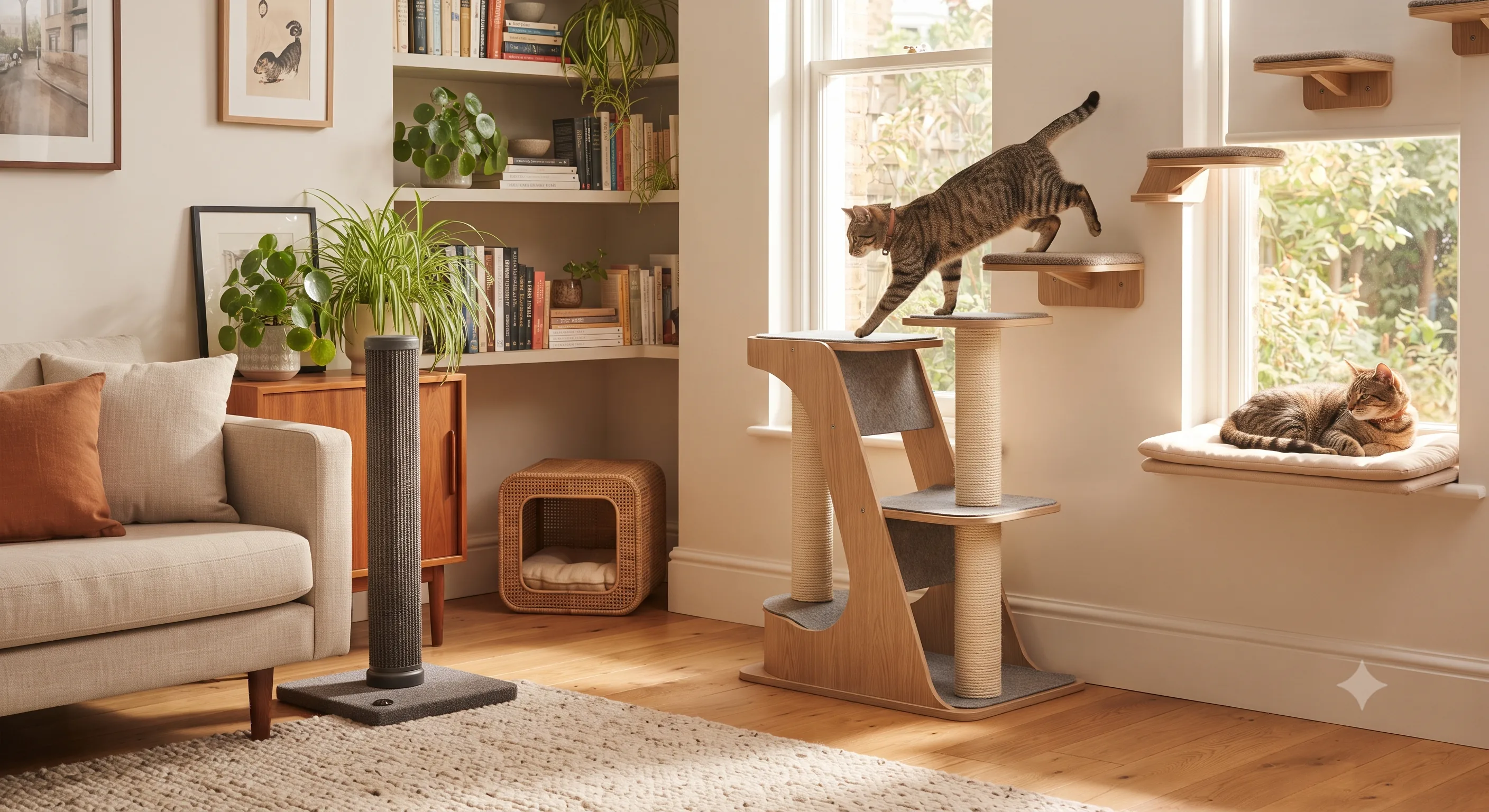
Cat-proofing does not mean stopping your cat from climbing.
Climbing is natural behavior, and many cats actually feel more comfortable when they have access to elevated resting places.
Instead of allowing your cat to climb unstable furniture, provide safe alternatives such as:
- Cat trees
- Secure shelves
- Window perches
- Stable scratching posts
- Cat towers
A secure high perch can give your cat a place to watch the room while reducing the temptation to climb unsafe furniture.
The goal is not to stop natural behavior.
The goal is to make natural behavior safer.
Choose Safe Toys for Your Cat
Not every cat toy needs to be available all day.
Some toys are better used only during supervised play.
Avoid toys with loose pieces that can easily be swallowed. Inspect toys regularly and throw away anything that has become damaged.
Good options include:
- Cat balls
- Puzzle feeders
- Sturdy wand toys
- Kick toys
- Scratching toys
- Interactive cat toys
Rotate toys every few days to keep things interesting.
You do not need dozens of toys. A small selection of safe toys can provide plenty of entertainment.
Cat-Proof Every Room
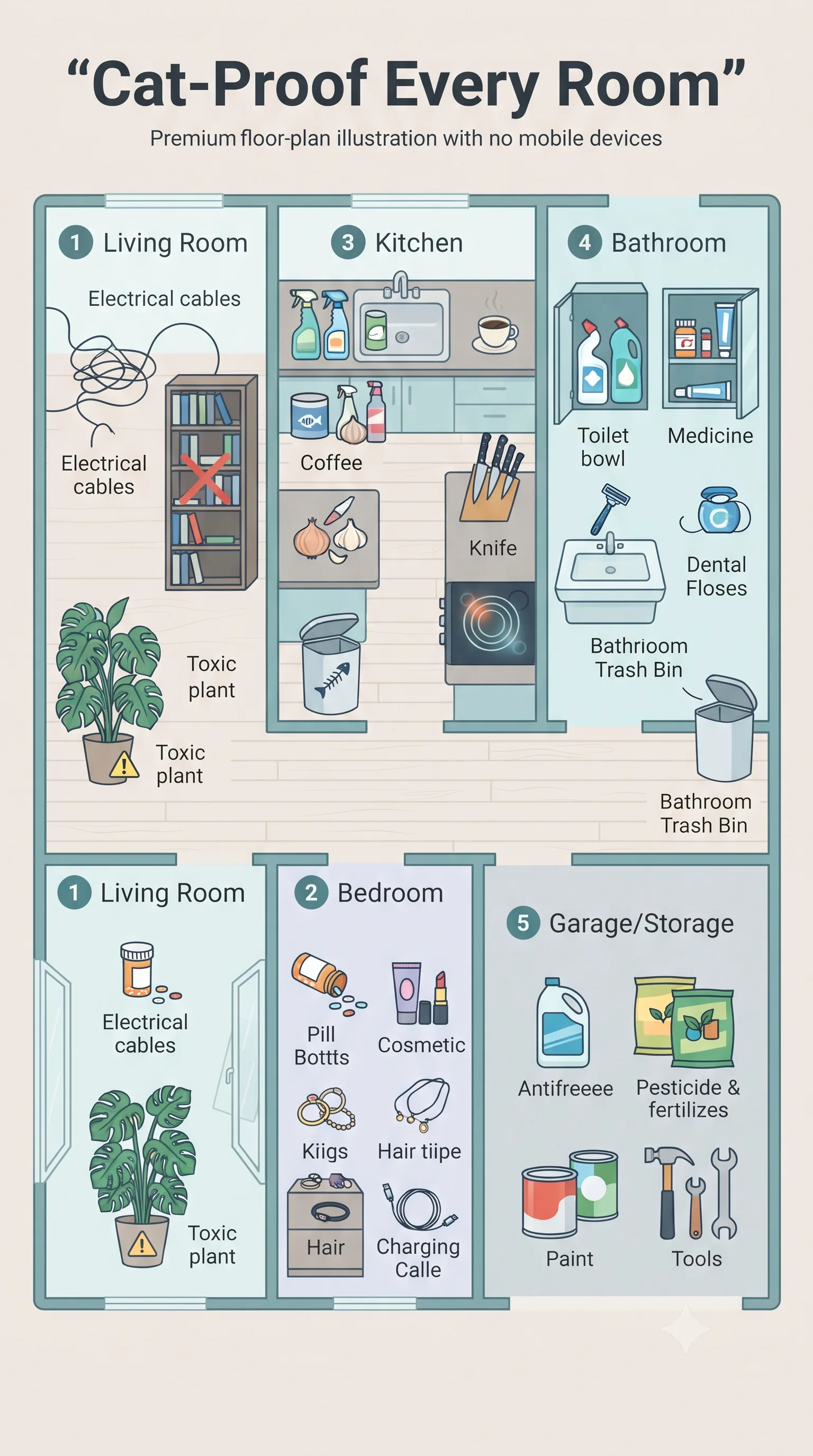
A simple room-by-room check can make the process much easier.
Living Room
Check for:
- Loose cables
- Unstable furniture
- Small objects
- Toxic plants
- Accessible windows
Give your cat a safe scratching area and a comfortable place to rest.
If you have tall furniture, make sure it is stable and properly secured.
Bedroom
Keep medicines, cosmetics, jewelry, hair ties, and small objects out of reach.
Check under the bed before moving furniture or closing storage boxes.
Also keep charging cables organized and away from cats that like chewing wires.
Kitchen
Secure:
- Cleaning products
- Food
- Sharp objects
- Trash
- Potentially dangerous appliances
Keep your cat away from hot surfaces and make sure food scraps cannot be easily accessed.
Bathroom
Close cabinets containing chemicals and medicines.
Keep small personal-care items and bathroom trash away from your cat.
Remember to keep razors, dental floss, cotton swabs, and similar items securely stored.
Garage or Storage Area
This area often contains some of the most dangerous chemicals in the house.
Keep antifreeze, pesticides, fertilizers, paints, solvents, tools, and other hazardous products securely stored and inaccessible to your cat.
If your cat has access to a garage or storage area, inspect the space carefully for spills, small objects, open containers, and hiding places.
How to Kitten-Proof Your Home
Kittens usually need even more supervision than adult cats.
They are curious, energetic, and still learning what they can and cannot eat, climb, or chew.
Before bringing a kitten home, do a complete safety check.
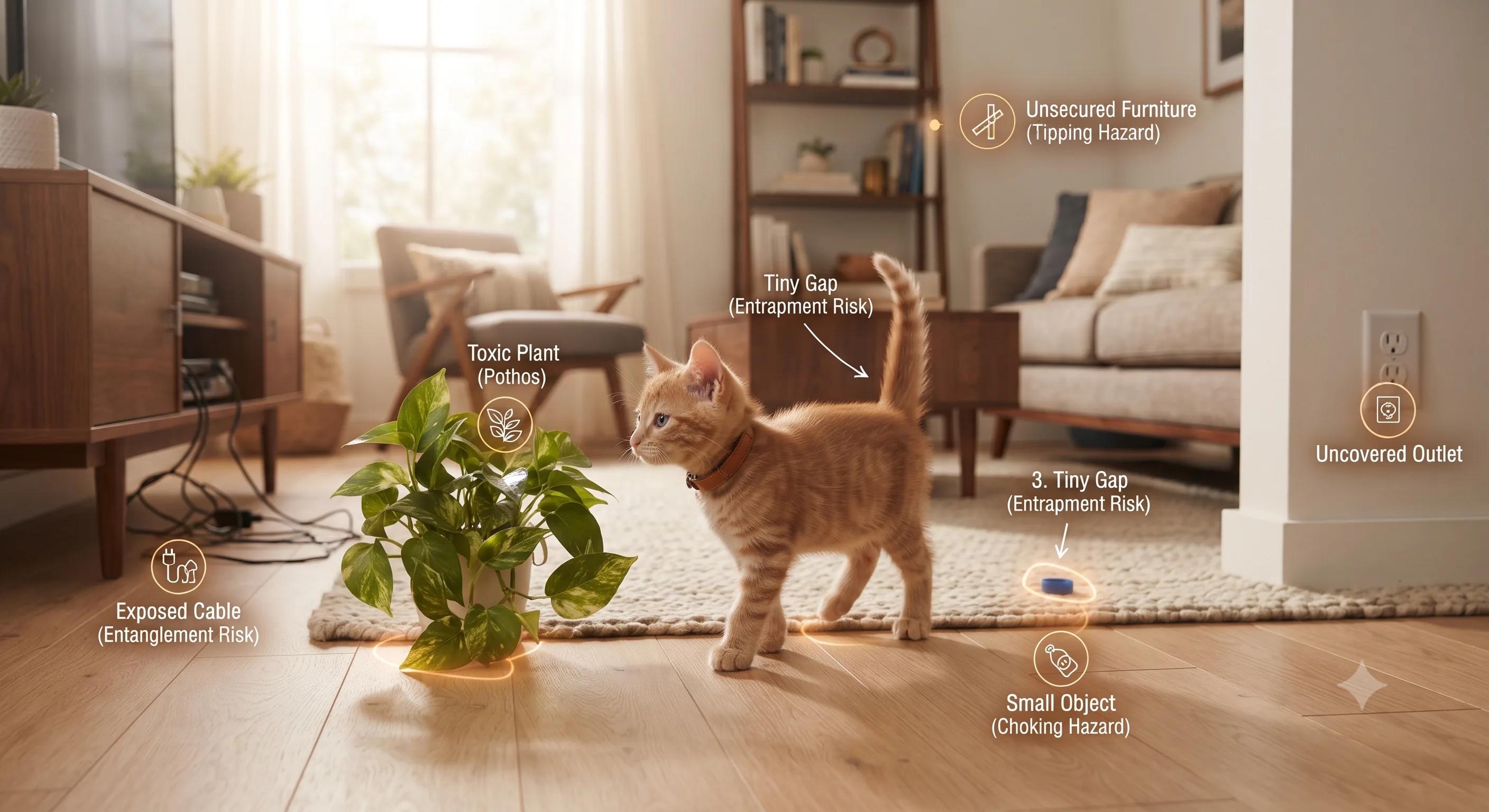
Look for:
- Small gaps
- Exposed cables
- Poisonous plants
- Unsecured furniture
- Tiny objects
- Accessible chemicals
- Unsafe windows
- Places where a kitten could become trapped
You may be surprised by how quickly a kitten finds something you missed.
A kitten that ignores a particular object today may decide to investigate it tomorrow.
For the first few weeks, pay close attention to where your kitten likes to explore, hide, climb, and chew. Use those discoveries to identify additional areas that need to be kitten-proofed.
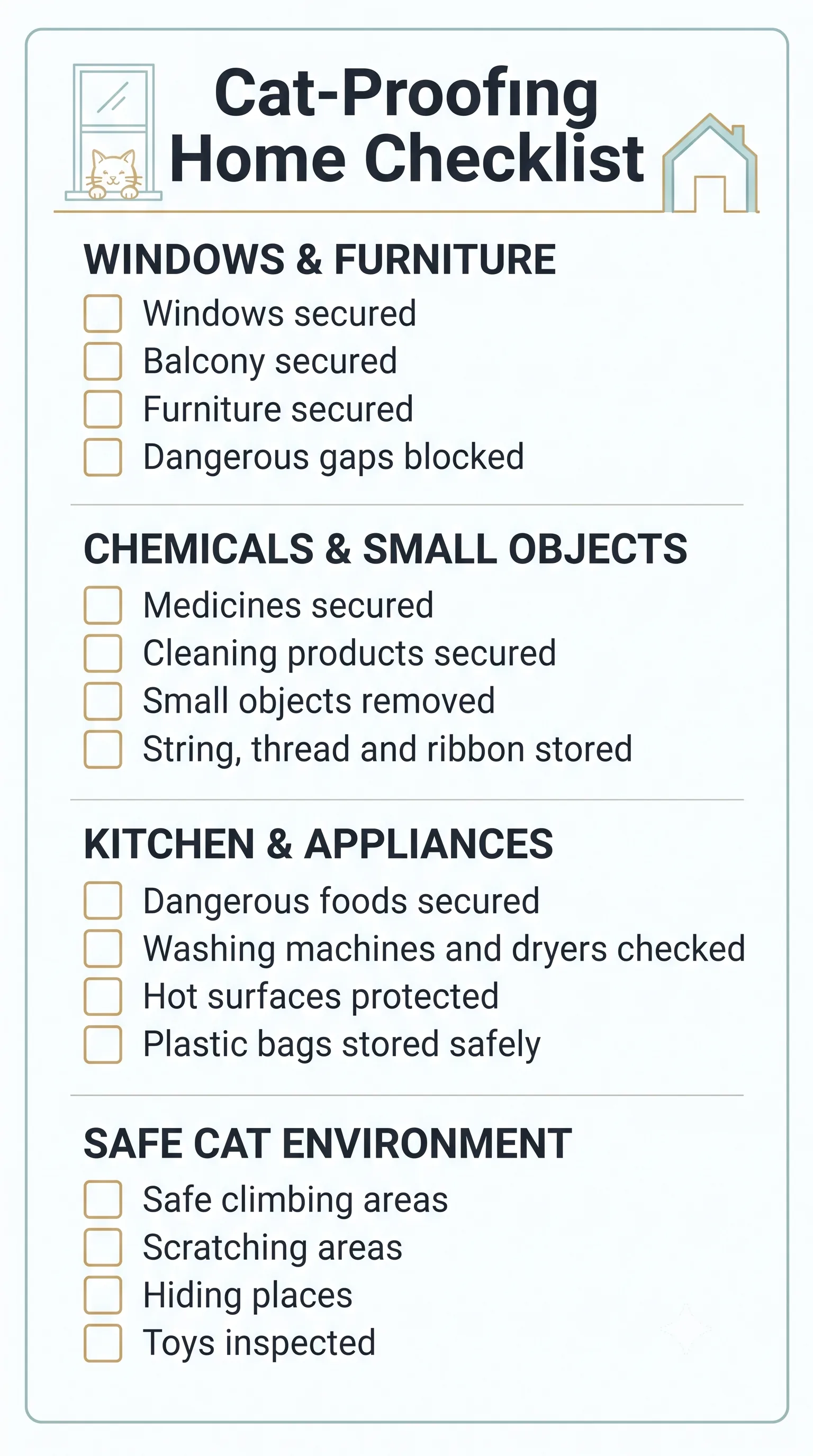
Complete Cat-Proofing Checklist
Before you consider your home cat-safe, go through this checklist:
- Windows have secure screens or barriers
- Balcony access is properly secured
- Electrical cables are protected
- Dangerous plants are removed or inaccessible
- Cleaning products are stored securely
- Medicines are kept in closed cabinets
- Small objects are out of reach
- String, thread, ribbon, and yarn are stored away
- Furniture is stable and secured where necessary
- Recliners and folding furniture are checked before use
- Kitchen surfaces are safe
- Dangerous foods are kept away
- Bathroom chemicals are secured
- Washing machines and dryers are checked before use
- Plastic bags are stored safely
- Candles and open flames are supervised
- Dangerous gaps and hiding places are blocked
- Your cat has safe places to climb and scratch
- Your cat has comfortable places to hide and rest
- Toys are regularly inspected for damage
- Garage and storage chemicals are inaccessible
Save this checklist and use it again every few months.
Your cat may discover a new hiding place, develop a new habit, or figure out how to open something you thought was secure.
Cat-Proofing Does Not Mean Making Your Home Boring
One of the biggest mistakes cat owners can make is thinking that a safe home needs to be an empty home.
Your cat still needs opportunities to climb, scratch, explore, hide, and play.
The trick is to make those activities safer.
Instead of trying to stop your cat from climbing everything, give them a stable cat tree.
Instead of letting them attack electrical cables, provide appropriate toys.
Instead of allowing them to hide behind dangerous appliances, give them a cozy cat bed or hiding box.
Instead of removing every high place, create secure shelves or a stable window perch.
When you provide safe alternatives, your cat can still behave like a cat without constantly getting into trouble.
Frequently Asked Questions About Cat-Proofing Your Home
How do I cat-proof my home?
Start by looking for anything your cat could chew, swallow, knock over, climb, become trapped in, or fall from. Secure windows and balconies, protect electrical cords, remove toxic plants, store medicines and chemicals safely, secure unstable furniture, and remove small objects from accessible areas.
What should I remove before bringing home a kitten?
Before bringing home a kitten, remove or secure small objects, electrical cords, toxic plants, medicines, cleaning products, string, plastic bags, unstable furniture, and anything that could create a dangerous gap or hiding place.
How do I cat-proof windows and balconies?
Use secure window screens or pet-safe barriers designed to withstand a cat's weight and movement. For balconies, use properly installed cat-proof netting or another secure barrier that prevents your cat from squeezing through gaps or climbing over the edge.
What household items are dangerous for cats?
Common household hazards include electrical cords, human medicines, cleaning chemicals, toxic plants, small objects, string, plastic bags, sharp objects, hot surfaces, open flames, unstable furniture, and certain human foods.
How do I make my apartment safe for a cat?
Focus on windows, balconies, electrical cords, furniture, plants, small spaces, and household chemicals. Apartments can be made much safer by securing elevated areas and giving your cat safe alternatives such as cat trees, scratching posts, window perches, and hiding spots.
Do indoor cats still need a cat-proof home?
Yes. Indoor cats can still encounter many household hazards. In fact, because indoor cats spend most or all of their time inside, it is especially important to make their everyday environment safe while providing appropriate opportunities for exercise, climbing, scratching, and exploration.
Final Thoughts
Cat-proofing your home is really about understanding how your cat interacts with its surroundings.
Look for things they can chew, swallow, knock over, climb, squeeze into, or accidentally fall from.
You do not have to make every room perfect overnight.
Start with the biggest risks, then gradually work your way through the rest of the house.
A few small changes can make a huge difference to your cat's safety and give you greater peace of mind.
And remember, even a well-cat-proofed home still needs regular checks.
Cats are clever, curious, and surprisingly good at discovering new ways to surprise us!
How cat-proof is your home right now? Have you ever found your cat getting into a place where you never expected them to go? Share your story in the comments!
Related articles
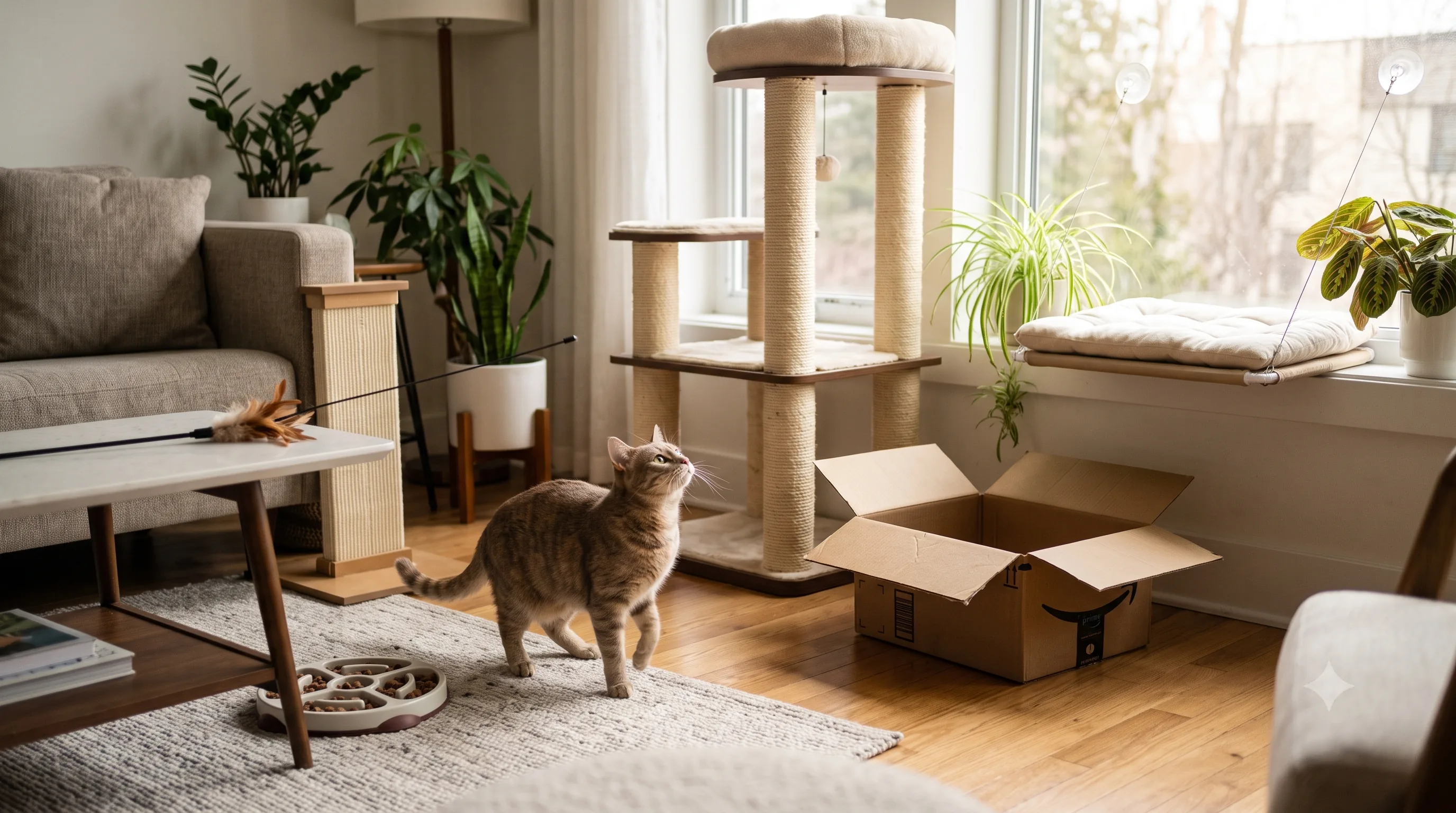
How to Keep an Indoor Cat Entertained: 14 Easy Ways to Prevent Boredom
Learn how to keep an indoor cat entertained with 14 easy enrichment ideas, including interactive play, puzzle feeders, climbing spaces, toys, and more.
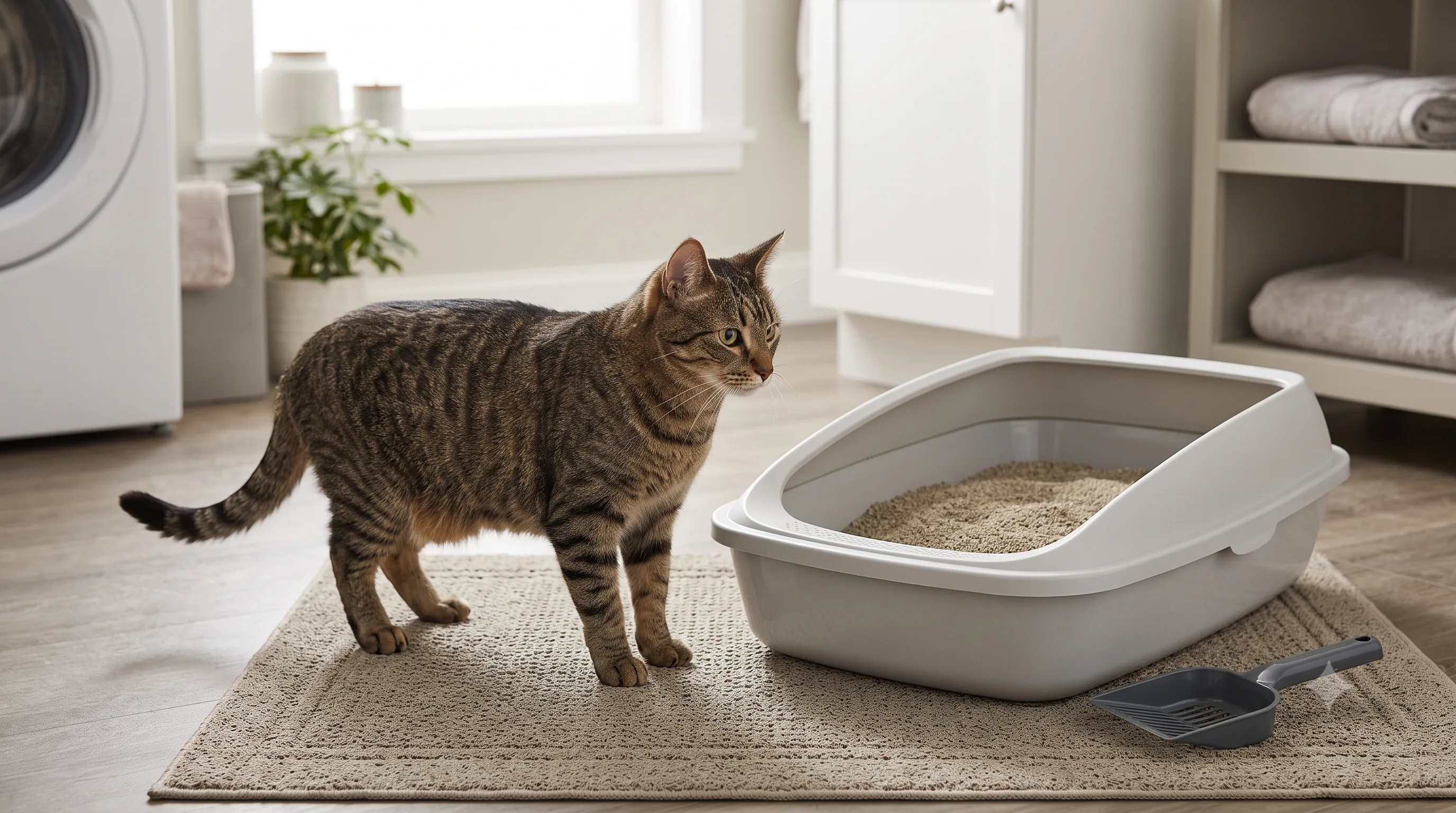
How Often Should You Clean a Cat Litter Box?
How often should you clean a cat litter box? Learn when to scoop, change litter, wash the box, control odors, and keep your cat's litter area clean.
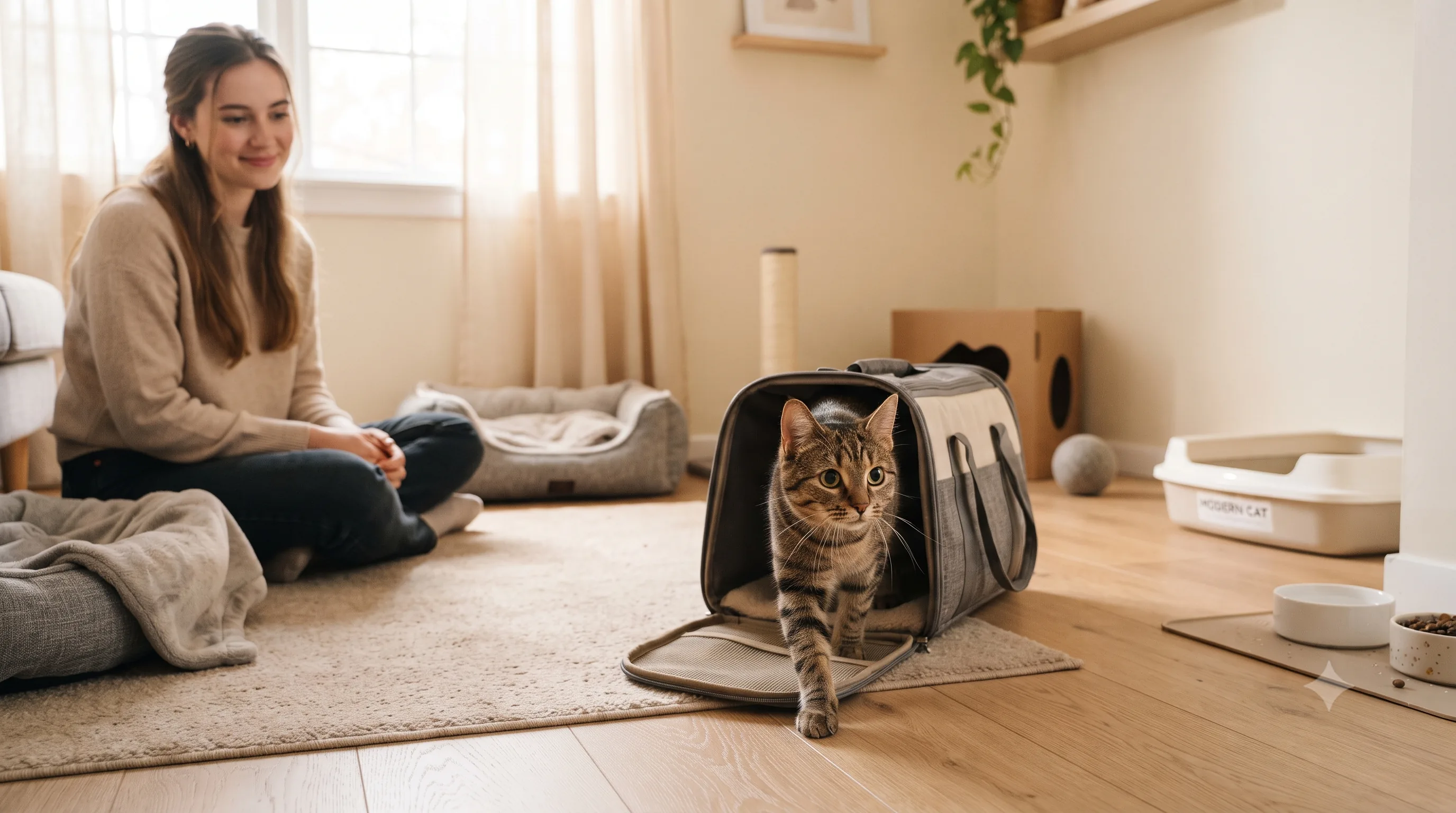
How to Introduce a New Cat to Your Home
Bringing home a new cat? Learn how to introduce a new cat safely and calmly, from preparing a safe room to building trust and introducing other pets.