Why Is My Cat Throwing Up? 12 Common Causes and What to Do
There's nothing quite as heart-stopping as hearing your cat retch in the middle of the night. You rush over, half-asleep and panicked, only to find a puddle of partially digested kibble on the floor. Is this normal? Should you be worried? The short answer: sometimes yes, sometimes no — and knowing the difference can save you a lot of stress (and money).
Cat vomiting is one of the most common reasons pet owners call the vet, but here's the thing — not all vomiting is created equal. A cat throwing up once in a while might just have a minor upset stomach, while repeated vomiting could signal something that needs medical attention. In this guide, we'll walk through 12 common causes of cat vomiting, what each one looks like, and exactly what you should do about it.
Quick Disclaimer: I'm not a veterinarian, and this post is for informational purposes only. If your cat is vomiting repeatedly, seems lethargic, or you're genuinely concerned — call your vet. When in doubt, always err on the side of caution.
1. Hairballs (The Classic Culprit)
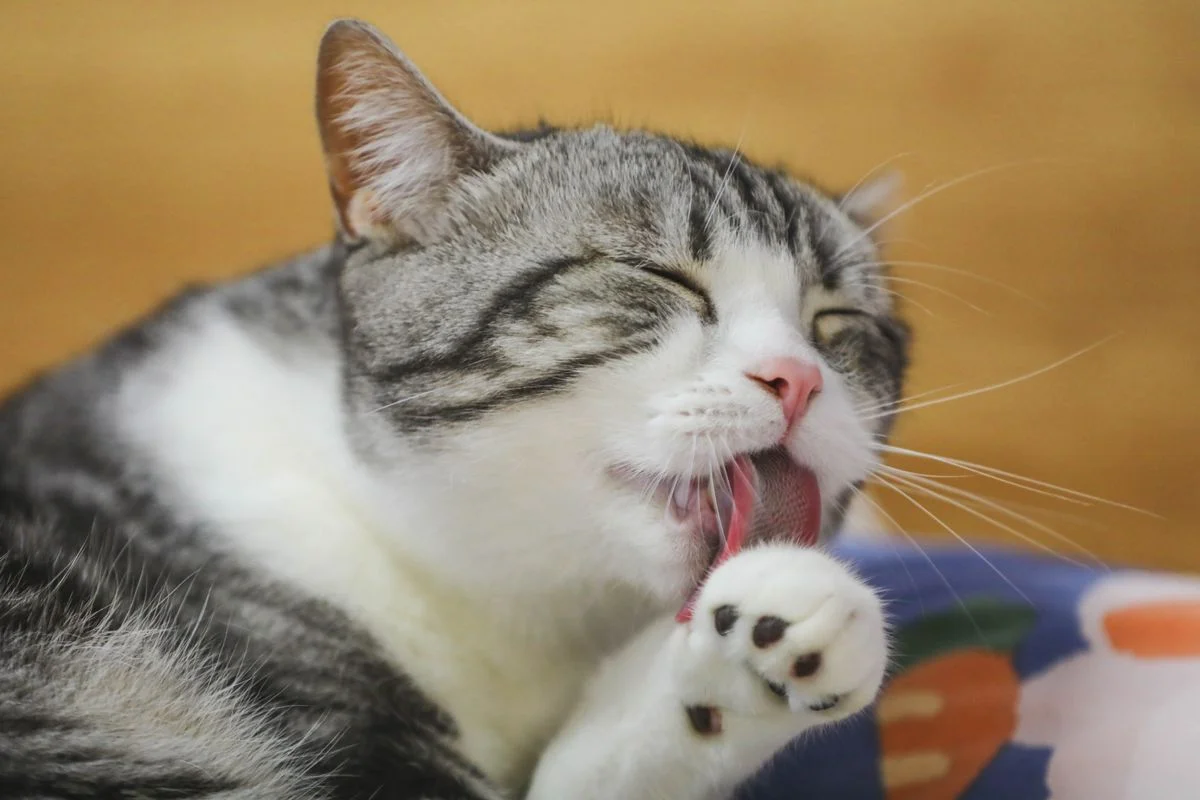
If there's one cause of cat vomiting that every owner knows about, it's hairballs. Cats are meticulous groomers — they spend up to 30–50% of their waking hours licking their fur. And all that licking means swallowing a lot of loose hair. Most of it passes through the digestive tract just fine, but sometimes it accumulates in the stomach and gets stuck. When that happens, your cat's body does what it's designed to do: eject it.
What it looks like: Vomiting that produces a tubular mass of hair, often with some liquid or partially digested food. Usually happens a few times a month at most.
What to do:
- Brush your cat regularly — the less loose hair on their coat, the less they swallow
- Consider hairball-control cat food or treats (they contain added fiber)
- Keep hairball remedy gels on hand — they help lubricate the digestive tract
If your cat is producing hairballs more than once a week, mention it to your vet. Frequent hairballs can sometimes indicate an underlying digestive issue.
2. Eating Too Fast — The "Bowl Vacuum" Problem
Some cats don't just eat — they inhale. If your cat gulps down their food in seconds and then throws up undigested kibble shortly after, you're likely dealing with speed-eating. This is especially common in multi-cat households where cats feel competitive pressure at mealtime.
What it looks like: Vomiting shortly after eating, with mostly intact kibble in the vomit. The cat otherwise seems fine and happy.
What to do:
- Switch to a slow-feeder bowl — these have obstacles that force your cat to eat around them
- Try puzzle feeders that make your cat work for each piece of food
- In multi-cat homes, feed cats in separate rooms to reduce competition stress
- Consider smaller, more frequent meals instead of one big bowl
This is one of the easiest problems to fix, and most cats adjust to slow feeders within a few days.
3. Food Intolerances and Allergies
Just like humans, cats can develop sensitivities to certain ingredients. The most common food allergens for cats include beef, dairy, fish, and chicken. Food-related vomiting tends to be chronic — it doesn't happen once and stop; it keeps happening as long as the cat keeps eating the offending ingredient.
What it looks like: Repeated vomiting over days or weeks, often accompanied by diarrhea, itchy skin, or excessive scratching. The vomiting isn't necessarily immediately after meals.
What to do:
- Keep a food diary — note what your cat eats and when vomiting occurs
- Talk to your vet about a food elimination trial — this involves feeding a novel protein (like duck or venison) for several weeks to see if symptoms resolve
- Never switch foods abruptly; transition over 7–10 days to avoid upsetting your cat's stomach further
Food allergies are tricky to pin down, but once you identify the trigger, managing them becomes much easier.
4. Sudden Diet Changes
Switching your cat's food too quickly is a classic recipe for an upset stomach. A cat's digestive system is sensitive to sudden changes in ingredient composition, and throwing up is a common response.
What it looks like: Vomiting that starts shortly after you changed your cat's food. The vomit may contain the new food.
What to do:
- Always transition foods gradually — mix increasing amounts of the new food with decreasing amounts of the old over 7–10 days
- If your cat has already thrown up after a sudden switch, go back to the old food temporarily and restart the transition more slowly
- Stick to high-quality, consistent brands — constant brand-hopping makes digestive issues more likely
5. Eating Something They Shouldn't (Dietary Indiscretion)
Cats are curious creatures, and sometimes that curiosity leads them to eat things that definitely don't belong in their stomachs. This could be anything from a piece of a toy to a houseplant leaf to a bug.
What it looks like: Sudden vomiting, sometimes with unusual contents in the vomit (pieces of plants, plastic, fabric). Your cat may also seem interested in chewing on odd objects.
What to do:
- Cat-proof your home — keep small objects, toxic plants (lilies are especially dangerous), and household chemicals out of reach
- If you suspect your cat swallowed something dangerous, call your vet immediately
- Watch for signs of a blockage: repeated vomiting, lethargy, loss of appetite, and no bowel movements — these are emergency signs
6. Parasites (Worms and More)
Intestinal parasites like roundworms, hookworms, and giardia can cause vomiting in cats, especially kittens and cats who spend time outdoors. Some parasites are transmitted through flea bites, while others come from ingesting contaminated soil or feces.
What it looks like: Vomiting that may contain visible worms (spaghetti-like roundworms are the most noticeable). Other signs include weight loss, a pot-bellied appearance, diarrhea, and a dull coat.
What to do:
- Stay current on deworming treatments — your vet can recommend a schedule based on your cat's lifestyle
- Use consistent flea prevention, since fleas can transmit certain parasites
- Keep your cat's litter box clean and wash your hands after handling it
- If you see worms in your cat's vomit or stool, collect a sample and bring it to your vet
Parasites are highly treatable, but leaving them unchecked can lead to more serious health issues, especially in young or elderly cats.
7. Inflammatory Bowel Disease (IBD)
IBD is a chronic condition where the lining of the digestive tract becomes inflamed. It's more common in middle-aged to older cats, and it's one of those conditions that can be frustrating to diagnose because its symptoms overlap with other problems.
What it looks like: Chronic, intermittent vomiting (often with bile or foam), weight loss, changes in appetite, and sometimes diarrhea. Symptoms may come and go over weeks or months.
What to do:
- This requires a vet diagnosis — they may run blood tests, imaging, and sometimes a biopsy
- Treatment often involves a prescription diet (hydrolyzed protein or novel protein) and possibly anti-inflammatory medications
- IBD is manageable but typically requires lifelong dietary management
If your cat has been vomiting frequently for more than a couple of weeks, IBD is worth discussing with your vet.
8. Kidney Disease — A Common Issue in Older Cats
Kidney disease is one of the most common health problems in older cats, and vomiting is a frequent symptom — especially as the disease progresses. The kidneys lose their ability to filter toxins from the blood, and those building toxins can cause nausea and vomiting.
What it looks like: Increased thirst and urination, weight loss, poor appetite, lethargy, and vomiting (often in the morning). These symptoms tend to develop gradually.
What to do:
- If your cat is over 7 years old and showing these signs, schedule a veterinary checkup — bloodwork and urinalysis can catch kidney issues early
- Kidney disease is manageable with a special diet, fluids, and medications, especially when caught early
- Encourage your cat to drink more water — consider a cat water fountain, wet food, or even water flavored with a bit of low-sodium chicken broth
Early detection makes a huge difference in quality of life and longevity for cats with kidney disease.
9. Hyperthyroidism — When the Metabolism Runs Wild
Hyperthyroidism is another common condition in older cats, caused by an overactive thyroid gland. It revs up your cat's metabolism, which sounds like a good thing — but it comes with a host of unpleasant symptoms, including vomiting.
What it looks like: Weight loss despite a ravenous appetite, increased thirst and urination, hyperactivity, a greasy or unkempt coat, and vomiting. Your cat might seem like they're in overdrive.
What to do:
- Blood tests can confirm hyperthyroidism — ask your vet to check thyroid levels during routine senior checkups
- Treatment options include daily medication (methimazole), radioactive iodine therapy, or a prescription diet
- With proper treatment, most cats with hyperthyroidism do very well
10. Pancreatitis
Pancreatitis is inflammation of the pancreas, and it's more common in cats than many people realize. It can happen alongside other conditions like IBD or liver disease, and it ranges from mild to life-threatening.
What it looks like: Vomiting, abdominal pain (your cat may adopt a "meatloaf" position with their head down and rear up), lethargy, loss of appetite, and sometimes diarrhea. Symptoms can come on suddenly.
What to do:
- Pancreatitis requires veterinary diagnosis and treatment — it often involves hospitalization for fluids and supportive care
- Mild cases may resolve with dietary management and medications; severe cases need aggressive treatment
- If your cat is vomiting and seems in pain or won't eat, don't wait — see a vet
11. Stress and Anxiety
Yes, cats can get stressed enough to throw up. Cats are creatures of habit, and big changes — moving to a new home, a new pet or person in the house, construction noise, or even a change in your routine — can trigger stress-related vomiting.
What it looks like: Vomiting that correlates with a stressful event or change. Your cat may also hide more, stop eating, over-groom, or show changes in litter box habits.
What to do:
- Identify and, if possible, minimize the stressor
- Give your cat safe spaces — high perches, hiding spots, and a quiet room they can retreat to
- Consider a Feliway diffuser (synthetic feline pheromones) to help calm anxious cats
- Keep routines as consistent as possible — regular feeding times, play sessions, and cuddles
Stress-related vomiting typically resolves once the cat adjusts to the new situation, but chronic stress can lead to other health problems, so it's worth addressing.
12. Motion Sickness — Even Travel Can Trigger Vomiting
Some cats get carsick, just like some humans. If your cat only vomits during or after car rides, motion sickness is the likely culprit.
What it looks like: Vomiting during or shortly after traveling in a car, often accompanied by drooling, restlessness, or meowing. Your cat otherwise seems healthy at home.
What to do:
- Try a secure, well-ventilated carrier — never let your cat loose in the car
- Acclimate your cat to the carrier gradually: leave it out at home with treats and bedding inside
- Ask your vet about motion sickness medication for cats — there are safe options for travel
- Keep car rides short and smooth, and avoid feeding right before travel
What Does Cat Vomit Color Mean? A Quick Reference
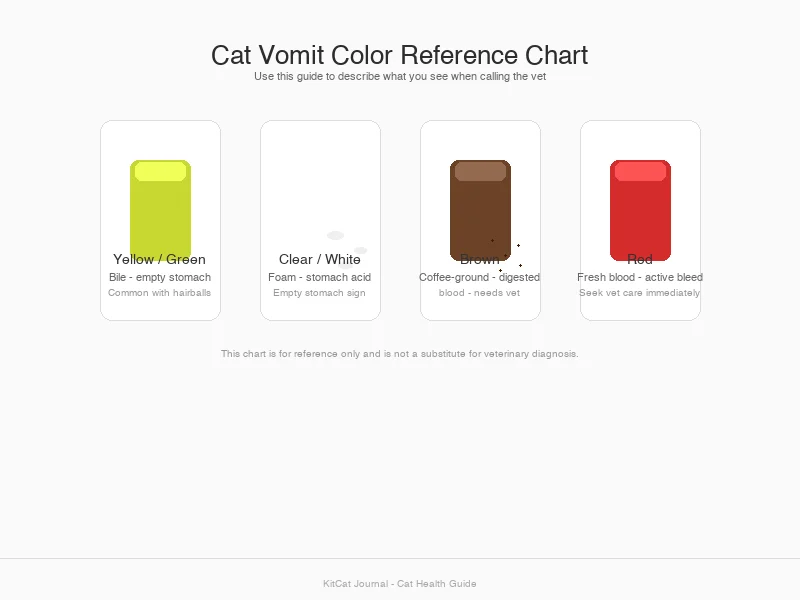
The color and consistency of your cat's vomit can give you clues about what's going on. Here's a quick reference:
| Vomit Color | What It Could Mean |
|---|---|
| Yellow or green | Bile — your cat's stomach was empty when they vomited. Common with hairballs or when a cat skips a meal. |
| White or clear foam | Stomach acid and saliva — also suggests an empty stomach. Could be an early sign of IBD or pancreatitis. |
| Brown or coffee-ground | Could indicate digested blood — this needs veterinary attention. |
| Red or fresh blood | Active bleeding in the esophagus or stomach — seek vet care immediately. |
| Undigested food | Your cat ate too fast, has food sensitivities, or has an obstruction. |
| Worms visible | Intestinal parasites — collect a sample and see your vet. |
This guide isn't a diagnostic tool, but it can help you describe what you're seeing when you call the vet.
When to Worry: Red Flags
Most occasional vomiting in cats is manageable at home, but there are times when you should skip the home remedies and go straight to the vet. Here are the red flags:
- Vomiting more than 2–3 times in a single day — this can lead to dehydration quickly
- Blood in the vomit — bright red or dark, coffee-ground-like blood both need attention
- Your cat seems lethargic, depressed, or unresponsive — a happy cat who vomits once is usually fine; a cat who vomits and won't get up is not
- Loss of appetite for more than 24 hours — cats can develop hepatic lipidosis (fatty liver disease) if they go too long without eating, and it's serious
- Signs of pain — hunching, crying, hiding, or a bloated abdomen
- Your cat is very young, very old, or has existing health conditions — these cats are more vulnerable to dehydration and complications
- Vomiting persists for more than a day or two — even if your cat seems okay otherwise
What You Can Do at Home (For Mild Cases)
If your cat has vomited once or twice but is otherwise acting normal — eating, drinking, playing, and using the litter box — here's a sensible approach:
-
Give the stomach a rest. Withhold food for 6–12 hours (but never withhold water — your cat needs to stay hydrated). For kittens or small cats, a shorter fasting window is safer; check with your vet.
-
Offer small amounts of water frequently. Dehydration is the biggest risk with vomiting. If your cat won't drink, try offering water from your hand, a syringe (without the needle), or a bit of water from a can of tuna (in moderation).
-
Reintroduce food gradually. After the fasting period, offer a small amount of bland food — boiled chicken (unseasoned) or a teaspoon of their regular food. If they keep it down, offer a little more after an hour or two.
-
Monitor closely. Keep an eye on your cat's energy level, appetite, and litter box habits. If anything looks off, call the vet.
-
Check your cat's environment. Did they get into something? Is there a new plant? A spilled chemical? Eliminating the trigger can solve the problem fast.
Prevention: Keeping Your Cat's Stomach Happy
A few simple habits can go a long way toward reducing vomiting episodes:
- Regular brushing — less swallowed hair means fewer hairballs
- Slow-feeder bowls — for the speed-eaters
- Consistent, high-quality diet — avoid frequent food switching
- Cat-proofing — keep toxic plants, small objects, and chemicals out of reach
- Routine vet checkups — annual exams (or biannual for seniors) catch problems early
- Parasite prevention — keep up with deworming and flea control
- Stress reduction — stable routines, safe spaces, and plenty of playtime
FAQ: Common Questions About Cat Vomiting
How often is it normal for a cat to vomit? Occasional vomiting — a few times a month, especially due to hairballs — can be normal for some cats. Vomiting more than once a week, or any vomiting that comes with other symptoms, warrants a vet visit.
Should I withhold food after my cat vomits? For a healthy adult cat, withholding food for 6–12 hours is generally safe, but always provide water. Kittens, senior cats, and cats with health conditions should not be fasted without veterinary guidance.
What does yellow cat vomit mean? Yellow vomit usually means bile — your cat's stomach was empty when they vomited. It's common with hairballs or if your cat vomits first thing in the morning. If it happens frequently, check with your vet.
When should I take my cat to the vet for vomiting? If your cat vomits more than 2–3 times in a day, has blood in the vomit, seems lethargic, won't eat for 24 hours, or is very young/old with other health issues — don't wait.
Can stress cause my cat to vomit? Yes, stress and anxiety can trigger vomiting in cats. Changes in routine, moving, new pets, or loud noises can all be triggers. Reducing stressors and providing safe spaces often helps.
Final Thoughts
Hearing your cat throw up is never pleasant, but understanding what's behind it can turn panic into action. Most cats will experience the occasional hairball or speed-eating vomit, and those are usually harmless. But when vomiting becomes frequent, severe, or is accompanied by other worrying symptoms, it's your cue to involve the vet.
The bottom line: know your cat's normal. If you know what's typical for them, you'll spot what's not — and that awareness is one of the best tools you have as a cat parent.
Has your cat ever thrown up and turned out to be something serious — or maybe it was just a hairball after all? Share your story in the comments — other cat parents could use the experience.
Related articles
Bengal Cat: Complete Guide to Personality, Care, Lifespan, and Cost
Learn everything about Bengal cats, including personality, appearance, exercise needs, health concerns, lifespan, diet, and ownership costs.

British Shorthair Cat: Complete Guide to Personality, Care, Lifespan, and Cost
Learn everything about British Shorthair cats, including personality, appearance, grooming needs, health concerns, lifespan, diet, and ownership costs.
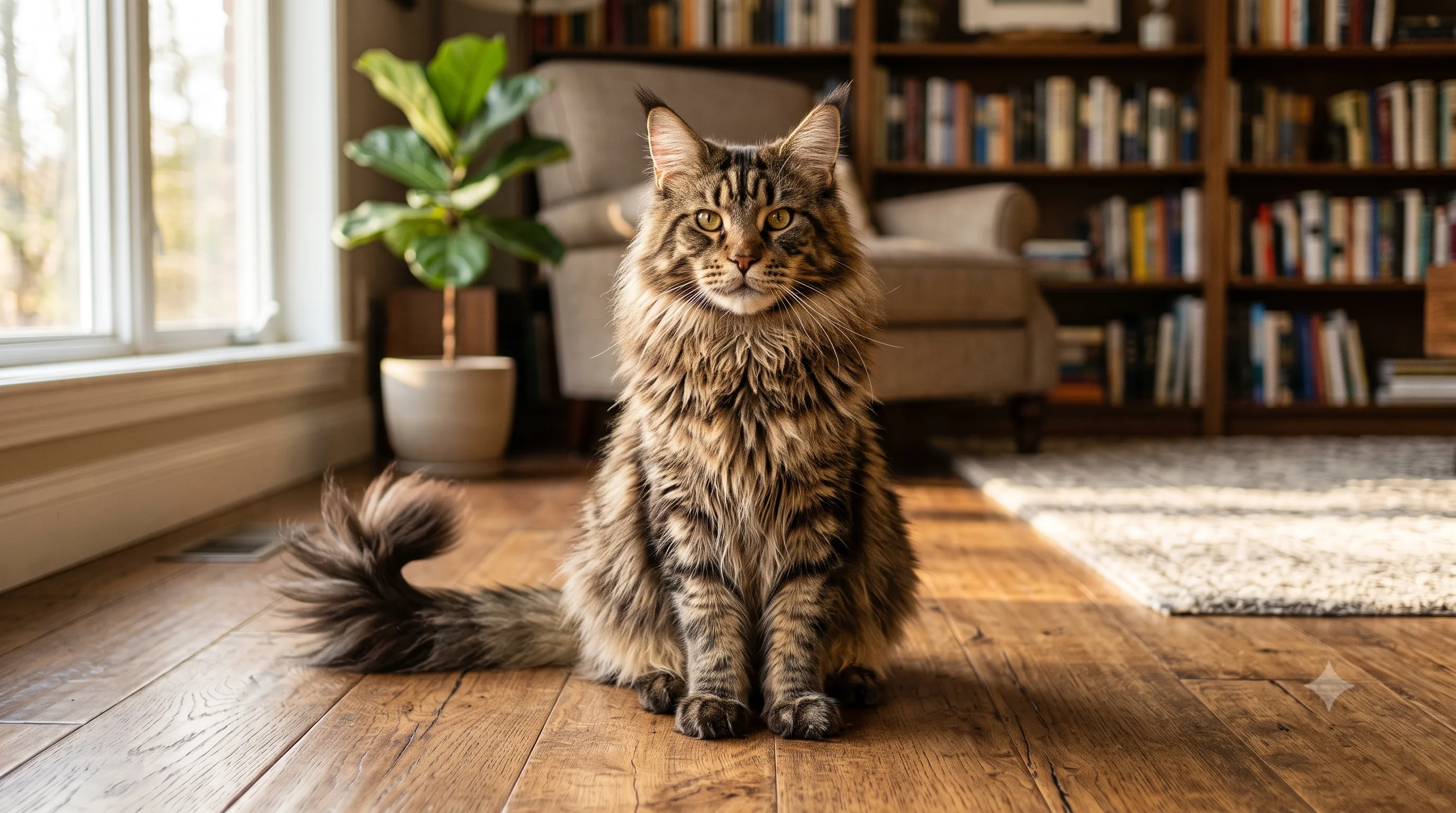
Maine Coon Cat: Complete Guide to Personality, Care, Lifespan, and Cost
Learn everything about Maine Coon cats, including personality, size, grooming needs, health concerns, lifespan, diet, and ownership costs.