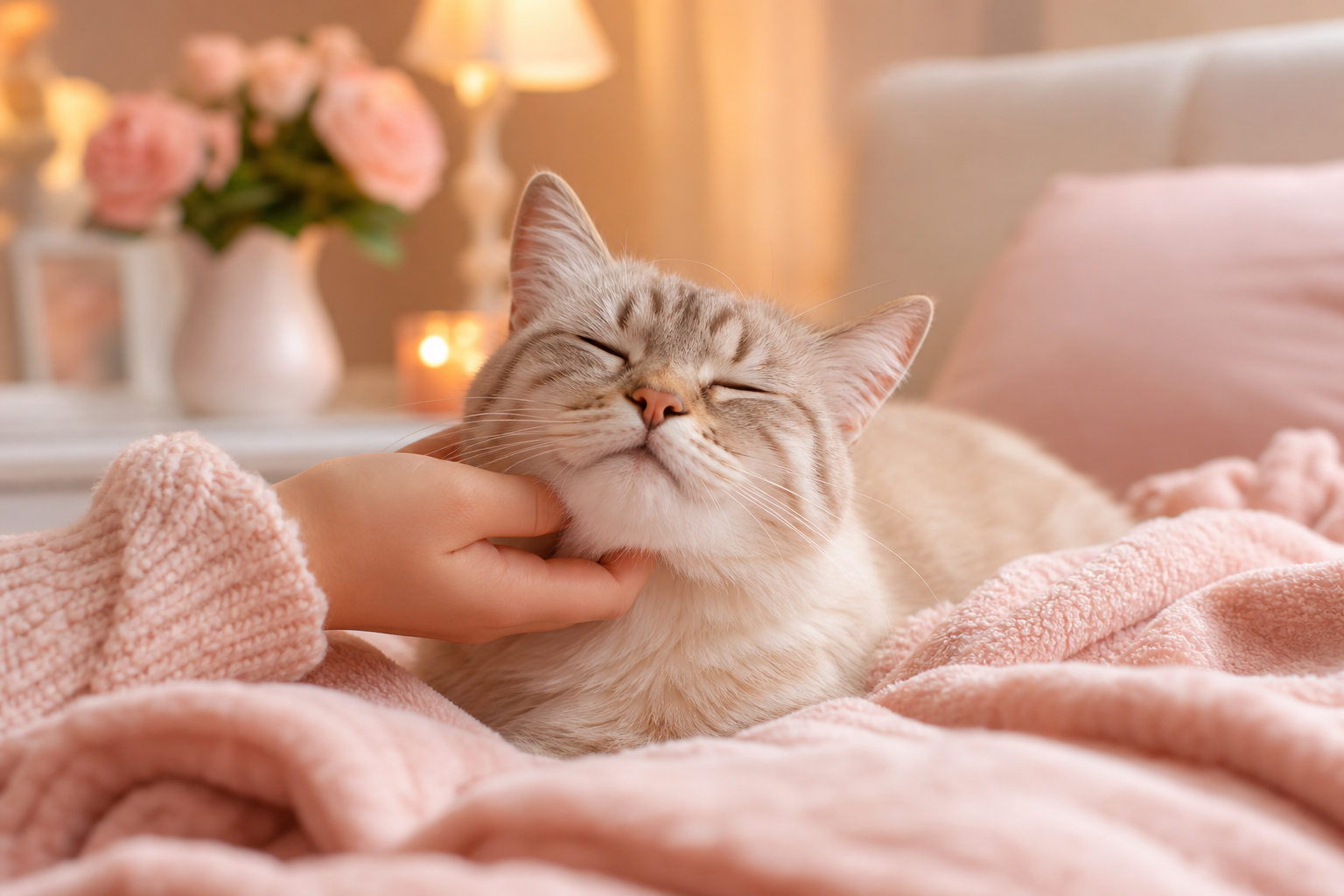
A happy cat isn't just fun to be around—it’s usually a healthier, more confident companion. While every cat has a unique personality, most content cats display a combination of physical behaviors, body language, and daily habits that reveal how they're feeling.
If you've ever wondered, "Is my cat happy?", this checklist will help you understand the subtle ways cats express comfort, trust, and joy.
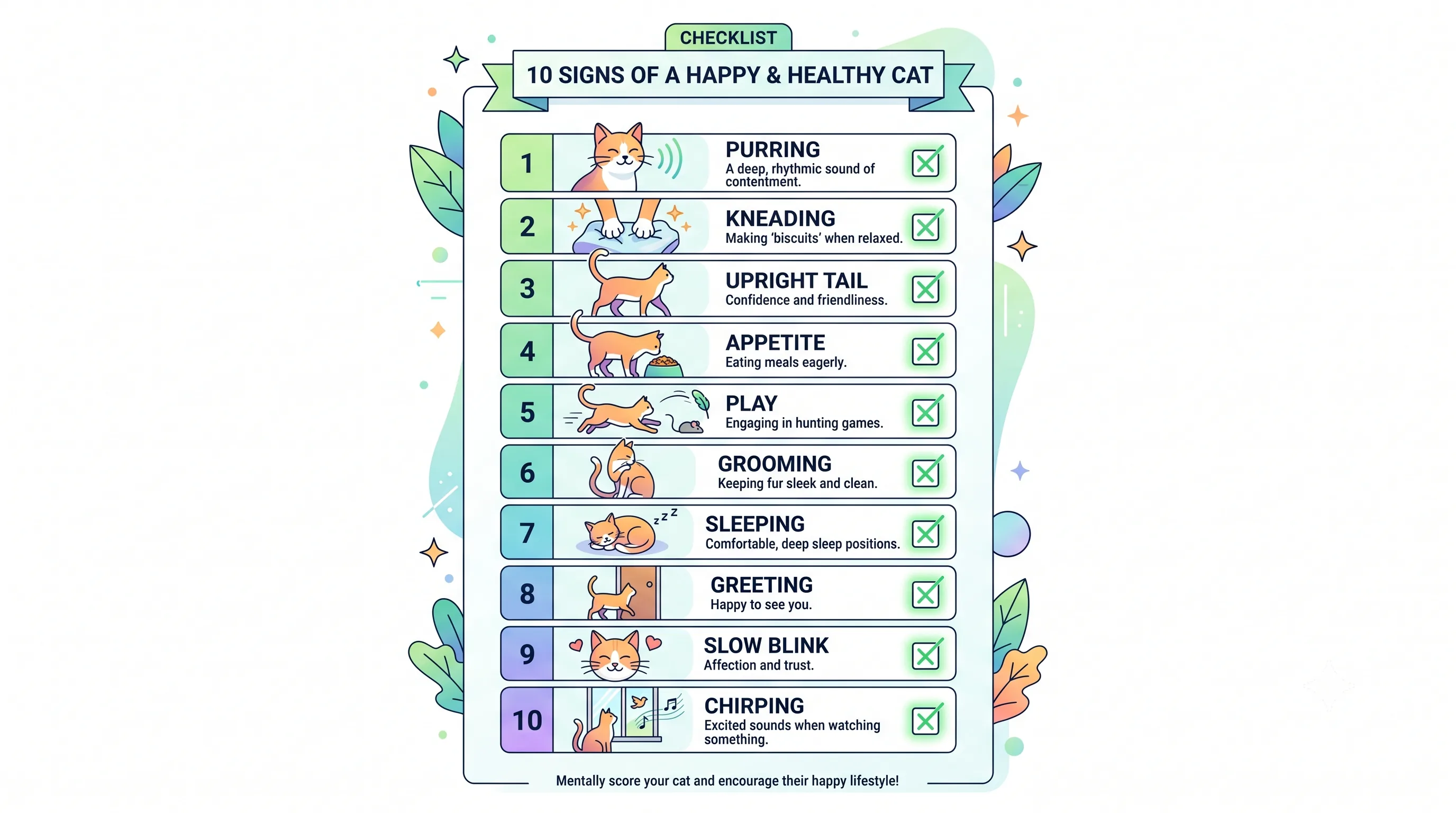
1. Purring in Relaxed Settings
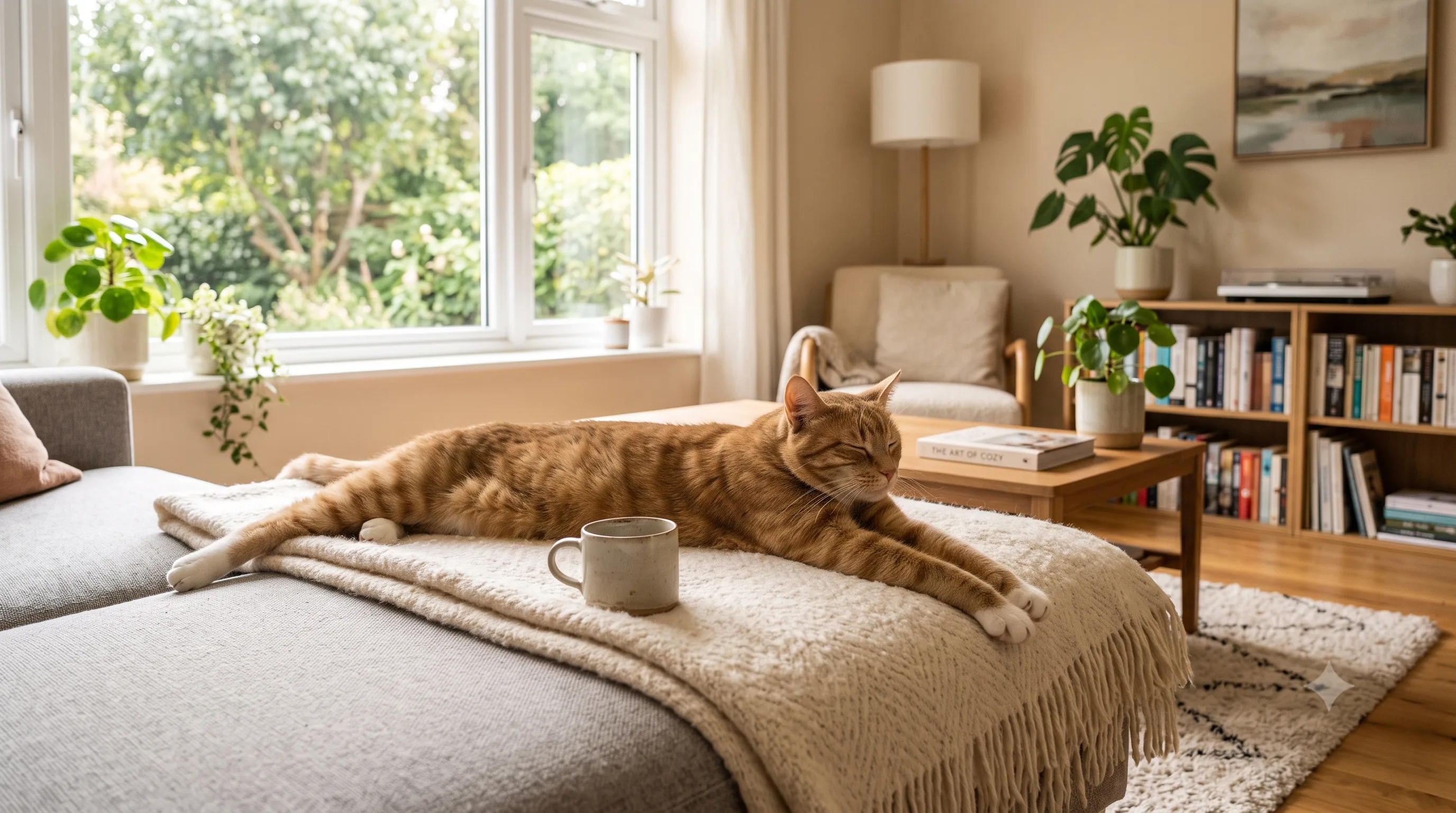
Purring is one of the most recognizable signs of feline happiness. When your cat curls up beside you, settles into a cozy nap, or enjoys gentle petting while purring softly, it's usually a sign they're feeling calm and secure.
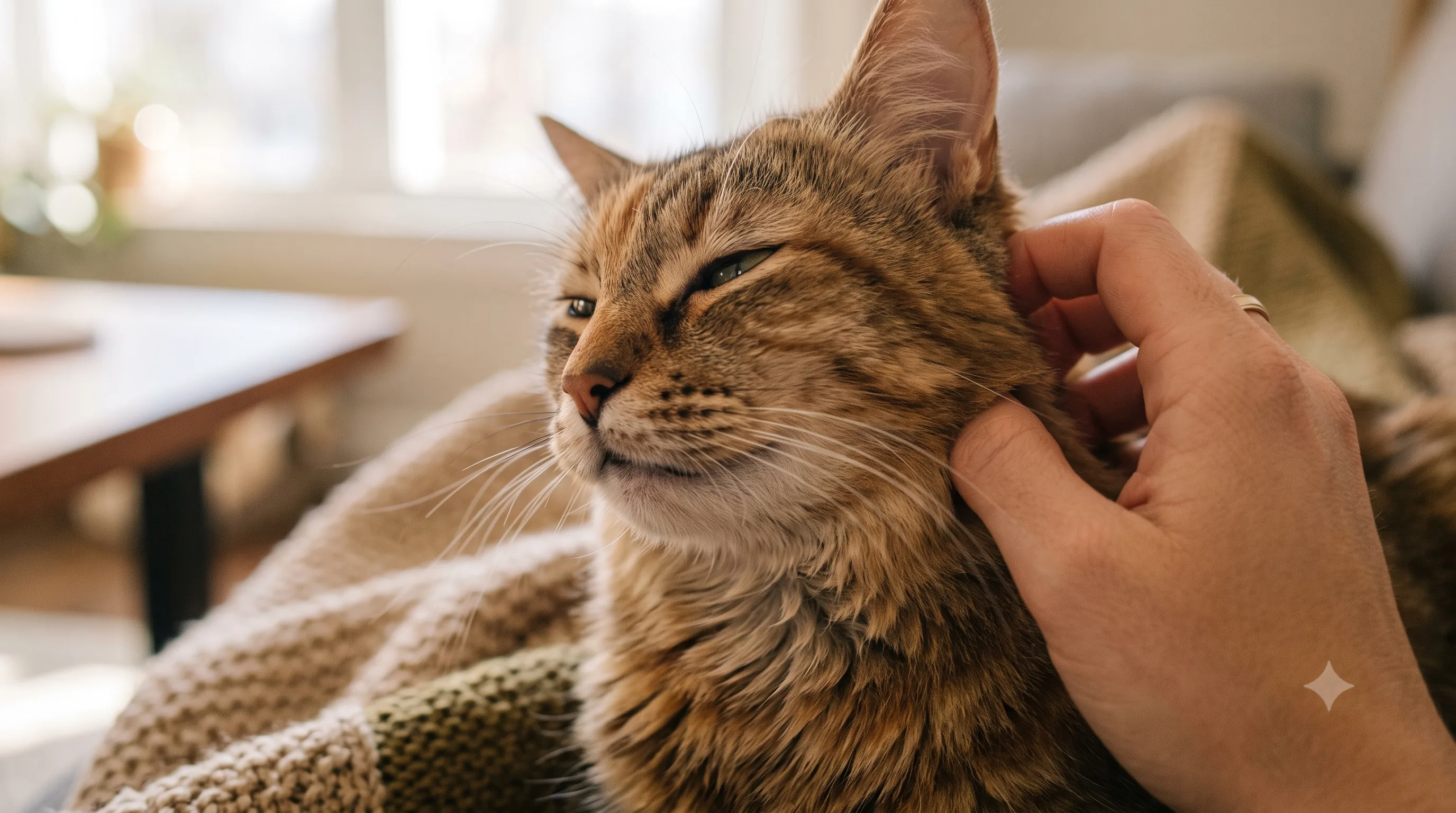
Note: Cats can also purr when they're stressed or in pain as a self-soothing mechanism. Look at the overall situation rather than relying on purring alone.
2. Kneading ("Making Biscuits")
Many adult cats continue the kneading behavior they learned as kittens while nursing from their mother.
When your cat presses their paws rhythmically into a blanket, pillow, or even your lap, they're often expressing comfort, affection, and relaxation.
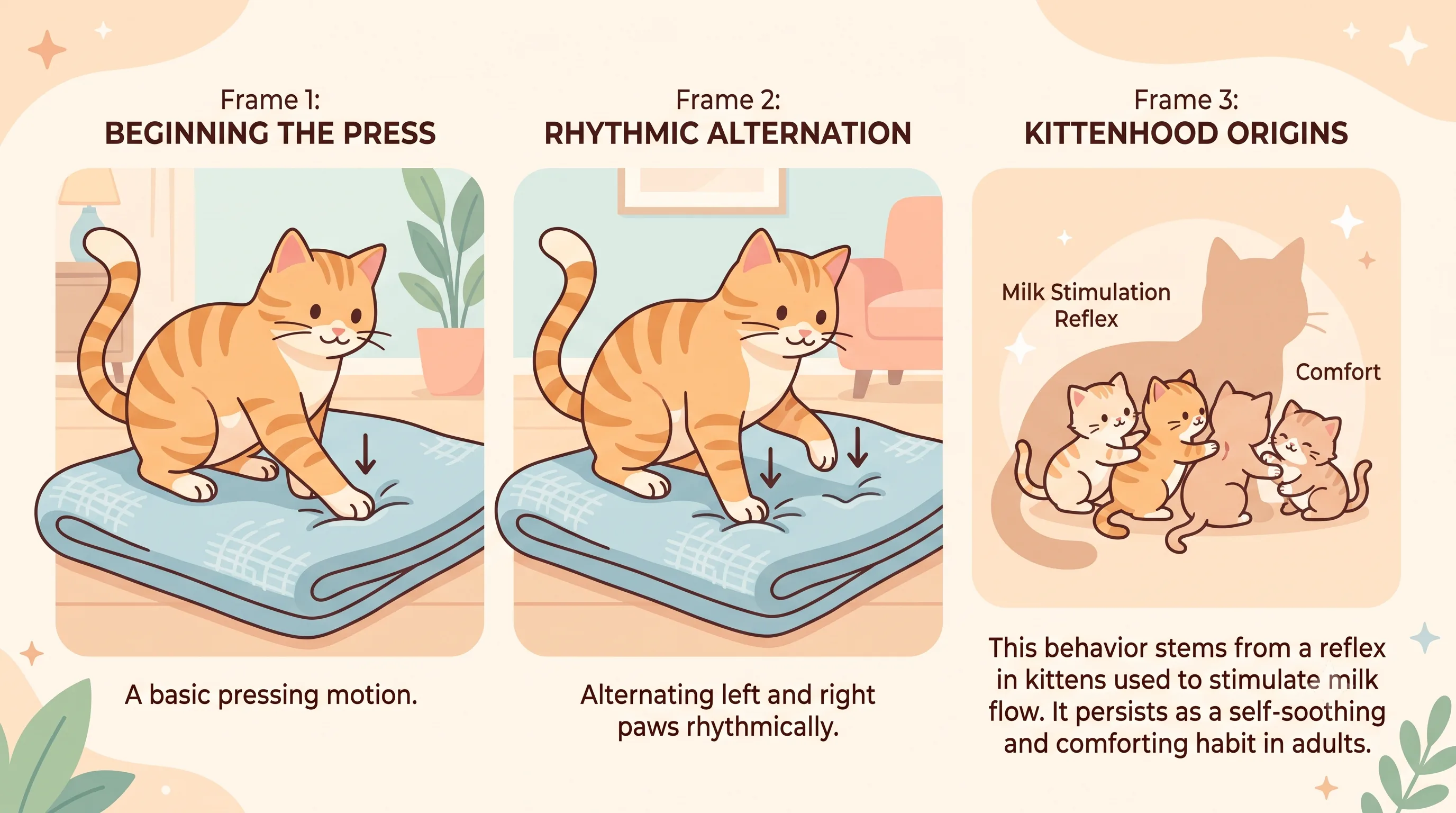
Common times you'll notice kneading include:
- Before settling down for a nap
- During cuddles
- On soft blankets
- While purring
3. A Relaxed, Upright Tail
A cat's tail says a lot about their emotions.
A happy cat often greets you with:
- Tail held straight up
- Slight curve at the tip
- Relaxed body posture
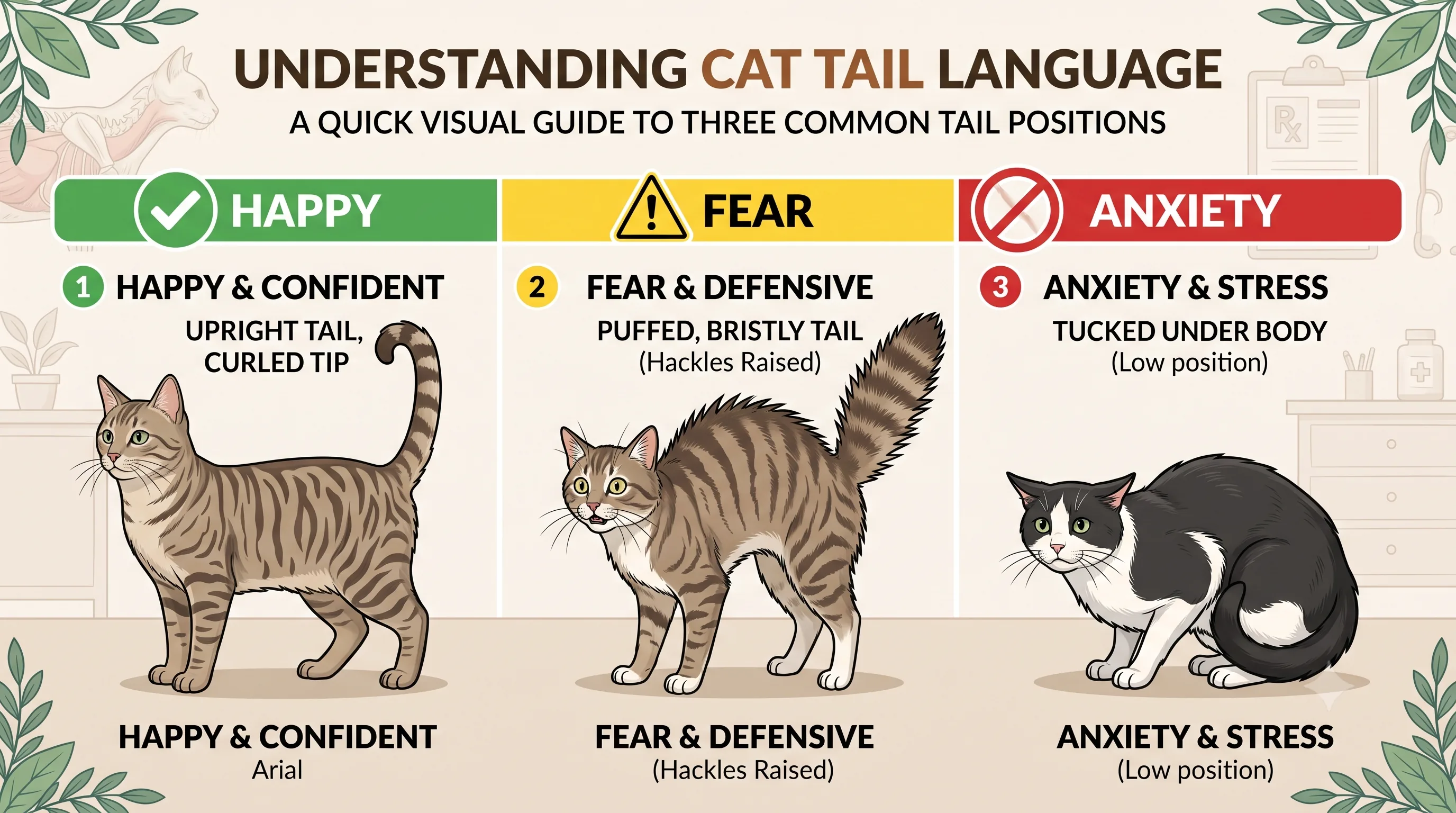
This is one of the friendliest greetings in cat language and often means they're excited to see you.
4. Healthy Appetite
Cats that consistently eat their meals with enthusiasm are generally feeling well both physically and emotionally.
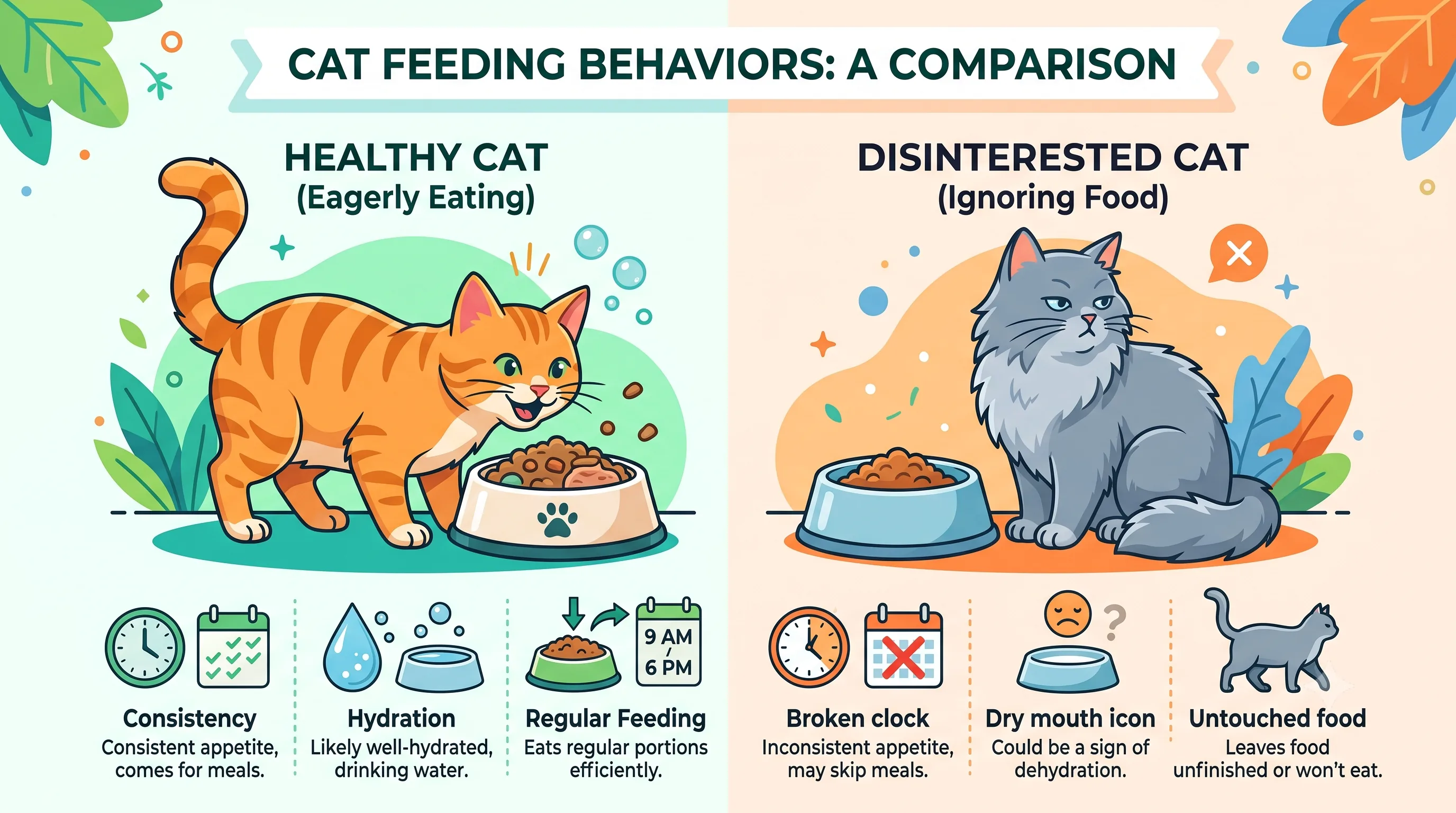
Healthy eating habits include:
- Eating at regular times
- Drinking enough water
- Showing interest in treats
- Maintaining a healthy weight
A sudden loss of appetite should always be monitored, especially if it lasts more than a day.
5. Playfulness
Happy cats love to play.
Whether they're chasing feather wands, stalking toy mice, or sprinting around the house during the famous "zoomies," play keeps both their body and mind healthy.
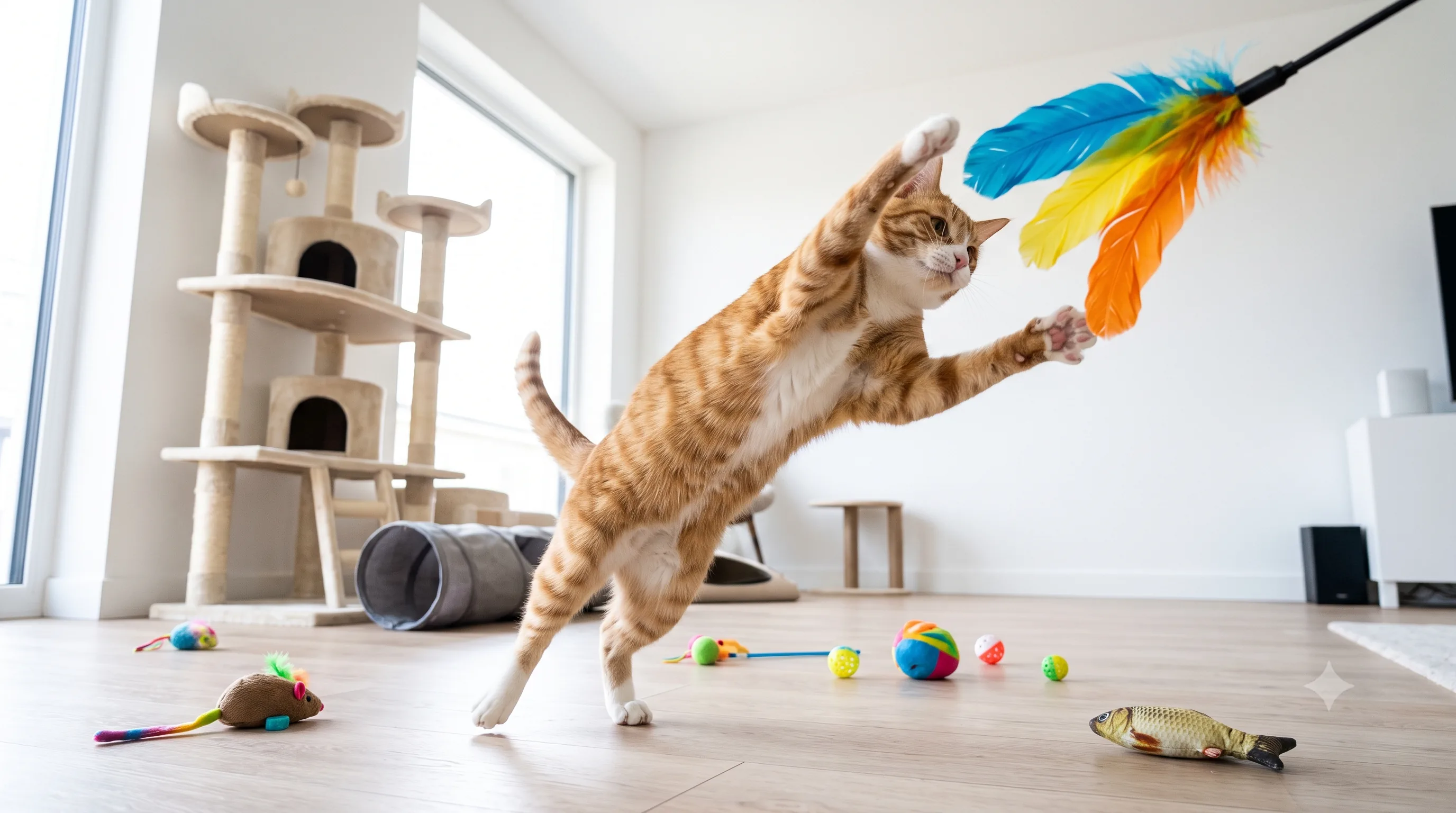
Great enrichment activities include:
- Puzzle feeders
- Wand toys
- Ball toys
- Cardboard boxes
- Climbing trees
- Window perches
Even older cats benefit from short daily play sessions.
Bonus Sign
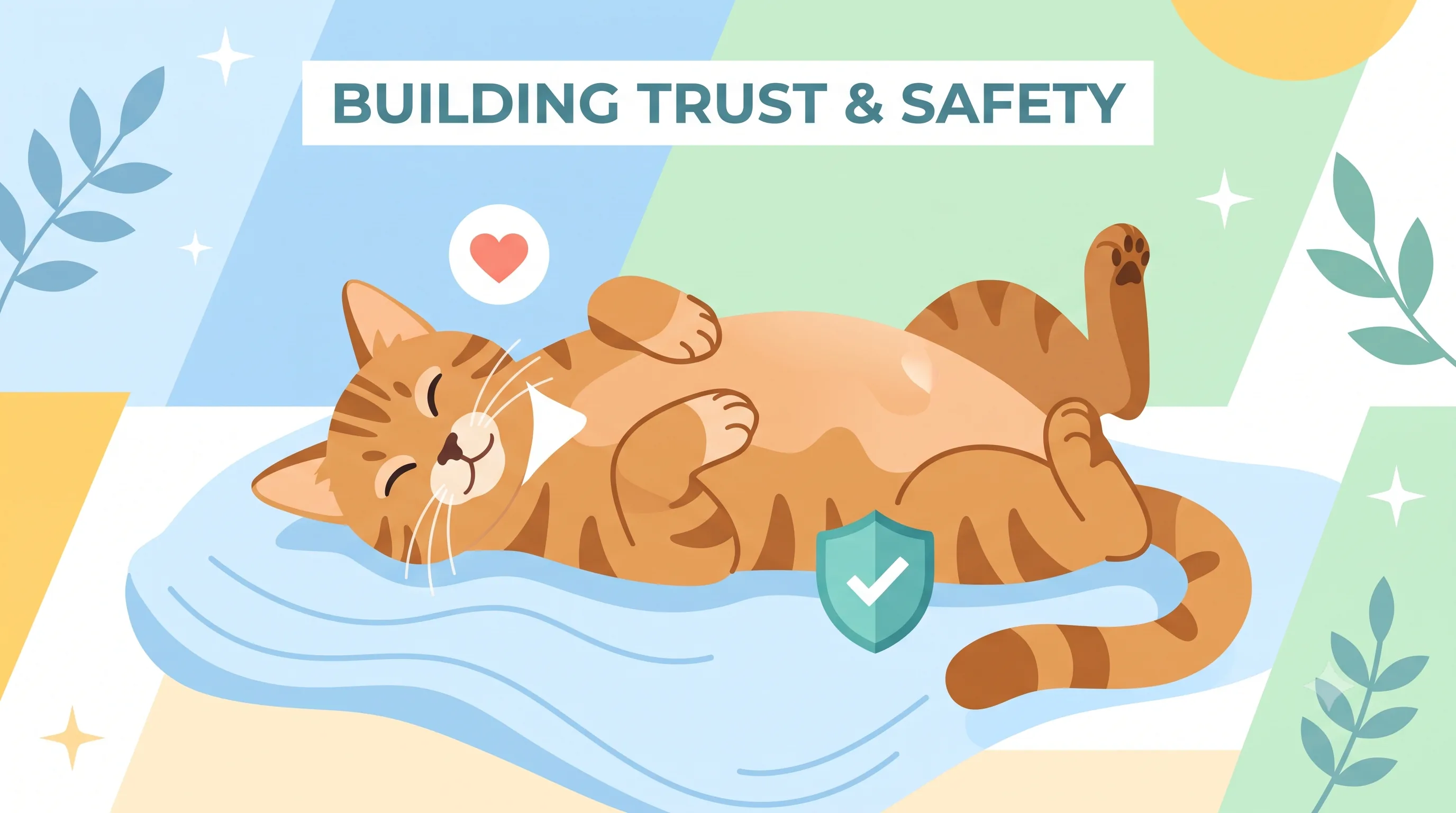
If your cat exposes their belly around you, it usually means they feel incredibly safe. It isn't always an invitation for belly rubs—many cats still prefer gentle head or chin scratches—but showing their stomach is a strong sign of trust.
6. Regular Grooming
Cats are naturally clean animals.
A happy, healthy cat spends time grooming their fur every day to keep it clean and free of tangles.
Regular grooming usually indicates:
- Good health
- Low stress
- Comfortable mobility
- Normal daily routine
Over-grooming or completely stopping grooming may indicate stress or illness and deserves attention.
7. Sleeping Peacefully in Open Areas
Cats only sleep deeply where they feel safe.
If your cat naps:
- On the couch
- Near your desk
- In the middle of the room
- Beside family members
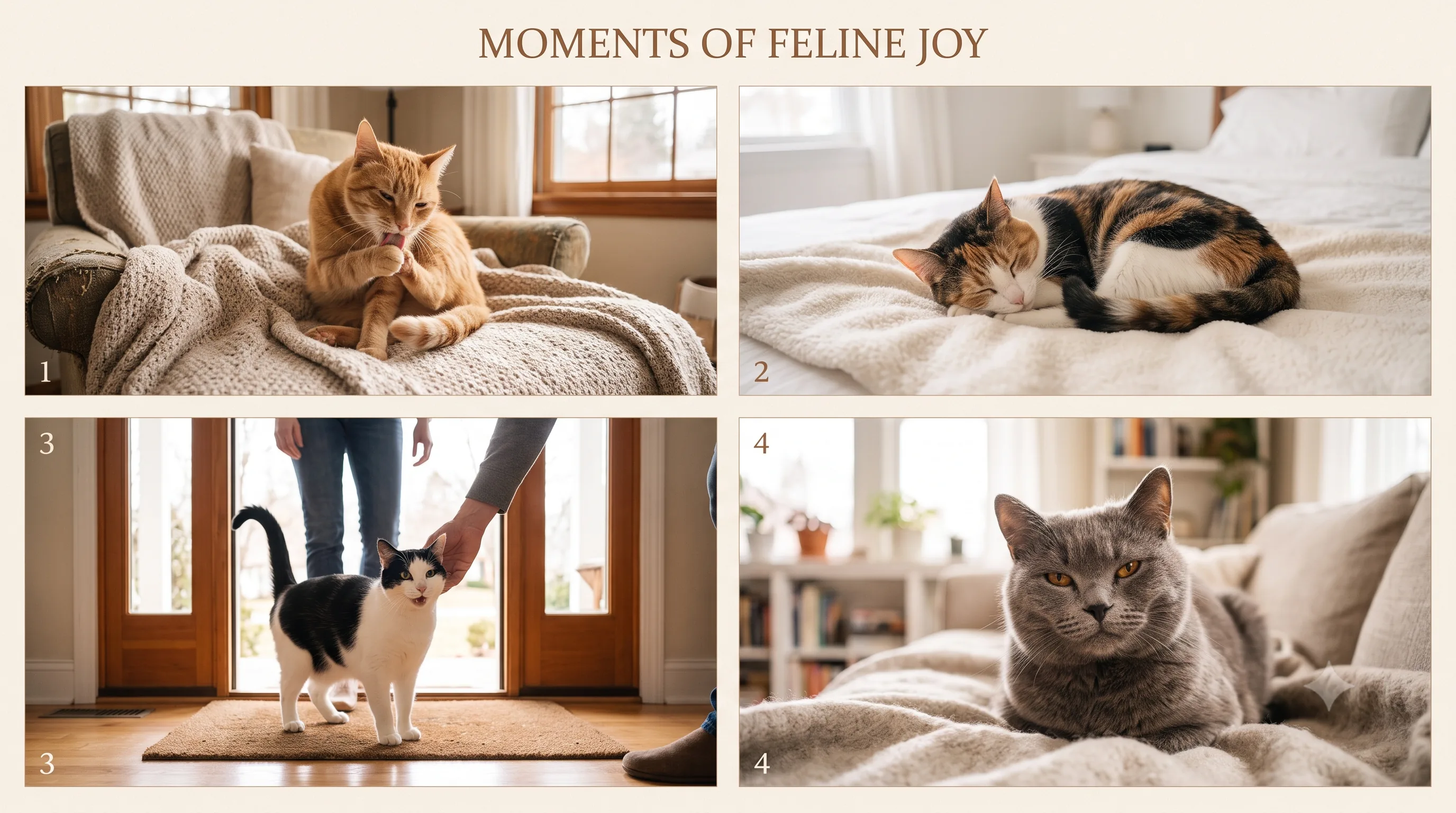
they're showing confidence in their environment.
A cat that constantly hides while sleeping may simply be shy, but sudden changes in sleeping location can sometimes signal stress.
8. Greeting You at the Door
Many cats build strong bonds with their humans.
If your cat comes to greet you after work, rubs against your legs, meows, or walks alongside you, they're showing affection and excitement.
Other friendly greeting behaviors include:
- Head bunting
- Tail wrapping around your legs
- Chirping
- Following you from room to room
9. Slow Blinking
A slow blink is often called a "cat kiss."
When a cat slowly closes and opens their eyes while looking at you, they're communicating trust and relaxation.
Try slowly blinking back.
Many cats respond by returning the gesture, strengthening your bond.
10. Gentle Chirps and Soft Meows
Not every vocal cat is unhappy.
Soft chirps, trills, and gentle meows are often friendly attempts to communicate.
Your cat may use these sounds to:
- Say hello
- Ask for attention
- Invite play
- Lead you to their food bowl
- Show excitement
Sudden loud yowling or unusual vocalizations, however, may indicate discomfort or medical problems.
Signs That Your Cat May Not Be Happy
Even the happiest cats can experience stress.
Watch for warning signs such as:
- Hiding constantly
- Aggression without clear cause
- Loss of appetite
- Excessive grooming
- Refusing to play
- Avoiding the litter box
- Sudden changes in behavior
If these signs continue for more than a day or two, it's a good idea to consult your veterinarian.
Remember
No single behavior guarantees that a cat is happy. The best indicator is seeing several positive signs together over time while your cat maintains good health and a consistent routine.
Frequently Asked Questions
Can a cat purr even when unhappy?
Yes. Cats sometimes purr to comfort themselves when they're anxious, frightened, or in pain. Consider the overall body language and situation rather than purring alone.
Do all happy cats like being held?
No. Some cats prefer sitting nearby instead of being picked up. Every cat has different comfort levels with physical affection.
How can I make my cat happier?
Provide fresh food and water, daily play sessions, scratching posts, safe hiding places, climbing opportunities, regular veterinary care, and plenty of patience and affection.
Final Thoughts
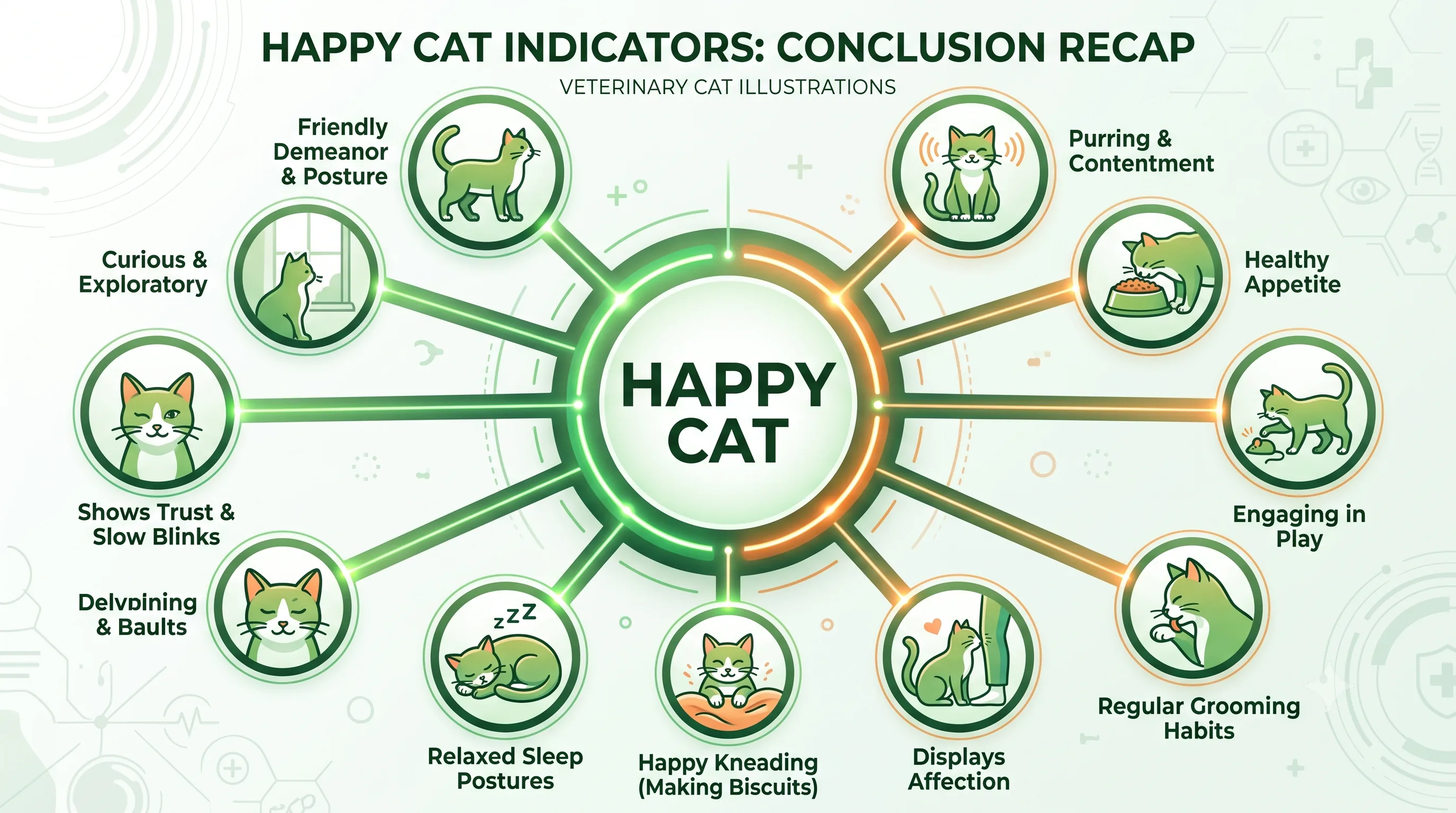
Cats express happiness in quiet, subtle ways. A relaxed tail, playful energy, healthy grooming habits, slow blinks, and peaceful naps all point toward a cat that feels safe and loved.
If your feline friend shows most of these signs regularly, you're providing an environment where they can truly thrive.
Every cat is unique—but when trust, comfort, curiosity, and affection come together, you'll know your cat is living their best life. 🐱
Related articles
Understanding Cat Body Language: A Visual Guide
Tails, ears, eyes, and whiskers all tell a story. Learn to read your cat's body language and strengthen your bond.
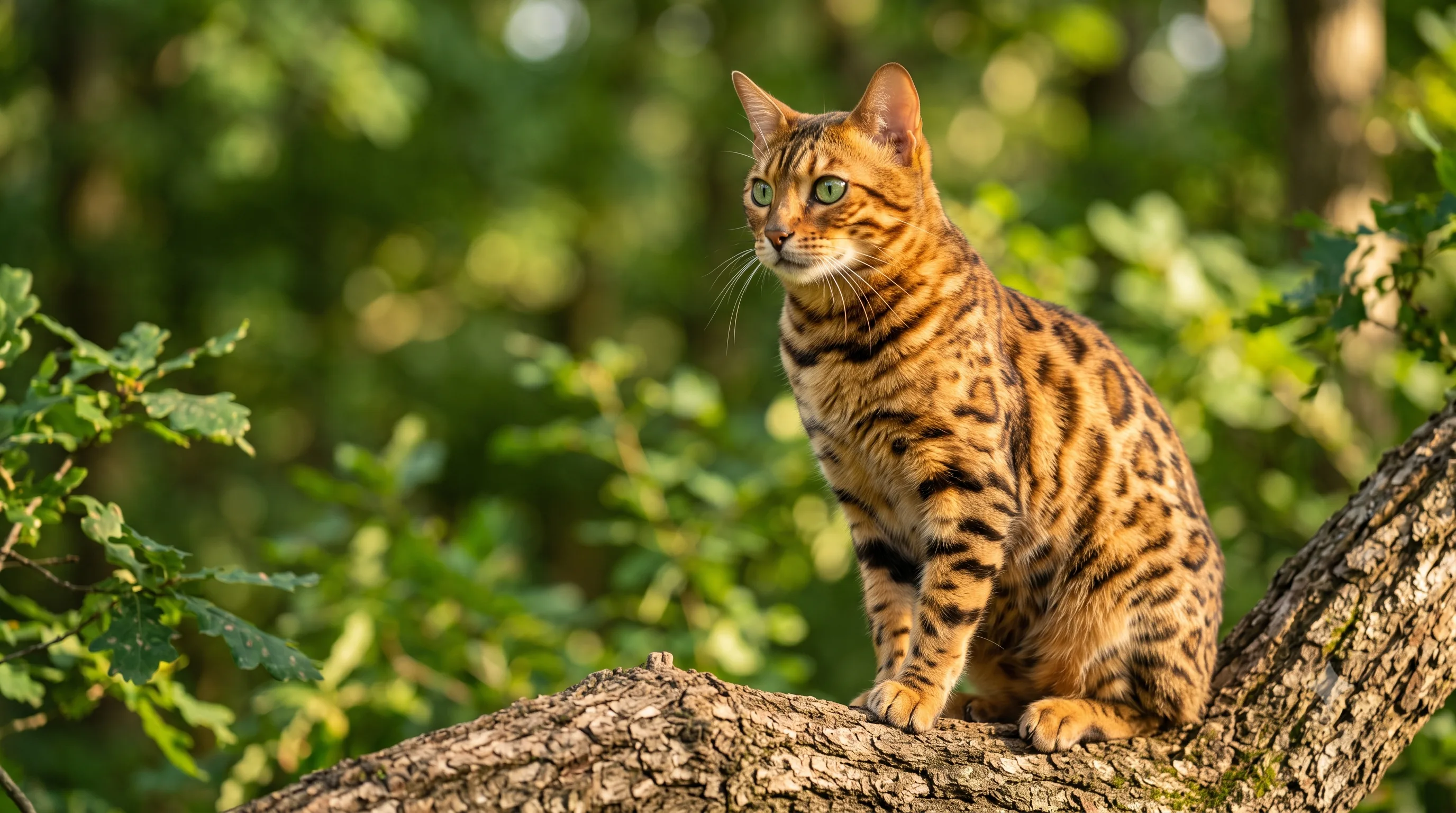
Bengal Cat: Complete Guide to Personality, Care, Lifespan, and Cost
Learn everything about Bengal cats, including personality, appearance, exercise needs, health concerns, lifespan, diet, and ownership costs.
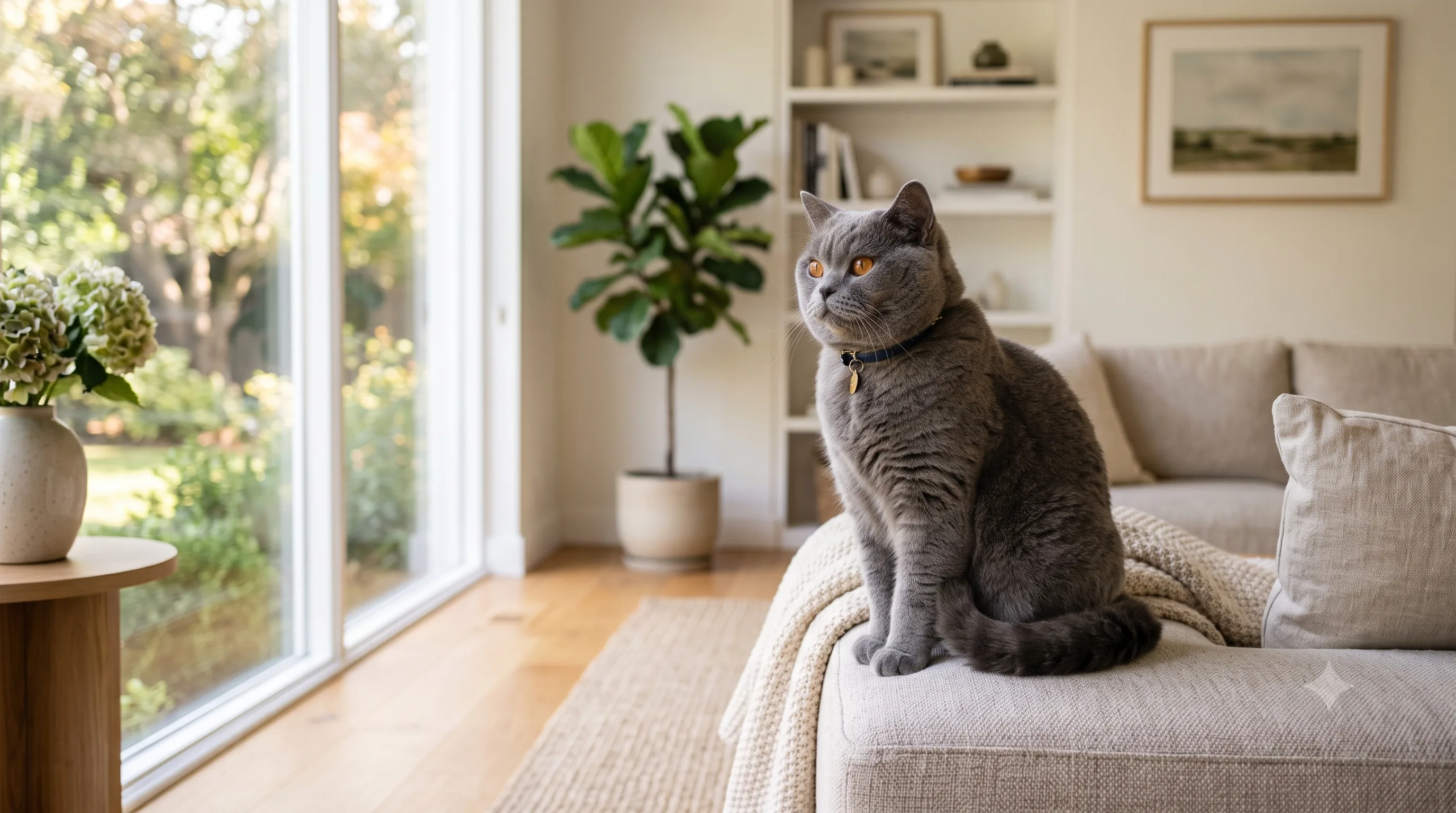
British Shorthair Cat: Complete Guide to Personality, Care, Lifespan, and Cost
Learn everything about British Shorthair cats, including personality, appearance, grooming needs, health concerns, lifespan, diet, and ownership costs.