Cats are constantly communicating — just not with words. Once you learn the signals, you'll understand your cat on a whole new level.
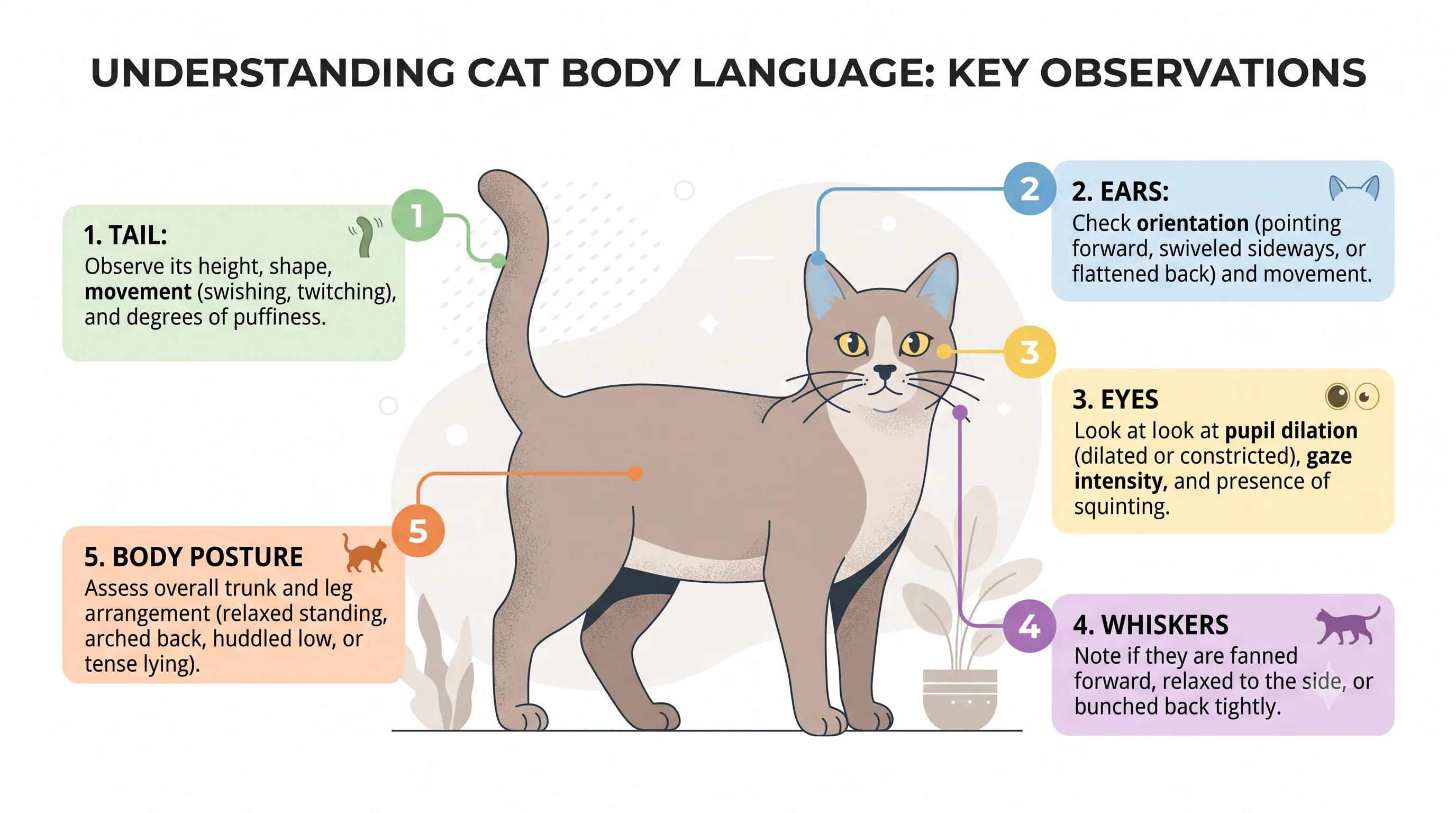
The tail tells all
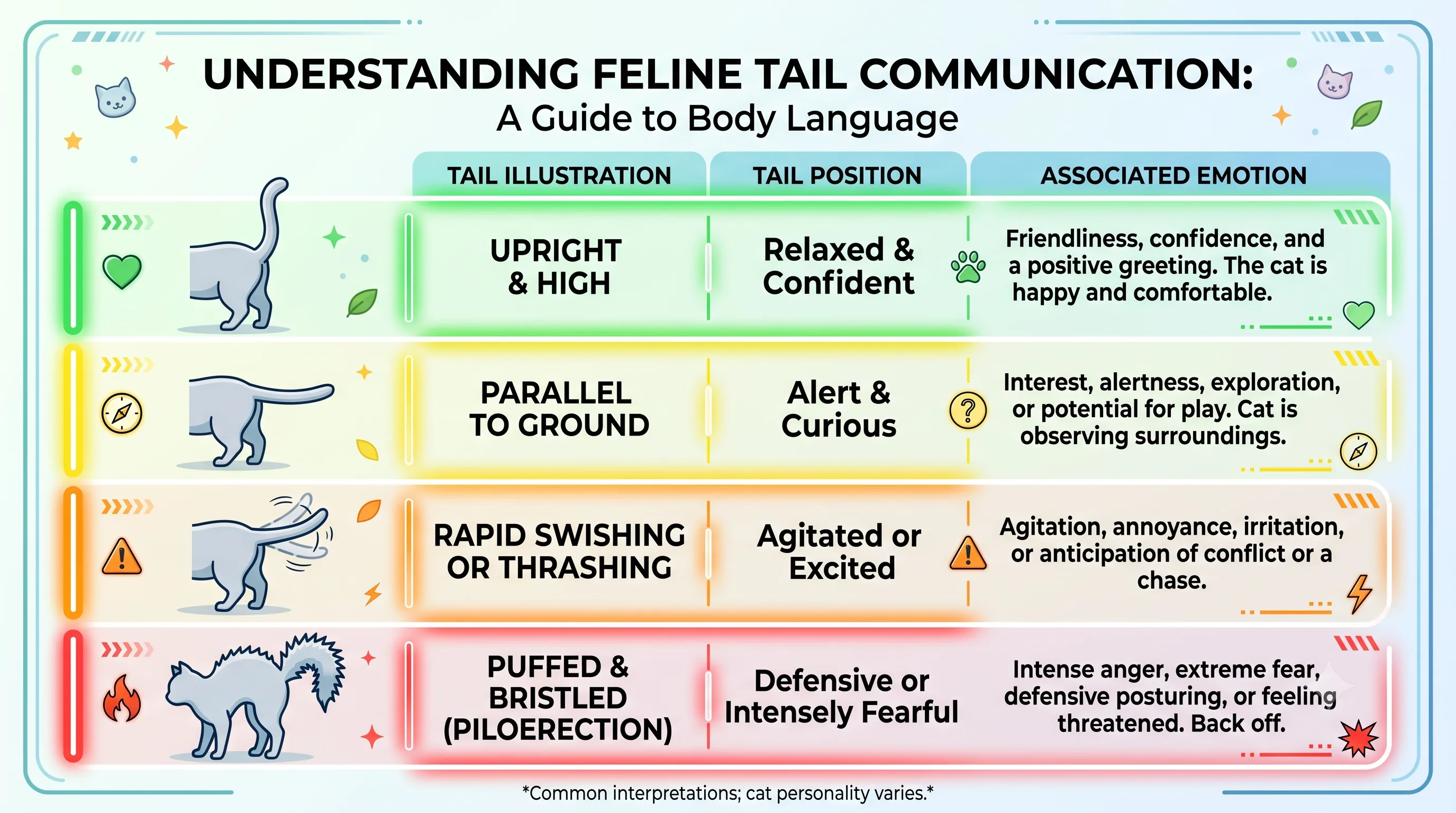
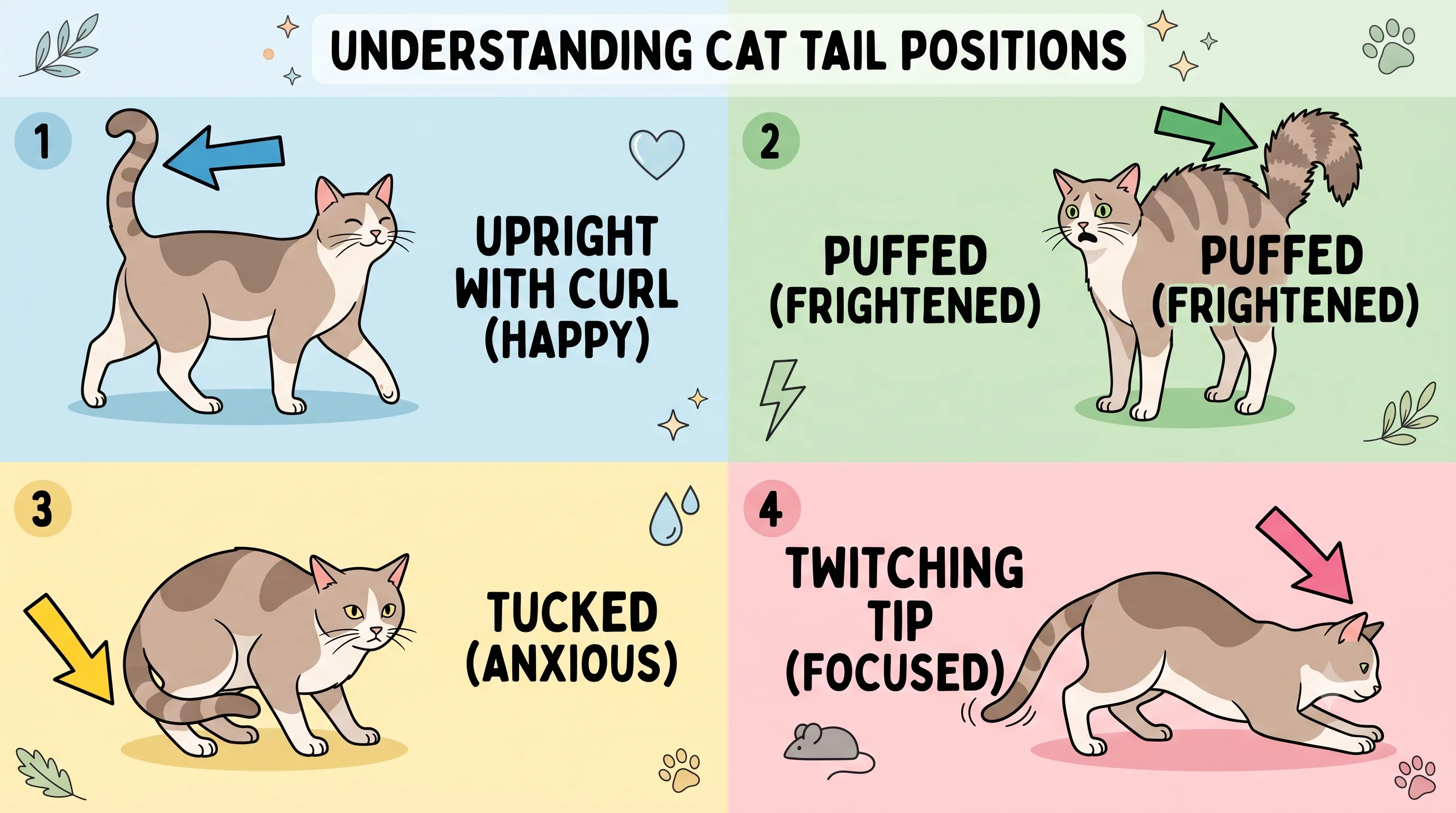
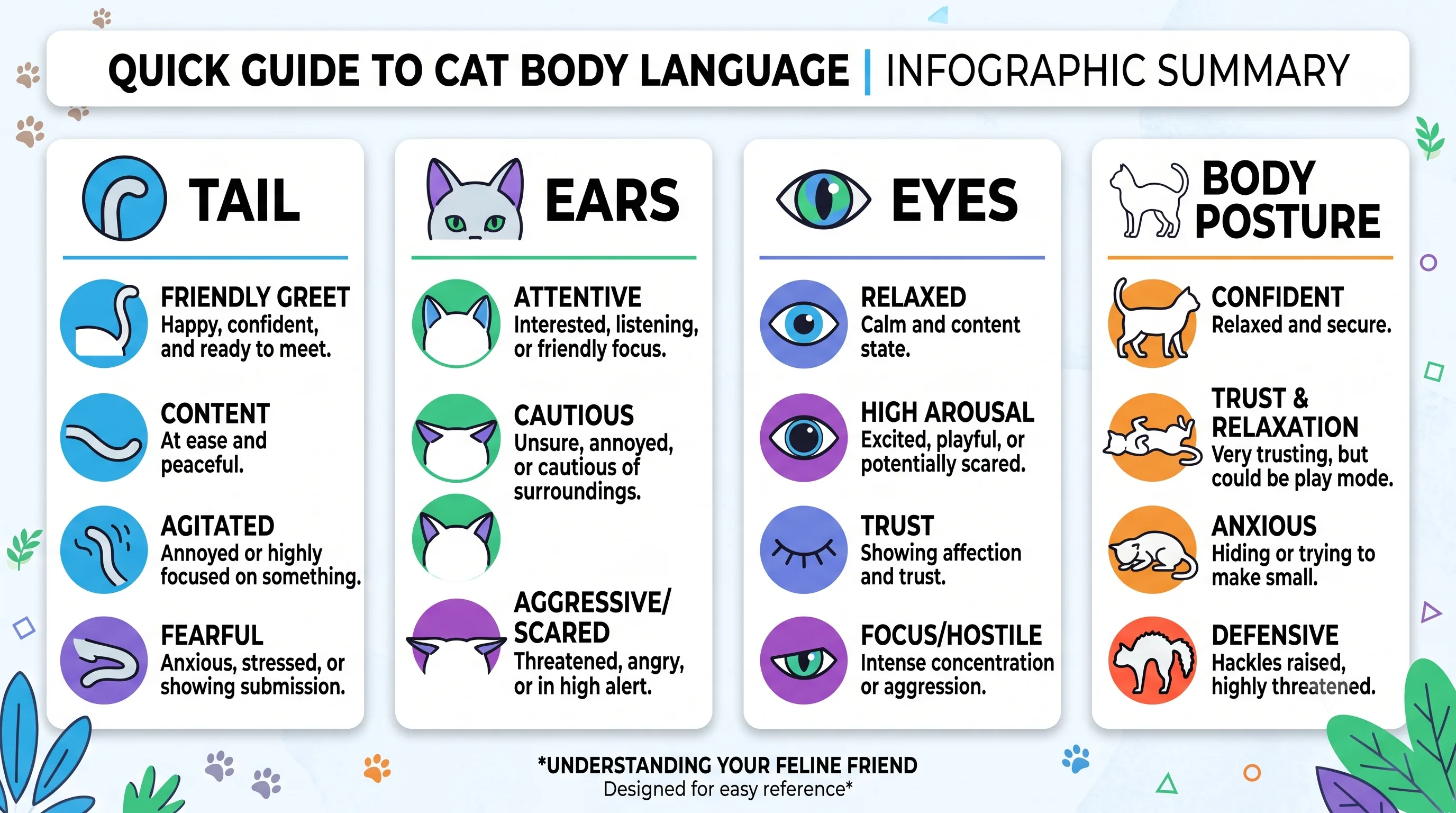
- Upright with a slight curl: confident and happy.
- Puffed up: frightened or threatened.
- Low or tucked: anxious or submissive.
- Twitching tip: focused or mildly irritated.
Ears are mood antennas
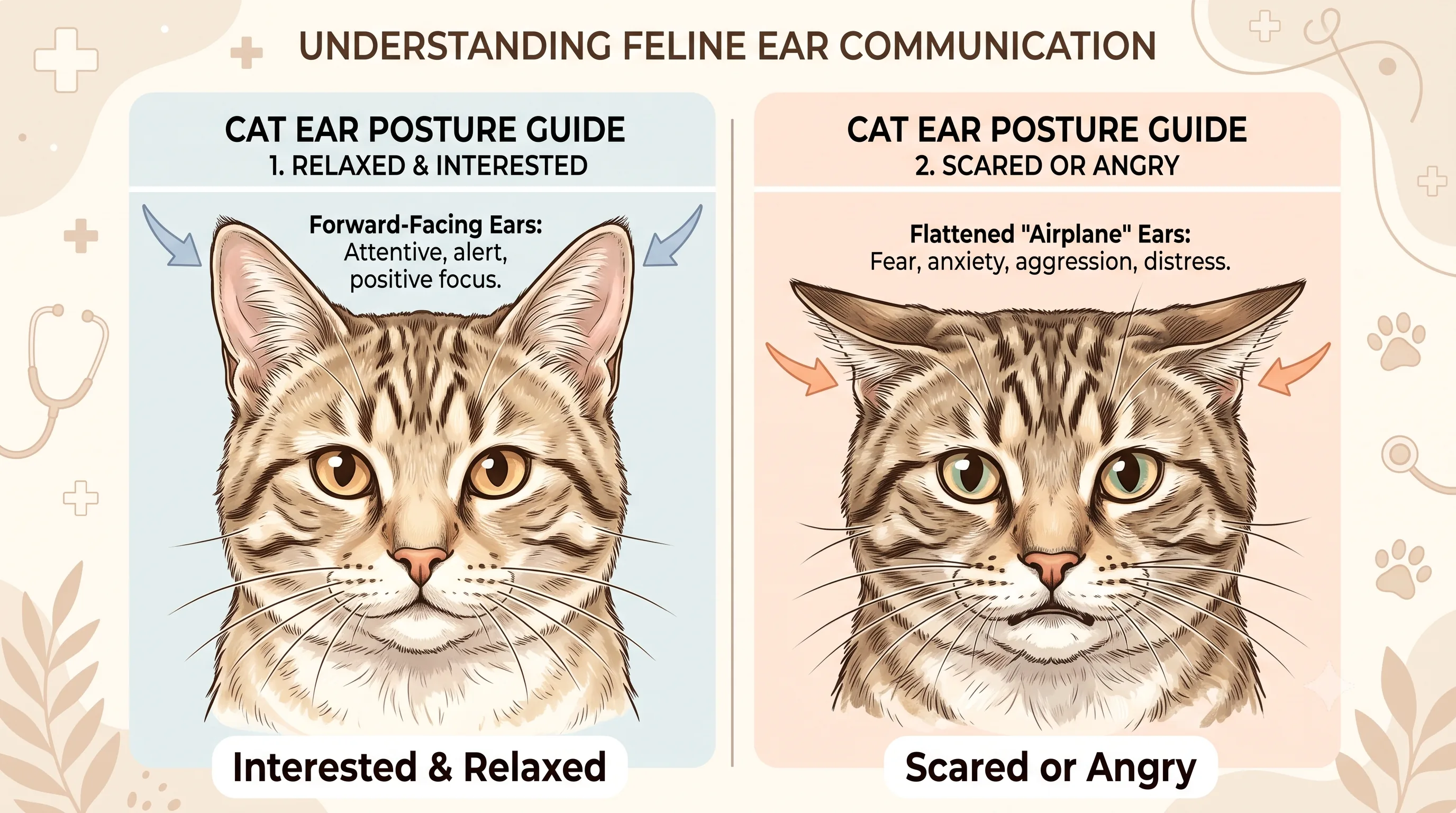
Forward-facing ears signal interest and contentment. Flattened "airplane" ears mean your cat is scared or angry — give them space.
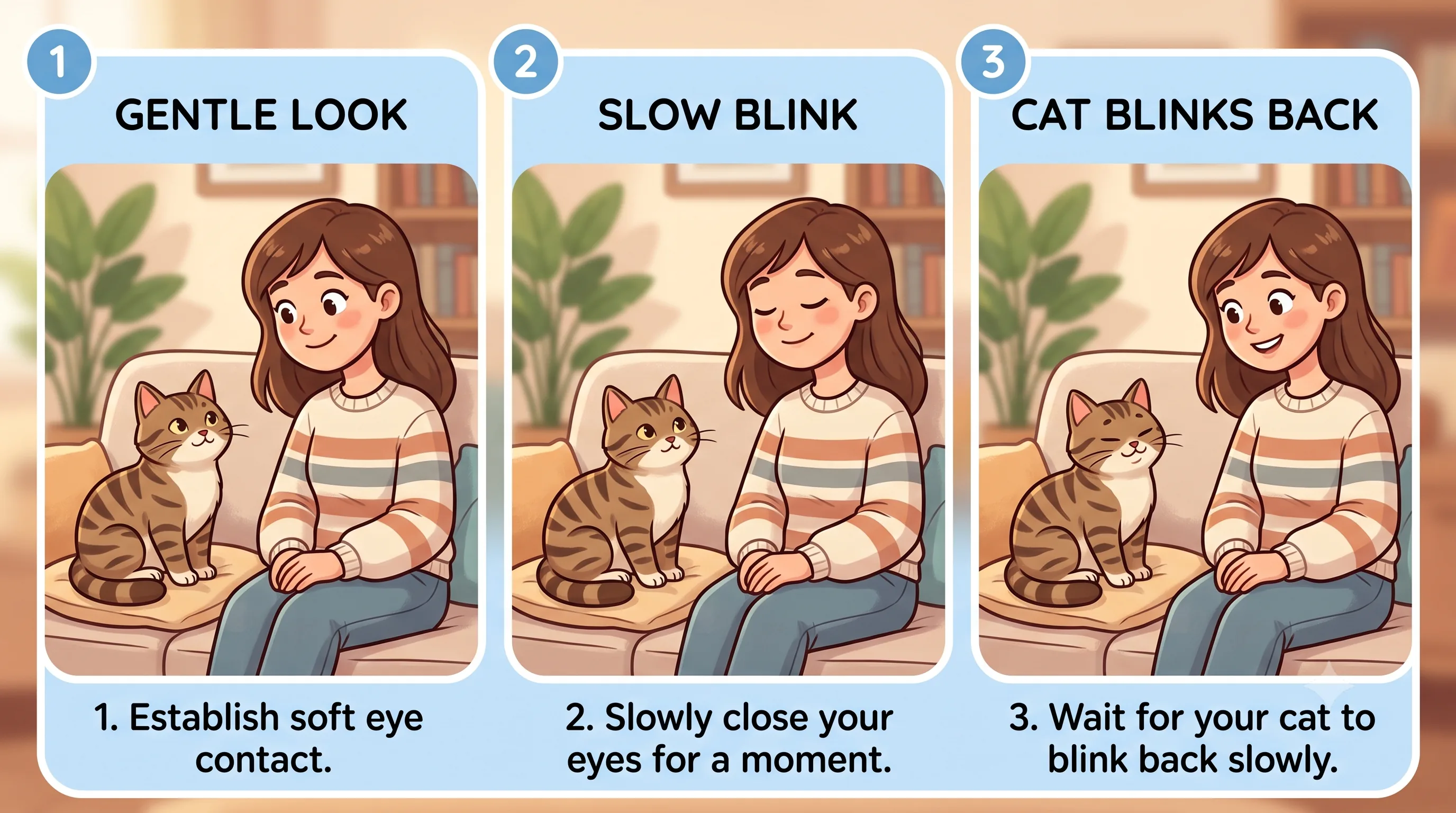
The slow blink
A slow blink is a cat's way of saying "I trust you." Try slow-blinking back — many cats will return the gesture.
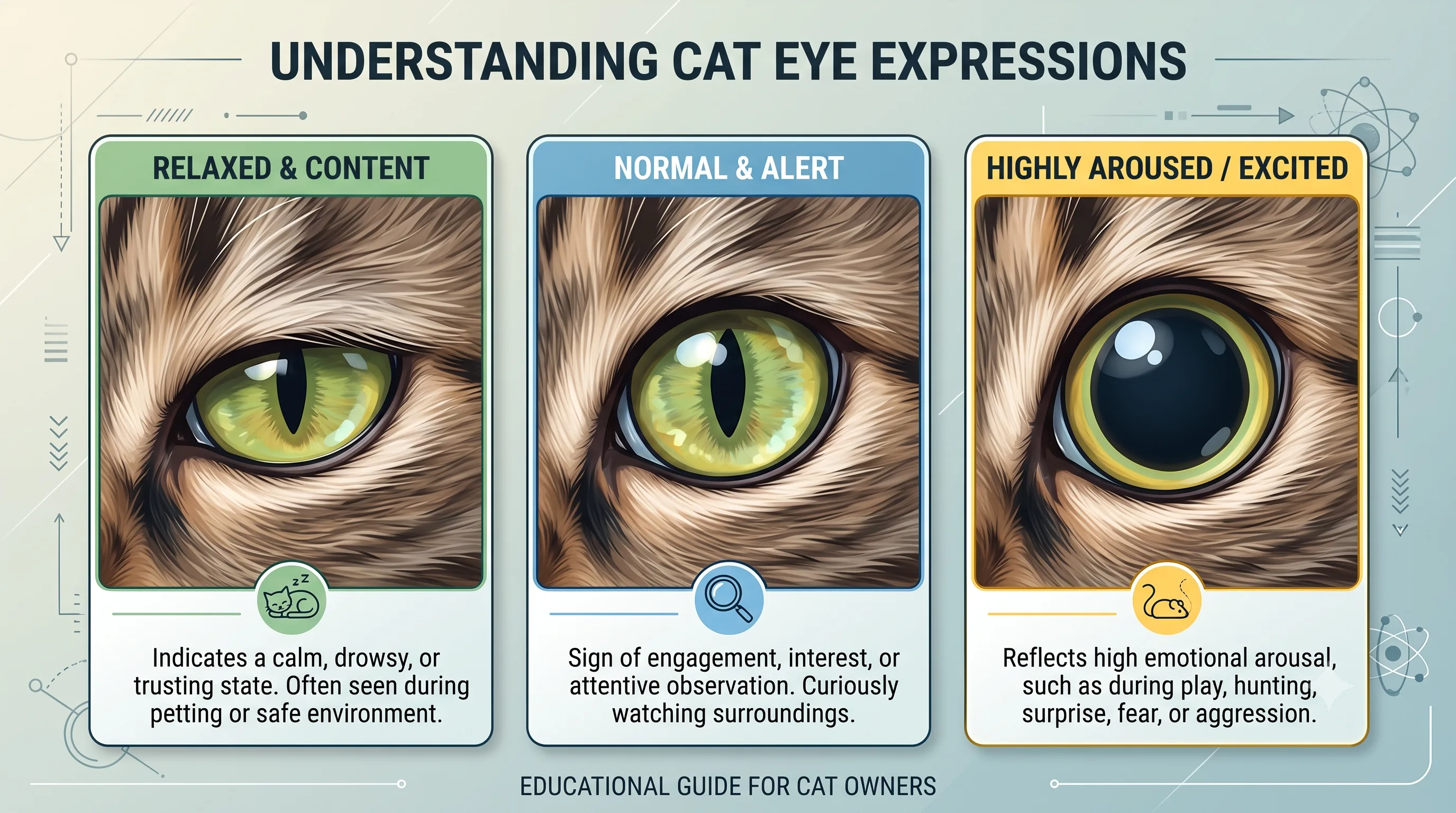
Eyes and pupils
Relaxed, half-closed eyes indicate calm. Wide, dilated pupils can signal excitement, fear, or playfulness depending on context.
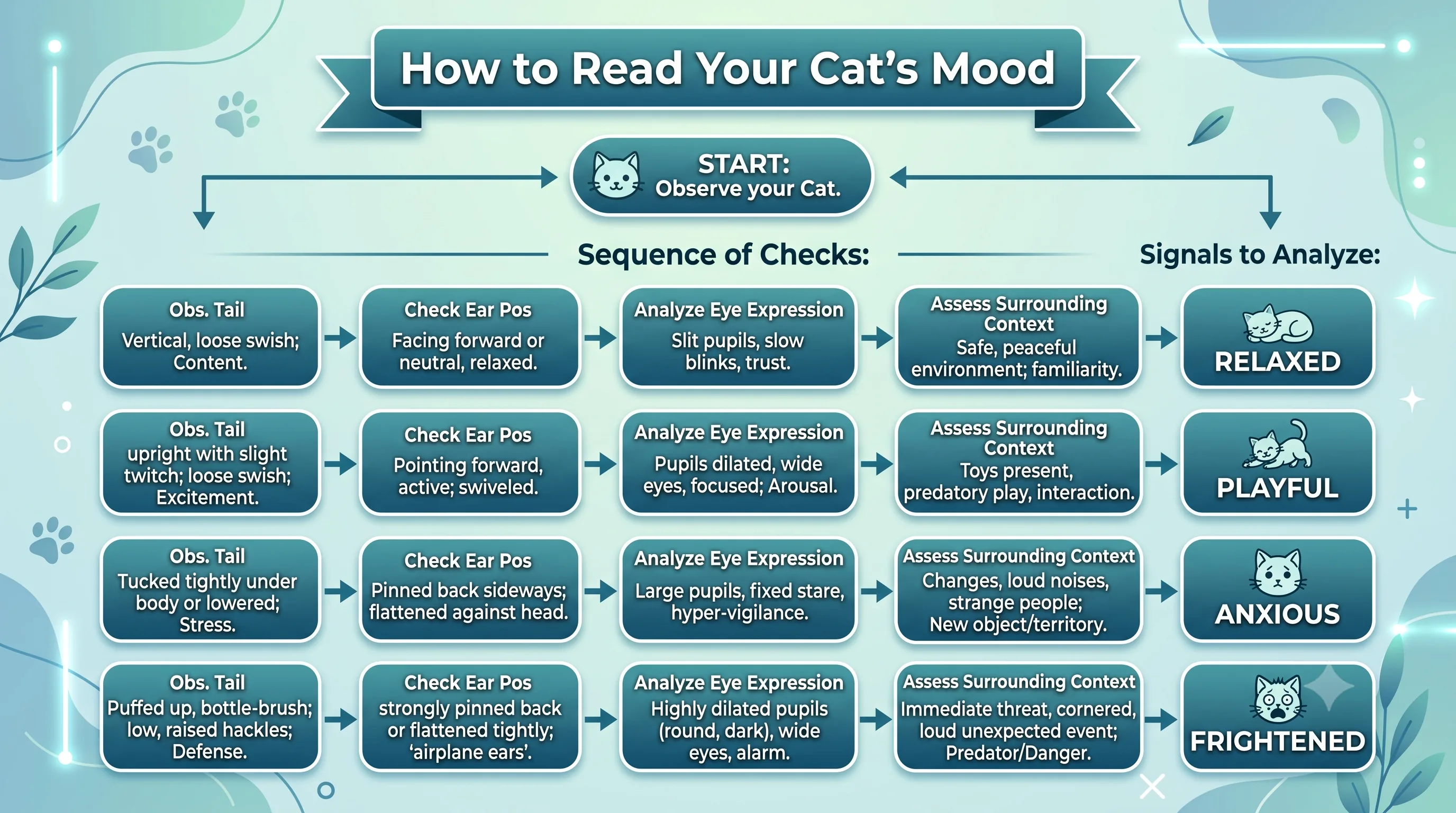
Putting it together
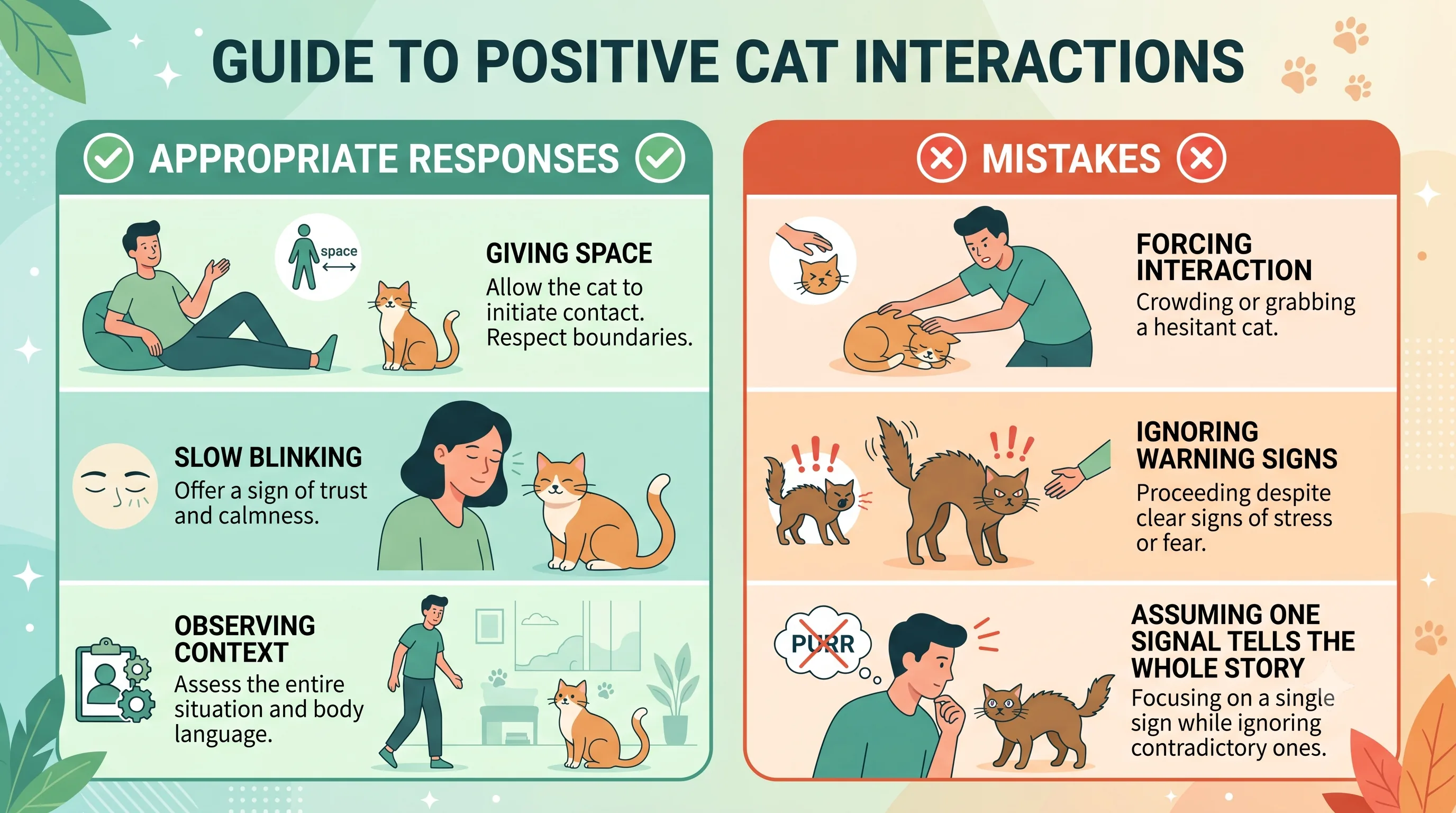
Always read signals in context — a twitching tail during play means something very different from a twitching tail when your cat is cornered. The more you watch, the more fluent you'll become.
Related articles

10 Signs Your Cat Is Truly Happy
Wondering if your cat is content? Here are ten clear, science-backed signs of a happy, well-adjusted feline.
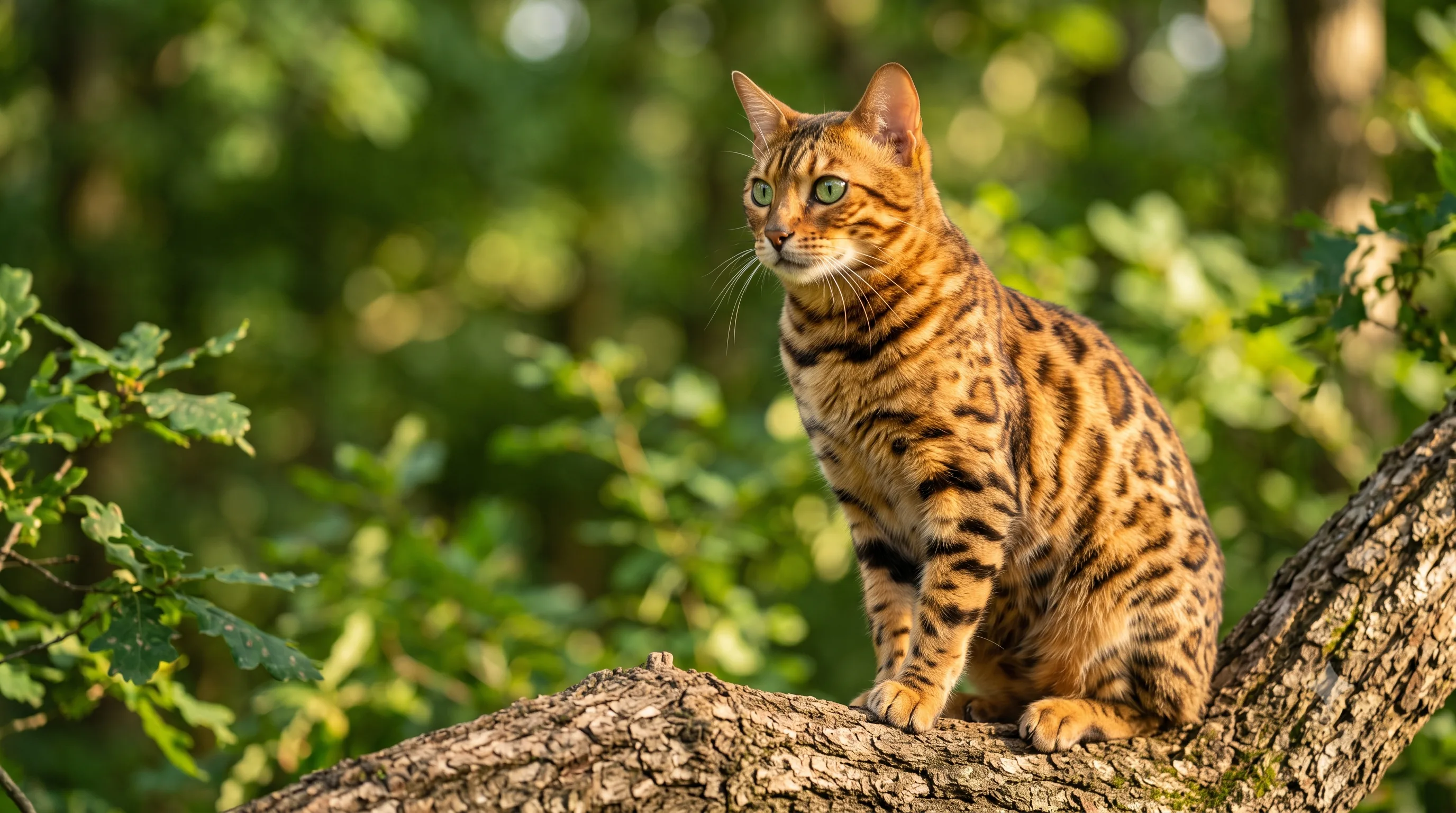
Bengal Cat: Complete Guide to Personality, Care, Lifespan, and Cost
Learn everything about Bengal cats, including personality, appearance, exercise needs, health concerns, lifespan, diet, and ownership costs.

British Shorthair Cat: Complete Guide to Personality, Care, Lifespan, and Cost
Learn everything about British Shorthair cats, including personality, appearance, grooming needs, health concerns, lifespan, diet, and ownership costs.