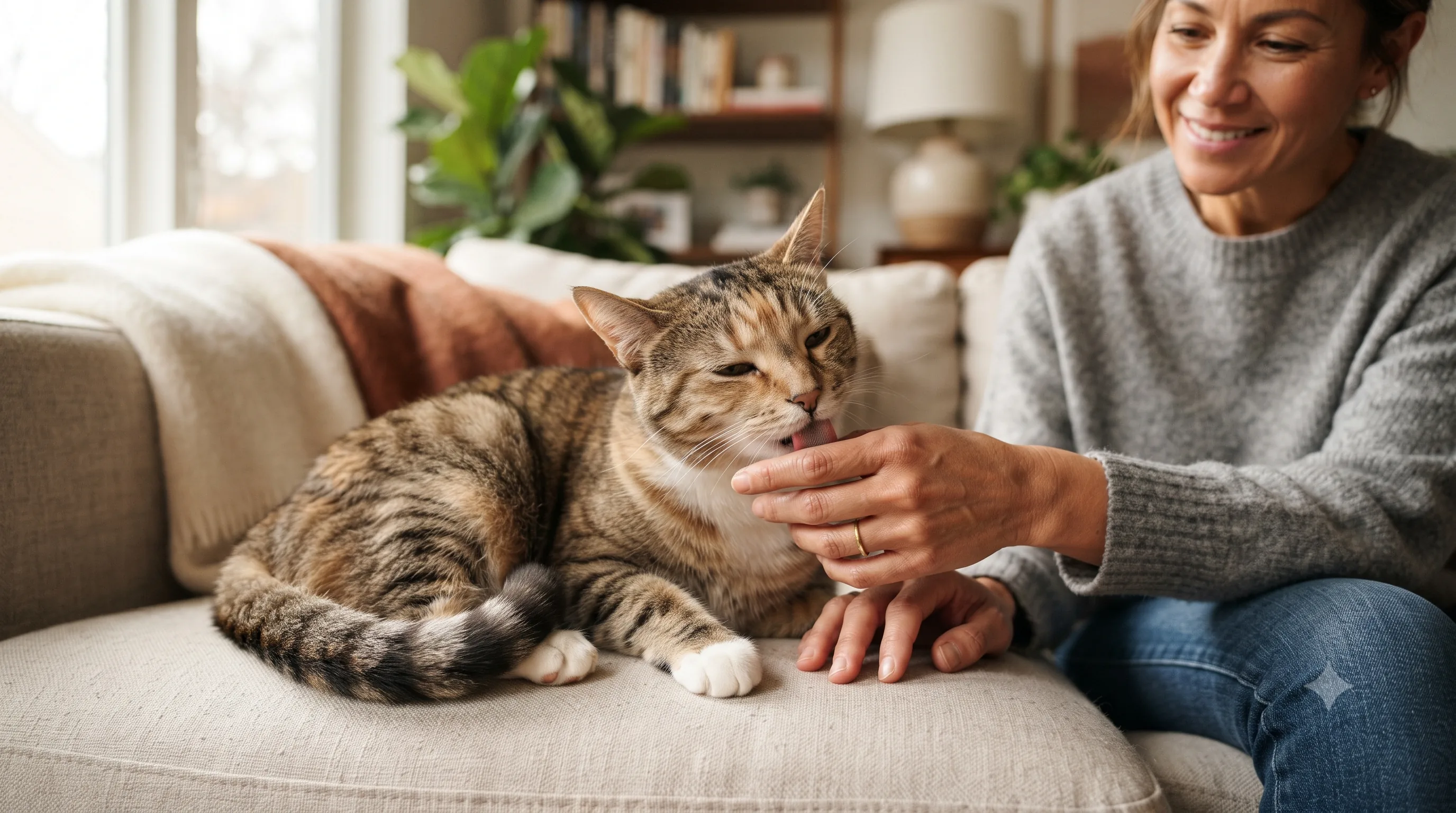
Have you ever been petting your cat peacefully, only to suddenly get a little bite followed by a lick?
It can be confusing. One second your cat seems completely relaxed, and the next you're wondering if you've somehow offended them.
The good news? A gentle bite followed by licking is often normal cat behavior. Your cat may be grooming you, showing affection, playing, seeking attention, or telling you that it has had enough petting.
The trick is learning to read the bite together with your cat's body language.
A soft nibble from a relaxed cat means something very different from a hard bite accompanied by flattened ears, hissing, or a tense body.
So, why does your cat bite you and then lick you?
Let's look at the most common reasons and how to figure out what your cat is actually trying to communicate.
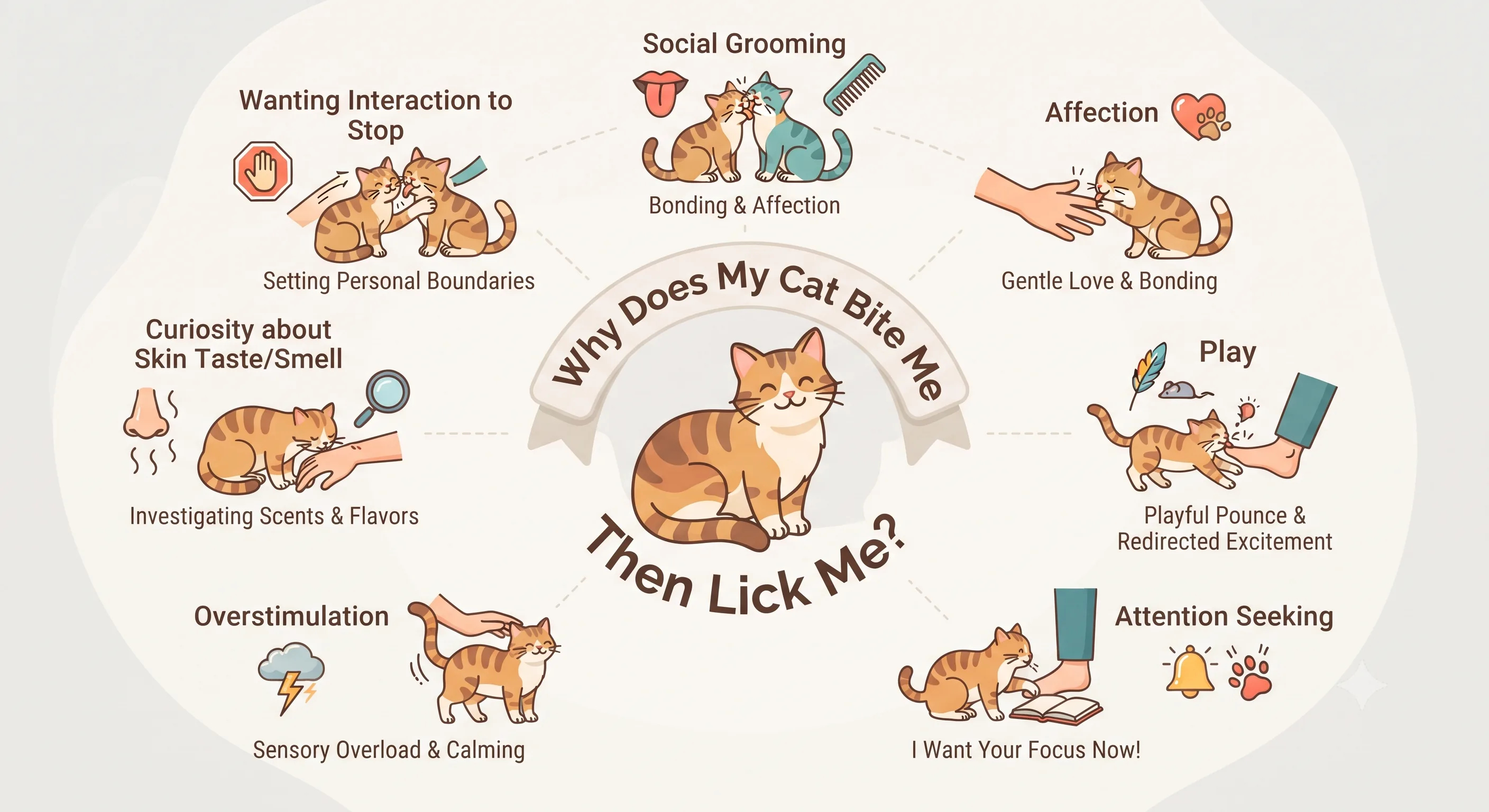
Quick Answer: Why Does My Cat Bite Me Then Lick Me?
When a cat bites you gently and then licks you, there are several possible explanations.
Your cat may be:
- Grooming you
- Showing affection
- Playing with you
- Seeking your attention
- Becoming overstimulated
- Reacting to the taste or smell of your skin
- Telling you that it wants you to stop
The intensity of the bite, your cat's body language, and what happens before and after the bite are the best clues.
If your cat is relaxed, purring, staying close, and giving you a gentle nibble, the behavior is usually very different from a painful bite accompanied by hissing, growling, or defensive body language.
Why Does My Cat Bite Me Then Lick Me?
Cats communicate through body language, sounds, scent, licking, and even gentle biting.
Unlike humans, they don't have words to tell us exactly what they're thinking. Instead, they use a combination of behaviors to communicate.
When a cat bites and then licks you, the behavior can mean different things depending on the situation.
A gentle bite might be part of grooming or play. A bite during a long petting session could mean your cat has become overstimulated.
That's why it's important not to interpret the bite by itself.
Look at the whole situation.
Where were you touching your cat? Was its body relaxed? Was its tail moving? Did it stay beside you afterward?
These little details can tell you much more than the bite alone.
1. Your Cat May Be Grooming You
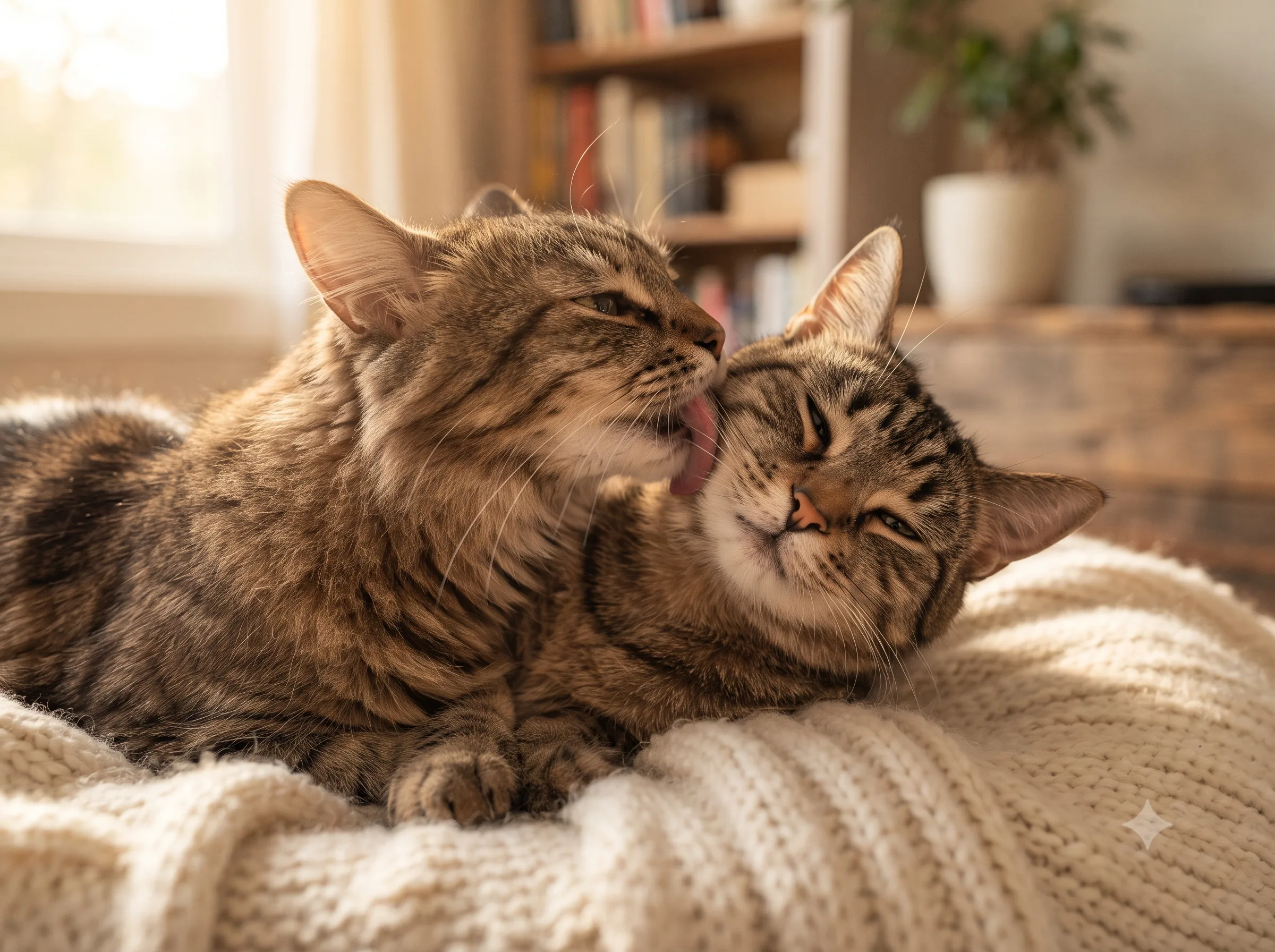
One of the sweetest explanations is that your cat may be treating you like part of its social group.
Cats groom each other as a way of bonding. If your cat licks your hand, arm, face, or even your hair, it may simply be trying to groom you.
Sometimes, a gentle bite can happen in between the licking.
Cats can use their teeth during grooming to remove things from another cat's fur. So a tiny nibble doesn't necessarily mean your cat is trying to hurt you.
Your cat may essentially be saying:
"You're one of us. Let me groom you."
Why Do Cats Groom Each Other?
Social grooming is common among cats that are comfortable with each other.
It can help them:
- Strengthen social bonds
- Keep each other clean
- Share familiar scents
- Show trust and affection
- Relax around one another
If your cat regularly licks you while sitting comfortably beside you, it's generally a positive sign.
2. Your Cat Could Be Showing Affection
Cats don't always show affection in the same way dogs do.
Some cats love sitting on your lap. Others prefer following you around the house. Some show affection by head-bumping you, purring beside you, slow blinking, or gently licking your skin.
A soft bite followed by licking can sometimes be another form of affection.
You might notice this behavior when you're relaxing together and your cat looks completely comfortable.
Signs Your Cat May Be Showing Affection
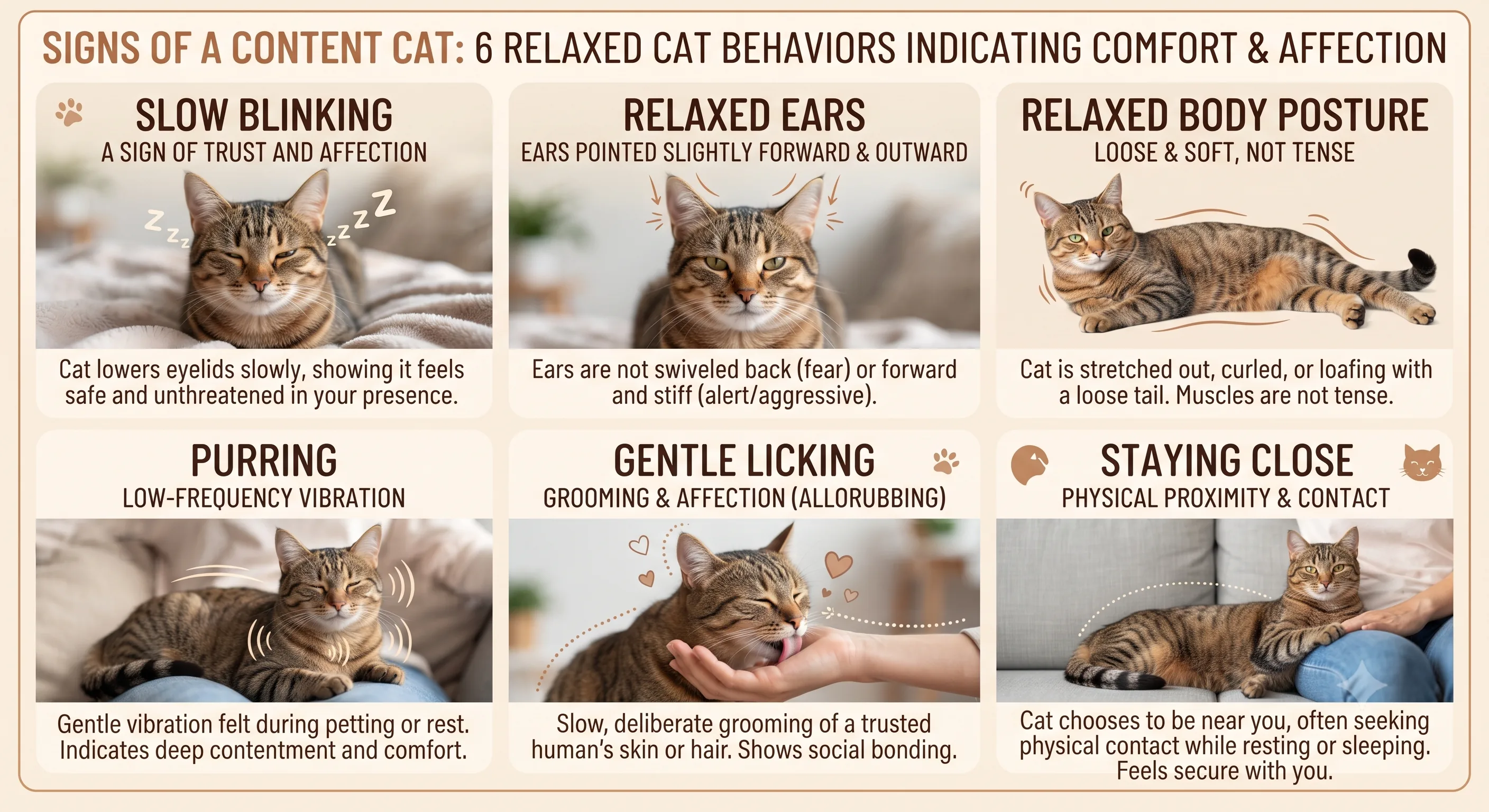
Look for several relaxed behaviors happening together, such as:
- Gentle nibbling rather than a painful bite
- Relaxed ears
- A relaxed body
- Purring
- Slow blinking
- Staying close to you afterward
- Licking you after the bite
Of course, every cat has its own personality.
Some cats are simply more "mouthy" than others.
The important thing is that the bite is gentle and your cat's overall body language remains relaxed.
3. Your Cat May Be Overstimulated
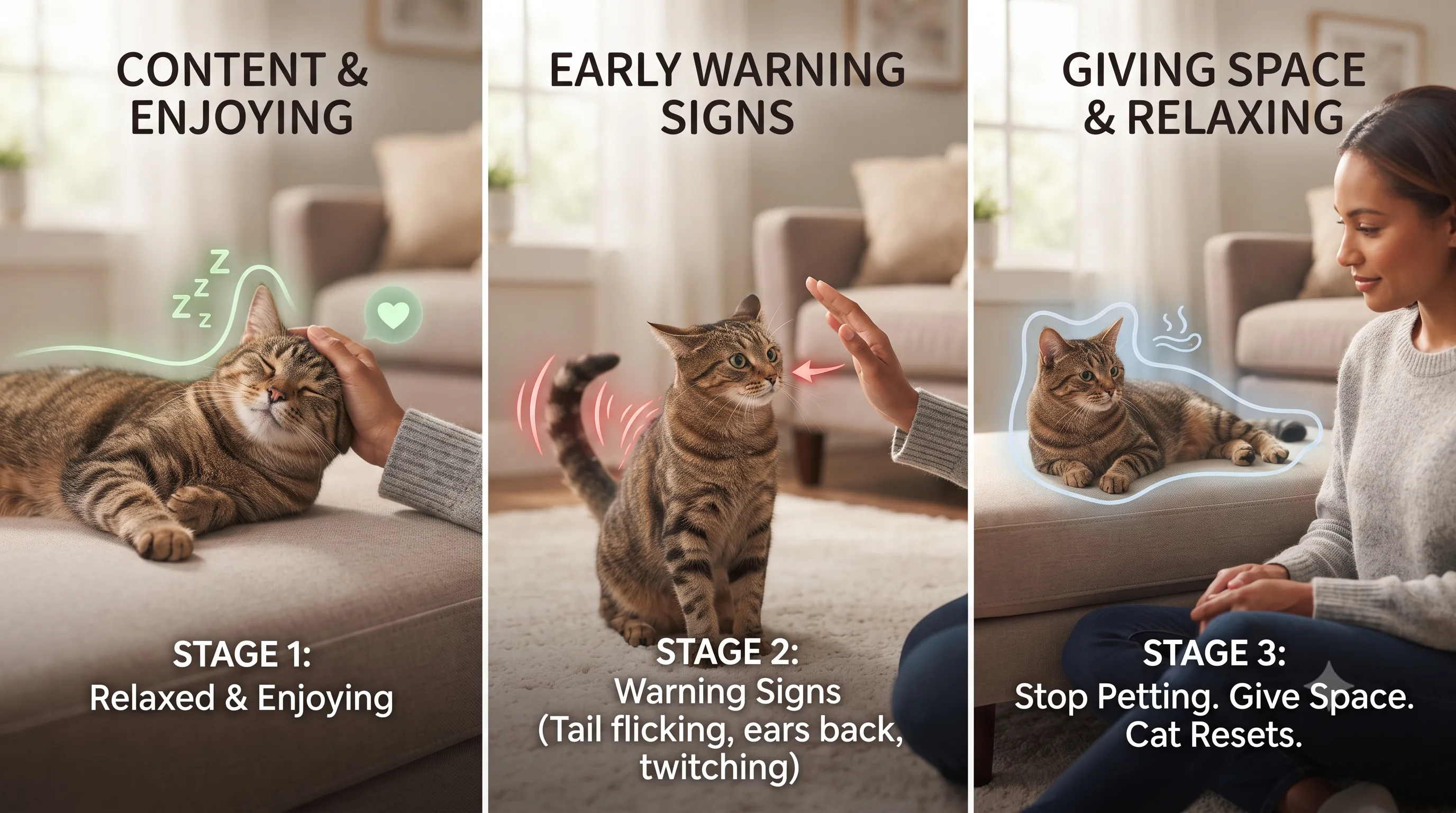
If your cat suddenly bites while you're petting it, overstimulation may be the reason.
Your cat may enjoy being scratched behind the ears or under the chin, but that doesn't mean it wants unlimited petting.
After a while, the sensation can become overwhelming.
Your cat may give you a quick bite as a very direct way of saying:
"I liked that... but you've reached my limit."
This can happen particularly when you repeatedly pet areas such as the back, sides, or base of the tail.
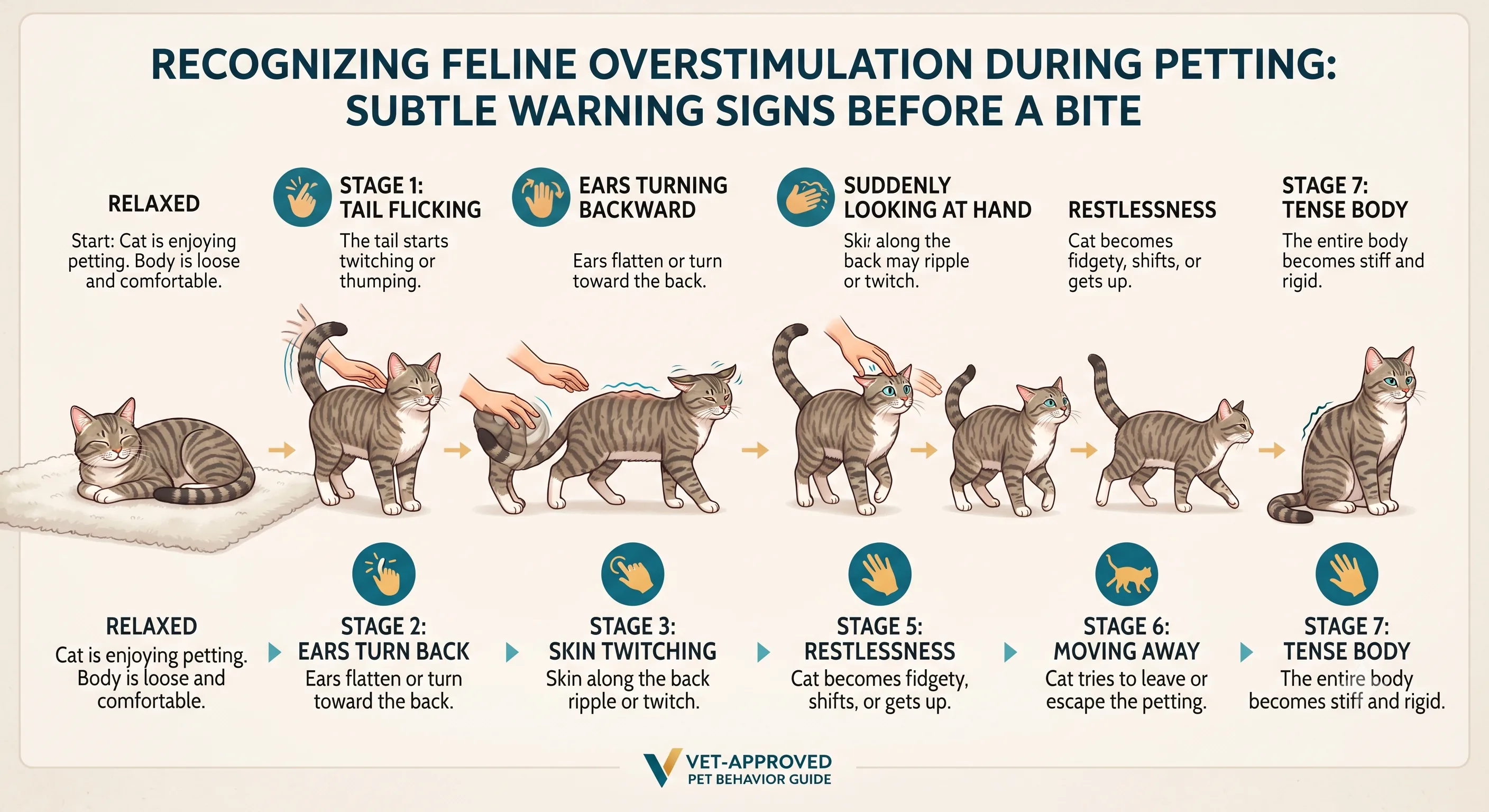
Watch for These Warning Signs
Your cat may be getting overstimulated if you notice:
- Tail flicking or thumping
- Ears turning sideways or backward
- Skin twitching along the back
- Suddenly looking at your hand
- Restlessness
- Moving away from you
- Tensing its body
If you notice these signs, stop petting your cat and give it some space.
The bite isn't necessarily your cat being aggressive.
It may simply be a very direct way of communicating a boundary.
4. Your Cat Might Be Playing
Cats naturally use their mouths and paws when they play.
If your cat gently bites you, licks you, and then tries to grab your hand again, it may be treating your hand like a toy.
This is especially common with kittens and young cats.
A playful cat may also:
- Pounce toward your hand
- Grab your fingers with its paws
- Kick with its back legs
- Wiggle its body
- Chase your moving fingers
- Give gentle bites
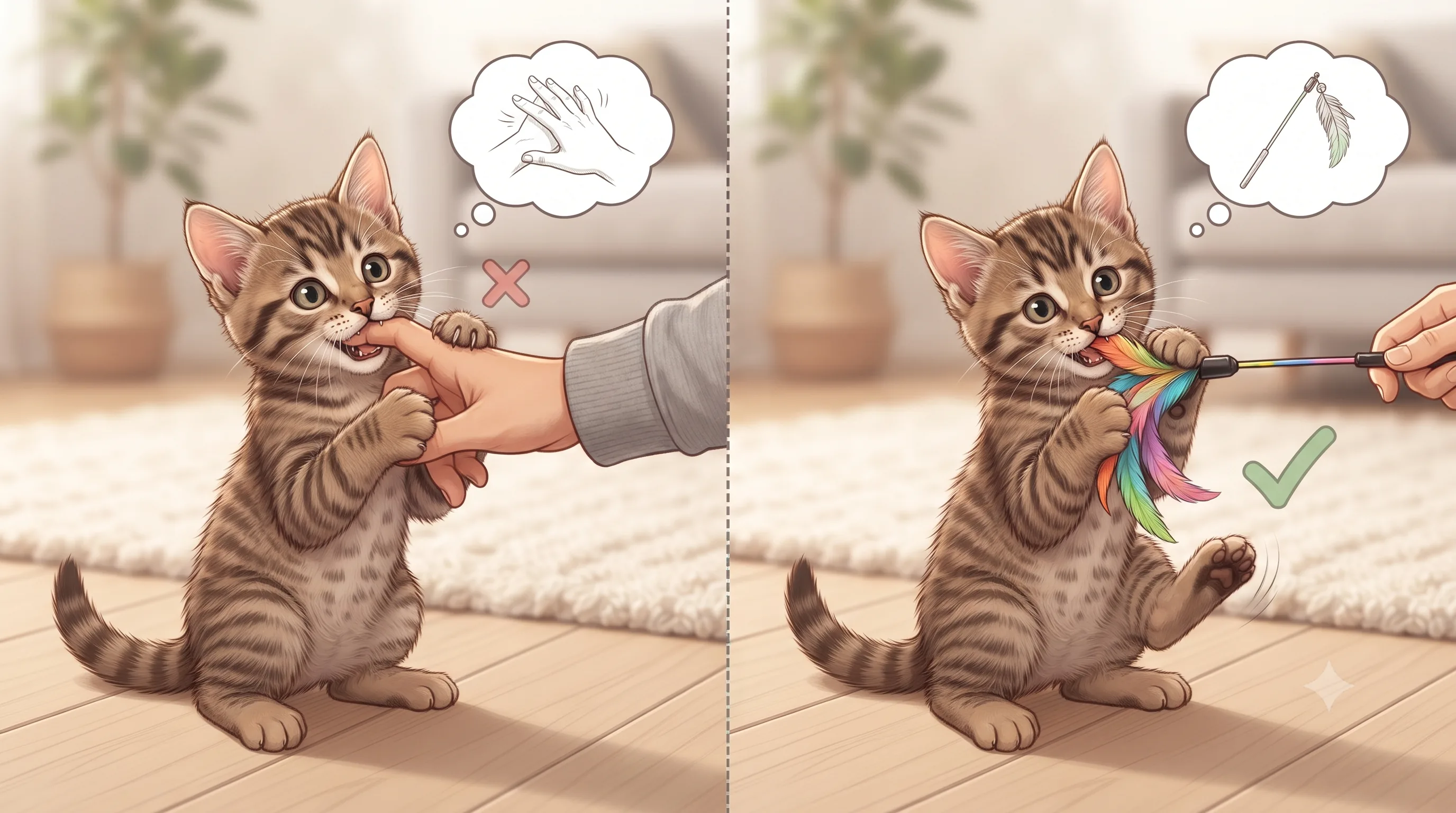
Playful biting can look cute when your cat is small, but it's better not to encourage biting human hands.
Don't use your fingers as toys.
Instead, redirect your cat toward an appropriate toy.
Wand toys, kicker toys, balls, and interactive toys can give your cat a safer outlet for chasing, grabbing, and biting.
5. Your Cat Likes the Taste or Smell of Your Skin
Not every bite-and-lick moment is affectionate.
Sometimes your cat simply likes the taste or smell of your skin.
Your skin can contain traces of:
- Sweat
- Salt
- Food
- Lotion
- Other scents
If you've just exercised or your hands are slightly sweaty, your cat may be especially interested in licking them.
Cats have a powerful sense of smell, so something that seems completely uninteresting to you can be fascinating to them.
In this situation, the licking may have less to do with affection and more to do with curiosity.
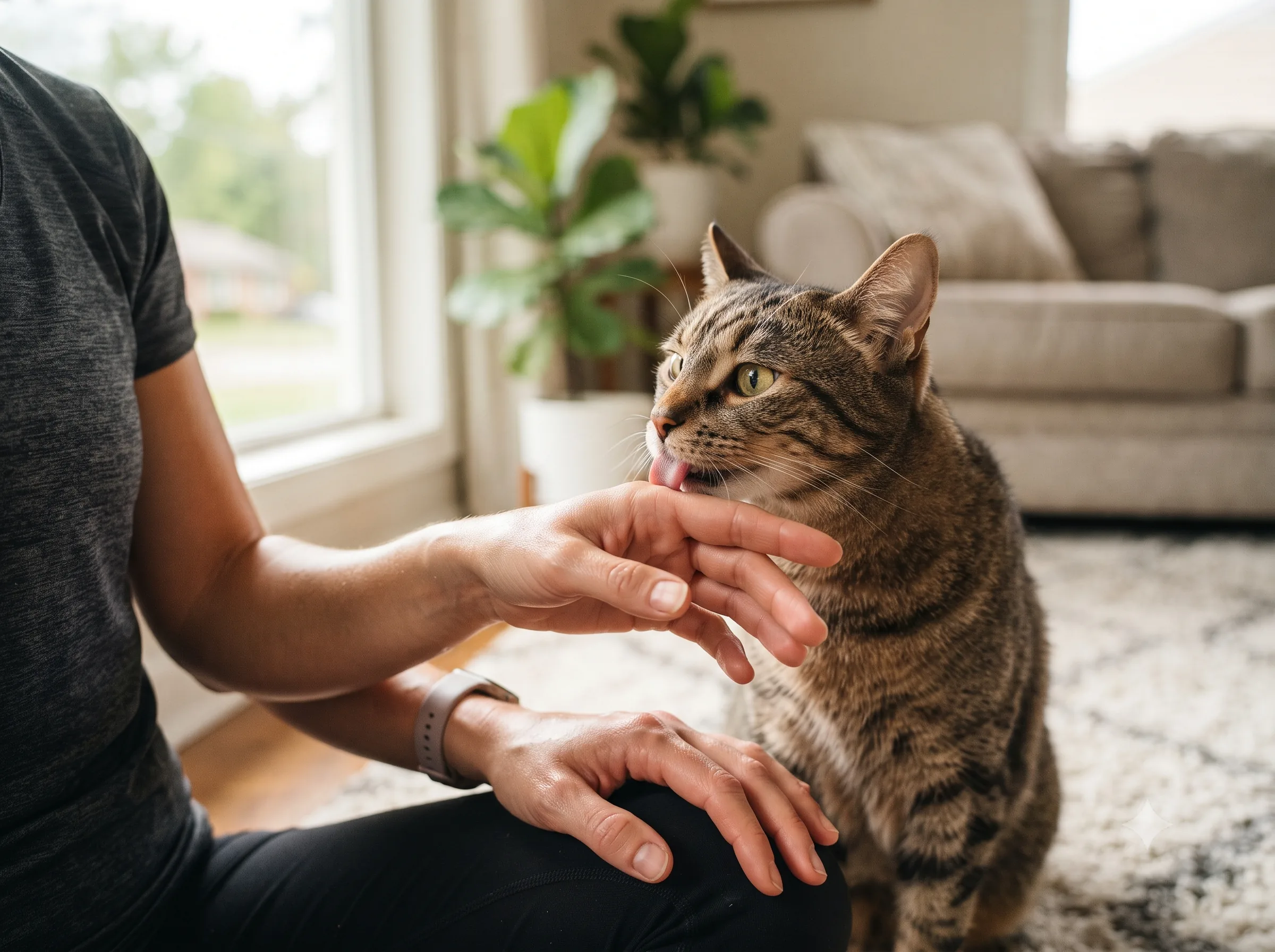
6. Your Cat Wants Your Attention
Cats are surprisingly good at learning what gets a reaction from their humans.
If your cat gently bites you and you immediately look at it, talk to it, pet it, or laugh, your cat may learn that biting gets your attention.
Over time, the behavior can become a little routine.
For example, your cat might walk over, give your hand a tiny bite, lick it, and then stare at you.
It may simply have learned:
"This works."
If you don't want the behavior to continue, try not to turn it into a game.
Calmly move your hand away and redirect your cat toward a toy or another activity.
7. Your Cat May Be Telling You to Stop Petting
Sometimes the simplest explanation is the right one.
Your cat may bite you because it wants you to stop doing something.
This can happen when you're:
- Petting it for too long
- Touching a sensitive area
- Holding it when it wants to leave
- Trying to move it
- Playing too roughly
- Getting too close while it's resting
The licking afterward doesn't necessarily mean the bite was affectionate.
Cats can show mixed signals, and the entire body language of your cat matters more than one action.
If your cat bites after you've been petting it for several minutes, consider whether it was trying to tell you that the interaction had gone on long enough.
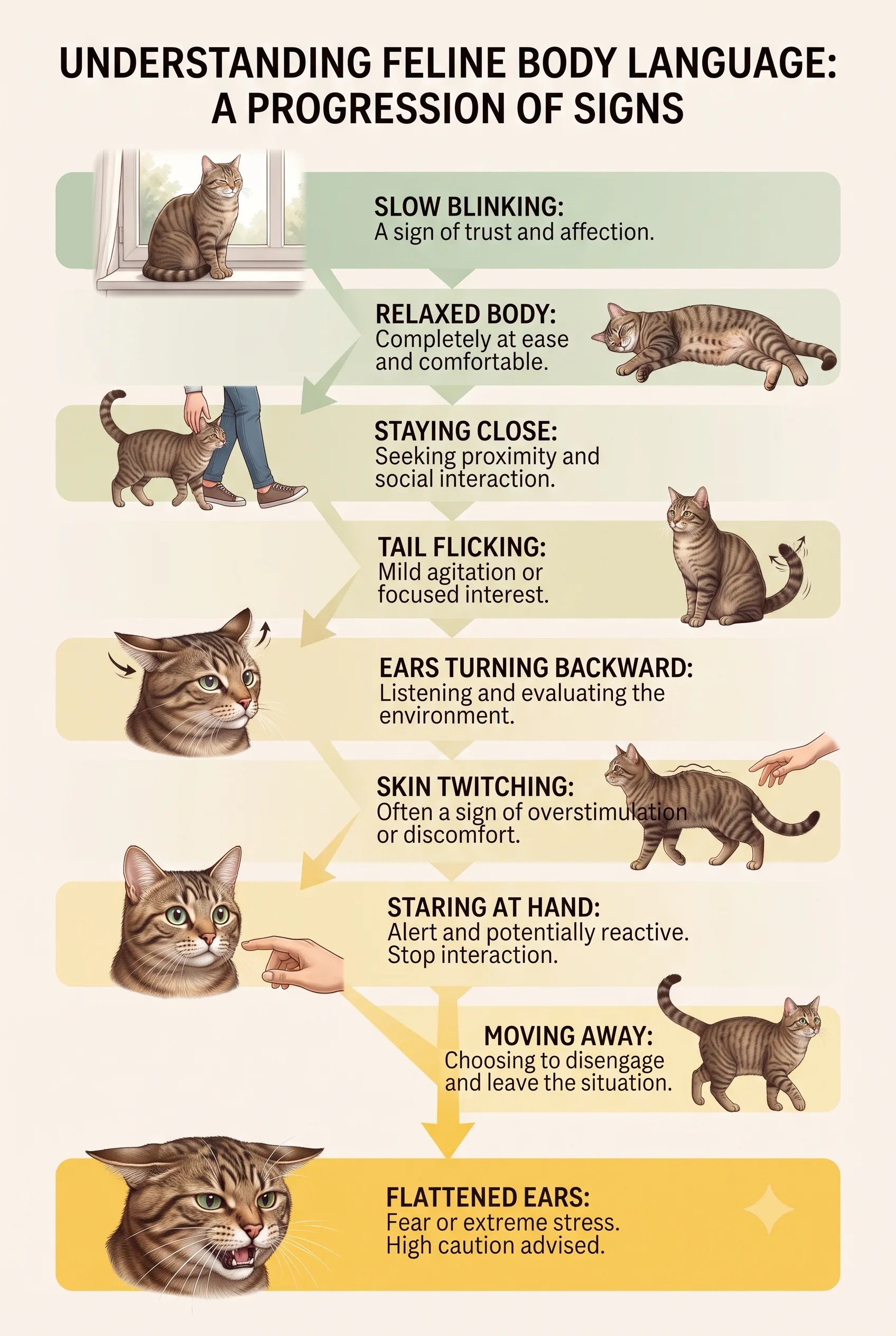
Love Bite or Aggressive Bite? How Can You Tell?
Not every cat bite means the same thing.
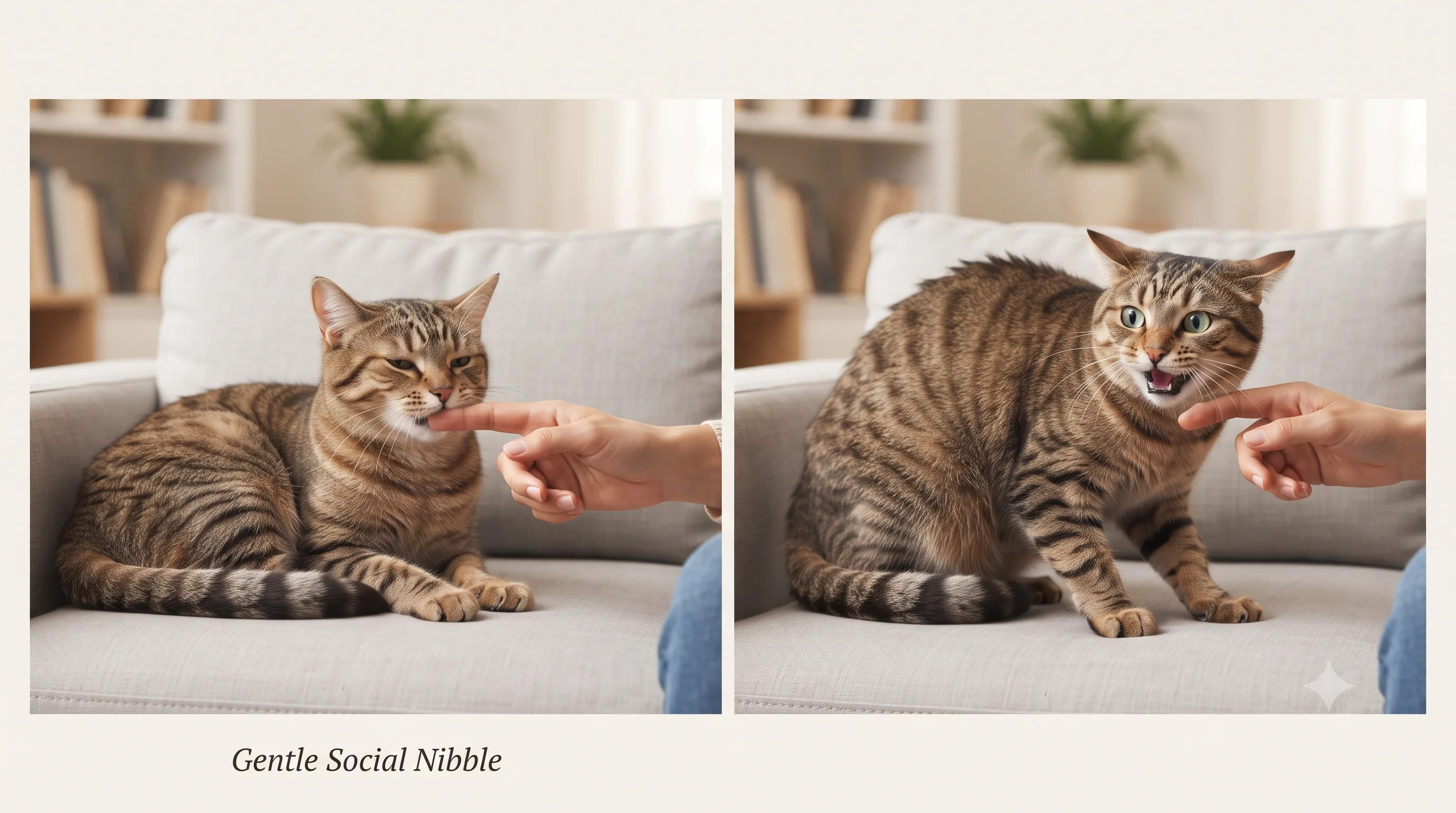
A love bite is usually gentle and doesn't cause significant pain. Your cat may remain relaxed and continue sitting beside you.
An aggressive or defensive bite is usually much more forceful and may be accompanied by other warning behaviors.
The easiest way to tell the difference is to look at the bite together with your cat's body language.
| Gentle Bite | Aggressive or Defensive Bite |
|---|---|
| Light pressure | Hard or forceful bite |
| Relaxed body | Tense or defensive body |
| Ears mostly relaxed | Ears flattened or pinned back |
| May purr | May hiss or growl |
| Little or no pain | Can cause significant pain |
| Cat stays nearby | Cat may try to escape or attack |
| Relaxed facial expression | Wide eyes or defensive expression |
If you're unsure which type of bite you're seeing, pay attention to your cat's behavior both before and after the bite.
What Is Your Cat's Body Language Telling You?
Your cat's body language can help you understand why it is biting or licking you.
One behavior rarely tells the whole story.
Instead, look for several signals happening at the same time.
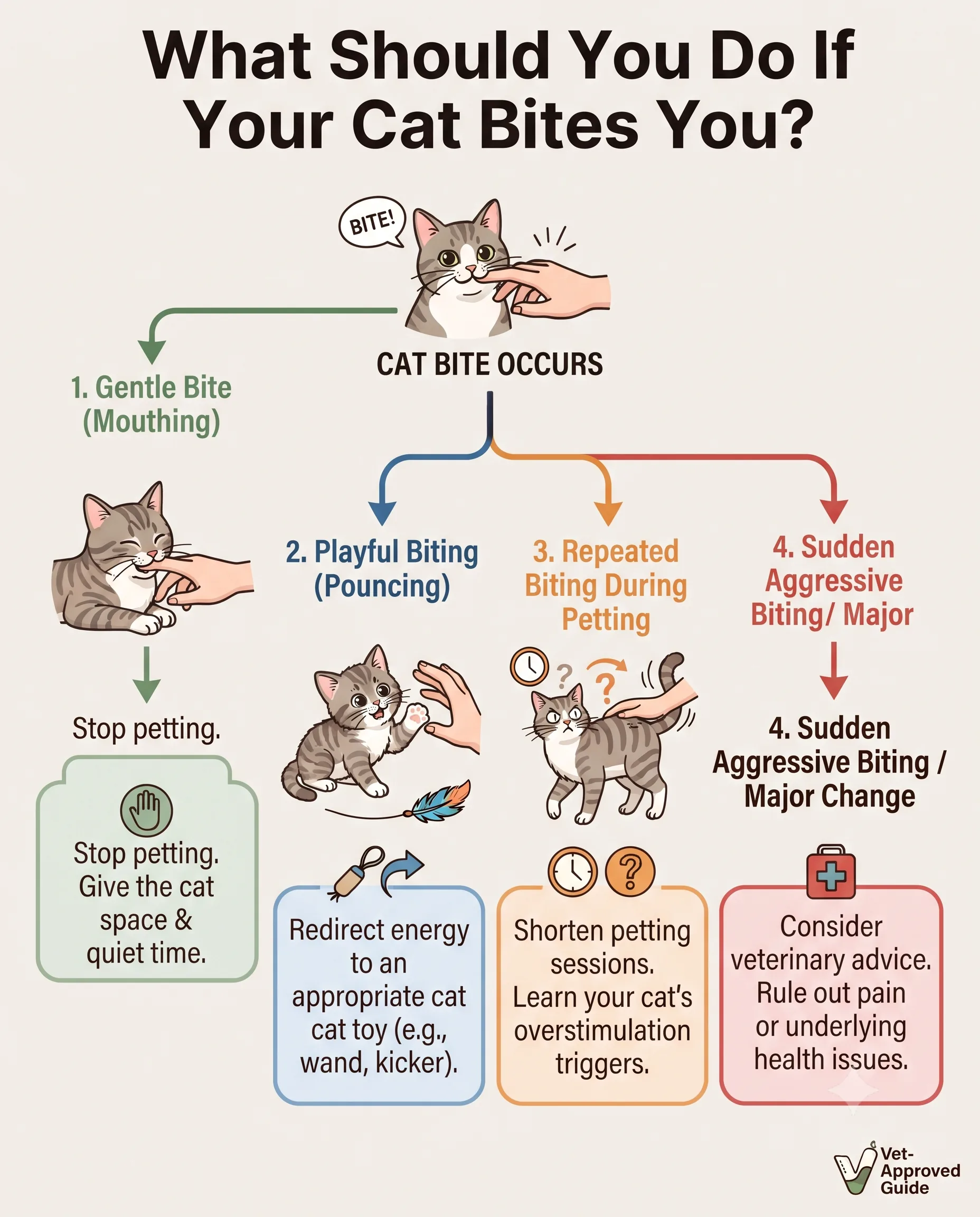
| Cat's Behavior | What It May Mean |
|---|---|
| Slow blinking | Relaxed and comfortable |
| Relaxed body | Comfortable and calm |
| Purring | Often relaxed, depending on context |
| Tail flicking | Possible irritation or overstimulation |
| Ears turning backward | Discomfort, irritation, or stress |
| Flattened ears | Fear, stress, or defensive behavior |
| Skin twitching | Possible overstimulation |
| Suddenly staring at your hand | May be reaching its tolerance limit |
| Moving away | Wants more space |
| Staying close afterward | Often indicates continued comfort |
For example, a cat that gently bites you while purring and staying beside you is giving you very different signals from a cat that bites while flattening its ears and trying to escape.
Context matters.
Should You Let Your Cat Bite You?
It depends on the type of biting.
A gentle occasional nibble isn't usually a problem.
However, you shouldn't encourage your cat to bite your hands during play.
What seems harmless when your kitten is tiny can become painful when that same cat grows into an adult.
Instead of wrestling with your cat using your hands, use toys such as:
- Wand toys
- Feather toys
- Small balls
- Kicker toys
- Interactive toys
- Catnip toys
This teaches your cat an important distinction:
Toys are for biting and chasing. Human hands are for gentle interaction.
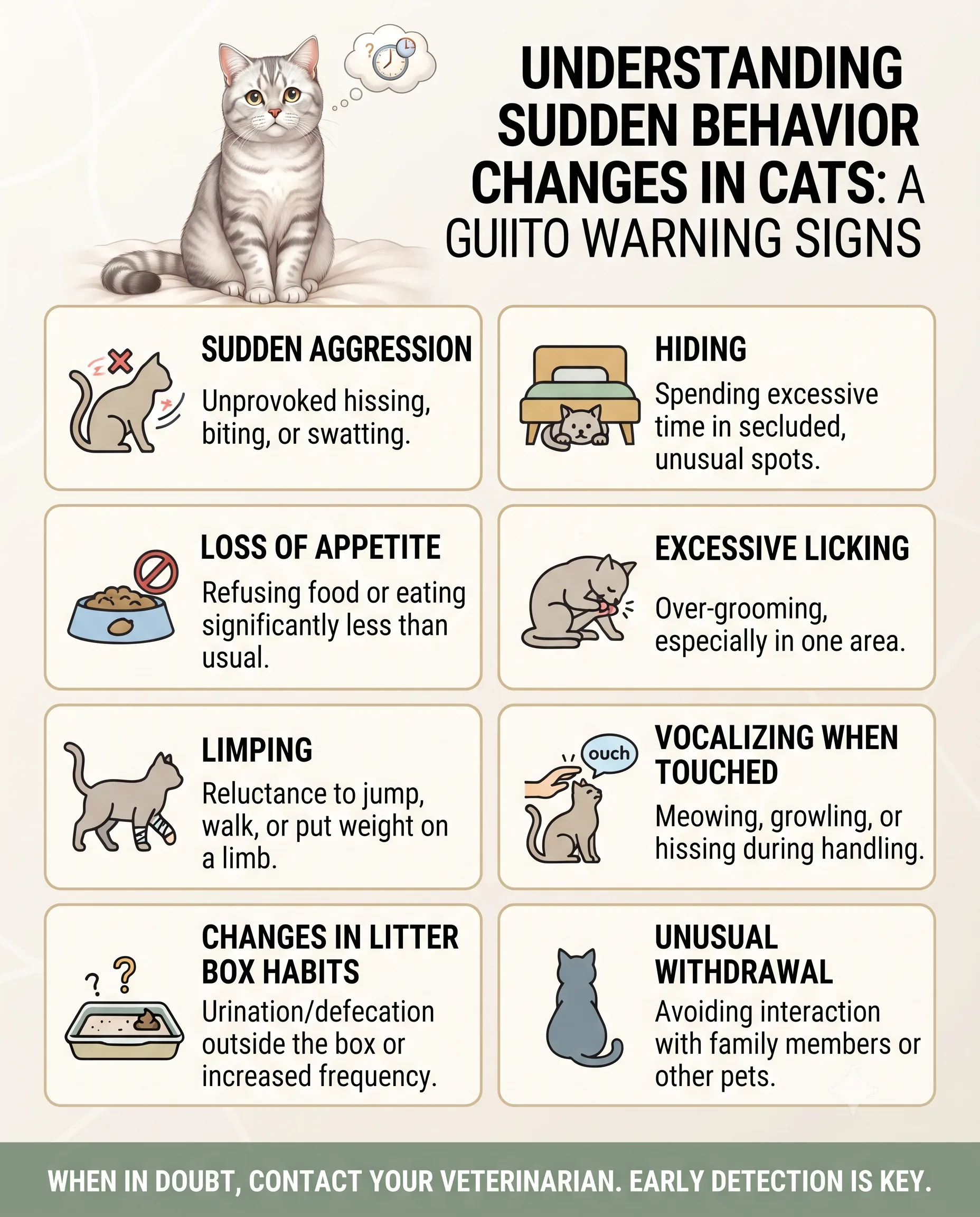
What Should You Do If Your Cat Bites You?
If your cat gives you a gentle bite while you're petting it, don't panic.
Simply stop what you're doing and give your cat a moment.
If the biting happens repeatedly, try to figure out what triggers it.
For example, if your cat always bites after five minutes of petting, shorten the petting session.
If it happens whenever you touch a particular area, avoid that area and observe whether the behavior improves.
If the biting is playful, redirect your cat toward a toy rather than continuing to play with your hands.
Don't Punish Your Cat
Avoid yelling, hitting, or physically punishing your cat for biting.
Punishment can make your cat fearful and may damage the trust you've built.
Instead, focus on understanding why the biting is happening and changing the situation that triggers it.
The goal isn't simply to stop your cat from communicating.
It's to understand what your cat is trying to communicate.
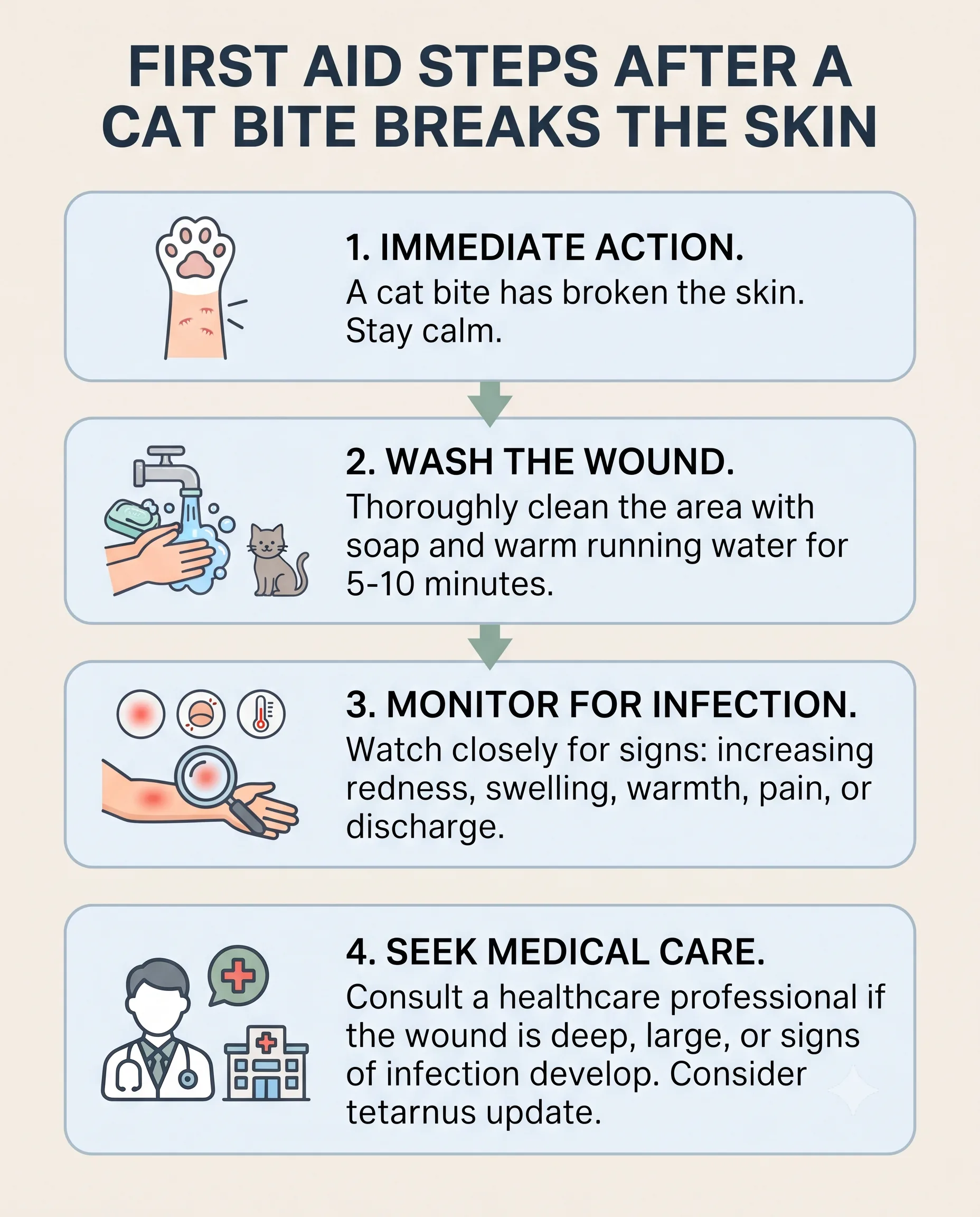
When Should You Be Concerned?
Occasional gentle biting is usually normal cat behavior.
However, a sudden change in biting behavior deserves more attention.
If your normally friendly cat suddenly starts biting aggressively, especially when you touch a particular part of its body, pain or another health problem could be involved.
Other concerning signs can include:
- Sudden aggression
- Hiding more than usual
- Loss of appetite
- Excessive licking
- Limping
- Vocalizing when touched
- Changes in litter box habits
- Acting unusually withdrawn
If your cat's behavior changes suddenly or the bites are becoming aggressive, speak with a veterinarian.
A sudden behavioral change is worth taking seriously, especially when it happens alongside other unusual symptoms.
What If Your Cat's Bite Breaks the Skin?
A cat bite that breaks the skin deserves more attention than a harmless nibble.
Cat bites can introduce bacteria into the skin, so don't ignore a bite that breaks the skin.
Wash the area thoroughly with soap and running water.
Then keep an eye on the wound for signs such as:
- Increasing redness
- Swelling
- Warmth
- Increasing pain
- Discharge
If the wound is deep, badly damaged, or showing signs of infection, seek medical attention.
It's also a good idea to get medical advice after a serious bite, particularly if you're unsure about your cat's vaccination status.
How to Stop Your Cat From Biting During Petting
If your cat regularly bites during petting, you can gradually learn its limits.
Start by petting your cat for a short period and stop before it becomes uncomfortable.
Pay attention to its body language.
If you notice tail flicking, skin twitching, ears turning backward, restlessness, or your cat suddenly watching your hand, it may be time to stop.
You can also reward calm interactions with gentle praise or a treat.
Over time, you'll become better at recognizing the moment when your cat has had enough.
Remember, your goal isn't necessarily to stop every little nibble.
It's to understand what your cat is communicating and prevent bites that are painful or unwanted.
The Bottom Line
So, why does your cat bite you and then lick you?
It could be:
- Grooming
- Affection
- Play
- Attention-seeking
- Overstimulation
- Curiosity about the taste or smell of your skin
- A way of saying that it's had enough
The key is to look at the whole situation, not just the bite.
A gentle nibble from a relaxed cat followed by licking is very different from a hard bite accompanied by flattened ears, hissing, or defensive body language.
Once you start paying attention to these little signals, your cat's behavior can become much easier to understand.
Frequently Asked Questions
Is it normal for my cat to bite me and then lick me?
Yes. A gentle bite followed by licking can be normal cat behavior. Your cat may be grooming you, showing affection, playing, seeking attention, or communicating that it wants you to stop petting it.
The context and your cat's body language are important.
Does my cat love me if it bites and licks me?
It can be a sign of affection, especially if the bite is gentle and your cat remains relaxed.
Licking can also be part of social grooming, which cats use to strengthen bonds.
However, not every bite followed by licking is affectionate. Your cat could also be playing, overstimulated, or asking you to stop.
Why does my cat bite me gently?
Gentle biting can happen during grooming, play, affection, attention-seeking, or overstimulation.
Pay attention to what your cat was doing immediately before the bite and how it behaves afterward.
Why does my cat lick me after biting me?
Your cat may be grooming you, especially if the bite is gentle and followed by relaxed licking.
It could also be a mixed behavior where your cat is playing, seeking attention, or becoming overstimulated.
Why does my cat bite me then lick me when I pet it?
If your cat bites you after you've been petting it for a while, overstimulation may be the reason.
Watch for signs such as tail flicking, ears turning backward, skin twitching, sudden restlessness, or your cat staring at your hand.
These signals may mean your cat has had enough.
Should I worry if my cat bites me?
A gentle occasional bite is usually not a concern.
However, sudden aggressive biting, painful bites, bites that break the skin, or a major change in behavior should be taken seriously.
If you're concerned about your cat's behavior or health, speak with a veterinarian.
Is a cat bite followed by licking a sign of affection?
Sometimes.
If your cat gives you a gentle nibble while remaining relaxed, purring, slow blinking, or staying close to you, affection or social grooming may be involved.
But context matters. The same behavior can also happen during play or overstimulation.
Final Thoughts
Cats have a funny way of showing us what they want.
One minute they're cuddling with you, and the next they're giving you a tiny bite before licking your hand like nothing happened.
Most of the time, there's a reason behind it.
Once you learn to recognize your cat's body language, these confusing little moments start making a lot more sense.
And honestly, that's part of the fun of living with a cat.
Does your cat ever bite you and then lick you? What does your cat usually do right before it happens? Tell us in the comments!
Related articles
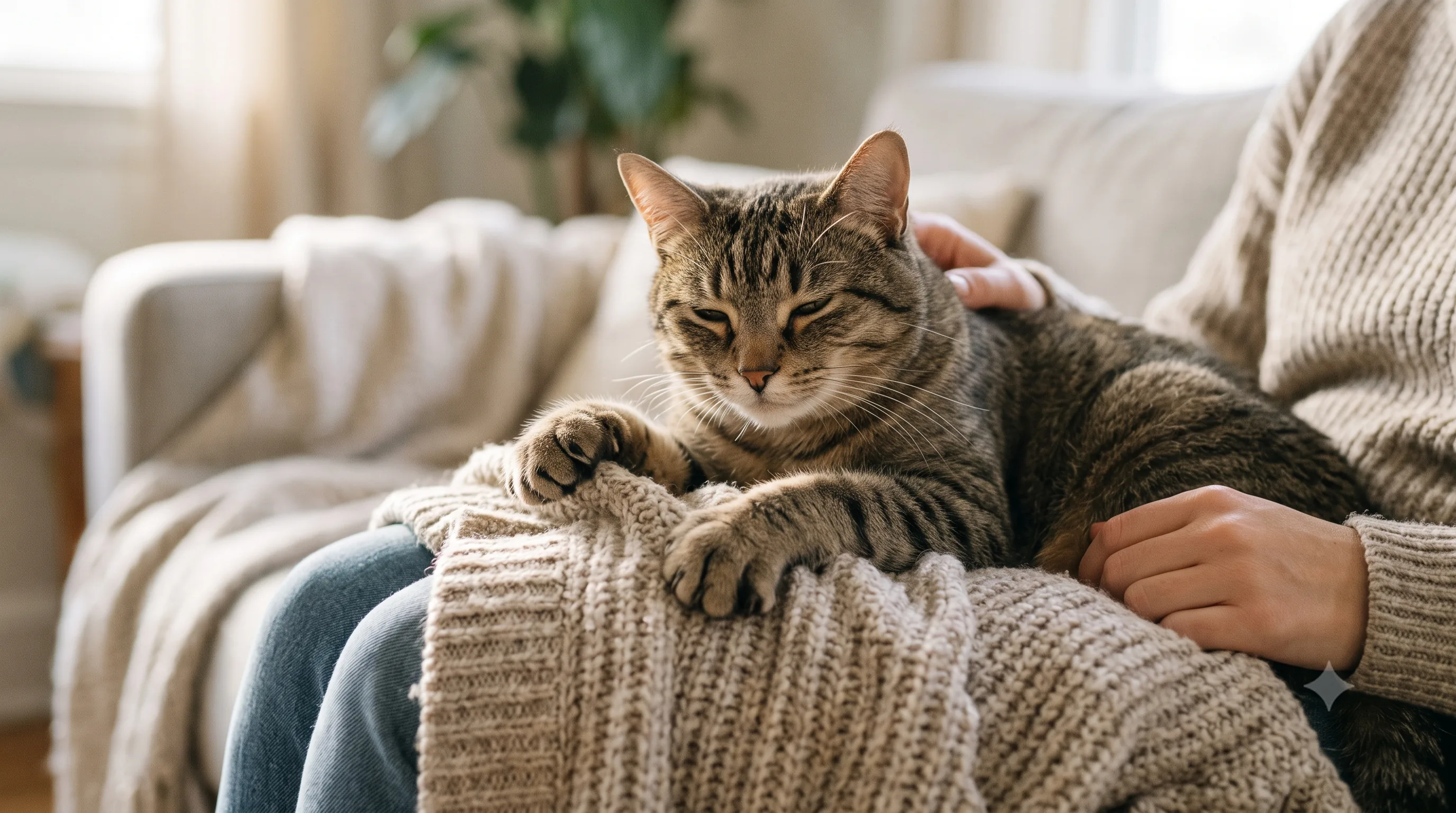
Why Does My Cat Knead Me?
Ever wondered why your cat kneads you with their paws? Learn what cat kneading means, why cats make biscuits, why they knead while purring, and when this adorable behavior may need attention.
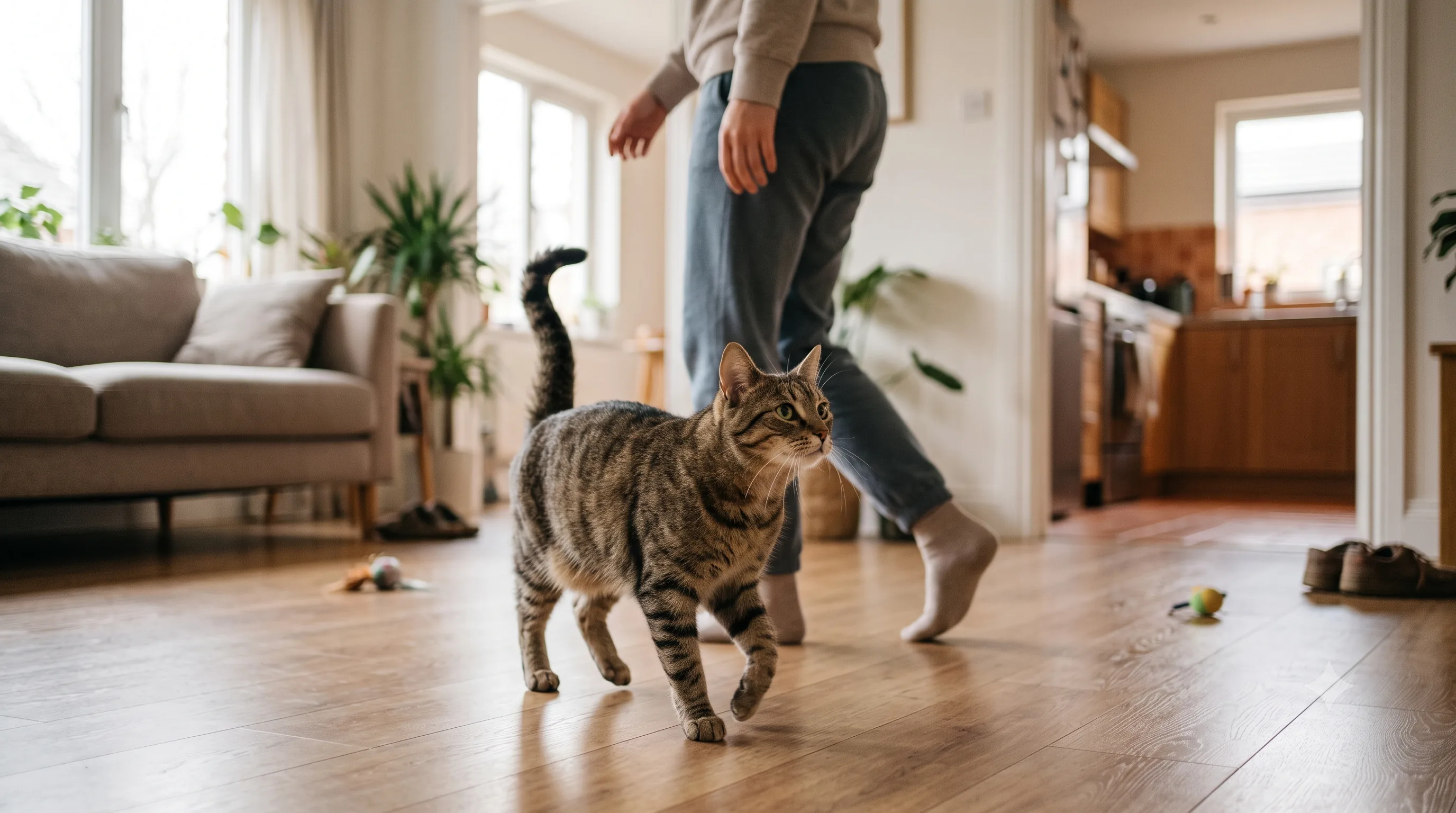
Why Does My Cat Follow Me Everywhere? 10 Reasons Your Cat Won't Leave Your Side
Why does your cat follow you everywhere? Discover 10 reasons cats follow their owners, what this behavior means, funny real-life cat stories, and when clinginess may signal a problem.
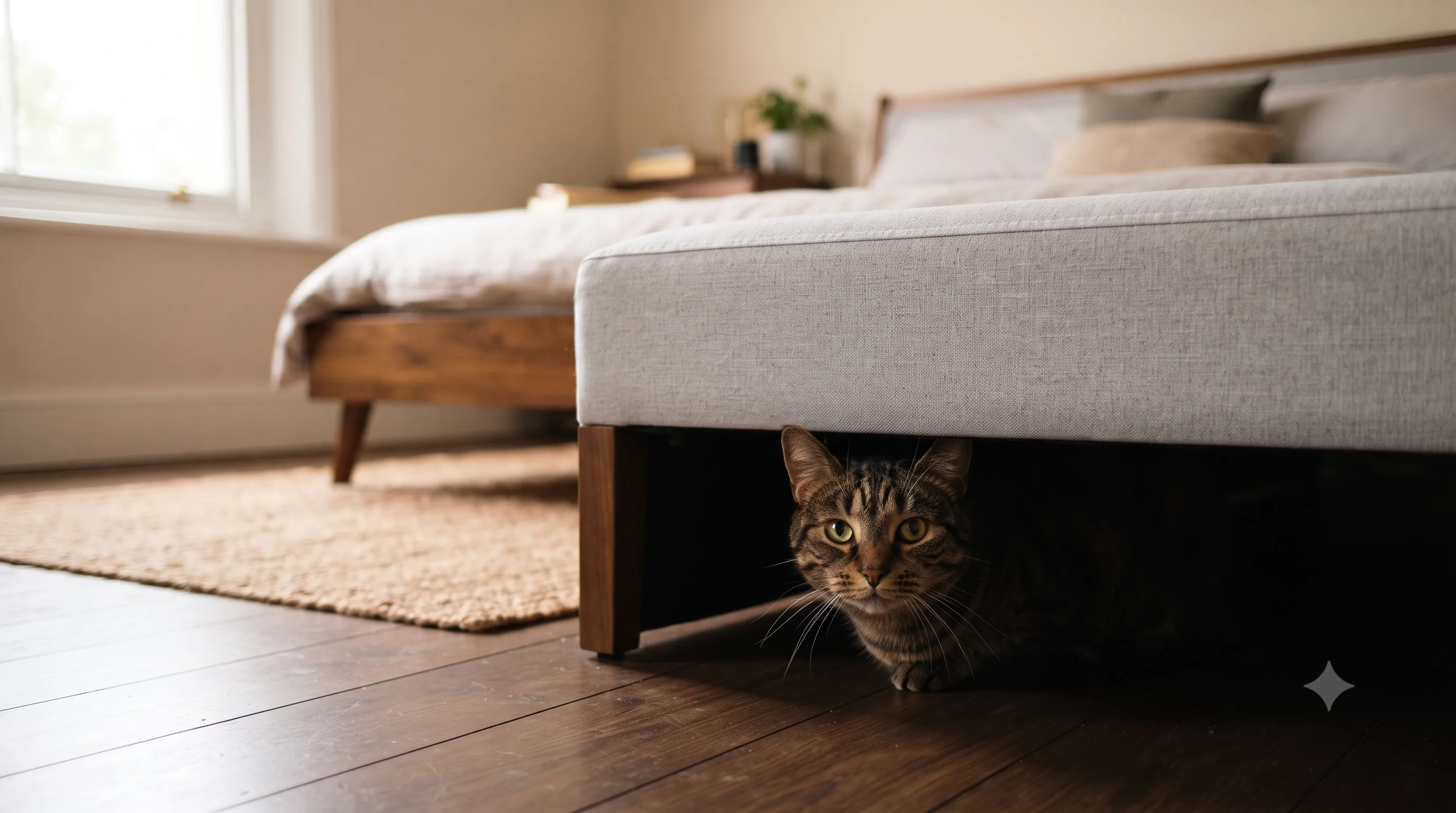
Why Does My Cat Hide? 7 Common Reasons and What to Do
Wondering why your cat keeps hiding? Learn 7 common reasons cats hide, how to tell normal behavior from a possible problem, and how to help your cat feel safe.