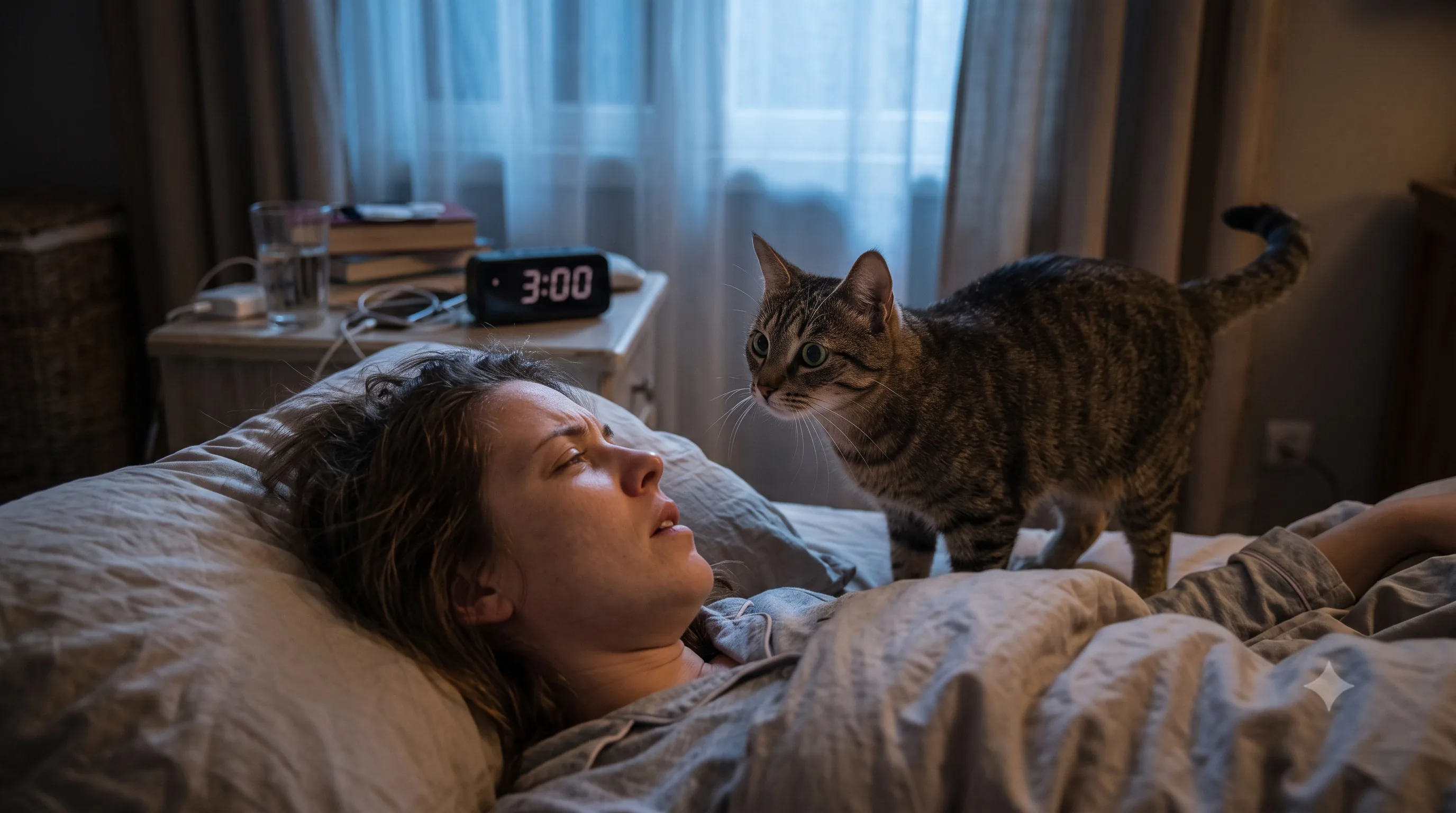
You finally get comfortable, close your eyes, and start drifting off. Then suddenly, your cat jumps onto the bed, walks across your face, meows beside your pillow, or starts knocking things off the table.
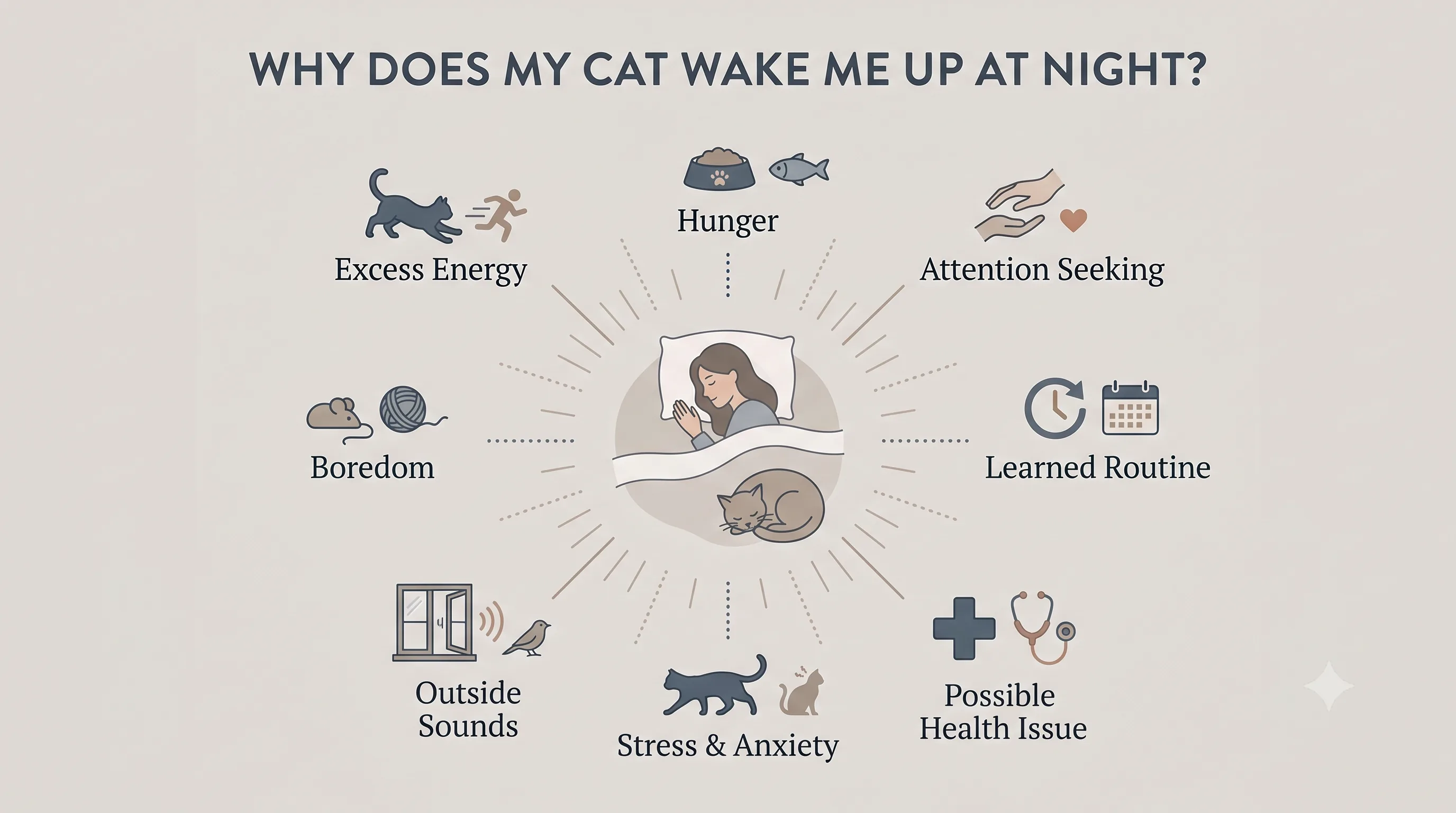
If your cat keeps waking you up at night, you're definitely not alone. Cats can become active after bedtime for several reasons, including hunger, boredom, excess energy, attention-seeking, natural hunting instincts, stress, or changes in their health.
The important thing is to figure out why your cat is waking you up before trying to stop the behavior.
In this guide, we'll explain the most common reasons cats wake their owners at night and share practical ways to help your cat settle down so you can both get better sleep.
Why Are Cats Active at Night?
Cats are often described as nocturnal, but most cats are actually crepuscular, meaning they're naturally more active around dawn and dusk.
This behavior makes sense when you consider their wild ancestors. Small prey animals are often active during these hours, so cats naturally developed activity patterns around sunrise and sunset.
Your indoor cat may not need to hunt for dinner, but those instincts are still there.
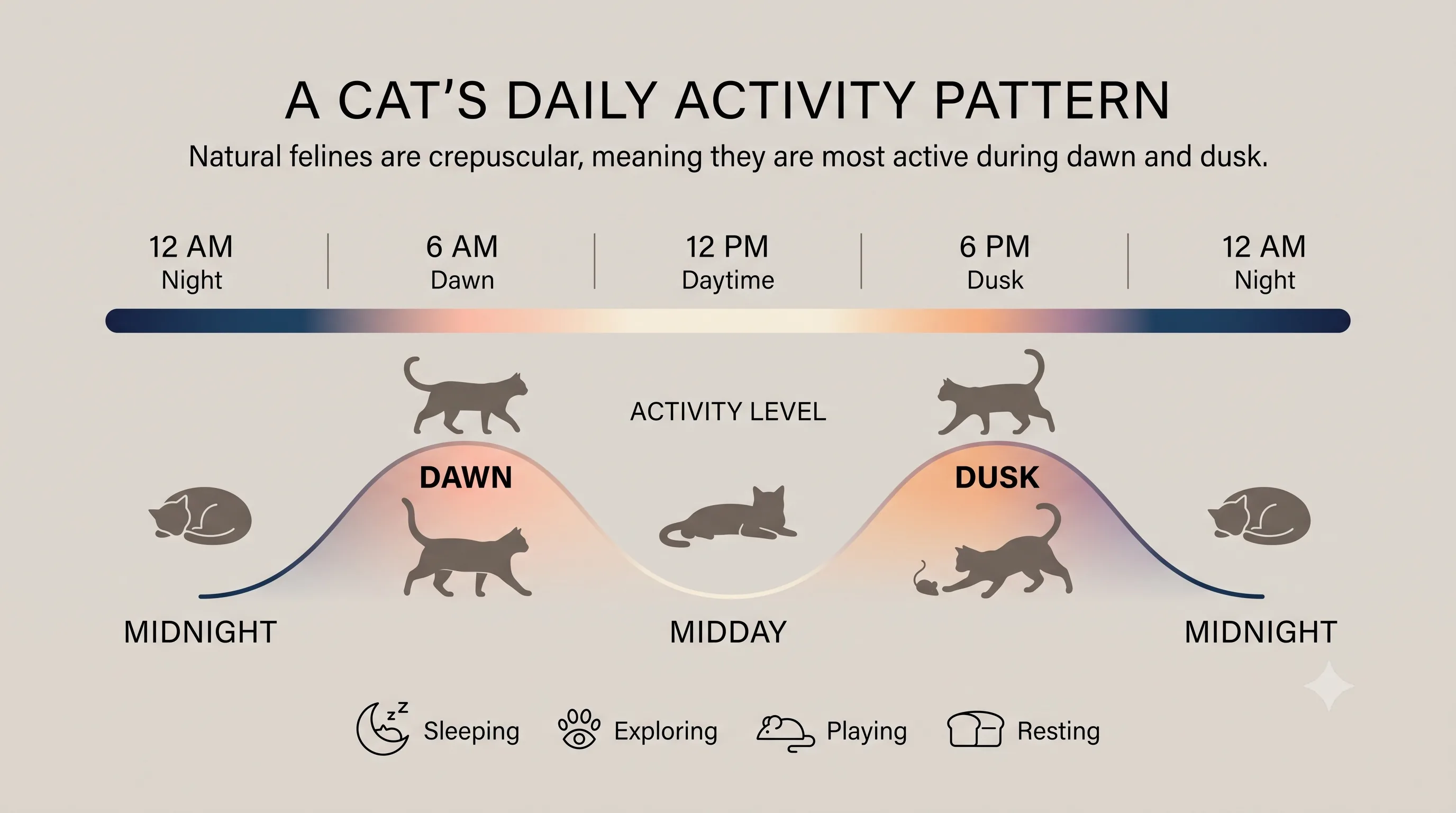
That doesn't mean your cat should be running around the house all night, though. Indoor cats can also develop nighttime habits based on their feeding schedule, activity level, environment, and interaction with their owners.
So while you're ready for eight hours of sleep, your cat may be thinking, "It's time to explore!"
1. Your Cat Has Too Much Energy
One of the most common reasons a cat wakes you up is simply because they haven't used enough energy during the day.
Indoor cats can spend many hours sleeping, especially when you're away from home. By bedtime, your cat may have had plenty of rest and be ready for some action.
If your cat starts running around the house, jumping on furniture, or attacking your feet under the blanket at night, excess energy could be the reason.
This is mainly a physical activity problem. Your cat may simply need more opportunities to run, chase, jump, and play while you're awake.
How to Help
Try adding more active playtime during the day.
Good options include:
- Wand toys
- Feather toys
- Toy mice
- Interactive balls
- Cat tunnels
- Puzzle feeders
- Short games of chase
You don't need to play for an hour at a time. Several short play sessions throughout the day can be more practical and engaging for many cats.
A play session before bedtime can be especially helpful. Let your cat chase, pounce, and "catch" the toy before you settle down for the night.
2. Your Cat Is Hungry
Some cats wake their owners because they're hungry.
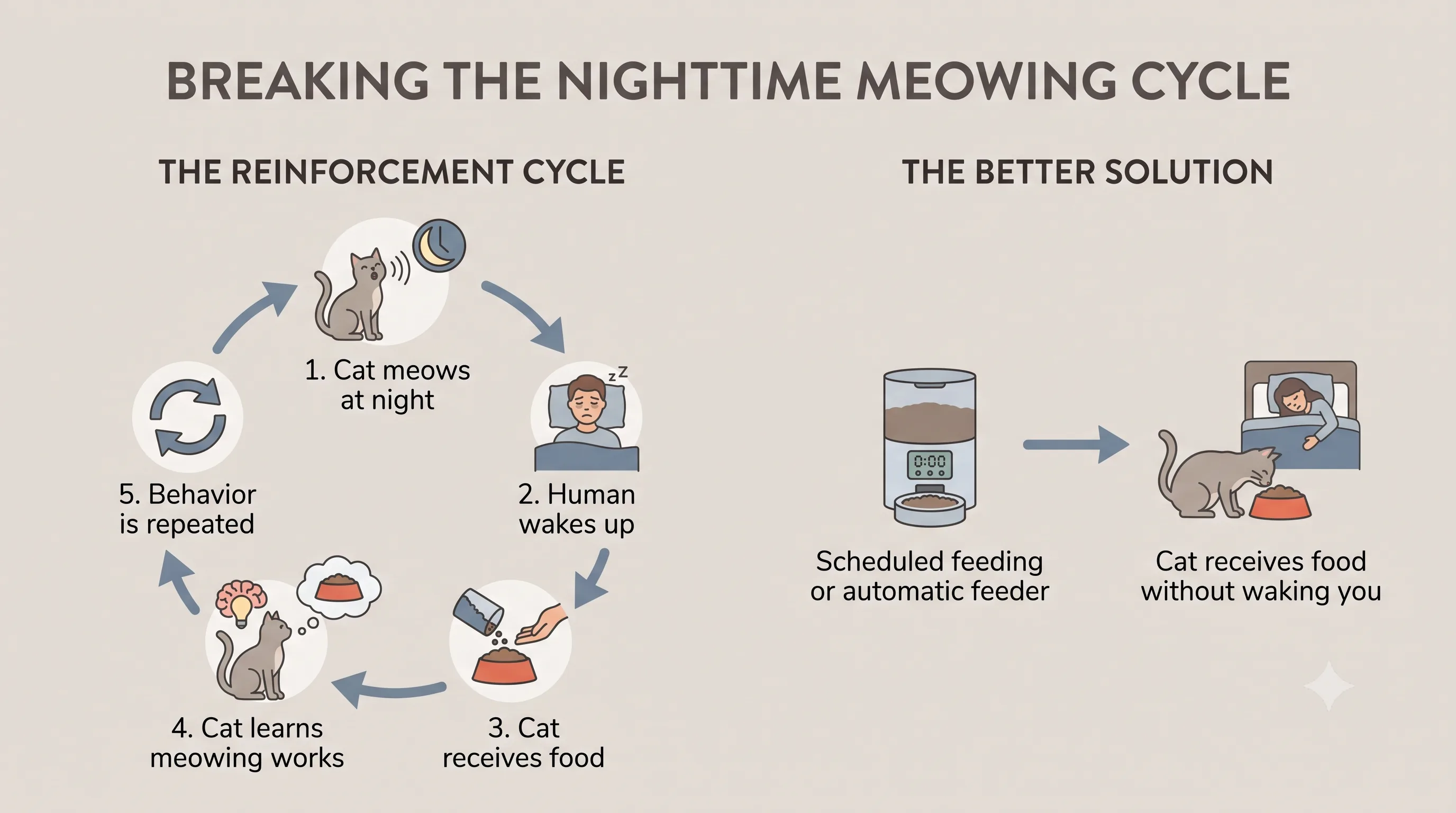
If your cat has learned that meowing at 3 a.m. results in food, they may continue doing it. From your cat's perspective, the strategy works perfectly.
Even giving food occasionally can reinforce the behavior because your cat learns that nighttime meowing might eventually pay off.
Should You Feed Your Cat Before Bed?
A small meal or part of your cat's normal daily food allowance before bedtime may help some cats settle down.
Just make sure you're not adding unnecessary extra calories. Instead, consider adjusting the timing of your cat's regular meals.
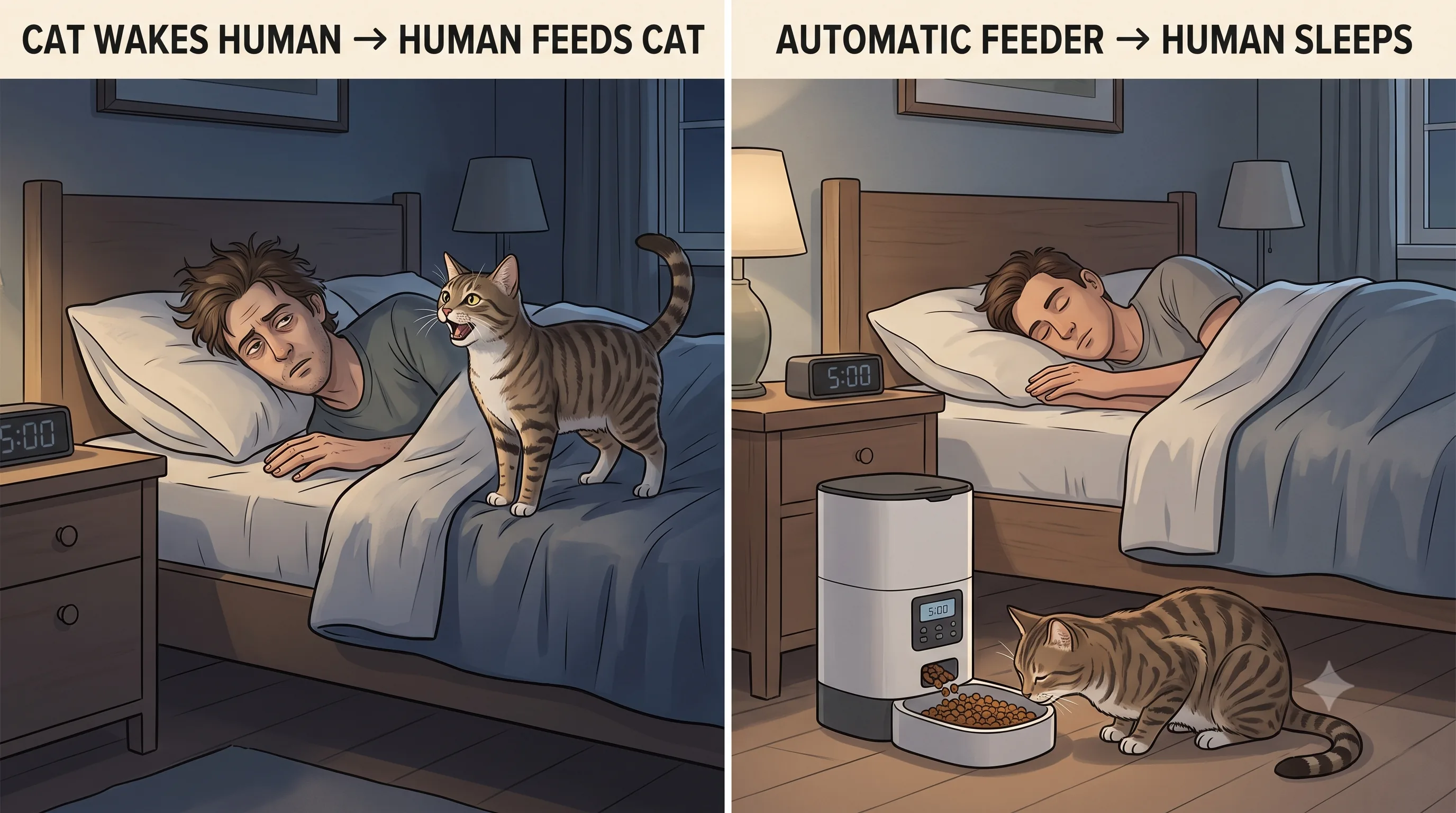
For cats that frequently wake their owners for food, an automatic feeder can also be useful. It can provide food at a scheduled time without teaching your cat that waking you is the way to get breakfast.
The goal is to separate "wake my human" from "get food."
3. Your Cat Wants Attention
Sometimes your cat isn't hungry or bored. They simply want you.
Cats can form strong bonds with their owners, and some cats become particularly demanding when the house gets quiet.
Your cat may jump onto your bed, purr next to you, knead your blanket, or repeatedly meow because they want attention.
If you respond by petting, talking to, or playing with your cat, they may quickly learn that nighttime is a great opportunity to get your attention.
What Should You Do?
Try not to reward attention-seeking behavior during the night.
That doesn't mean you should automatically ignore your cat. If the nighttime behavior is new, unusually intense, or accompanied by other changes, first consider whether hunger, discomfort, stress, or illness could be involved.
If you've confirmed that your cat is safe, healthy, and has access to food, water, and a litter box, consistently responding to nighttime demands can make the habit stronger.
Instead, give your cat plenty of attention and interaction during the day.
Interactive play, grooming, training, and simple time together can help satisfy their need for social interaction before bedtime.
4. Your Cat Is Bored
Imagine spending most of your day sleeping, looking out the window, and walking around the same rooms.
Eventually, you'd probably get bored too.
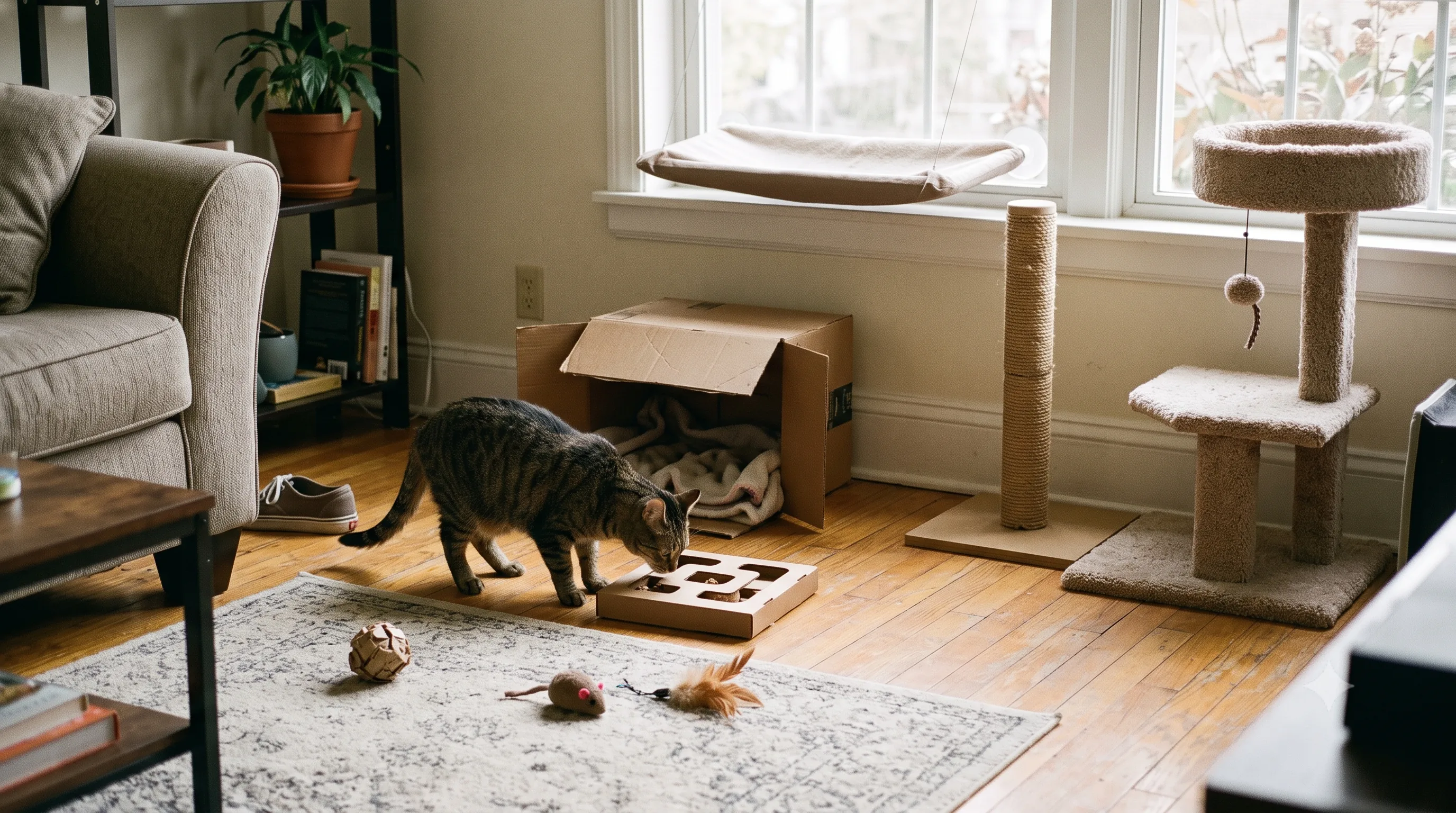
Cats need mental stimulation as well as physical exercise. Without enough enrichment, they may look for something interesting to do at night.
And unfortunately, "wake up my human" can become that activity.
Unlike excess energy, which is mainly about physical exercise, boredom is about giving your cat things to explore, investigate, solve, and interact with.
Give Your Cat Things to Do
You don't need to buy expensive toys to keep your cat entertained.
Try providing:
- A cardboard box
- A paper bag without handles
- A cat tree
- A window perch
- Puzzle toys
- Scratching posts
- Safe toys that can be played with independently
You can also rotate your cat's toys every few days.
Keeping every toy available all the time can make them less interesting. Rotating toys gives familiar objects a sense of novelty.
5. Your Cat Has Learned Your Routine
Cats are creatures of habit.
If your cat wakes you at 5 a.m. every morning and you get up shortly afterward, they may start connecting those two events.
Over time, your cat may become very good at predicting when you're going to wake up.
The same thing can happen with breakfast.
If breakfast always happens immediately after you wake up, your cat may decide that waking you is simply part of the breakfast routine.
Try Changing the Routine
Instead of making your cat's meal the first thing that happens when you get out of bed, introduce another activity first.
For example:
- Wake up.
- Get ready for the day.
- Make your own breakfast.
- Feed your cat afterward.
This can help break the connection between "wake human" and "get food."
Consistency matters here. If waking you sometimes results in breakfast, your cat may continue trying because the behavior still occasionally works.
6. Your Cat Wants to Hunt
Your cat may be completely satisfied with their food but still have the urge to hunt.
Hunting is more than simply finding food. It involves watching, stalking, chasing, pouncing, and catching.
That's why a food bowl alone doesn't always satisfy an indoor cat's natural instincts.
Interactive play can help recreate parts of this experience.
Try moving a wand toy slowly across the floor, hiding it behind furniture, and occasionally letting your cat catch it.
The goal isn't to make your cat exhausted as quickly as possible. It's to give them a satisfying little hunting experience.
A good play session can combine physical exercise with mental stimulation, making it a useful part of a nighttime routine.
7. Your Cat Is Reacting to Something Outside
Sometimes the reason isn't inside your house at all.
Your cat may hear or see something outside that you don't notice.
Another cat walking past the window, insects near a light, birds outside, neighborhood noises, or other animals can suddenly grab your cat's attention.
If your cat spends the night staring through a window, meowing, or becoming restless, check what's happening outside.
Closing the curtains or moving your cat's sleeping area away from a particularly busy window may help.
You can also provide another comfortable place for your cat to settle that isn't directly beside the window.
8. Your Cat May Be Experiencing Stress or Anxiety
Changes in your cat's environment can affect their behavior.
Moving furniture, bringing home another pet, having visitors, moving to a new house, or changing your daily routine can sometimes make a cat restless.
A stressed cat may become more vocal, hide more often, follow you around, or behave differently at night.
If the nighttime behavior started suddenly after a major change at home, stress could be worth considering.
Give your cat a quiet, predictable space where they can retreat when they want some alone time.
Keeping feeding, play, and sleep routines reasonably consistent can also make the environment feel more predictable.
9. A Sudden Change Could Mean a Health Problem
If your cat suddenly starts waking you up at night when they never did before, don't assume it's simply a new habit.
Behavioral changes can sometimes be one of the first signs that something isn't right.
Pay attention to other changes such as:
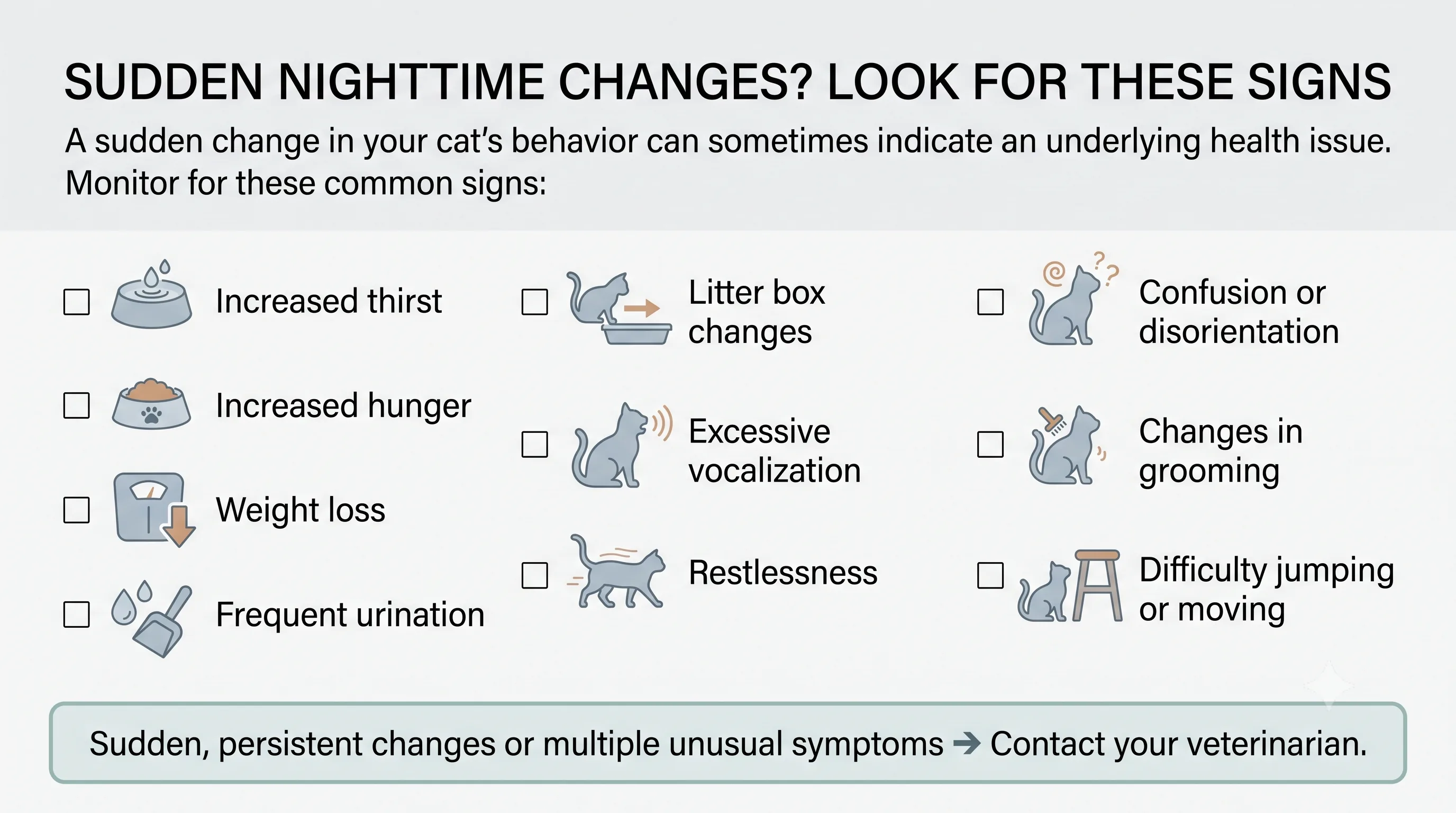
- Increased thirst
- Increased hunger
- Weight loss
- Frequent urination
- Changes in litter box habits
- Excessive vocalization
- Confusion or disorientation
- Restlessness
- Changes in grooming
- Difficulty jumping or moving around
Older cats can also develop age-related conditions that affect their sleep and nighttime behavior.
If the behavior is sudden, persistent, or accompanied by other unusual symptoms, it's a good idea to speak with a veterinarian.
A cat that suddenly becomes restless or unusually vocal at night may need more than a change in routine.
Should You Ignore a Cat That Wakes You Up at Night?
Sometimes yes—but only after you've ruled out hunger, discomfort, environmental problems, and signs of illness.
If your cat simply wants attention and you've already confirmed that everything is okay, consistently responding can accidentally reinforce the behavior.
For example, if your cat meows and you immediately get out of bed to pet them, play with them, or give them food, your cat may learn:
Meowing at night = human responds.
But completely ignoring your cat isn't always the right answer.
First make sure they have:
- Fresh water
- Access to a clean litter box
- A comfortable sleeping area
- Appropriate food
- A safe environment
- No obvious signs of illness or distress
Once you've ruled out those needs, you can work on changing the nighttime routine.
How to Stop Your Cat From Waking You Up at Night
Once you've figured out why your cat is waking you, the next step is changing the routine that keeps the behavior going.
There isn't usually one magic solution. A combination of small changes tends to work better.
Create a Bedtime Routine
Cats love predictable routines.
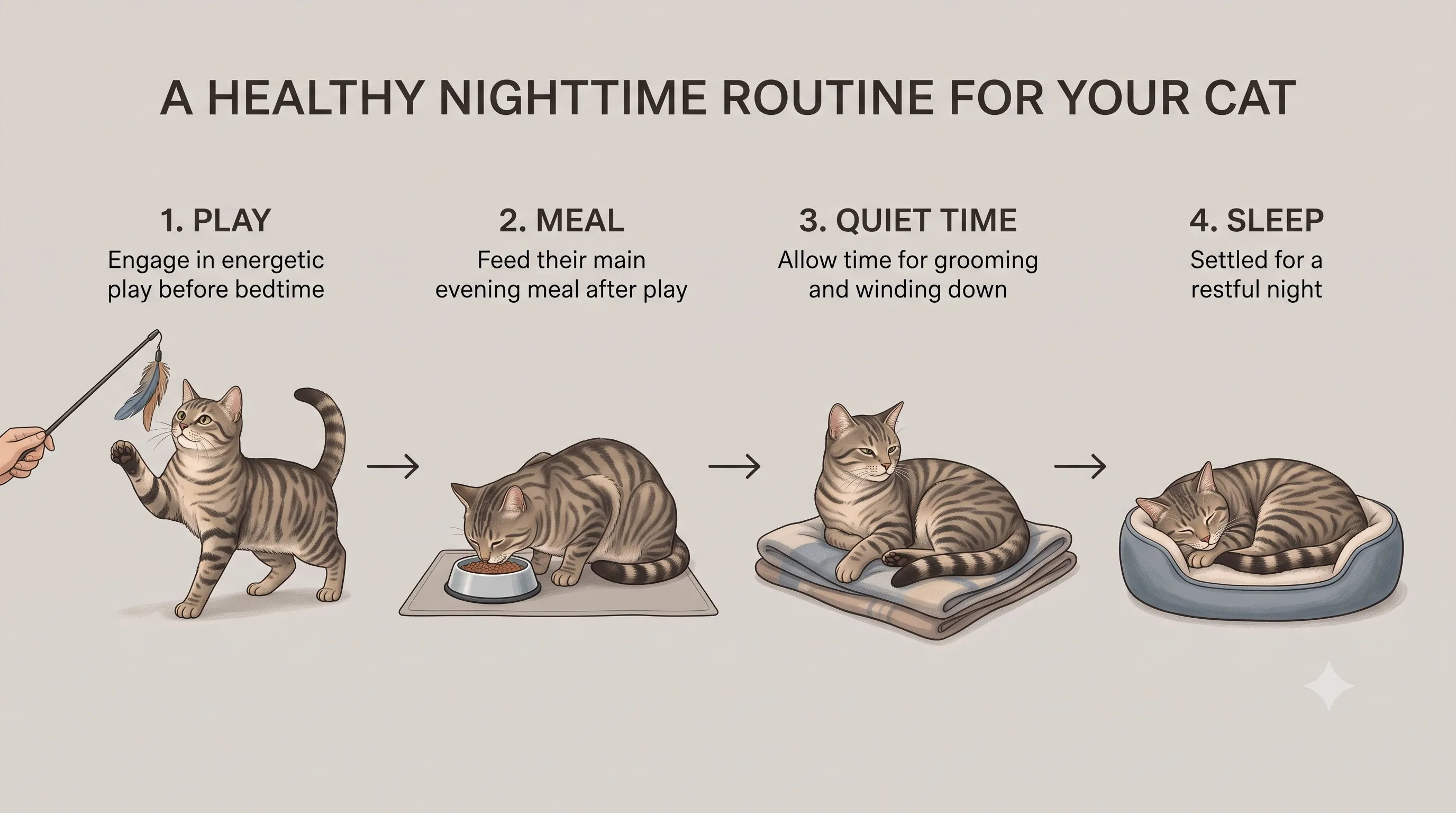
Try following the same sequence every evening:
Play → Meal → Quiet Time → Sleep
A good interactive play session followed by food can help satisfy your cat's natural hunt-and-eat pattern.
After that, keep the environment calm and avoid starting exciting games right before you go to sleep.
Increase Daytime Activity
If your cat sleeps most of the day, encourage more activity while you're awake.
You can break playtime into several short sessions instead of trying to do one long session.
Even 10 minutes of interactive play can give your cat something productive to focus on.
Use different toys and activities so your cat gets a combination of physical exercise and mental stimulation.
Make Your Bedroom Less Interesting
If your cat repeatedly plays with objects around your bedroom, remove tempting items before bed.
Keep fragile objects out of reach and secure anything your cat likes to knock over.
You can also provide an alternative sleeping area outside the bedroom if your cat is comfortable using it.
A comfortable cat bed, scratching post, or safe enrichment area can give your cat somewhere else to spend the night.
Don't Accidentally Reward the Behavior
This is one of the hardest parts.
Your cat may meow for several nights before realizing that the usual reward isn't coming.
If you've decided that nighttime attention-seeking needs to stop, consistency is important.
However, never ignore behavior that could indicate illness, pain, injury, or genuine distress.
The goal isn't to punish your cat. It's to stop accidentally teaching them that waking you is an effective way to get attention or food.
What If My Cat Wakes Me at 5 a.m.?
Early-morning wake-ups are particularly common because dawn is naturally an active period for cats.
If your cat wakes you shortly before your normal wake-up time, an automatic feeder can sometimes help.
Set it to dispense your cat's meal around the time they normally start asking for food. This shifts the responsibility from you to the feeder.
Over time, your cat may learn that the feeder provides breakfast rather than waking you up.
You can also try changing your morning routine so feeding doesn't happen immediately after you get out of bed.
A Simple Nighttime Routine for Your Cat
If you're not sure where to start, try this routine for a couple of weeks.
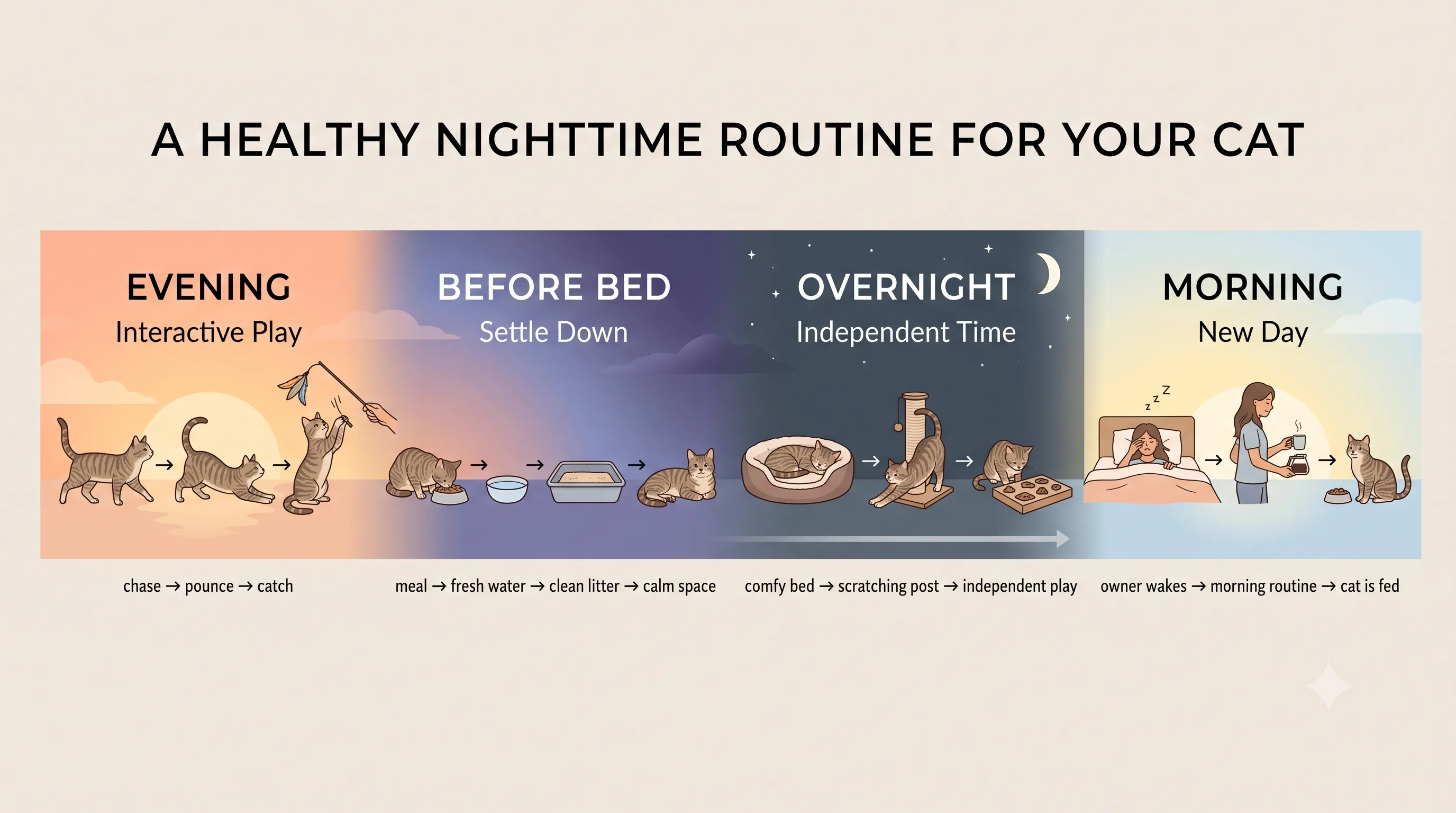
Evening
Give your cat an interactive play session using a wand toy or another favorite toy.
Let your cat chase and catch the toy several times rather than ending the game abruptly.
The goal is to give your cat an opportunity to stalk, chase, pounce, and catch.
Before Bed
Give your cat their normal evening meal or a suitable portion of their daily food.
Make sure fresh water and a clean litter box are available.
Keep the environment calm and avoid introducing exciting new activities right before bedtime.
Overnight
Leave a few safe enrichment options available, such as a scratching post, comfortable bed, or safe independent toy.
Avoid leaving string, ribbon, or other toys that could become dangerous when your cat is unsupervised.
If your cat is comfortable sleeping outside your bedroom, you can also create a cozy nighttime area elsewhere in the home.
Morning
Try not to make feeding your cat the first thing you do after waking up.
Keeping the routine consistent can gradually reduce the connection between waking you and getting breakfast.
How Long Does It Take to Change the Behavior?
Every cat is different.
Some cats adjust within a few days, while others may take several weeks to change a well-established habit.
The important thing is consistency.
If your cat gets attention after waking you on Monday but gets ignored on Tuesday and Wednesday, they may keep trying because they don't know when the behavior will work.
Think of it from your cat's perspective: if a button sometimes gives you a treat, you'd probably keep pressing it too.
Don't expect an overnight change. Give your new routine time to become predictable.
When Should You Be Concerned?
Occasional nighttime activity is normal for cats.
However, a sudden or dramatic change in your cat's behavior deserves more attention.
If your cat is repeatedly vocalizing at night, seems confused, appears uncomfortable, or shows other changes in eating, drinking, litter box use, movement, or behavior, talk to your veterinarian.
It's especially important to pay attention to unusual nighttime behavior in older cats.
The key difference is a normal pattern versus a sudden change.
A cat that has always been active at dawn may simply have a different sleep schedule. A cat that suddenly starts pacing, crying, or acting confused at night may need further attention.
Frequently Asked Questions
Why does my cat wake me up at 3 a.m.?
Your cat may wake you at 3 a.m. because they're hungry, bored, seeking attention, full of energy, or naturally active during the night. If this behavior is new, consider whether stress, discomfort, or a health problem could also be involved.
Why does my cat wake me up at 5 a.m.?
Cats are naturally more active around dawn, so early-morning wake-ups are common. Your cat may also have learned that waking you up leads to breakfast. An automatic feeder and a consistent morning routine can help break that association.
How do I stop my cat from waking me up for food?
Avoid immediately feeding your cat when they wake you. Instead, consider adjusting their normal meal schedule or using an automatic feeder. The goal is to teach your cat that food comes from the feeding routine rather than from waking you.
Should I ignore my cat when they wake me up?
If you've confirmed that your cat has food, water, a clean litter box, a safe environment, and no signs of illness or distress, avoiding attention can help prevent reinforcement of attention-seeking behavior. However, sudden or unusual nighttime behavior shouldn't automatically be ignored.
Why does my cat suddenly meow at night?
Sudden nighttime meowing can have several causes, including hunger, stress, environmental changes, attention-seeking, discomfort, or illness. Look for other changes in your cat's behavior, eating, drinking, litter box habits, or movement.
Do cats sleep through the night?
Not necessarily. Cats often sleep for many hours throughout the day and can be active during dawn and dusk. Their sleep pattern can also be influenced by their environment, feeding schedule, activity level, and daily routine.
Will playing with my cat before bed help?
A play session before bedtime can help some cats by providing physical exercise and mental stimulation. Try interactive play that allows your cat to chase, pounce, and catch a toy, followed by their normal evening meal.
Why does my cat run around the house at night?
Running around the house at night, sometimes called the "zoomies," can happen when a cat has excess energy or hasn't had enough physical or mental stimulation during the day. Interactive play and enrichment can help provide appropriate outlets for that energy.
Final Thoughts
Your cat probably isn't waking you up at night just to ruin your sleep.
They may be hungry, bored, full of energy, looking for attention, reacting to something outside, or simply following their natural activity patterns. The key is to figure out why your cat is waking you before trying to change the behavior.
Start with the basics: give your cat enough daytime activity, provide mental enrichment, establish a predictable bedtime routine, and avoid accidentally rewarding nighttime attention-seeking.
And if the behavior suddenly changes or comes with other unusual symptoms, don't assume it's just a bad habit. A veterinarian can help rule out an underlying health problem.
Does your cat wake you up at 3 a.m.? Tell us what they do—meow beside your pillow, sprint around the house, knock things off shelves, or something even more ridiculous. 🐱
Related articles

Why Does My Cat Knock Things Off Tables?
Ever wondered why your cat keeps knocking things off tables? Learn why cats push objects over, what they're trying to tell you, and how to stop the behavior without stress.
Why Does My Cat Meow at Night? 10 Common Reasons and What to Do
Why does your cat meow at night? Discover 10 common reasons, from hunger and boredom to stress and health problems, plus simple ways to help.

Why Does My Cat Bite Me Then Lick Me?
Wondering why your cat bites you and then licks you? Learn what this behavior means, when it is affectionate or playful, how to read your cat's body language, and when a bite may be a sign of stress or pain.