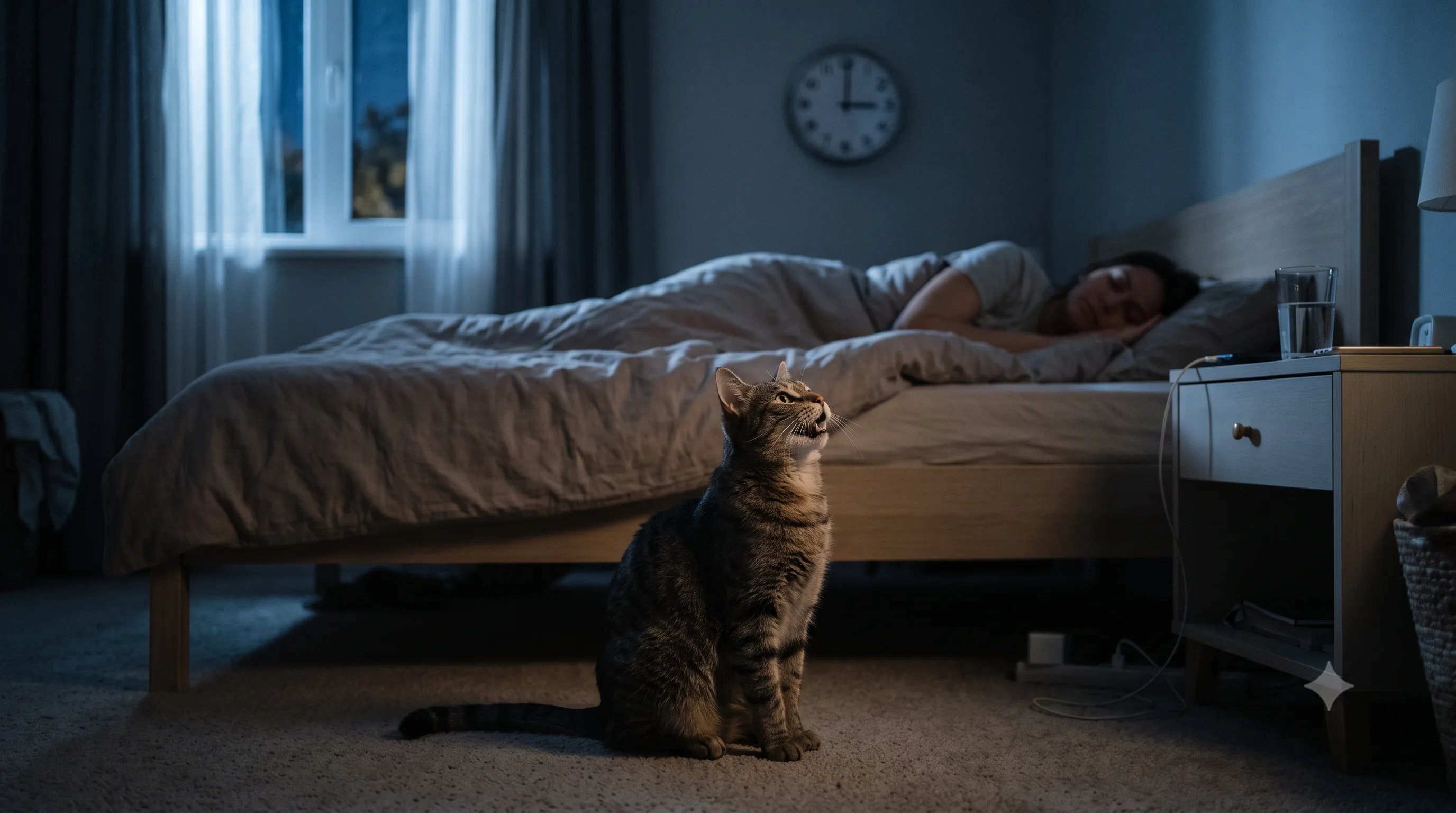
Have you ever finally gotten comfortable in bed, only to hear your cat start meowing from another room?
You are not alone.
Many cat owners deal with nighttime meowing. It can be especially confusing when your cat seems perfectly happy and quiet during the day, then suddenly becomes very vocal as soon as you turn off the lights.
Cats are naturally more active around dawn and dusk, but nighttime meowing can have many different causes.
Your cat might be hungry, bored, energetic, lonely, stressed, looking for attention, or simply following its natural activity pattern. Sometimes, however, sudden nighttime vocalization can be a sign of pain or an underlying health problem.
So, why does your cat meow at night?
Let's look at the most common reasons and what you can do about them.
Quick Answer: Why Does My Cat Meow at Night?
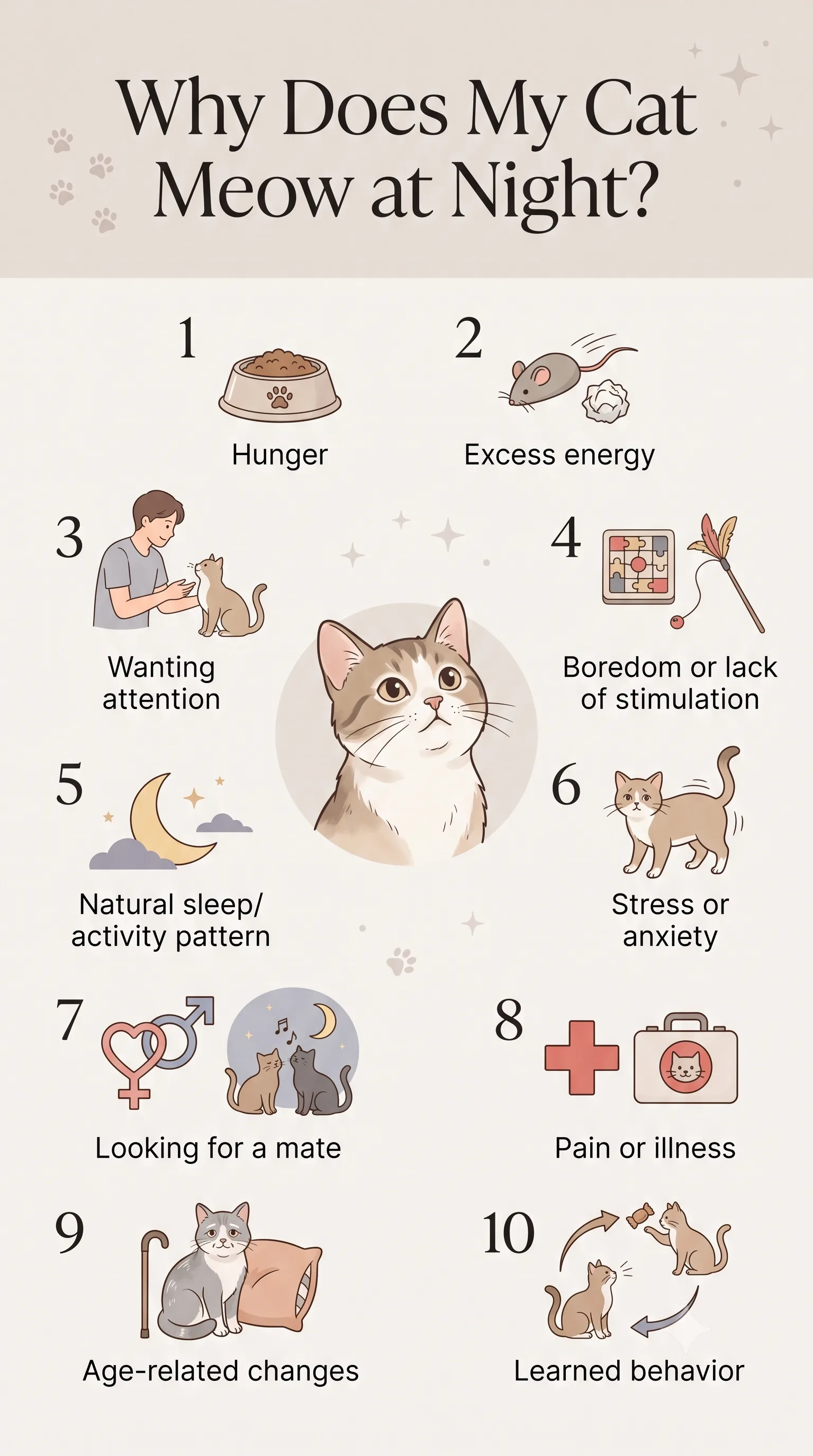
Cats may meow at night because they are hungry, bored, energetic, lonely, stressed, looking for attention, looking for a mate, or experiencing discomfort.
Some cats are also naturally more active at night because their sleep and activity patterns are different from ours.
The best solution depends on why your cat is meowing.
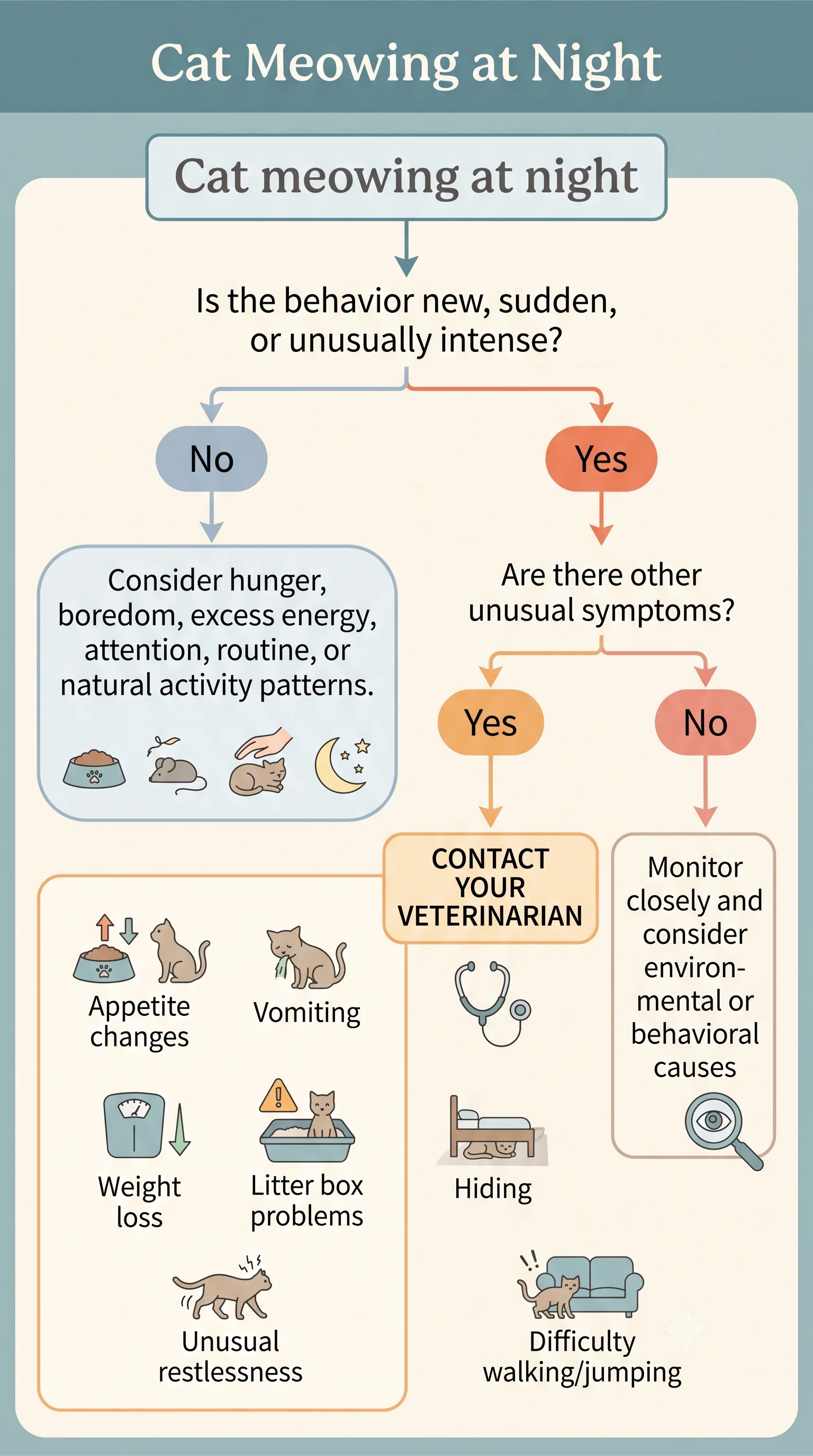
If the behavior is sudden, unusually intense, or accompanied by other changes such as weight loss, vomiting, changes in appetite, difficulty using the litter box, or signs of pain, speak with a veterinarian.
Why Do Cats Meow at Night?
The first thing to understand is that your cat usually isn't meowing at night just to annoy you.
Meowing is one of the main ways cats communicate with humans. Your cat may be trying to tell you that it wants something, feels uncomfortable, is bored, or simply wants your attention.
The reason can be as simple as an empty food bowl, but nighttime vocalization can sometimes point to a health or behavioral problem.
Let's look at the most common reasons.
1. Your Cat May Be Hungry
One of the most common reasons for nighttime meowing is hunger.
If your cat has learned that meowing gets you out of bed to provide food, it may quickly turn into a habit.
Even if you don't intentionally reward the behavior, your cat may remember that nighttime meowing sometimes leads to a tasty snack.
This is especially common if your cat's last meal is several hours before bedtime.
What You Can Do
Try giving your cat its normal evening meal a little closer to bedtime, as long as this fits its regular feeding routine.
You can also consider a puzzle feeder or automatic feeder that provides food at a scheduled time.
This can help your cat stop associating nighttime food with waking you up.
Avoid repeatedly getting up to feed your cat every time it meows. Otherwise, your cat may learn that nighttime crying is an effective way to get a midnight snack.
2. Your Cat Has Energy Left to Burn
Your cat may have spent most of the day sleeping while you were busy.
Then, just when you're ready for bed, your cat suddenly becomes a tiny furry athlete.
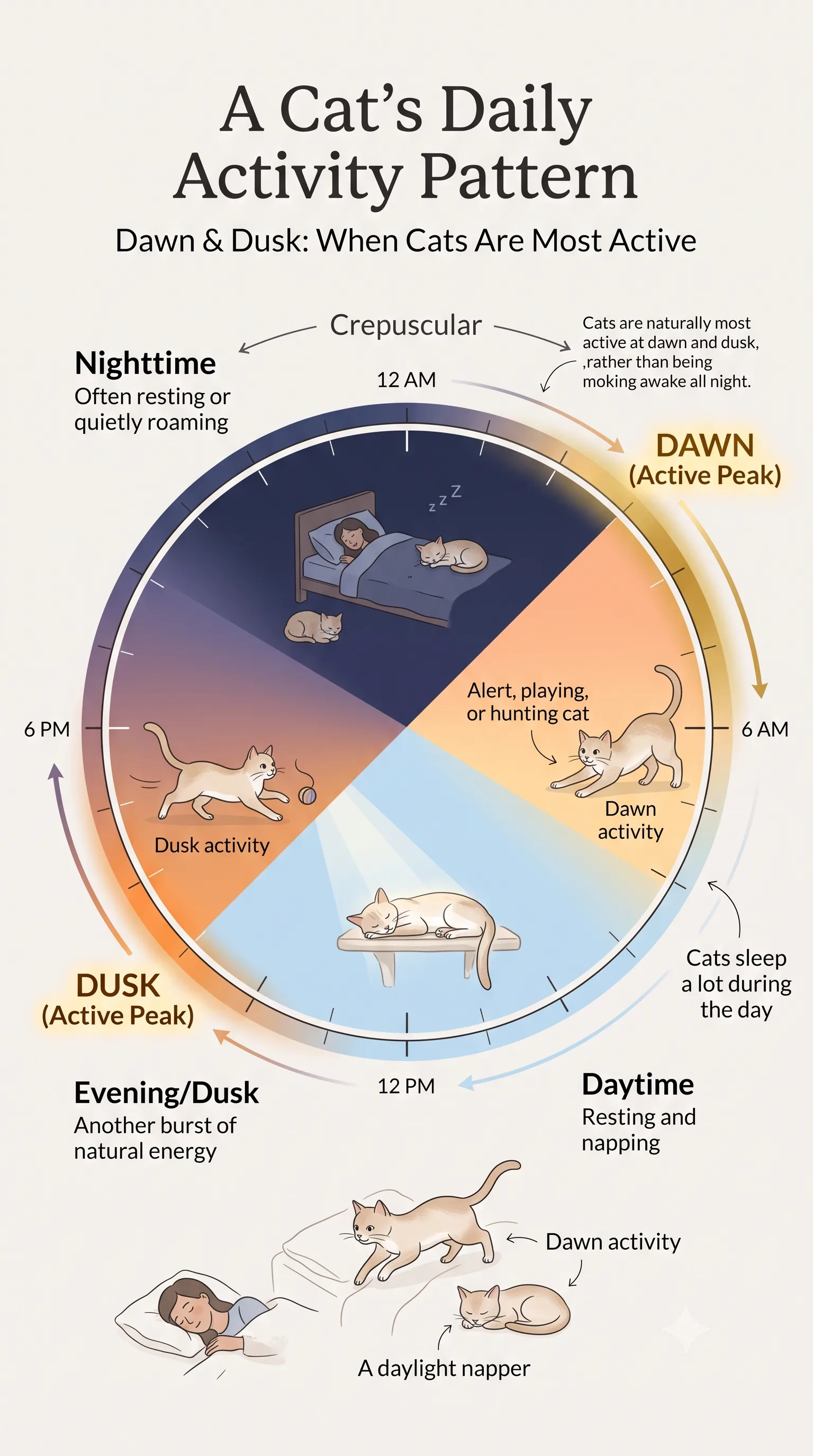
Cats naturally sleep a lot during the day, and their activity often increases during the evening and early morning.
If your cat hasn't had enough playtime, it may still have plenty of energy when you go to sleep.
Try a Play Session Before Bed
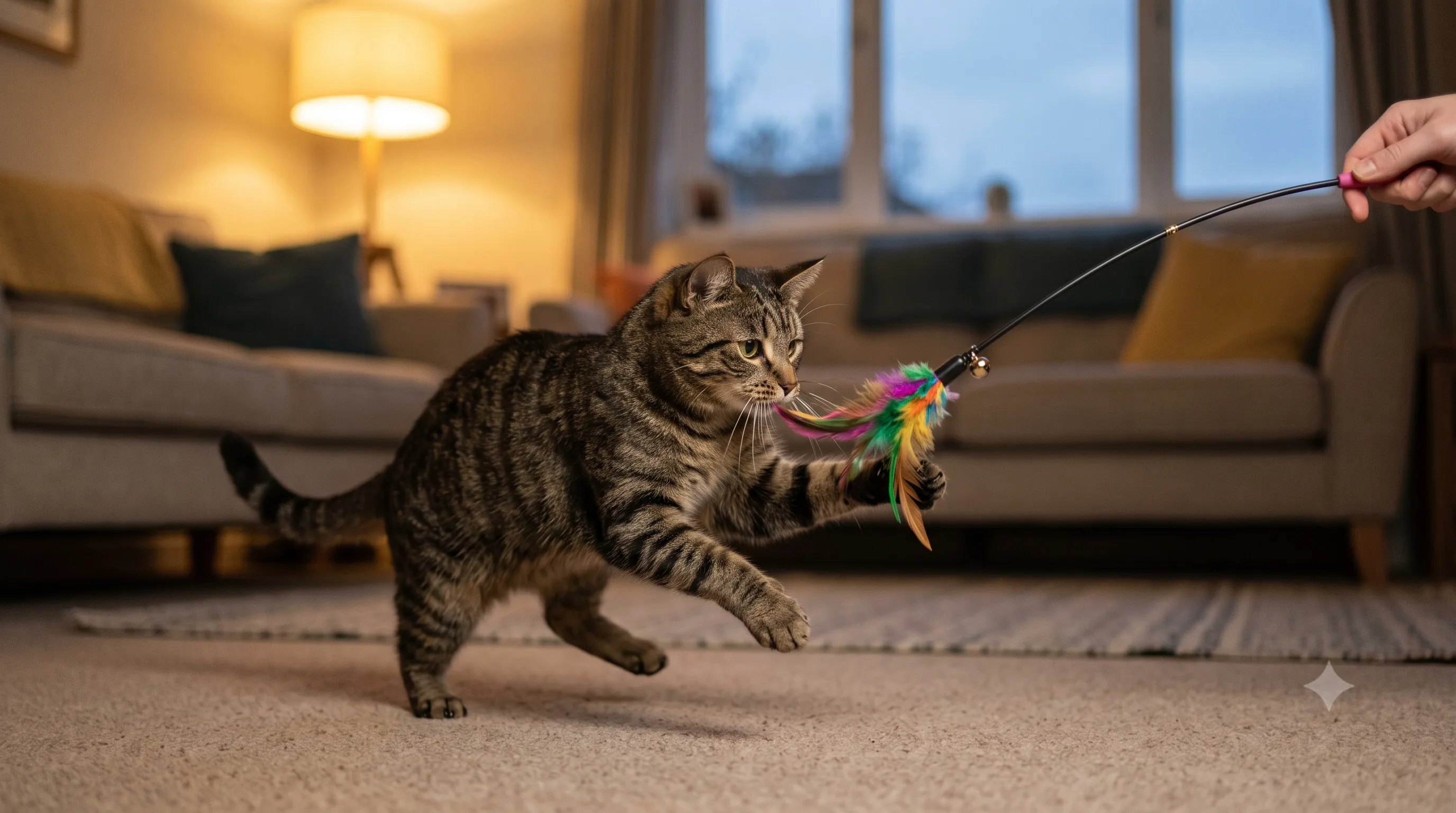
A good play session in the evening can help your cat burn some energy before bedtime.
Try toys that encourage your cat to chase, stalk, pounce, and jump.
Some good options include:
- Wand toys
- Feather toys
- Toy mice
- Balls
- Interactive toys
- Treat puzzles
Spend some time actively playing with your cat before bedtime rather than simply leaving toys on the floor.
A tired cat is often more likely to settle down afterward.
3. Your Cat Wants Your Attention
Sometimes the reason is surprisingly simple:
Your cat wants you.
If your cat spends most of the day alone, nighttime may be the first opportunity it gets to interact with you when the house is quiet.
Your cat may walk into your bedroom, meow, and wait for you to respond.
If you talk to it, pet it, get out of bed, or even tell it to be quiet, your cat may see that as attention.
From your cat's perspective, mission accomplished.
Should You Ignore Your Cat?
If you've already ruled out hunger, discomfort, illness, and other genuine needs, consistently avoiding attention when your cat meows at night can eventually help reduce attention-seeking behavior.
However, don't suddenly ignore unusual or excessive vocalization without first considering why it is happening.
If your cat normally sleeps quietly but suddenly starts crying at night, that's worth paying attention to.
4. Your Cat Doesn't Have Enough Stimulation
Indoor cats can become bored, especially when they don't have enough opportunities to explore, play, climb, scratch, and investigate their surroundings.
A quiet house at night can actually make boredom more noticeable.
Your cat may wander around the house looking for something interesting to do, and meowing may become part of that routine.
Make Your Home More Interesting
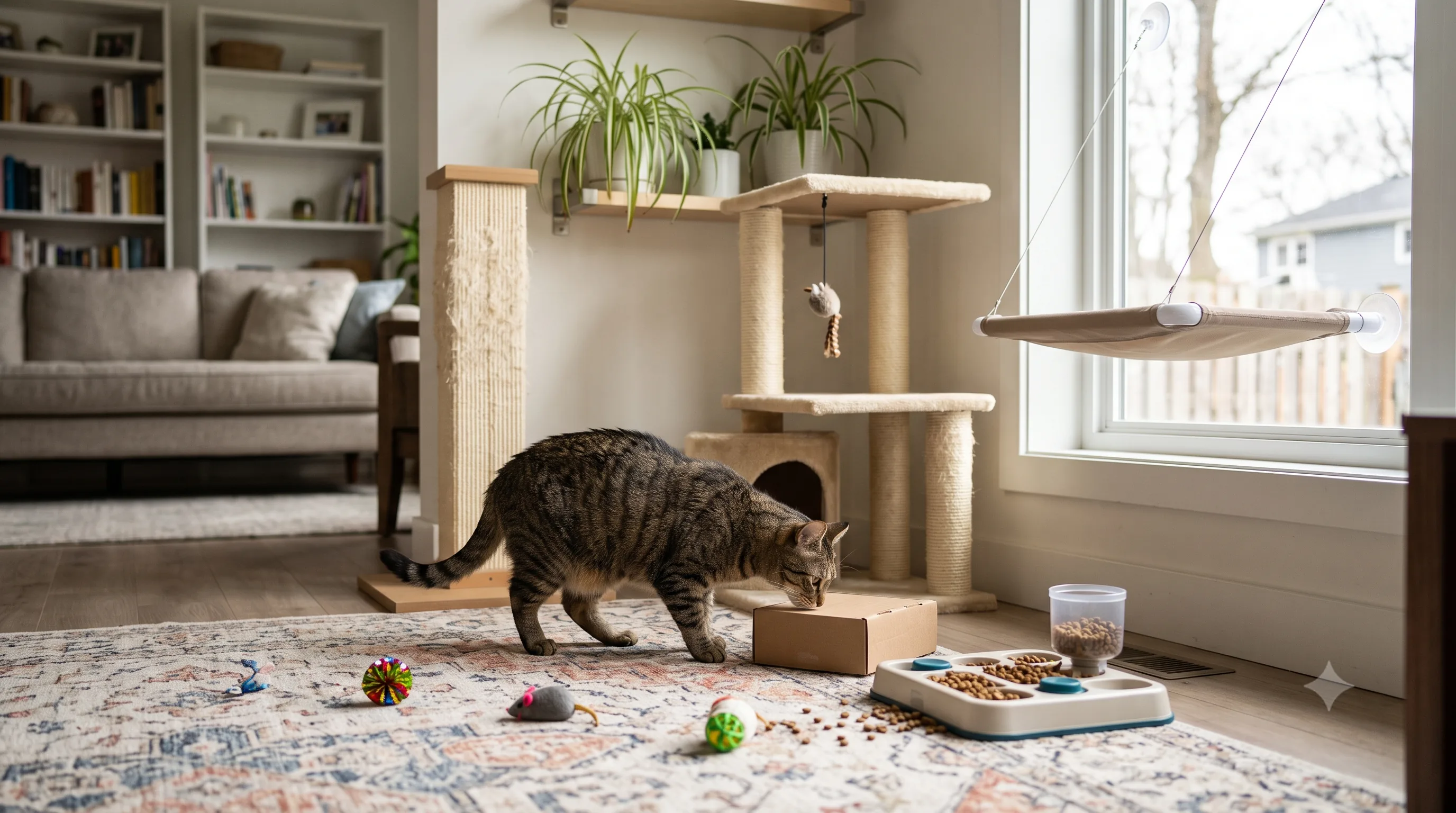
You don't need to buy expensive cat furniture to make your home more engaging.
You can provide:
- Scratching posts
- Cardboard boxes
- Cat trees
- Safe window perches
- Interactive toys
- Puzzle feeders
- Rotating toys
Try rotating your cat's toys instead of leaving every toy available all the time.
A toy that disappears for a few days can suddenly become interesting again when you bring it back.
Giving your cat more appropriate things to do during the day can also reduce the chances of boredom turning into nighttime activity.
5. Your Cat's Sleep Schedule Is Different From Yours
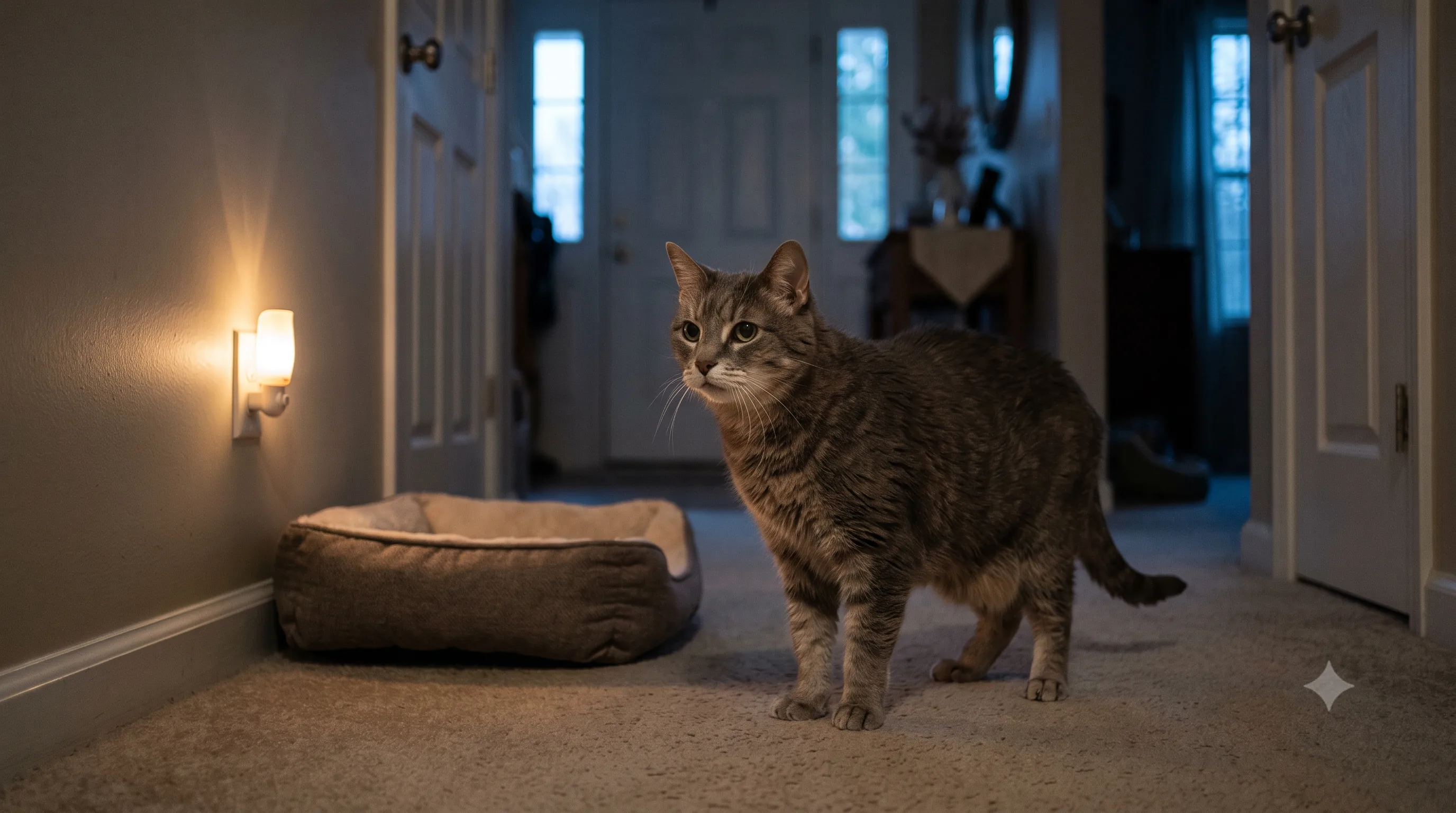
Cats don't necessarily follow the same sleep schedule as humans.
You might be ready for eight hours of uninterrupted sleep, while your cat thinks 2:00 AM is an excellent time for exploring the house.
Cats are crepuscular, which means they are often naturally more active around dawn and dusk.
This doesn't mean your cat has to spend the entire night awake.
Some nighttime activity is completely normal.
The goal is usually not to make your cat sleep exactly when you do, but to create a routine that encourages more activity during the evening and calmer behavior overnight.
6. Your Cat Is Stressed or Anxious
Nighttime can feel very different to a cat.
The house becomes quiet, the lights go off, and there may be unfamiliar sounds outside.
Some cats become more vocal when they feel anxious or insecure.
Changes in the home can also trigger nighttime meowing.
For example:
- Moving to a new home
- A new pet
- A new family member
- Changes in your daily routine
- Construction or loud noises
- Being left alone more often
If your cat's meowing started after a major change, stress could be playing a role.
Help Your Cat Feel Safe
Give your cat access to a quiet, comfortable area where it can retreat when it wants some peace.
A familiar bed, blanket, scratching post, or favorite toy can make the environment feel more secure.
Try to keep your cat's daily routine as consistent as possible.
If your cat has recently experienced a major change, give it time to adjust rather than expecting the behavior to disappear immediately.
7. Your Cat May Be Looking for a Mate
If your cat hasn't been spayed or neutered, nighttime vocalization can sometimes be related to mating behavior.
Cats in heat can become surprisingly vocal.
Female cats may yowl, become more affectionate, roll around, and show other changes in behavior.
Male cats may also become more vocal or restless when they detect a female nearby.
If your cat is not intended for breeding, talk to your veterinarian about spaying or neutering.
8. Your Cat May Be in Pain or Ill
This is one of the most important possibilities to consider.
If your cat suddenly starts meowing much more than usual, especially at night, don't automatically assume it's a behavioral issue.
Cats are very good at hiding pain and illness. Increased vocalization can sometimes be a sign that something is wrong.
Signs to Watch For
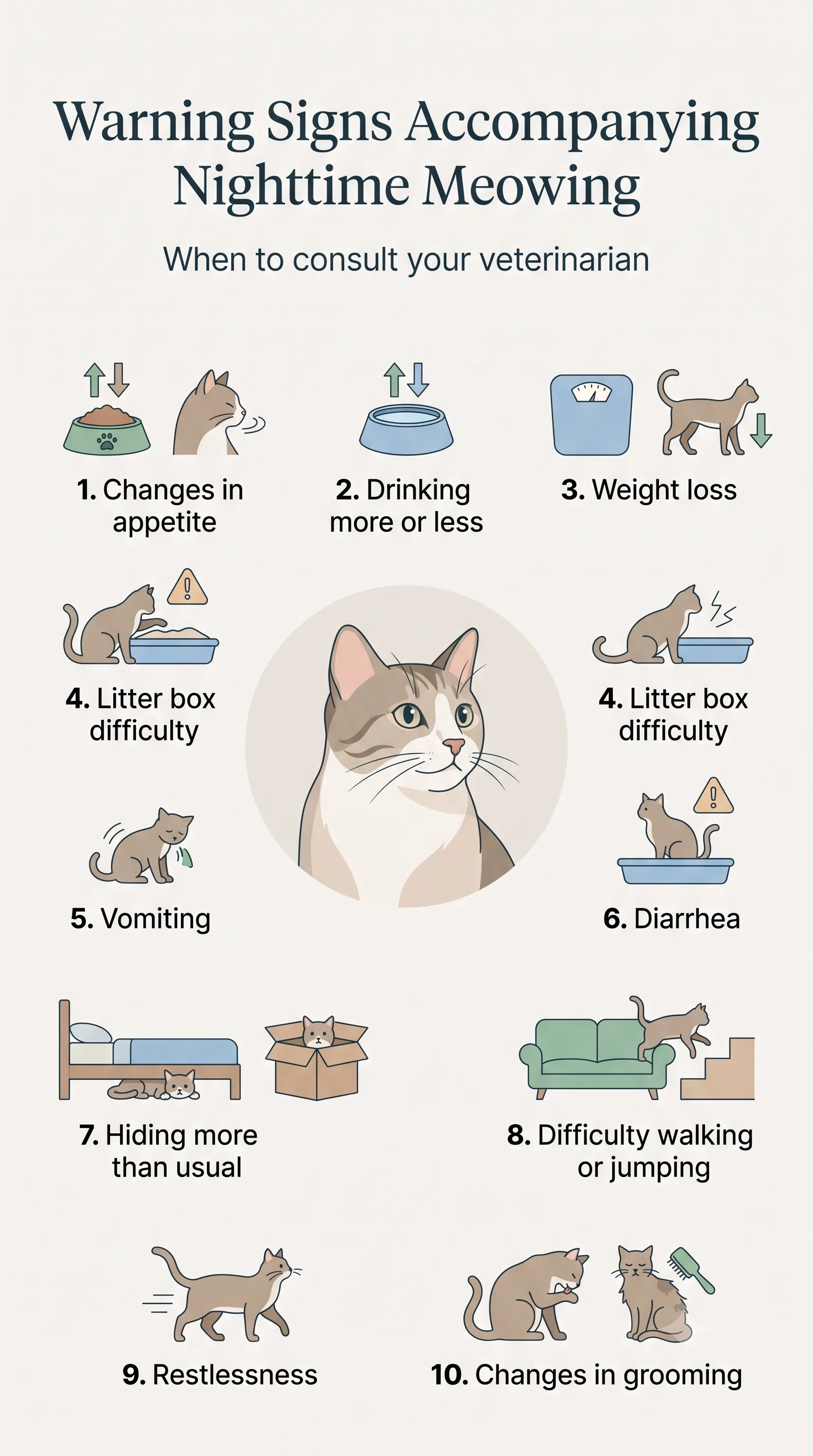
Pay attention to other changes in your cat's behavior, including:
- Changes in appetite
- Drinking much more or less than usual
- Weight loss
- Difficulty using the litter box
- Vomiting
- Diarrhea
- Hiding more than usual
- Difficulty walking or jumping
- Restlessness
- Changes in grooming habits
If nighttime meowing is new, sudden, or unusually intense, focus on ruling out a medical problem before treating it as a behavior issue.
If you notice unusual behavior alongside nighttime meowing, it's best to speak with a veterinarian.
9. Why Do Older Cats Meow More at Night?
Nighttime vocalization can become more common in senior cats.
As cats get older, changes in their vision, hearing, sleep patterns, and cognitive function can affect nighttime behavior.
An older cat may wake up confused, have difficulty seeing in low light, or become disoriented when the house is quiet.
This can lead to wandering and vocalization.
If your senior cat suddenly starts crying at night, don't simply assume it's because of old age.
Sudden behavioral changes can also be connected to an underlying medical issue, so a veterinarian can help determine what may be causing the change.
10. Your Cat Has Learned That Meowing Gets Results
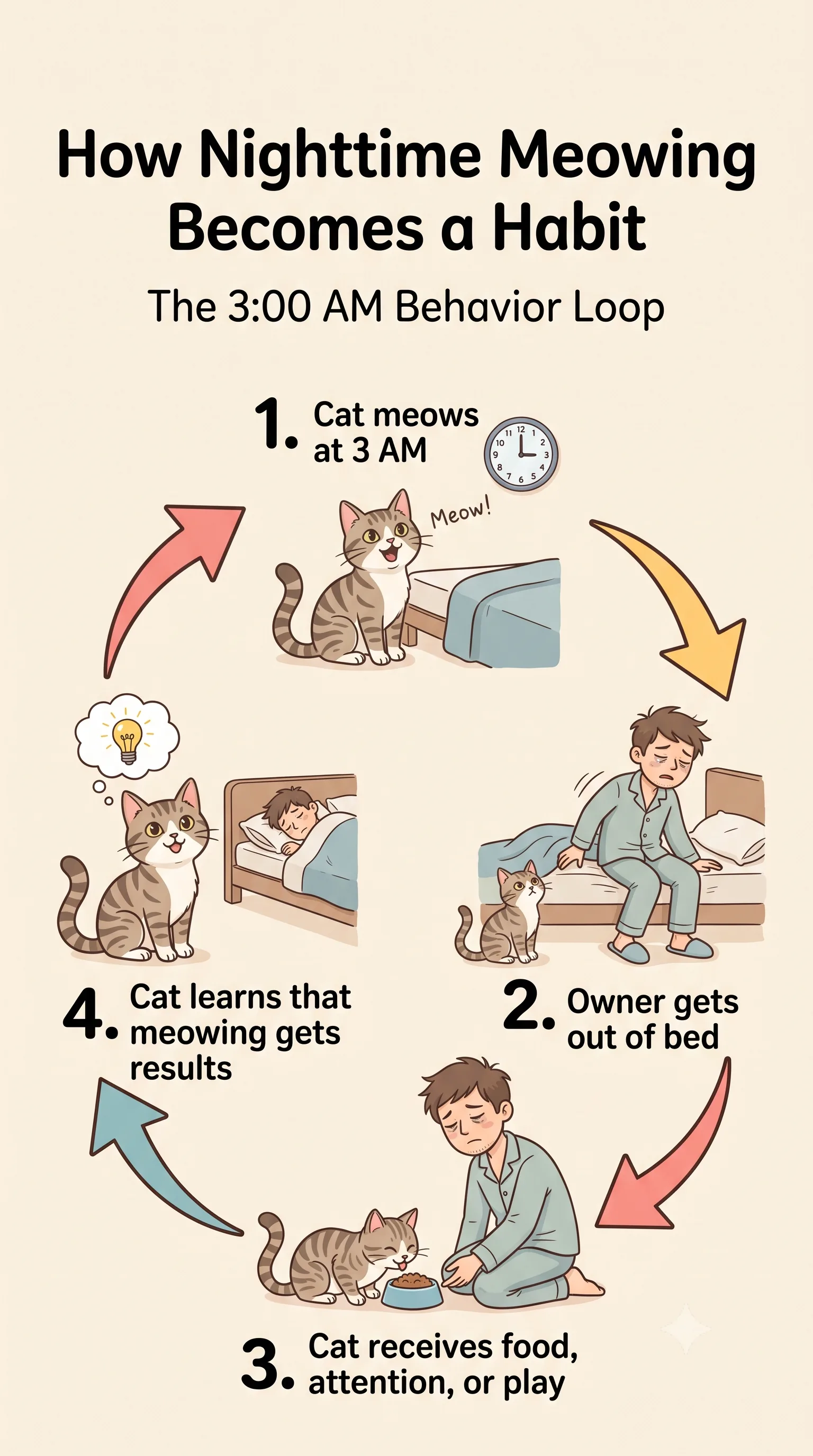
Cats are excellent at learning patterns.
Imagine your cat meows at 3 AM.
You get up and give it food.
Your cat quickly learns:
Meowing at 3 AM gets results.
The next night, it tries again.
This can turn into a cycle surprisingly quickly.
The same thing can happen with attention, playtime, opening doors, or being allowed into another room.
If your cat's needs are being met and you've ruled out health problems, consistency becomes important.
If you respond differently every night, your cat may keep trying because it knows that eventually you might respond.
How to Stop Your Cat From Meowing at Night
There isn't one magic solution because the best approach depends on why your cat is meowing.
However, these habits can help make nighttime quieter.
1. Increase Evening Playtime
Give your cat an active play session before bed.
Use toys that encourage chasing, stalking, and pouncing rather than simply watching the toy.
This gives your cat an appropriate way to use some of its energy before you go to sleep.
2. Keep a Consistent Feeding Routine
Try to keep meals around the same times every day.
If your cat frequently wakes you because it expects food, an automatic feeder may help separate feeding time from your bedtime routine.
The goal is to avoid teaching your cat that waking you up is the way to get breakfast.
3. Don't Reward Attention-Seeking Meowing
If your cat has been fed, is comfortable, and doesn't have a health problem, avoid immediately responding to every nighttime meow.
Don't get up, offer treats, start playing, or provide attention every time your cat calls for you.
Consistency is important.
If you sometimes ignore the meowing but other times get up and respond, your cat may keep trying because the behavior occasionally works.
4. Create a Comfortable Sleeping Area
Make sure your cat has a comfortable place to sleep with access to fresh water and a clean litter box.
Some cats also enjoy having a warm blanket or a familiar sleeping spot.
A quiet and comfortable sleeping area can make it easier for your cat to settle down.
5. Provide Daytime Stimulation
Try to give your cat opportunities to play, explore, climb, scratch, and look outside during the day.
Interactive play is especially useful because it gives your cat both physical activity and mental stimulation.
The more appropriate activity your cat gets throughout the day, the less likely it may be to turn bedtime into playtime.
6. Keep the Litter Box Clean
A dirty litter box can make some cats uncomfortable and may contribute to nighttime restlessness.
Clean the litter box regularly and make sure your cat can easily access it at night.
If your cat suddenly changes its litter box habits, however, don't assume the problem is simply a dirty box. Changes in bathroom behavior can sometimes be a sign of a health problem.
Should You Let Your Cat Sleep in Your Bedroom?
There isn't a universal answer.
Some cats sleep peacefully beside their owners, while others turn the bedroom into a midnight playground.
If your cat is calm and doesn't disturb your sleep, there's nothing inherently wrong with letting it sleep in your room.
But if your cat repeatedly wakes you up, scratches at the door, or starts playing at 3 AM, you may need to establish some boundaries.
The important thing is to choose a routine you can consistently follow.
If you decide that your cat shouldn't sleep in your bedroom, avoid changing the rule from one night to the next.
When Should You Worry About Nighttime Meowing?
Occasional nighttime meowing isn't necessarily something to worry about.
However, pay closer attention if the behavior is sudden, excessive, or accompanied by other changes.
Contact your veterinarian if your cat:
- Suddenly becomes much more vocal
- Appears to be in pain
- Stops eating or drinking normally
- Has difficulty using the litter box
- Becomes unusually restless
- Loses weight without an obvious reason
- Hides more than usual
- Shows significant changes in behavior
Especially with older cats, sudden behavioral changes deserve attention.
When in doubt, it's better to have an unusual change checked rather than assuming your cat is simply being difficult.
A Simple Bedtime Routine for Your Cat
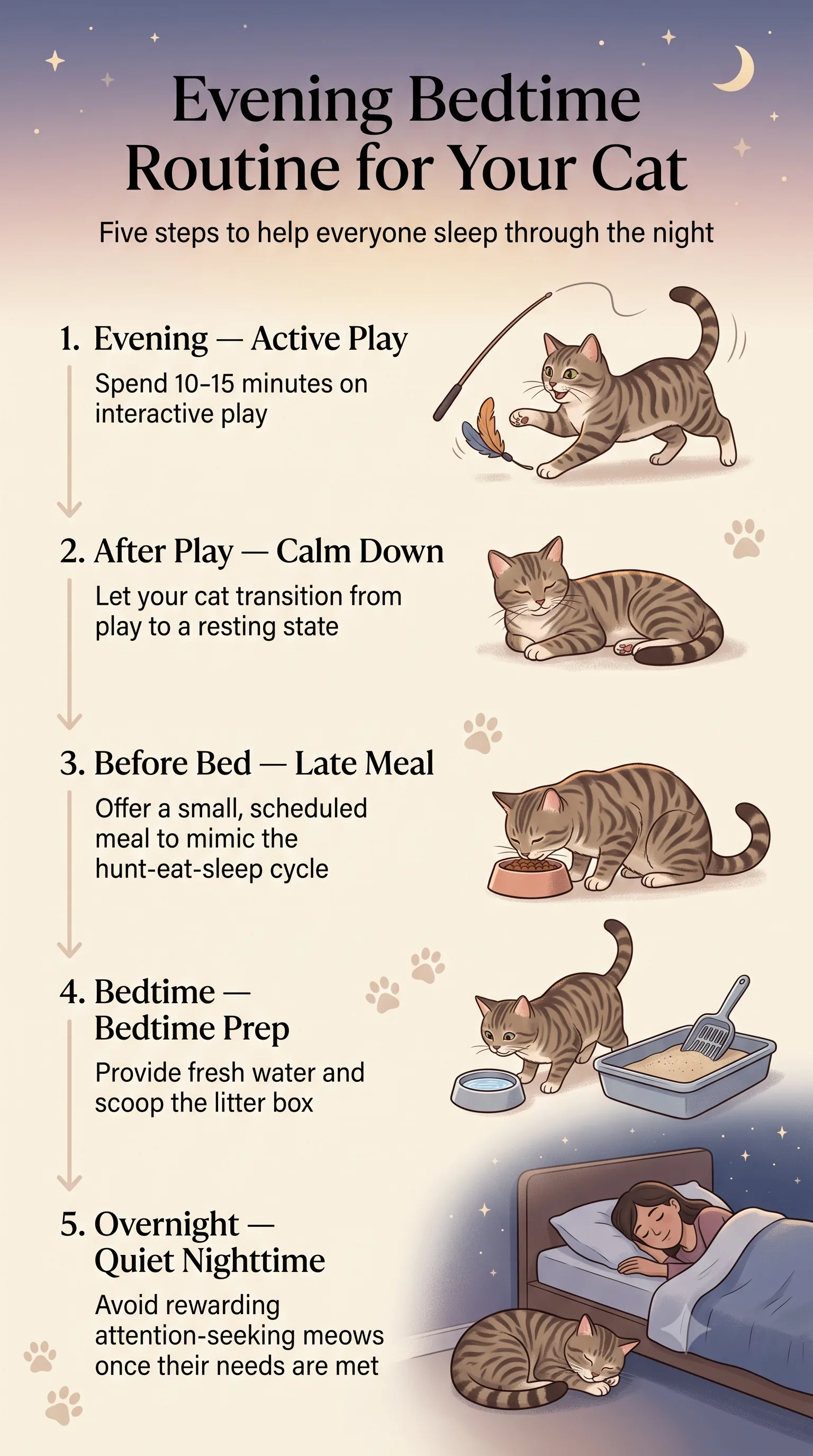
If your cat regularly wakes you up at night, try creating a predictable bedtime routine.
For example:
Evening: Give your cat some active playtime.
After play: Allow your cat to calm down.
Before bed: Provide its normal meal or scheduled feeding.
Bedtime: Make sure fresh water and a clean litter box are available.
Overnight: Avoid rewarding unnecessary attention-seeking meowing once you've ruled out genuine needs.
A predictable routine can help your cat understand when it's time to play, eat, and settle down.
It may take some time for your cat to adjust, so don't expect the behavior to disappear after one night.
Frequently Asked Questions
Why does my cat meow at night but not during the day?
Your cat may be more active at night because cats naturally tend to have higher activity around dawn and dusk.
Boredom, hunger, attention-seeking, stress, or a changed routine can also make nighttime meowing more noticeable.
How do I stop my cat from waking me up at night?
Start by making sure your cat has food, water, a clean litter box, and a comfortable sleeping area.
An evening play session can help burn excess energy.
If your cat is healthy and simply seeking attention, consistently avoiding nighttime rewards can help change the habit.
Should I ignore my cat when it meows at night?
If you've ruled out hunger, illness, pain, and other genuine needs, you can try not responding to attention-seeking meowing.
However, sudden or unusual nighttime vocalization should not automatically be ignored.
Do cats get bored at night?
Yes.
Indoor cats can become bored if they don't have enough stimulation.
Providing toys, scratching areas, climbing opportunities, window views, and interactive playtime can help keep them mentally and physically active.
Why is my older cat suddenly meowing at night?
Older cats can experience changes in sleep patterns, senses, and cognitive function that may contribute to nighttime vocalization.
However, sudden changes can also indicate a medical problem, so it's a good idea to have a senior cat checked by a veterinarian.
Why is my cat suddenly meowing at night?
Sudden nighttime meowing can have several causes, including changes in routine, stress, hunger, boredom, attention-seeking, pain, or illness.
If the behavior is unusual for your cat or occurs alongside other changes, speak with a veterinarian.
Why does my indoor cat meow at night?
Indoor cats may meow at night because they have excess energy, boredom, hunger, want attention, or are naturally more active during the evening and early morning.
Increasing daytime stimulation and creating a consistent evening routine may help.
Why does my cat cry at night and walk around the house?
Your cat may be looking for food, attention, stimulation, or another cat.
Stress, confusion, discomfort, and age-related changes can also cause nighttime wandering and vocalization.
If this behavior is new or unusual, consider speaking with a veterinarian.
The Bottom Line
So, why does your cat meow at night?
It could be hungry, bored, energetic, lonely, stressed, looking for a mate, or simply following its natural activity pattern.
In some cases, nighttime vocalization can also be connected to pain or an underlying health problem.
The key is to look at the bigger picture.
Pay attention to when the meowing happens, what your cat does before and after it, and whether there have been any recent changes in its behavior or environment.
Once you understand what your cat is trying to communicate, finding a solution becomes much easier.
And remember, your cat probably isn't trying to ruin your sleep.
It may just have a very important 3 AM announcement to make. 😸
Final Thought
Your cat may not understand that humans need sleep.
To your cat, 3 AM might be the perfect time for dinner, a game of chase, or an important conversation about absolutely nothing.
So before reaching for the pillow and hiding your head under it, try to figure out what your cat is actually trying to tell you.
A little observation, a consistent routine, and the right amount of play can often make nighttime much more peaceful for both of you.
Does your cat wake you up with nighttime meowing? What do you think it's usually asking for? Share your experience in the comments!
Related articles
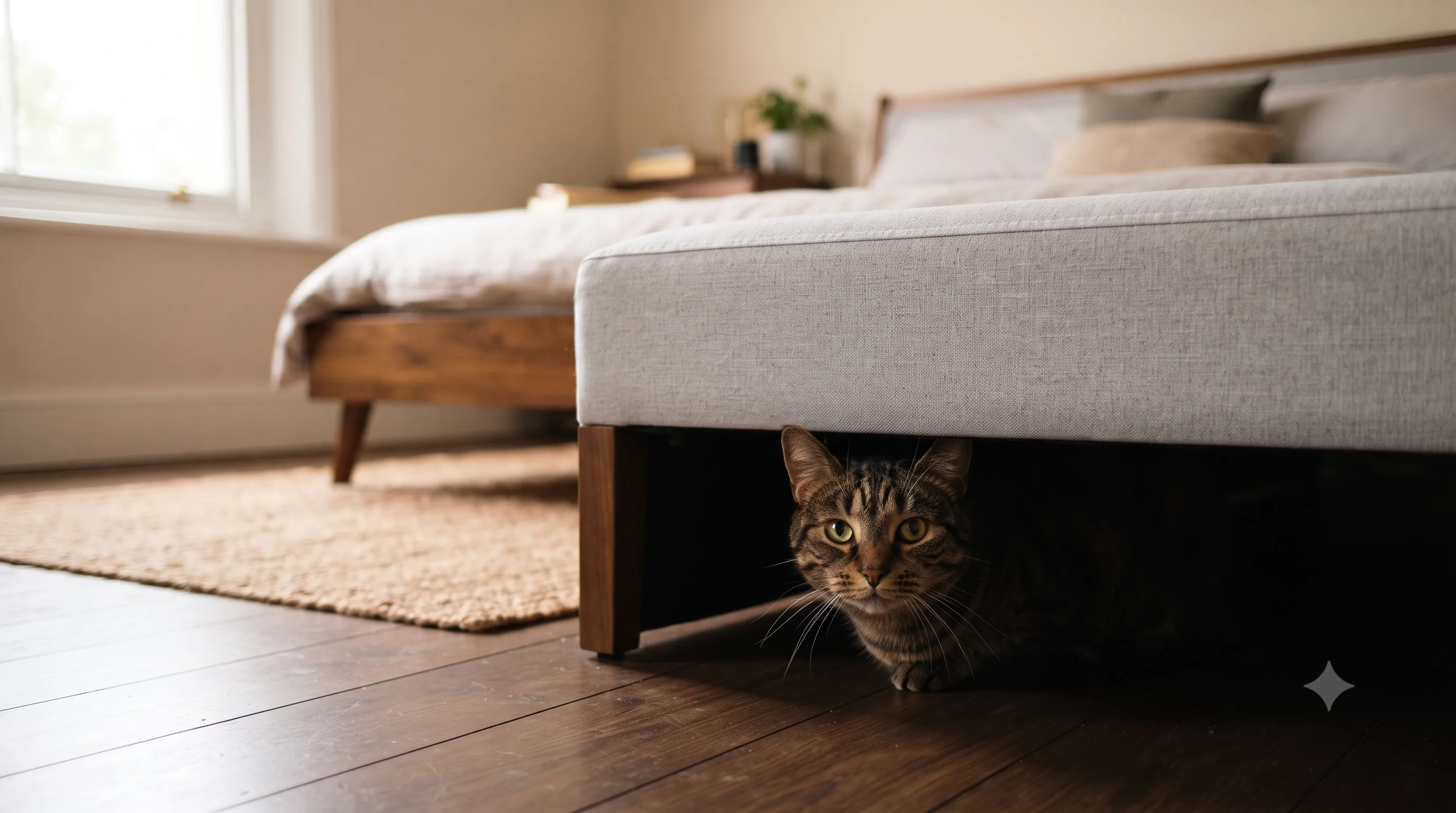
Why Does My Cat Hide? 7 Common Reasons and What to Do
Wondering why your cat keeps hiding? Learn 7 common reasons cats hide, how to tell normal behavior from a possible problem, and how to help your cat feel safe.
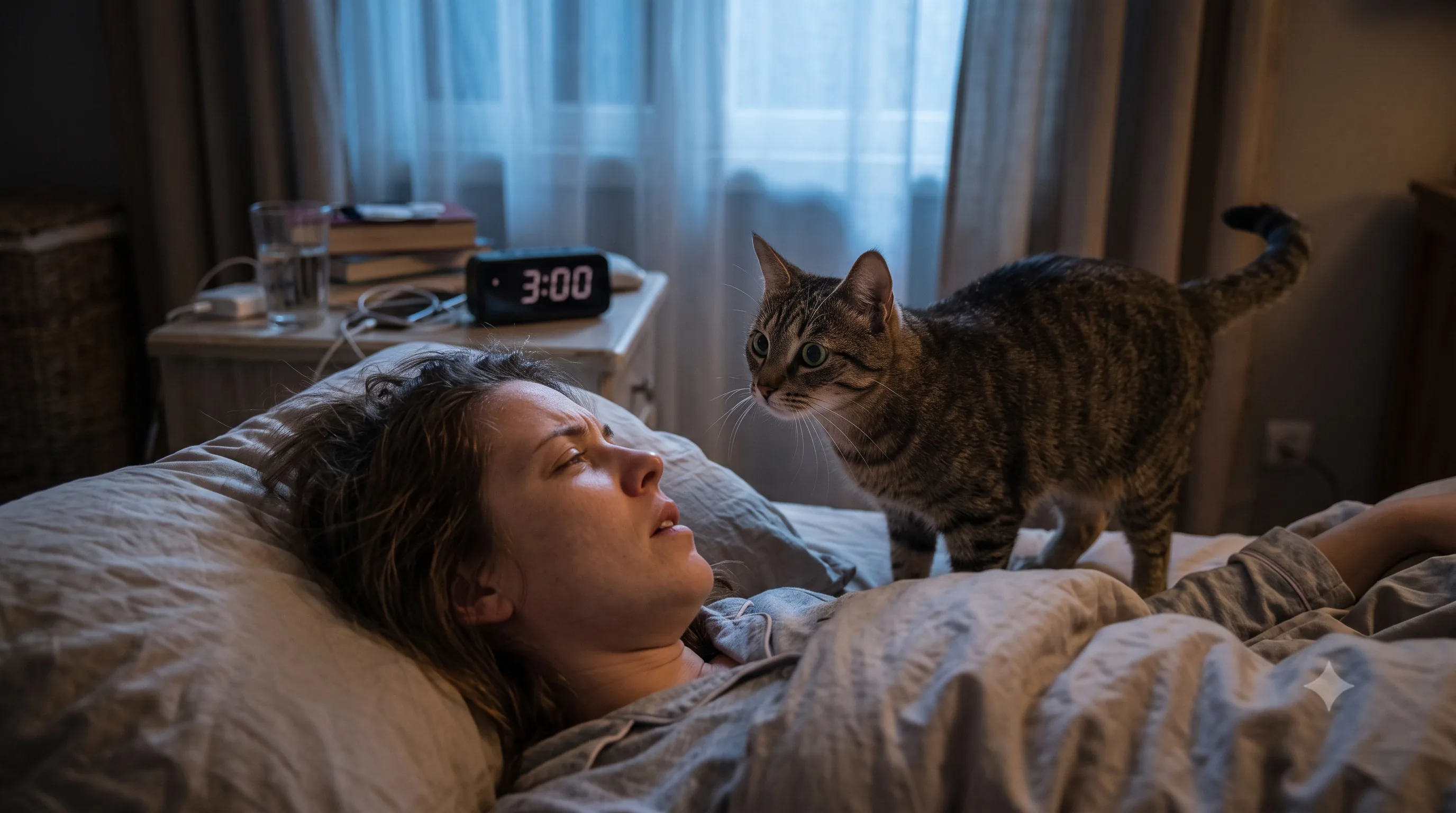
Why Does My Cat Wake Me Up at Night? Common Reasons and How to Help
Does your cat wake you up at night? Discover why cats become active after bedtime, why they may meow at 3 a.m., and practical ways to help your cat sleep peacefully.
Why Does My Cat Bite Me Then Lick Me?
Wondering why your cat bites you and then licks you? Learn what this behavior means, when it is affectionate or playful, how to read your cat's body language, and when a bite may be a sign of stress or pain.