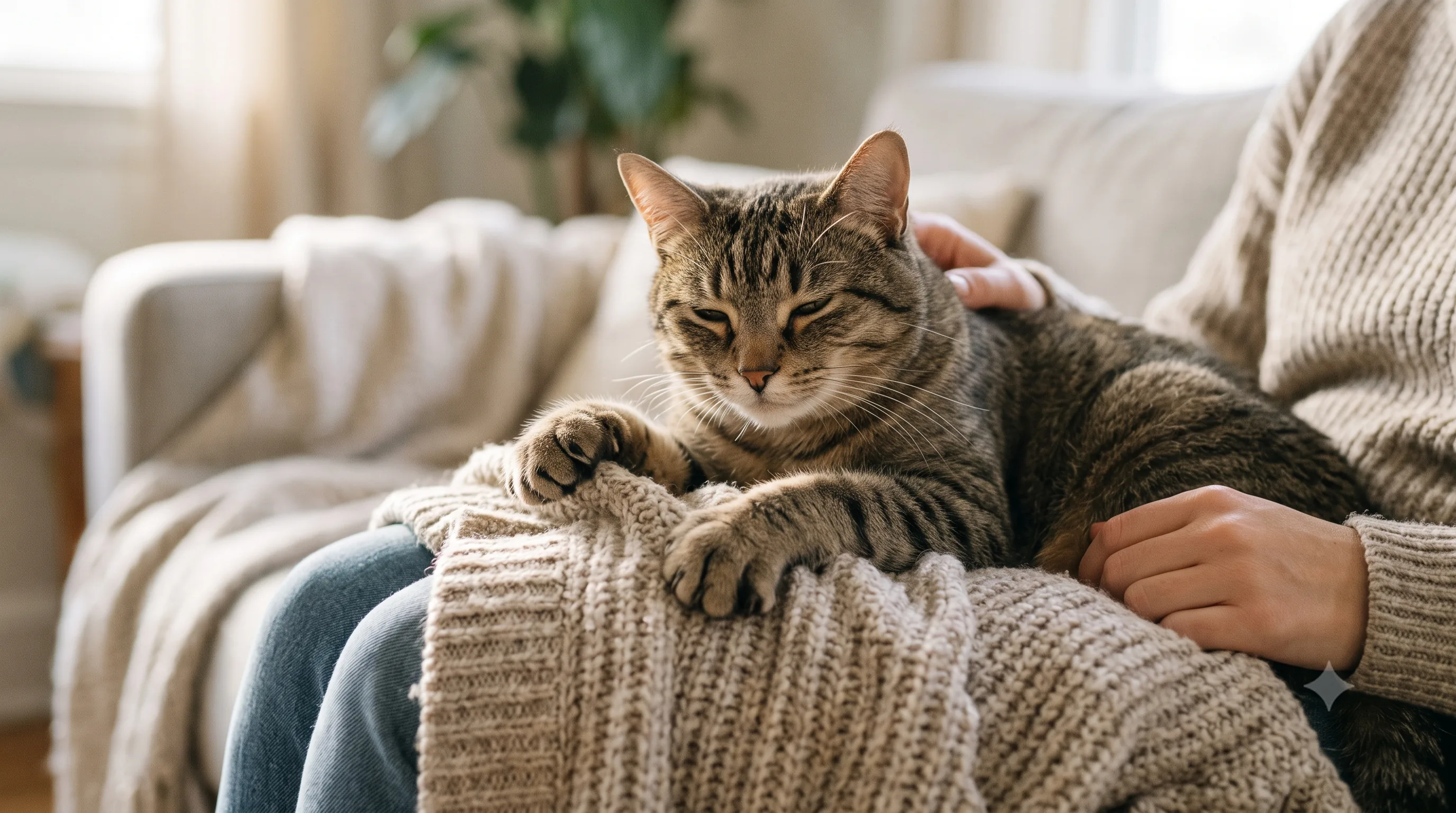
If your cat has ever climbed onto your lap, settled down, and started pushing their paws against you one at a time, you have probably wondered, "What exactly are you doing, little one?"
This adorable behavior is called kneading, and many cat owners affectionately call it "making biscuits." Some cats knead their favorite human, while others prefer blankets, pillows, beds, or even another pet.
But why do cats knead? Is your cat showing affection, remembering kittenhood, getting comfortable, or simply enjoying a relaxing moment?
The funny thing is, kneading can mean several different things—and the reason your cat kneads you may be slightly different from why they knead a blanket.
In this guide, we'll explore why cats knead, what it means when your cat kneads you, why they sometimes knead while purring, and whether you should ever be concerned about the behavior.
What Is Cat Kneading?
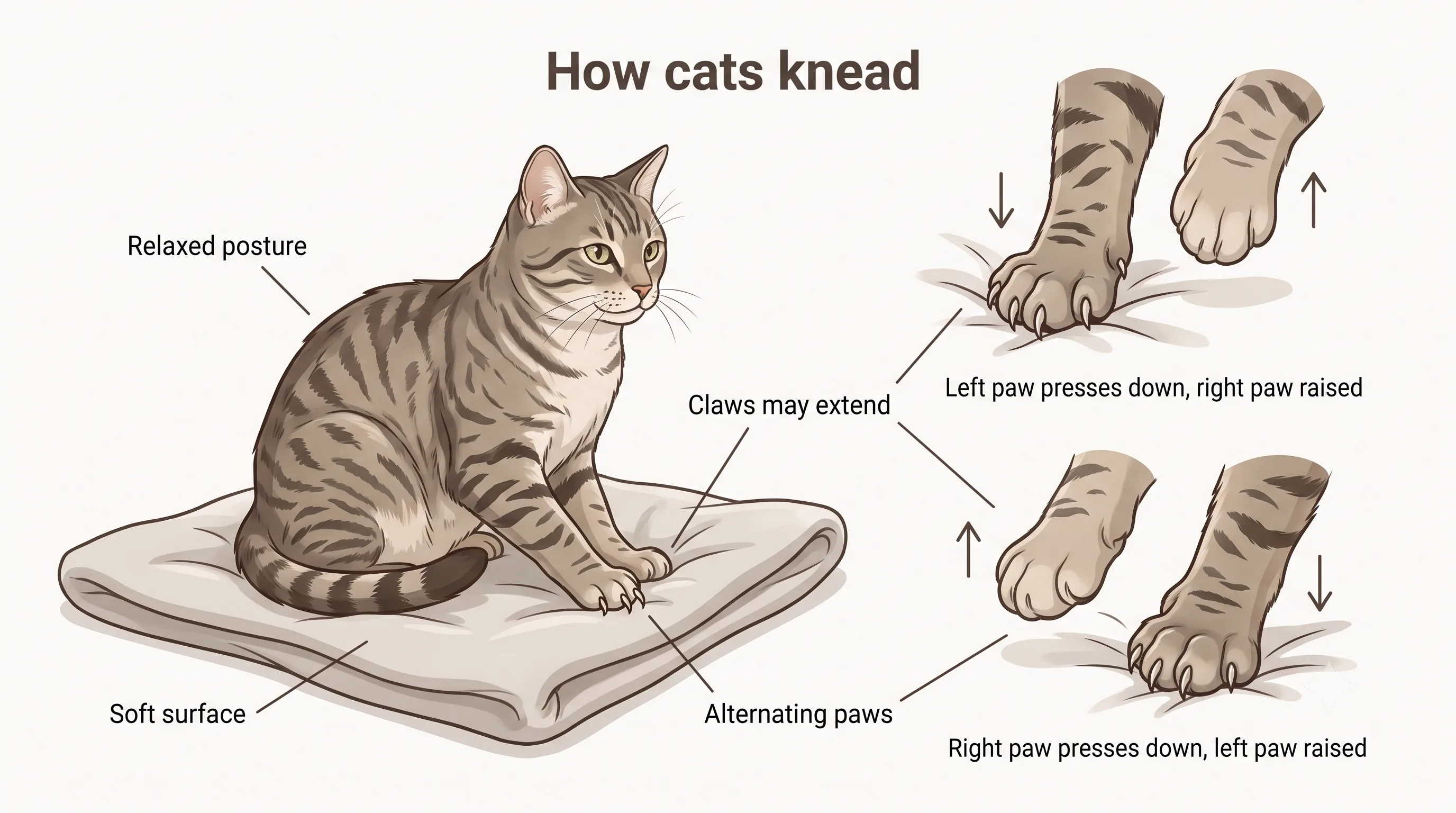
Cat kneading is a rhythmic movement where a cat pushes their front paws against a soft surface, usually alternating between the left and right paw.
You may see your cat kneading:
- Your lap
- A blanket or pillow
- Their favorite bed
- Your stomach or chest
- Another pet
- Their own sleeping spot
Some cats knead with their claws tucked away, while others extend their claws as they push their paws forward.
You might also notice your cat purring, closing their eyes, or becoming very relaxed while kneading. When several of these behaviors appear together, your cat is usually comfortable with what is happening.
Why Do Cats Knead?
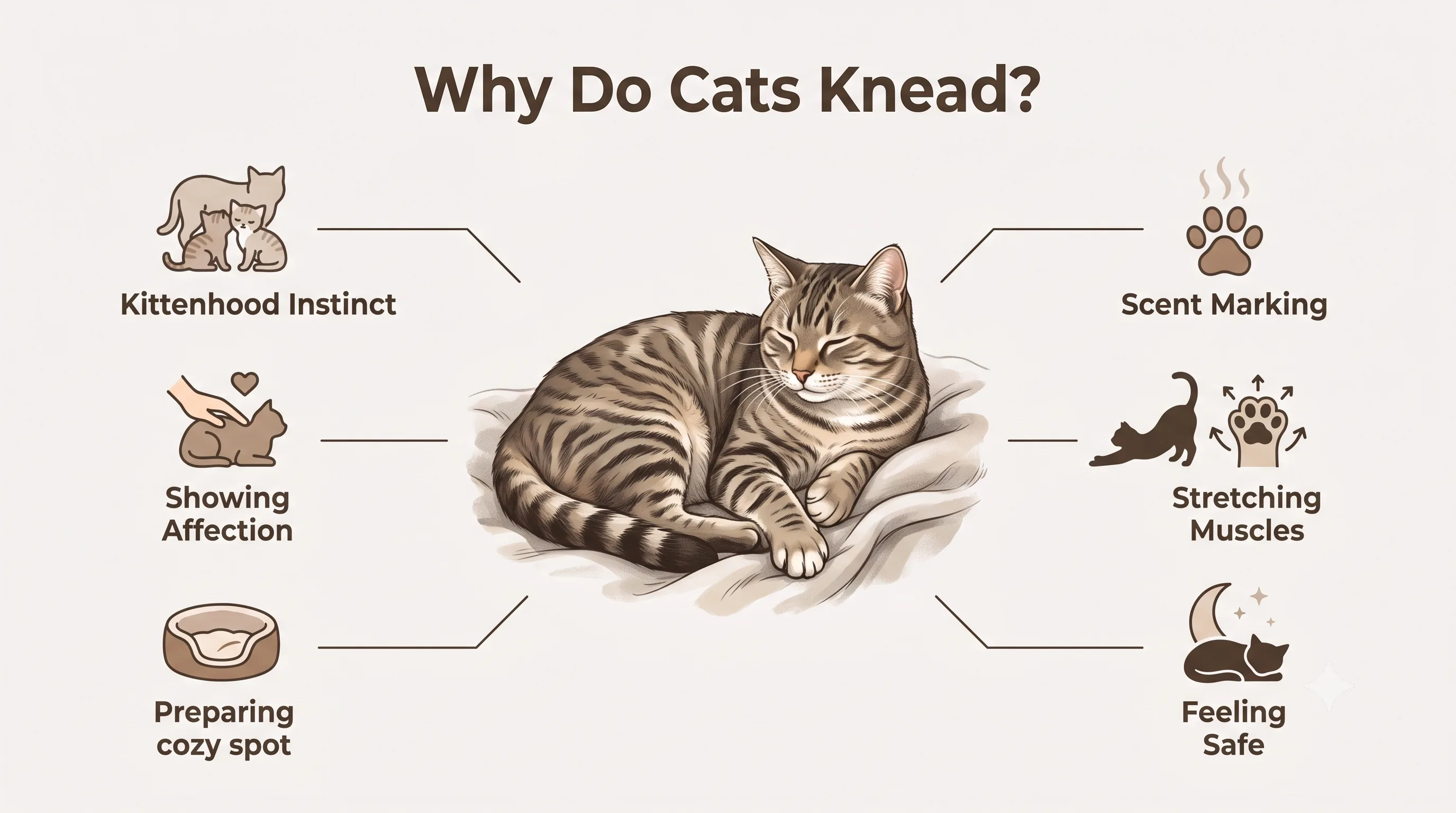
There isn't just one reason cats knead.
The behavior begins during kittenhood and can continue into adulthood. For some cats, it appears to be connected to comfort and relaxation. For others, it may be part of settling down, stretching, or interacting with a familiar surface.
Here are some of the most common reasons behind those little paw movements.
1. It Reminds Them of Kittenhood
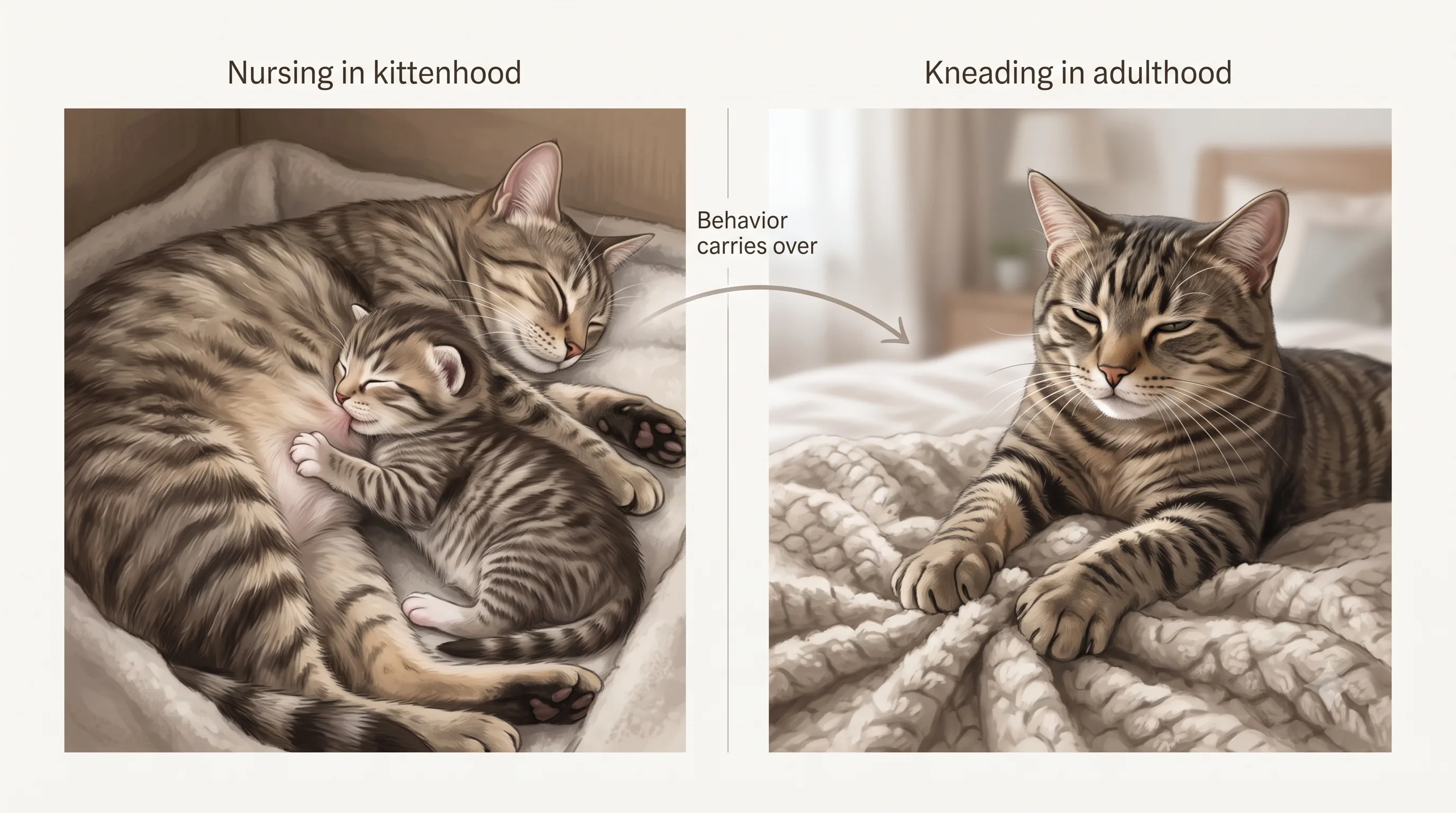
One of the most widely recognized explanations for kneading is its connection to nursing.
When kittens nurse, they instinctively push their paws against their mother's belly. This movement helps stimulate milk flow and becomes associated with warmth, nourishment, and security.
That kittenhood association can stick around long after weaning.
So when an adult cat climbs onto your lap and starts kneading, they may be repeating a familiar behavior that helps them feel comfortable and secure.
In other words, your cat may be bringing a little piece of kittenhood into their adult life.
2. Your Cat Is Showing Affection
If your cat regularly kneads you, take it as a compliment.
Cats don't always show affection in obvious ways. Some prefer to sit nearby, slowly blink at you, rub against your legs, or quietly follow you around the house.
Kneading can be another way of interacting with someone they associate with comfort and security.
If your cat climbs onto your lap, purrs, relaxes, and starts making biscuits, they are probably enjoying being close to you.
Your lap may have become your cat's favorite safe place.
3. They Are Getting Comfortable
Have you ever watched a cat circle around a blanket before lying down?
Kneading can be part of that process.
Cats may knead a soft surface before settling down for a nap. The movement may help them arrange the surface or simply become part of their familiar routine before resting.
Your cat isn't necessarily trying to redecorate your couch.
They may simply be preparing their little sleeping area.
4. They May Be Leaving Their Scent
Cats rely heavily on scent to understand and navigate their environment.
Their paw pads contain scent glands, so kneading may also help leave familiar scent cues on a surface.
However, scent marking is probably only one possible reason for kneading rather than the main explanation for every cat.
If your cat repeatedly kneads the same blanket, bed, or favorite part of the couch, it may simply be a familiar and comforting place that they enjoy returning to.
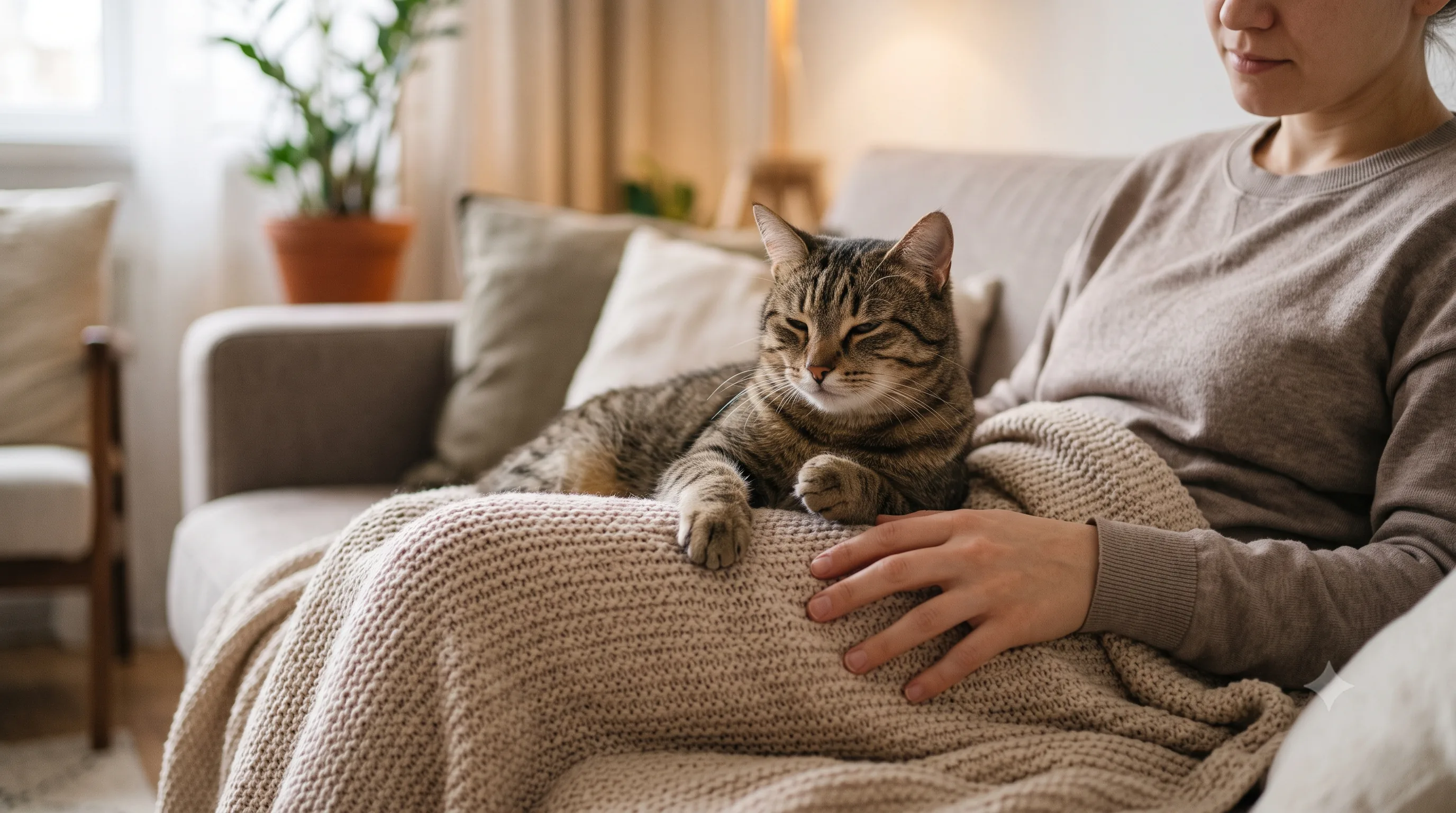
5. They May Be Stretching
Sometimes, kneading may simply feel good.
Think about what happens when your cat wakes up from a long nap. They may stretch their legs, arch their back, extend their paws, and then start kneading.
The movement may give their paws and legs a gentle stretch after resting.
For some cats, kneading may simply be part of the transition from sleeping to settling into another comfortable position.
It's basically your cat's version of a tiny morning stretch routine.
6. They Feel Safe and Relaxed
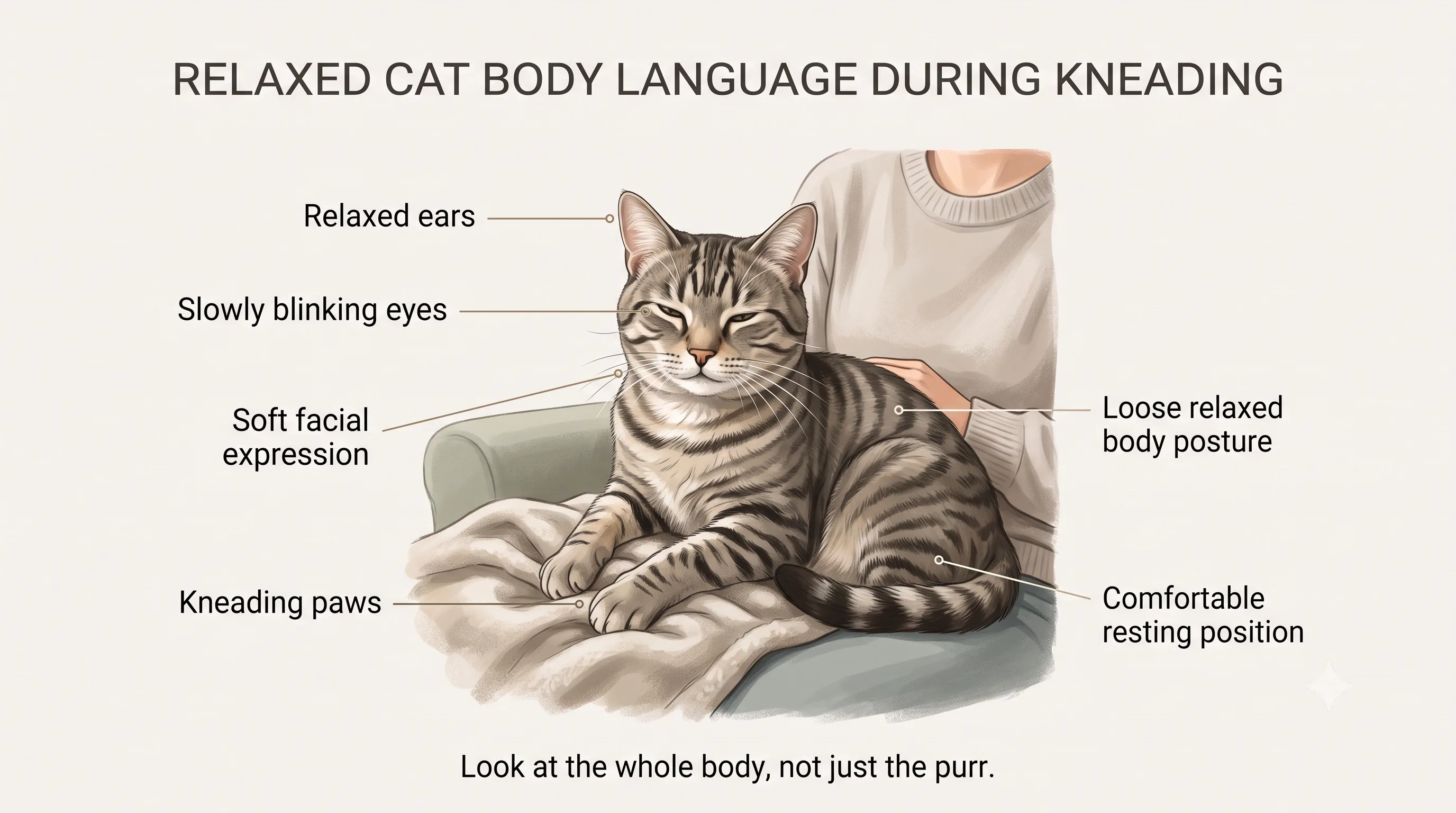
Kneading is often seen alongside other relaxed behaviors.
If your cat is lying comfortably on you, purring, blinking slowly, and gently kneading your clothes, they are probably enjoying the moment.
You may have accidentally created the perfect cat relaxation zone.
Warm human + soft clothes + attention = five-star cat hotel.
Why Does My Cat Knead Me Specifically?
This is where things get especially cute.
Your cat has plenty of surfaces to knead, so why choose you?
There is a good chance that you make them feel safe and comfortable.
Cats are creatures of habit. If your cat associates you with food, warmth, protection, affection, and comfortable naps, your body can become one of their favorite places to relax.
Your lap also happens to be warm and soft, which makes it an excellent kneading surface.
So when your cat climbs onto you and starts making biscuits, there usually isn't a secret message that you need to decode.
They may simply be enjoying your company and the comfort of being close to you.
Why Does My Cat Knead While Purring?
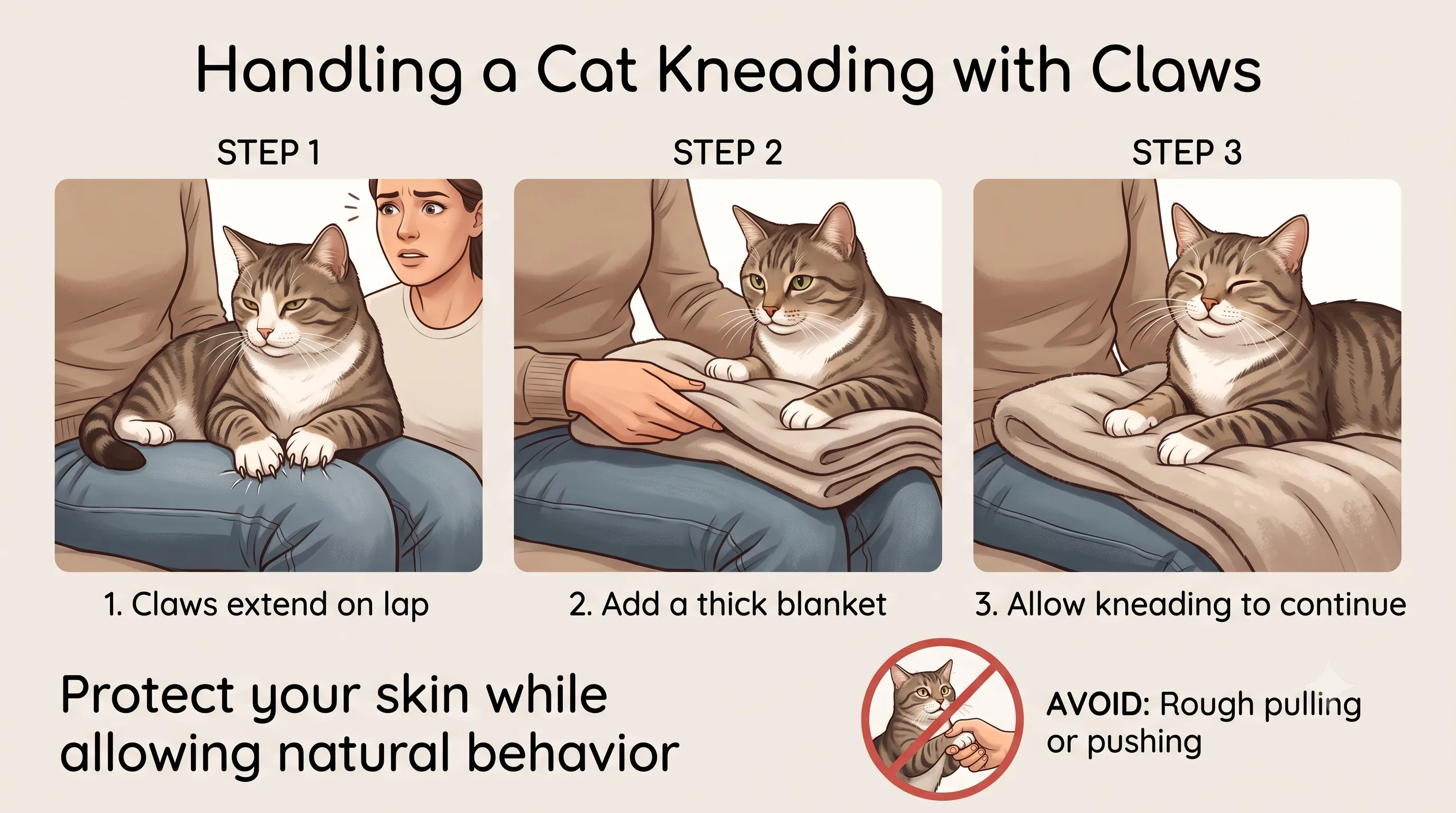
Kneading and purring often appear together because both behaviors can happen when a cat is relaxed.
You might notice your cat:
- Kneading your lap
- Purring loudly
- Closing their eyes
- Relaxing their body
- Slowly blinking
- Settling down for a nap
When you see several of these behaviors together, your cat is most likely feeling comfortable and content.
Of course, purring can happen for different reasons, so it's better to look at your cat's overall body language rather than using purring alone as a sign of happiness.
A relaxed body, soft facial expression, normal breathing, and willingness to remain close to you provide more useful context.
Why Does My Cat Knead With Their Claws?
This is where an adorable moment can suddenly become a little painful.
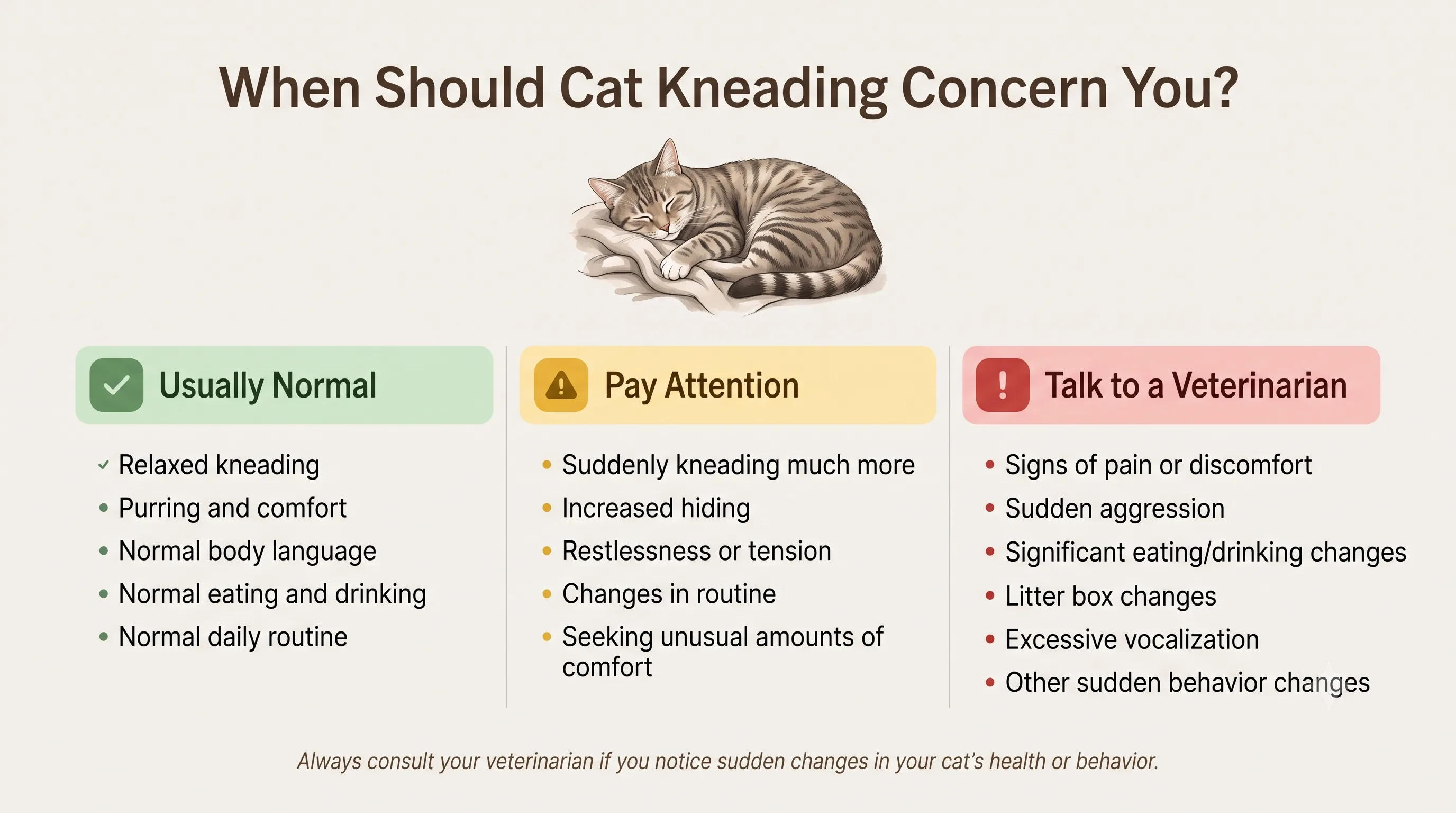
Some cats naturally extend their claws while kneading. They aren't necessarily trying to scratch you. Their claws may simply come out as part of the paw movement.
Unfortunately, your legs may not appreciate this particular expression of love.
If your cat's claws are hurting you, try placing a thick blanket between you and your cat.
You can also provide a soft cushion or blanket nearby and gently encourage your cat to knead there.
If your cat's claws need routine maintenance, regular nail trimming can also help reduce accidental scratches.
Avoid grabbing your cat's paws or forcing them to stop while they are relaxed. A gentle redirection is usually a better approach.
Why Do Cats Knead Blankets?
Some cats would rather knead a blanket than a human.
Soft blankets can provide a comfortable surface for kneading, especially when your cat is preparing to sleep or relax.
You may notice your cat repeatedly kneading the same blanket before curling up on top of it.
This doesn't necessarily mean there is something unusual happening.
Your cat may simply have discovered a surface that feels comfortable and has become part of their relaxation routine.
If they purr, settle down, and eventually fall asleep, the blanket may have become their personal comfort zone.
And yes, your cat may have officially claimed it as their property.
Should I Stop My Cat From Kneading Me?
Usually, there is no reason to stop your cat from kneading.
For most cats, it is a normal and harmless behavior.
If you enjoy it and your cat seems relaxed, you can simply let them continue.
If their claws become uncomfortable, place a blanket between you and their paws or gently redirect them onto a nearby cushion.
Avoid punishing your cat for kneading. They aren't doing something wrong, and punishment can make them anxious or confused.
The goal isn't to eliminate kneading.
It's to make the behavior comfortable for both of you.
Why Is My Cat Suddenly Kneading More Than Usual?
A change in behavior is worth paying attention to.
If your cat suddenly starts kneading much more frequently than usual, look at the bigger picture.
Ask yourself:
- Has anything changed at home?
- Is your cat spending more time seeking comfort from you?
- Have there been changes to their daily routine?
- Are they showing signs of stress?
- Are they eating and drinking normally?
- Are they sleeping normally?
- Are they using the litter box normally?
- Have you noticed any other unusual behaviors?
An increase in kneading by itself usually isn't a reason to panic.
Your cat may simply be seeking comfort or responding to a change in their environment.
However, sudden behavioral changes are more important when they appear alongside other unusual symptoms. If that happens, it's worth discussing the change with your veterinarian.
Is Kneading a Sign That My Cat Loves Me?
It can be.
We can't know exactly what a cat is thinking, but kneading is commonly associated with comfort and positive emotional states.
If your cat chooses to knead you while purring, relaxing, and staying close to you, it's reasonable to interpret the behavior as a sign that they feel safe and comfortable around you.
Cats have different personalities, too.
One cat may show affection by kneading your lap. Another might follow you from room to room. Another may simply sit beside you without touching you.
So don't worry if your cat doesn't knead.
There are plenty of other ways cats show that they enjoy your company.
And honestly, if your cat has chosen your lap as their personal biscuit-making station, you've probably earned some serious cat-parent points.
What Should I Do When My Cat Kneads Me?
The best response is usually simple: let them enjoy it.
You can gently pet your cat if they seem to enjoy being touched.
Some cats prefer to be left alone while they knead, so pay attention to their body language. If their ears flatten, their tail starts flicking sharply, or they move away, give them some space.
If their claws hurt, place a blanket between you and their paws instead of pushing them away.
You can also provide a soft blanket or cushion nearby and encourage your cat to knead there.
The goal isn't to eliminate kneading.
It's to make sure both you and your cat are comfortable.
When Is Cat Kneading a Sign of a Problem?
Kneading is normally nothing to worry about.
However, it's worth paying closer attention if kneading is accompanied by other unusual changes, such as:
- Signs of pain or discomfort
- Excessive vocalization
- Sudden aggression
- Significant changes in eating or drinking
- Changes in litter box habits
- Excessive hiding
- Restlessness
- Repetitive behaviors that seem difficult for your cat to stop
- Other sudden changes in normal behavior
The behavior itself is usually normal.
It's the sudden change or combination with other symptoms that deserves more attention.
If you're concerned about a noticeable change in your cat's behavior, a veterinarian can help determine whether there is an underlying medical or behavioral issue.
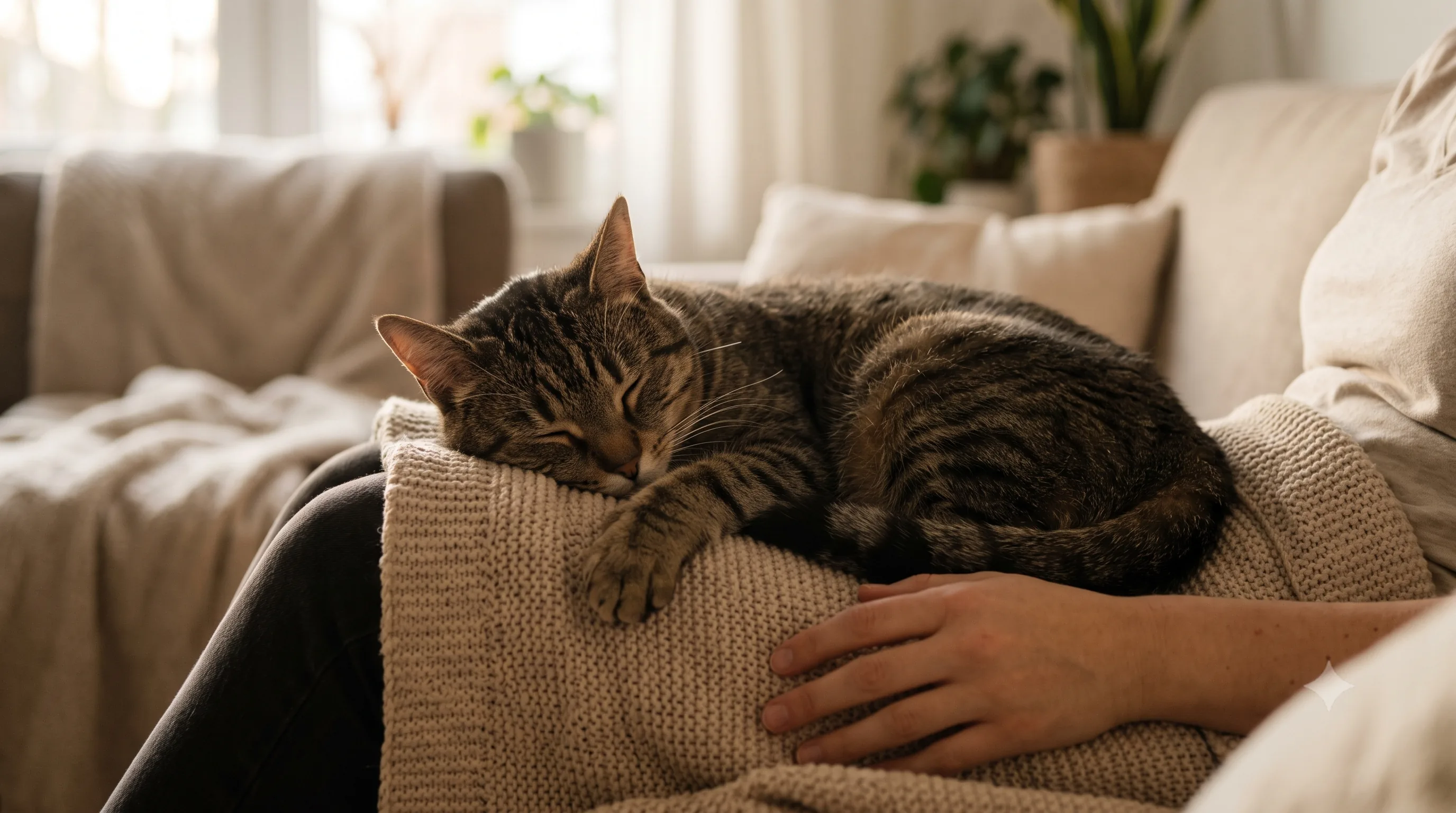
Frequently Asked Questions About Cat Kneading
Why does my cat knead me and purr?
Cats often knead and purr when they are relaxed and comfortable. If your cat climbs onto your lap, kneads your clothes, purrs, and settles down, they are likely enjoying the warmth and security of being close to you. Look at their overall body language rather than relying on purring alone.
Why does my cat knead with claws?
Some cats naturally extend their claws while kneading. They usually aren't trying to hurt you. If the claws become uncomfortable, place a thick blanket between you and your cat or redirect them to a soft cushion.
Why does my cat knead my stomach?
Your stomach is warm, soft, and often relatively stable when you're sitting or lying down, making it a comfortable kneading surface. If your cat kneads your stomach while purring and relaxing, they may simply enjoy the comfort of being close to you.
Why do cats knead blankets?
Cats may knead blankets because they provide a soft, comfortable surface. Kneading can become part of a cat's routine before resting or sleeping. If your cat repeatedly returns to the same blanket, it may simply be a familiar and comforting spot.
Do cats knead because they love you?
Kneading can be associated with affection and comfort, especially when a cat chooses to knead a person while remaining relaxed and close. While we can't know exactly what a cat is thinking, the behavior can reasonably be viewed as a sign that they feel safe and comfortable around you.
Should I stop my cat from kneading?
Usually, no. Kneading is a normal behavior for many cats. If it doesn't bother you, there is generally no need to interrupt it. If your cat's claws hurt, use a blanket as a barrier or gently redirect them to a nearby soft surface instead of punishing them.
Final Thoughts
So, why does your cat knead you?
Most of the time, it's because they feel comfortable, safe, and relaxed.
Kneading begins during kittenhood and can remain a comforting behavior throughout a cat's life. Your cat may be repeating a familiar kitten behavior, settling into a cozy sleeping spot, stretching their paws, interacting with a familiar surface, or simply enjoying time with you.
The next time your cat climbs onto your lap and starts making biscuits, you can take it as a pretty good compliment.
And if those tiny claws occasionally turn your lap into a pincushion, don't take it personally.
Your cat probably isn't trying to hurt you.
They're just making biscuits.
Does your cat knead you? Tell us in the comments where your cat usually makes biscuits—your lap, your bed, a blanket, or somewhere completely unexpected!
Related articles
Why Does My Cat Bite Me Then Lick Me?
Wondering why your cat bites you and then licks you? Learn what this behavior means, when it is affectionate or playful, how to read your cat's body language, and when a bite may be a sign of stress or pain.
Why Does My Cat Follow Me Everywhere? 10 Reasons Your Cat Won't Leave Your Side
Why does your cat follow you everywhere? Discover 10 reasons cats follow their owners, what this behavior means, funny real-life cat stories, and when clinginess may signal a problem.
Why Does My Cat Hide? 7 Common Reasons and What to Do
Wondering why your cat keeps hiding? Learn 7 common reasons cats hide, how to tell normal behavior from a possible problem, and how to help your cat feel safe.