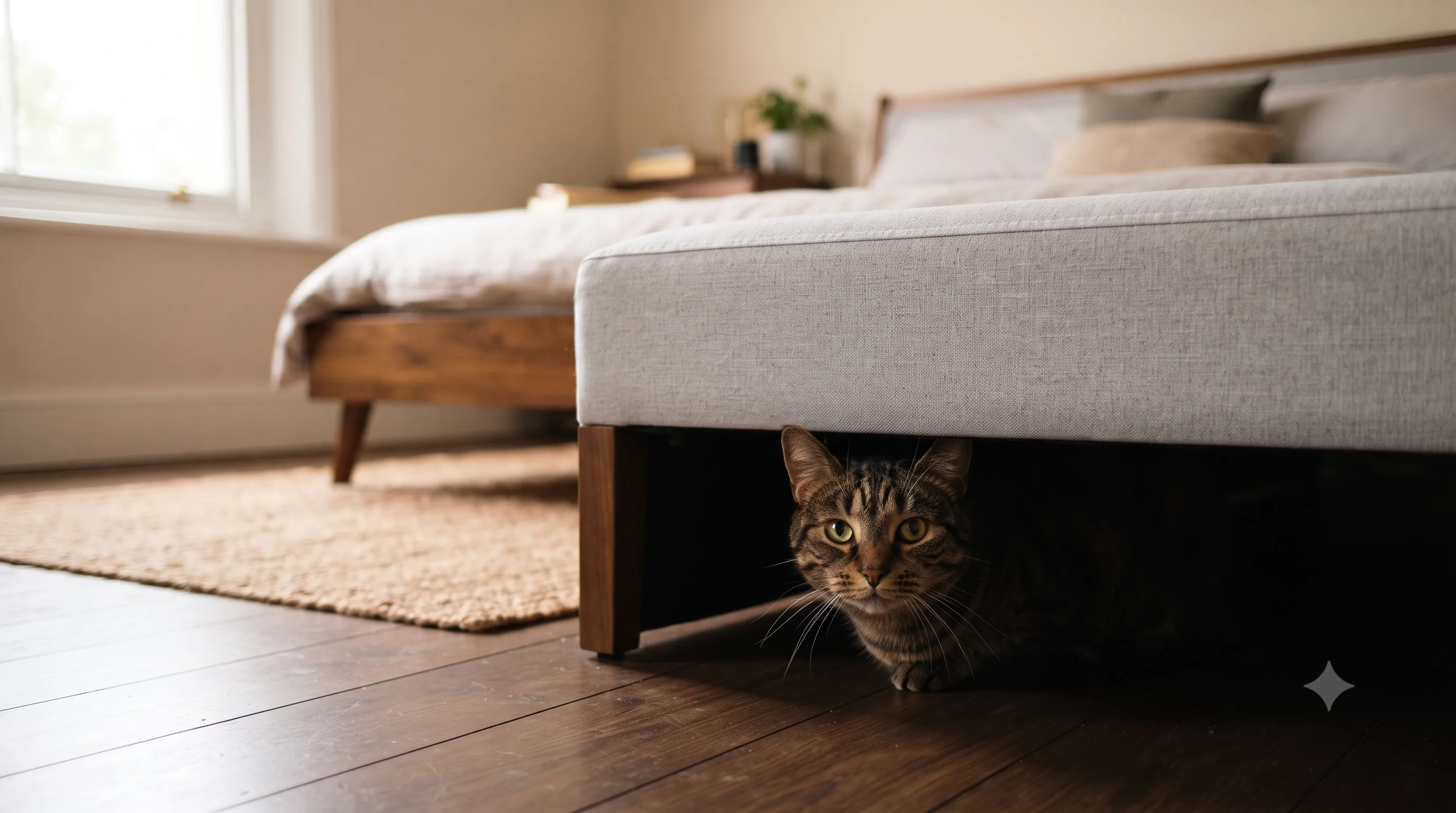
Have you ever looked around the house and suddenly realized you haven't seen your cat for hours?
You check under the bed, behind the sofa, inside the cupboard, and maybe even in places you didn't think a cat could possibly fit.
Then you spot two little eyes staring back at you.
Cats are naturally drawn to quiet, enclosed spaces. For some cats, hiding is simply part of their personality. But if your cat suddenly starts hiding more than usual, it can also be a sign that they're scared, stressed, uncomfortable, or not feeling well.
So, why does your cat hide?
In this guide, we'll look at the most common reasons cats hide, how to tell normal hiding from potentially concerning behavior, and what you can do to help your cat feel safe and comfortable at home.
Quick Answer: Why Is My Cat Hiding?
Cats hide for many different reasons.
Your cat may be hiding because they:
- Want some peace and quiet
- Are sleeping
- Feel frightened by a loud noise or unfamiliar situation
- Are stressed by a change in their environment
- Are adjusting to a new home
- Don't feel comfortable around another pet
- Aren't feeling well or may be experiencing pain
The most important clue is whether the hiding is normal for your cat.
If your cat has always enjoyed sleeping under the bed for a few hours, there's usually no reason to panic. But if your normally social cat suddenly starts hiding all day, especially alongside changes in eating, drinking, litter box habits, energy, or behavior, it's worth paying closer attention.
Why Do Cats Hide?
Hiding is a natural part of many cats' behavior.
In the wild, cats use hidden spaces to rest, observe their surroundings, stay protected, and avoid potential threats. Even indoor cats can retain this instinct.
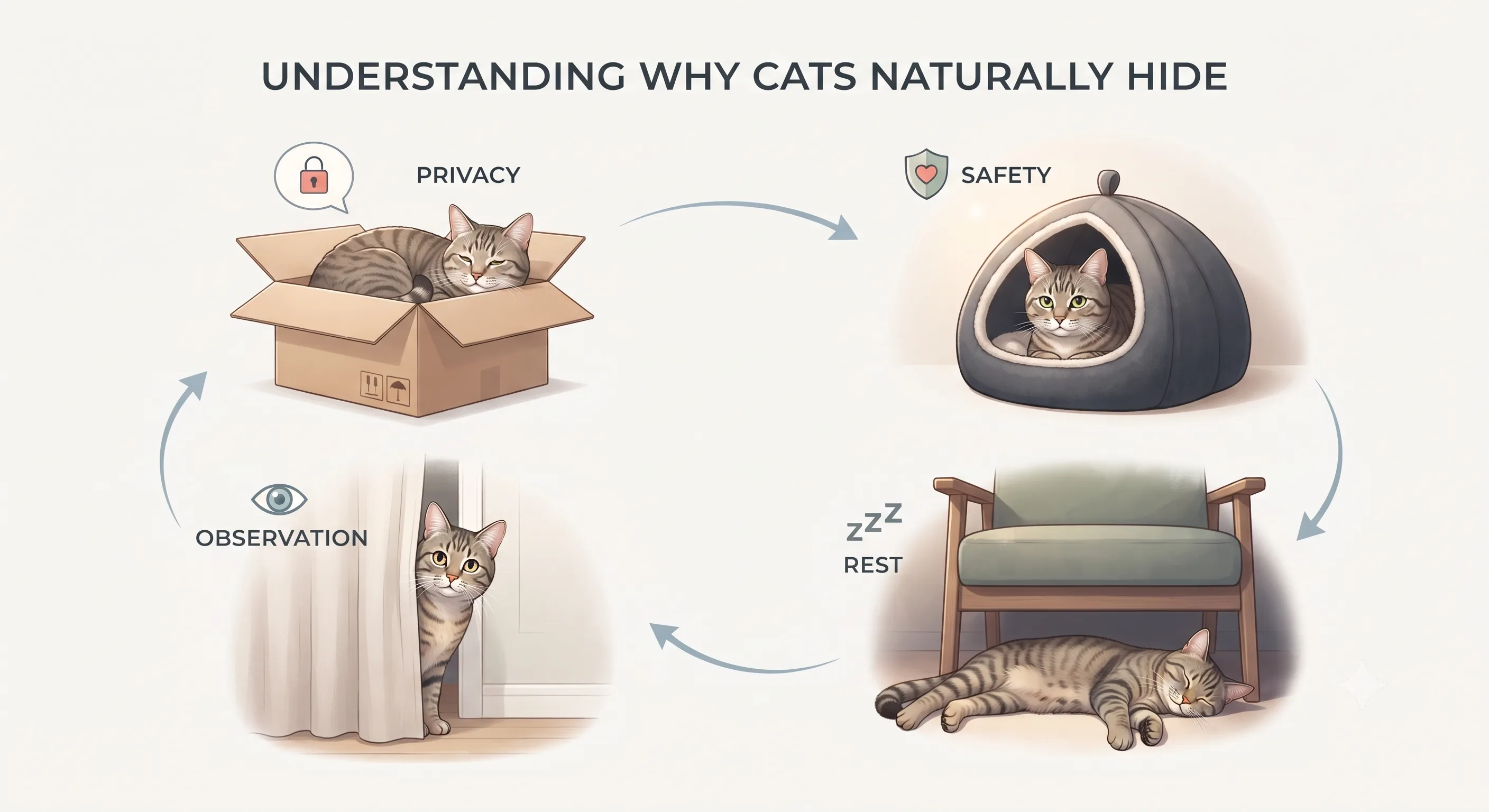
A small, enclosed space can make your cat feel secure. It gives them somewhere to relax without being disturbed.
You may find your cat hiding:
- Under the bed
- Behind furniture
- Inside a cardboard box
- Under a blanket
- In a quiet cupboard
- Behind curtains
- Inside a covered cat bed
If your cat comes out normally to eat, drink, play, use the litter box, and interact with you, their hiding may simply be part of their normal routine.
The important thing is to understand what is normal for your individual cat.
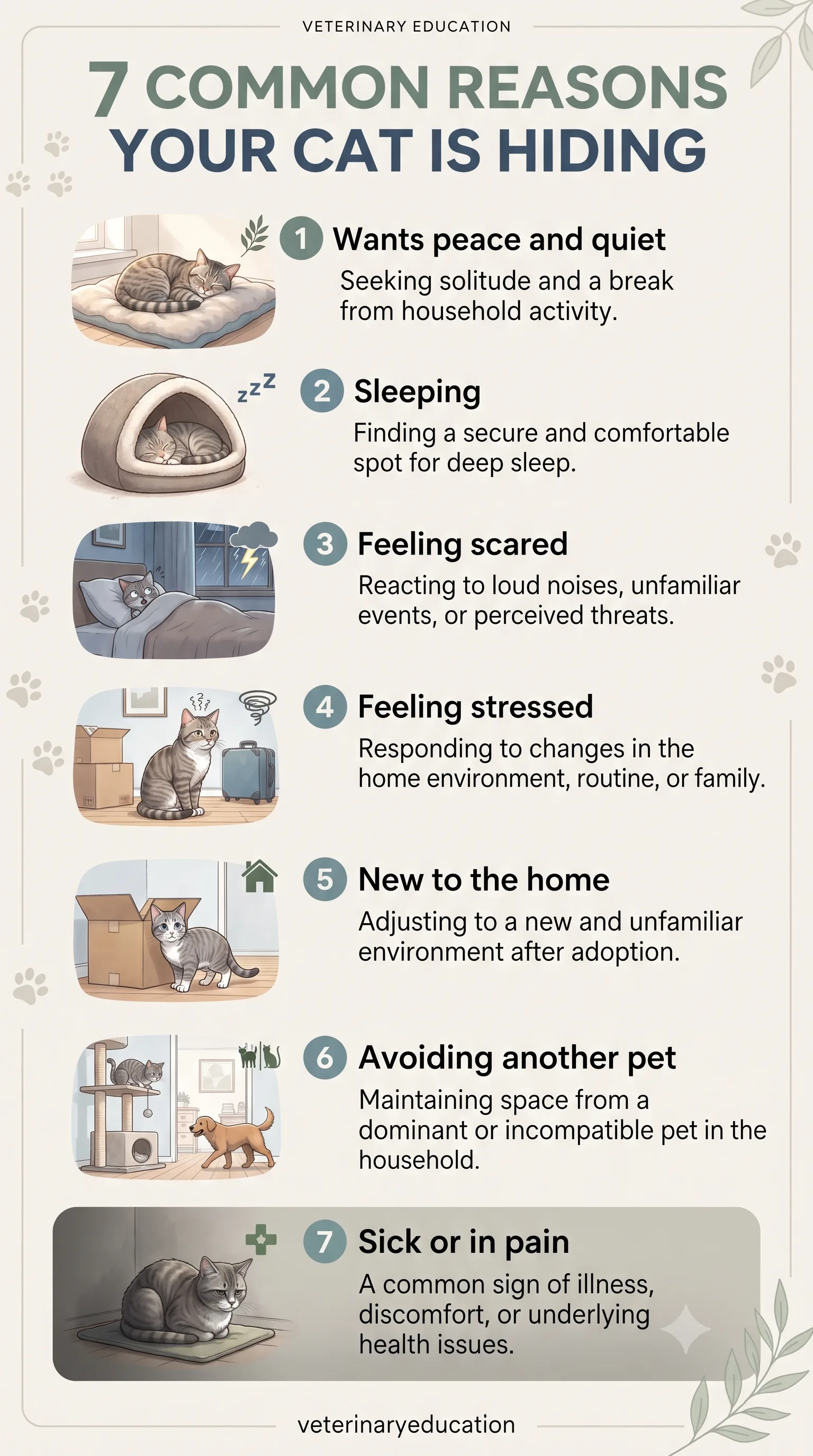
7 Common Reasons Your Cat Is Hiding
1. Your Cat Wants Some Peace and Quiet
Sometimes, your cat isn't scared or sick. They simply want some alone time.
Cats sleep a lot, and they don't always want people or other pets around while they rest. A quiet hiding spot gives them a chance to relax without interruptions.
This can be especially common in busy homes with:
- Children
- Visitors
- Other cats
- Dogs
- Lots of activity or noise
If your cat disappears after a busy morning or comes out later and behaves normally, they may simply be looking for a quiet place to decompress.
Think of it as your cat's version of closing the bedroom door.
2. Your Cat Is Sleeping
Before you worry, consider the simplest explanation: your cat might just be sleeping.
Cats can sleep for around 12 to 16 hours a day, and some cats may sleep even more depending on their age, lifestyle, and individual habits.
Cats also don't always choose obvious places for their naps.
A space under the bed, behind a sofa, or inside a cardboard box may feel dark, quiet, and comfortable.
If your cat disappears for a while but wakes up normally, eats, drinks, uses the litter box, and plays as usual, their hiding may simply be part of their daily routine.
3. Your Cat Is Feeling Scared
Cats can be frightened by things that seem completely normal to us.
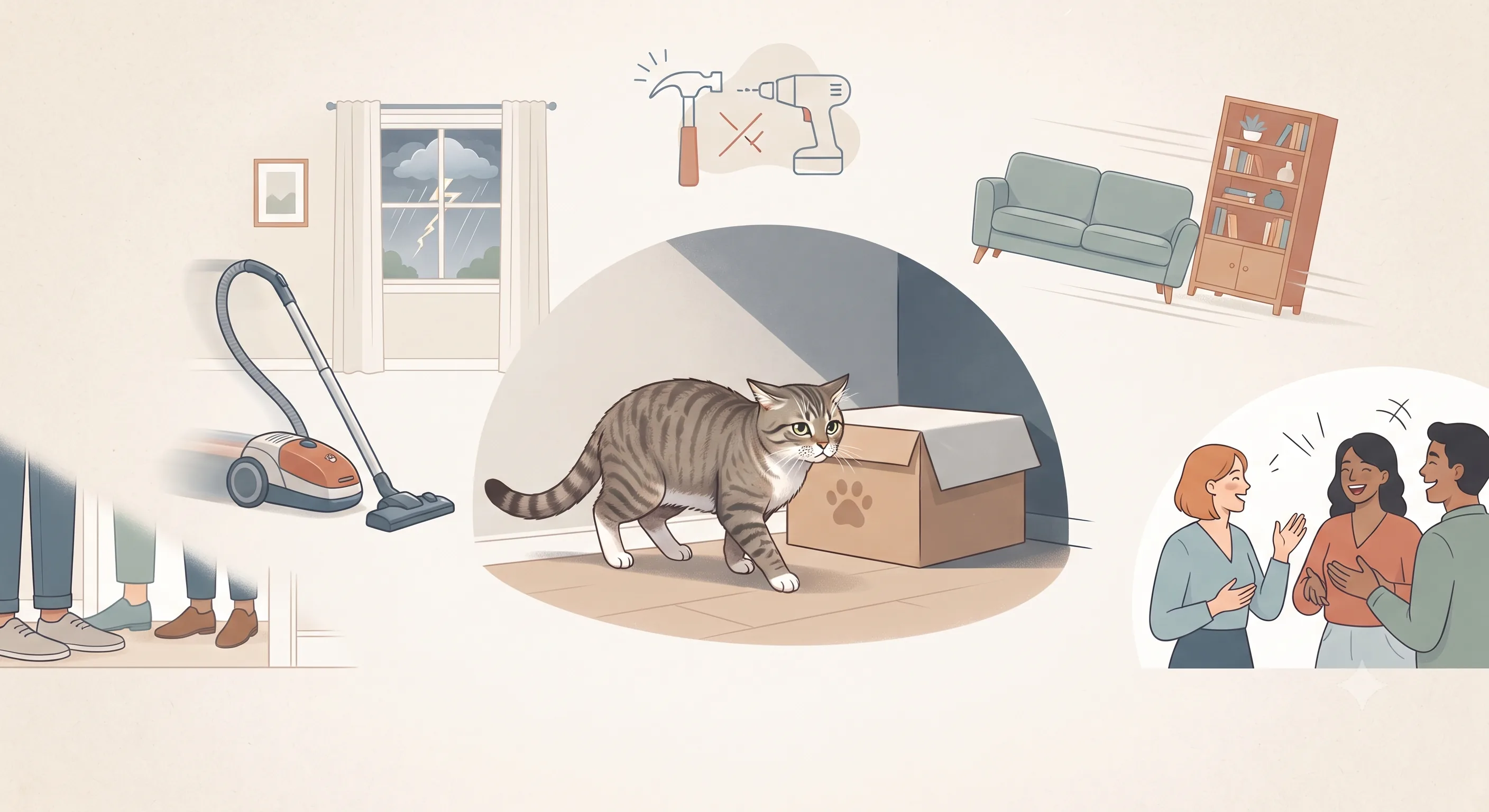
Thunderstorms, fireworks, vacuum cleaners, loud music, construction work, unfamiliar people, or sudden changes around the house can send a cat looking for somewhere safe.
When cats feel threatened, hiding is one of their natural ways of coping with the situation.
You may notice your cat hiding more often during:
- Fireworks or loud celebrations
- Thunderstorms
- Home renovations
- Parties or gatherings
- Visits from strangers
- Loud arguments or sudden noises
- Moving furniture around
During these moments, give your cat some space.
Trying to drag them out of their hiding spot can make them even more frightened.
Instead, let them stay somewhere safe until they feel comfortable enough to come out.
4. Your Cat Is Stressed
Fear is often connected to something happening right now. Stress can be caused by an ongoing change or situation that makes your cat uncomfortable.
Cats generally prefer routine.
Moving to a new home, bringing home another pet, changing their feeding routine, moving their litter box, or changing the people around them can sometimes cause stress.
Stress can look different from cat to cat.
Hiding is one of the common signs, but you may also notice:
- Eating less
- Excessive grooming
- Urinating outside the litter box
- Becoming more vocal
- Acting unusually aggressive
- Avoiding people
- Sleeping more than usual
If your cat's behavior changes after a major change at home, give them time to adjust.
Keeping their routine predictable and giving them a quiet place to retreat can help them feel more secure.
5. Your Cat Is New to Your Home
If you've recently adopted a cat, don't be surprised if they spend the first few days hiding.
Think about it from their perspective.
They've suddenly been brought into an unfamiliar environment filled with new smells, sounds, people, objects, and routines.
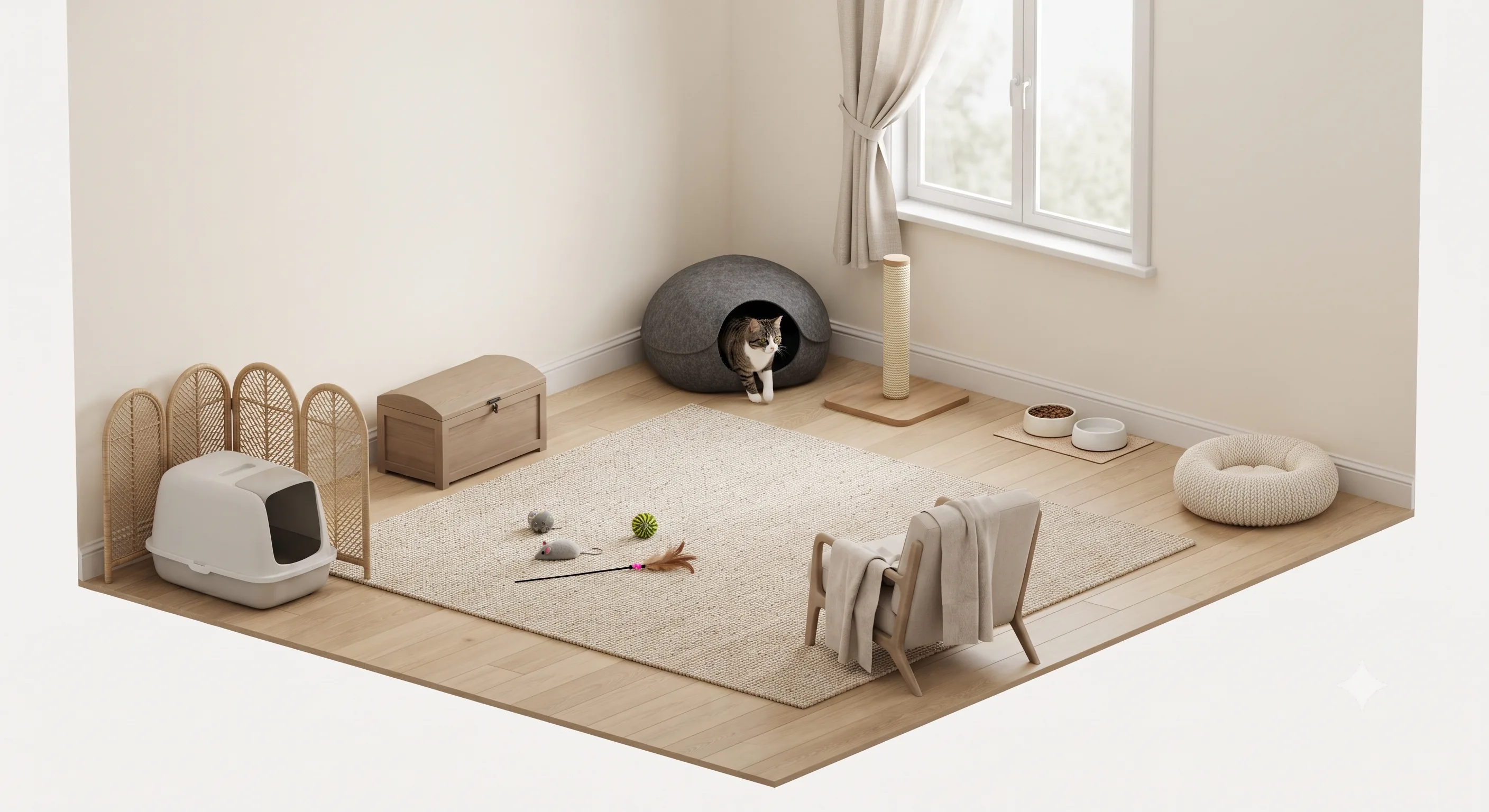
Hiding gives them a chance to observe their surroundings from a place where they feel protected.
Instead of forcing your new cat to interact with you, give them a quiet room where they have access to:
- Food and fresh water
- A litter box
- A comfortable bed
- A scratching post
- A safe hiding place
- A few toys
Let your cat come out when they're ready.
Sit quietly nearby, speak softly, and allow them to approach you on their own terms.
Building trust can take time, but patience usually goes a long way.
6. Your Cat Is Avoiding Other Pets
If you have multiple pets, one cat may hide because they don't feel comfortable around another animal.
This can happen even if the other pet isn't actively attacking them.
A confident dog, playful kitten, or territorial cat can make another cat feel like they don't have enough personal space.
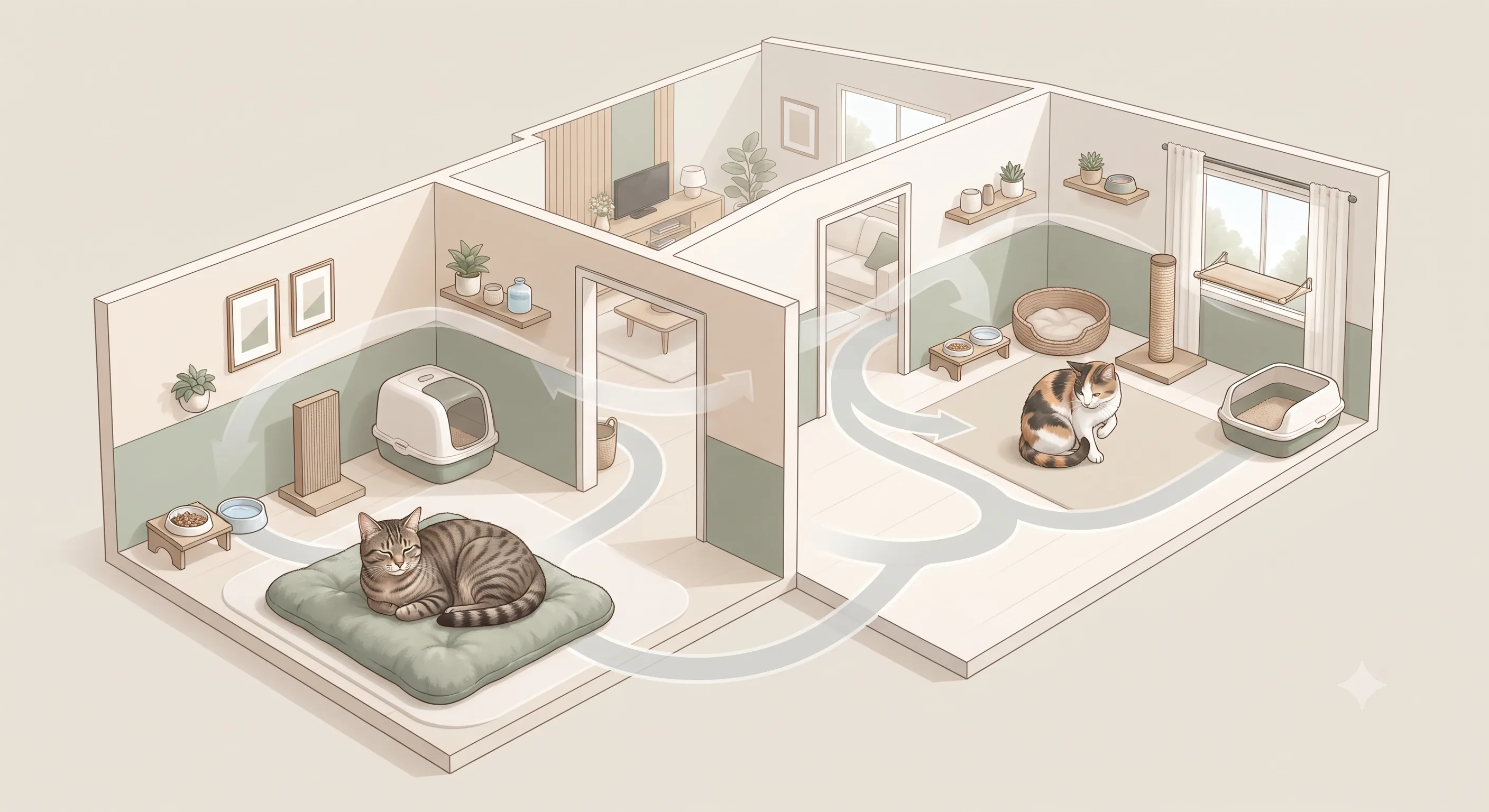
Make sure each cat has access to their own resources.
Ideally, provide separate:
- Food and water bowls
- Sleeping areas
- Scratching posts
- Litter boxes
- Hiding spots
Your cats don't necessarily need to spend all their time together.
Having places where a cat can escape, relax, and observe from a safe distance can help reduce tension between pets.
7. Your Cat May Be Sick or in Pain
This is the reason to pay the most attention to.
Cats are very good at hiding signs of illness. A cat that suddenly becomes withdrawn or starts hiding much more than usual may be trying to cope with pain or discomfort.
A sudden change in hiding behavior is especially worth noticing if it happens alongside other changes.
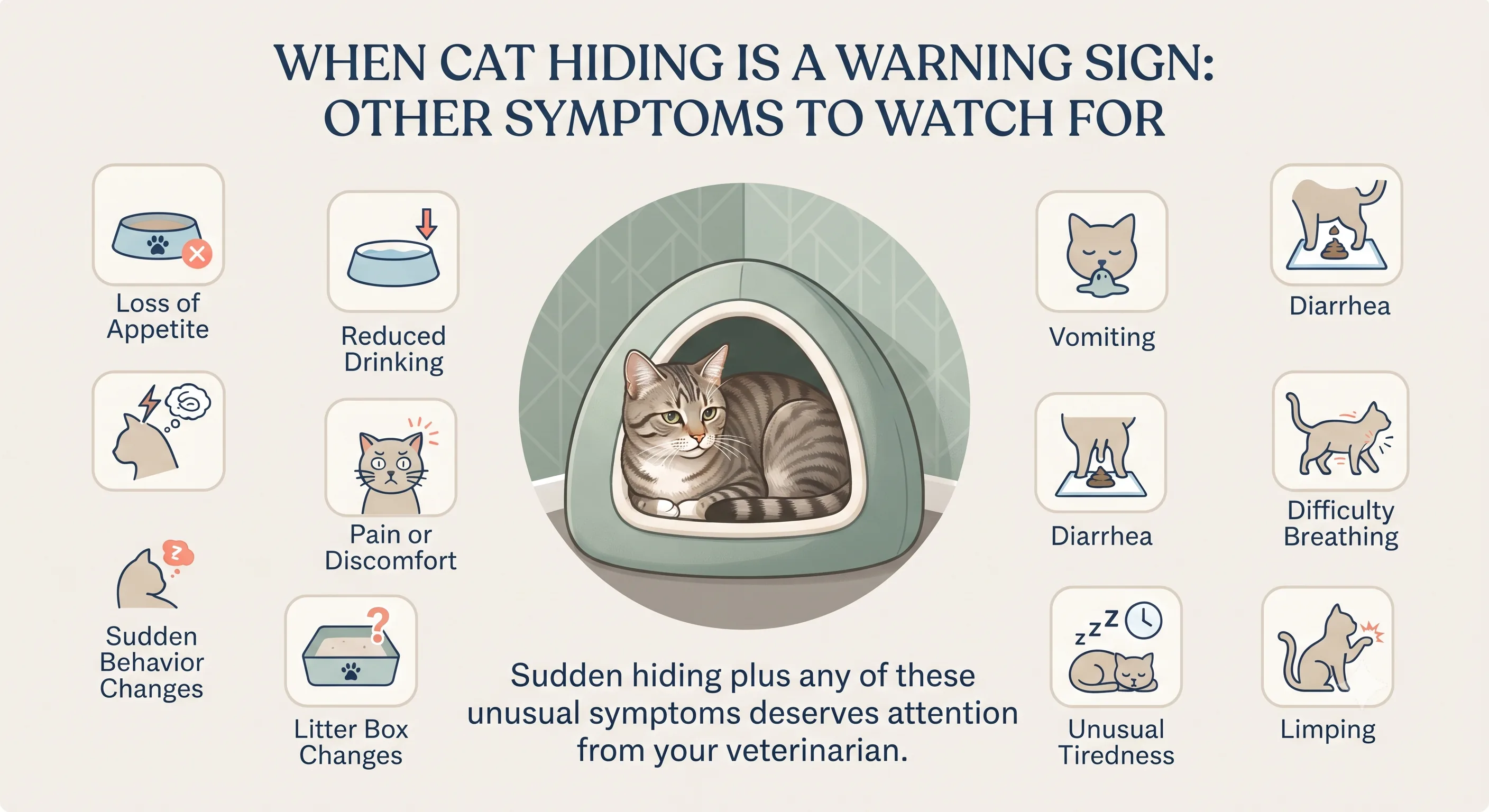
Watch for signs such as:
- Loss of appetite
- Vomiting or diarrhea
- Difficulty breathing
- Limping
- Excessive sleeping
- Changes in drinking
- Changes in litter box habits
- Weight loss
- Unusual vocalization
- Difficulty jumping or walking
- A sudden change in personality
If your cat is hiding much more than normal and you notice other unusual symptoms, contact a veterinarian.
Don't assume that sudden hiding is simply your cat being shy.
Important: If your cat is struggling to breathe, collapses, or repeatedly strains to urinate without producing urine, seek urgent veterinary care.
Is It Normal for a Cat to Hide All Day?
Sometimes—but the important clue is whether this is normal for your cat.
Some cats are naturally shy and may spend a lot of time in quiet areas. Others are social and want to be around their humans most of the day.
Instead of focusing only on the number of hours your cat spends hiding, look for changes in their overall behavior.
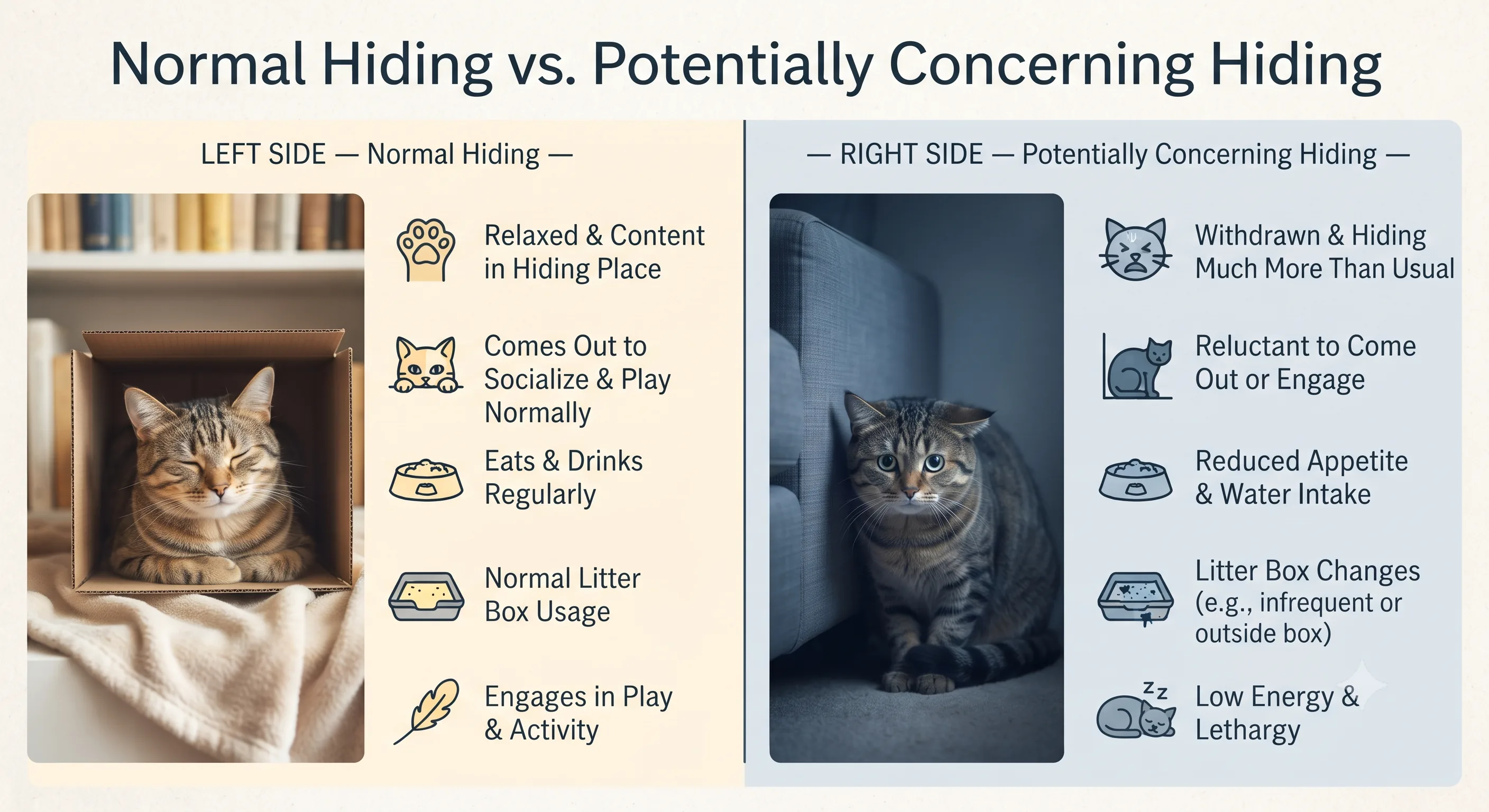
| Normal Hiding | Potentially Concerning Hiding |
|---|---|
| Your cat has always enjoyed hiding | Your cat suddenly starts hiding much more |
| They come out normally | They stay hidden almost all the time |
| They eat and drink normally | They stop eating or drinking |
| They use the litter box normally | Their litter box habits change |
| They play and interact normally | They become unusually withdrawn |
| They return to normal after resting | Other unusual symptoms appear |
| They hide in familiar safe places | They suddenly hide in unusual places |
A cat that has always spent several hours under the bed may simply have a strong preference for quiet spaces.
But if your normally social cat suddenly starts hiding all day, that's a different situation.
A sudden change is usually more important than the exact amount of time your cat spends hiding.
How to Help a Cat That Keeps Hiding
The goal isn't to stop your cat from hiding completely.
Instead, focus on making your home feel safe enough for them to come out when they're ready.
Give Them a Safe Hiding Spot
Instead of trying to stop your cat from hiding, give them an appropriate place to do it.
A cardboard box, covered cat bed, or quiet corner can become their personal safe zone.
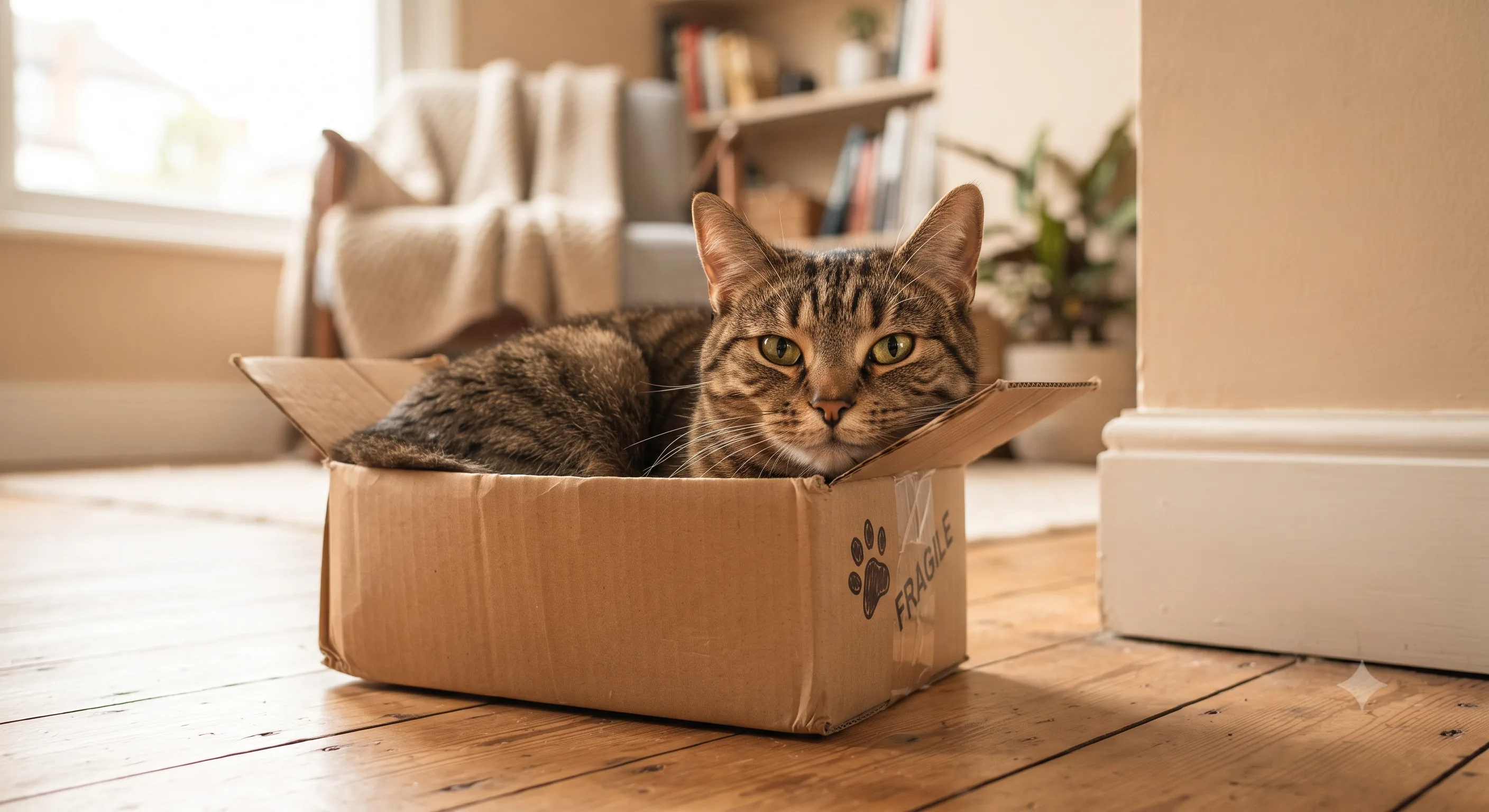
You can place a soft blanket inside the box and keep it somewhere away from heavy foot traffic.
A good hiding spot should allow your cat to retreat without being repeatedly disturbed.
Keep Their Routine Consistent
Cats often feel more comfortable when they know what to expect.
Try to keep feeding, playtime, and bedtime routines relatively consistent.
Even small routines can help your cat feel more secure.
If something major has changed at home, give your cat time to adjust rather than expecting them to immediately return to their old behavior.
Don't Pull Your Cat Out
If your cat is hiding because they're scared or stressed, pulling them out can make the situation worse.
Let them come out on their own.
You can sit nearby, speak softly, or offer a favorite treat, but give them the choice to approach you.
Your cat is more likely to feel confident when they have some control over when they hide and when they come out.
Reduce Stress Around Their Hiding Spot
Pay attention to what's happening around your cat's favorite hiding place.
Try to keep it away from:
- Loud appliances
- Heavy foot traffic
- Children who may repeatedly disturb them
- Other pets
- Sudden noises
A quiet, predictable environment can make the hiding spot feel much safer.
Make Your Home More Cat-Friendly
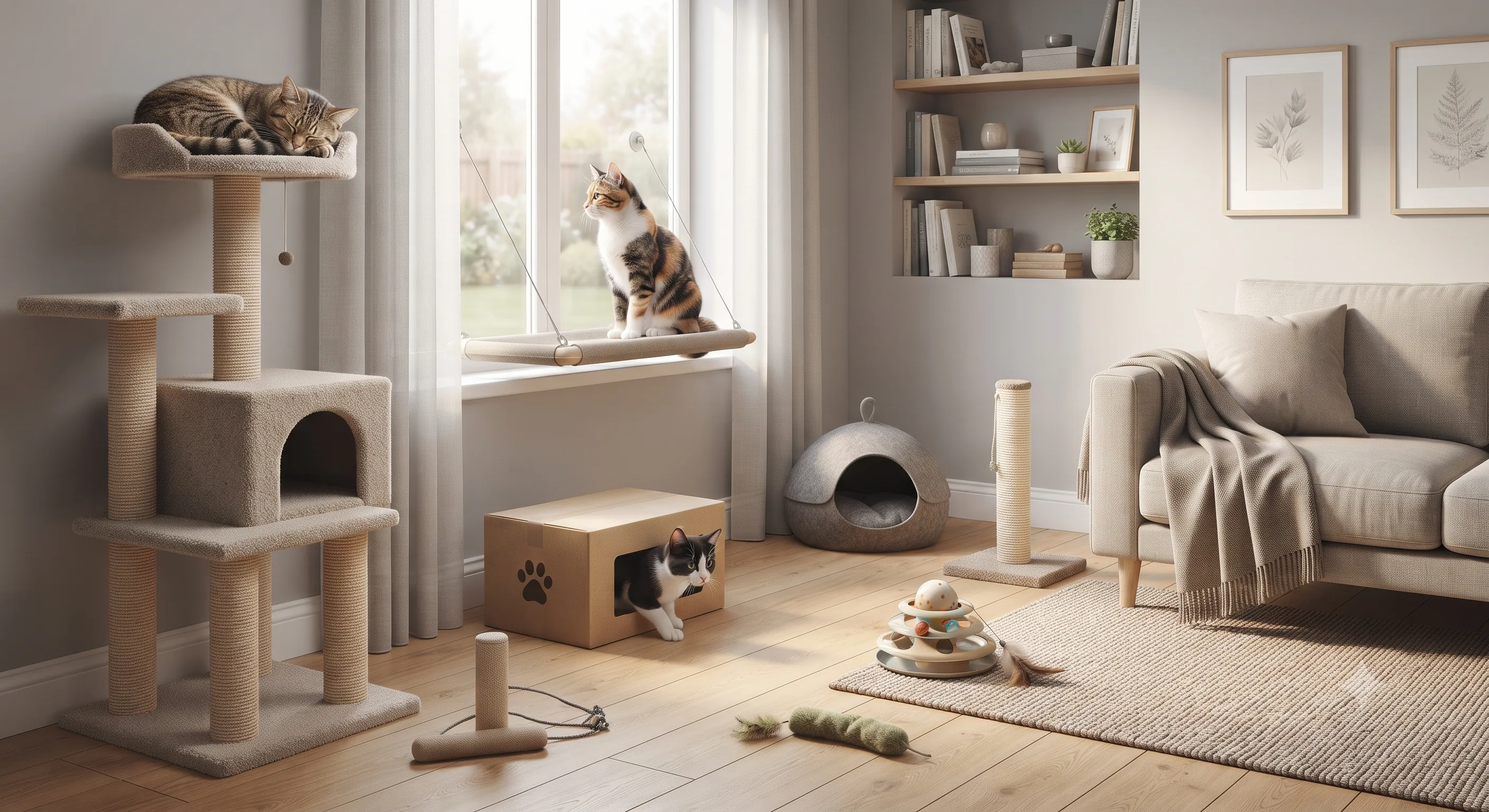
Your cat should have places where they can climb, hide, scratch, sleep, and observe what's happening around them.
Consider adding:
- A cat tree
- Window perches
- Cardboard boxes
- Covered beds
- Scratching posts
- Interactive toys
- Quiet sleeping areas
You don't need to spend a fortune.
Sometimes a simple cardboard box becomes your cat's favorite piece of furniture.
Should You Pull a Hiding Cat Out?
Usually, no.
If your cat has chosen a safe place and isn't showing signs of illness or danger, there's generally no reason to force them out.
In fact, having control over when they hide and when they come out can help them feel more confident.
There are exceptions, of course.
If your cat is hiding somewhere dangerous, trapped, injured, or showing signs of serious illness, you'll need to intervene.
If you're unsure whether the behavior is normal, pay attention to the bigger picture: eating, drinking, litter box habits, movement, energy, and overall behavior.
When Is Cat Hiding a Sign of a Problem?
Hiding by itself isn't necessarily a problem.
A sudden change in hiding behavior is what deserves more attention.
Pay closer attention if your cat:
- Suddenly starts hiding much more than usual
- Stops eating or drinking
- Stops using the litter box normally
- Has trouble walking or jumping
- Seems weak or unusually tired
- Vomits repeatedly
- Has diarrhea
- Is breathing strangely
- Cries or reacts when touched
- Shows other sudden changes in behavior
If something feels noticeably different from your cat's normal behavior, it's better to speak with a veterinarian rather than assuming they're simply being shy.
Frequently Asked Questions
Why is my cat hiding all of a sudden?
A cat may suddenly start hiding because they're frightened, stressed, adjusting to a change, avoiding another pet, or not feeling well. Pay attention to other changes in eating, drinking, litter box habits, energy, and behavior.
Why does my cat hide under the bed?
Under the bed is dark, enclosed, quiet, and difficult for people or other pets to reach. For many cats, it feels like a safe place to rest or retreat.
If your cat has always used the space and otherwise behaves normally, it may simply be their preferred hiding spot.
Is it normal for cats to hide during the day?
Yes. Some cats naturally prefer quiet spaces during the day, especially when they're sleeping or resting.
The key is whether daytime hiding is normal for your individual cat.
Why is my cat hiding and not eating?
Hiding combined with a loss of appetite is more concerning than hiding alone.
Cats can hide when they're stressed, sick, or experiencing discomfort. If your cat is hiding and not eating, contact a veterinarian promptly, particularly if other symptoms are present.
Should I leave my cat alone when they're hiding?
Usually, yes.
If your cat is in a safe place and isn't showing signs of illness or danger, give them space. You can stay nearby, speak softly, or offer a treat, but avoid forcing them out.
How long can a cat hide before I should be concerned?
There isn't one exact number of hours that applies to every cat.
Some cats naturally spend long periods hiding. What matters more is whether the behavior is unusual for your cat and whether it comes with other changes such as loss of appetite, unusual tiredness, vomiting, breathing problems, or changes in litter box habits.
Why is my cat hiding from me?
Your cat may be hiding from you because they're frightened, stressed, tired, adjusting to a change, or simply looking for some quiet time.
If your cat normally interacts with you but suddenly starts avoiding you, look for other changes in their behavior or environment.
Every Cat Is Different
One cat may follow you from room to room while another prefers to watch everything from underneath the bed.
Some cats are naturally confident and social.
Others need more time, quiet, and personal space.
The goal isn't to make your cat stop hiding completely.
The goal is to make sure they have a safe place to retreat to while also feeling comfortable enough to eat, play, explore, and interact normally.
Once you understand your cat's personality and routine, their hiding behavior becomes much easier to understand.
Final Thoughts
So, why does your cat hide?
It could be something completely normal, like sleeping, wanting some quiet time, or finding a cozy spot.
But hiding can also happen when a cat feels stressed, frightened, or unwell.
Pay attention to what's normal for your cat. If their hiding suddenly changes or comes with other unusual symptoms, don't ignore it.
And remember, sometimes your cat isn't avoiding you.
They just found a really good hiding spot and decided you don't need to know about it.
Does your cat have a favorite hiding spot? Tell us where your little hide-and-seek champion likes to disappear in the comments!
Related articles
Why Does My Cat Meow at Night? 10 Common Reasons and What to Do
Why does your cat meow at night? Discover 10 common reasons, from hunger and boredom to stress and health problems, plus simple ways to help.
Why Does My Cat Bite Me Then Lick Me?
Wondering why your cat bites you and then licks you? Learn what this behavior means, when it is affectionate or playful, how to read your cat's body language, and when a bite may be a sign of stress or pain.
Why Does My Cat Follow Me Everywhere? 10 Reasons Your Cat Won't Leave Your Side
Why does your cat follow you everywhere? Discover 10 reasons cats follow their owners, what this behavior means, funny real-life cat stories, and when clinginess may signal a problem.