This post contains affiliate links. If you purchase through these links, KitCat may earn a small commission at no additional cost to you.
Living in a small apartment doesn't mean your cat has to sacrifice its love for climbing, scratching, and exploring. But when every corner already has a purpose, finding room for a bulky cat tree can be challenging.
That's where a space-saving cat tree comes in. A thoughtfully designed cat tree can give your feline friend vertical climbing space, comfortable resting spots, and dedicated scratching areas without taking over your living room.
Whether you have a playful kitten, an energetic adult cat, or a relaxed senior feline, choosing the right cat furniture can make indoor life more interesting.
In this guide, we've shortlisted 10 cat tree options worth considering for smaller homes. We'll also cover the essential features to compare, including footprint, height, stability, scratching materials, and platform size.
Let's find a little vertical paradise for your furry roommate! 🐾

Which Cat Tree Should You Choose?
Not every cat needs the same type of climbing furniture. Your apartment layout and your cat's personality should influence your decision.
Here's a quick guide to help you identify what to prioritize.
| Your needs | What to prioritize |
|---|---|
| Very small apartment | Compact footprint and vertical design |
| Active kitten | Multiple climbing levels and accessible platforms |
| Large adult cat | Wide platforms and a sturdy base |
| Frequent scratcher | Durable sisal scratching surfaces |
| Senior cat | Low platforms and easy access |
| Multi-cat household | Multiple resting areas and sufficient space |
Our buying tip: Don't automatically choose the tallest or largest cat tree. Look for a design that provides useful climbing and resting opportunities while fitting comfortably into your available space.

10 Best Cat Trees for Small Apartments
We've included 10 options from our shortlisted affiliate products. Before purchasing, check the current retailer listings for exact dimensions, materials, weight capacity, included accessories, and assembly requirements.
1. Multi-Level Modern Charcoal Cat Tree with Hammock & Condo
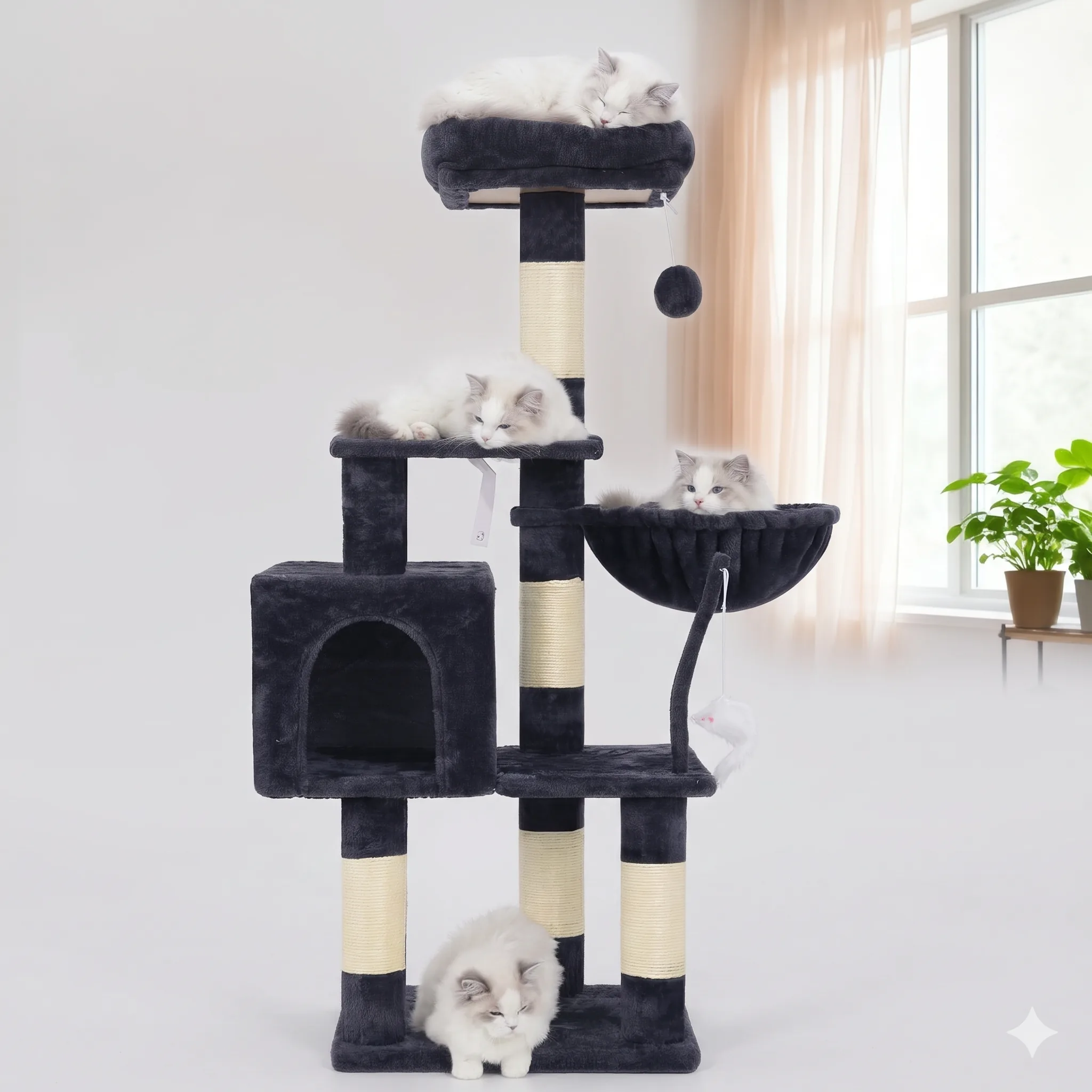
Multi-Level Charcoal Plush Cat Tree with Basket Hammock
- Deep circular plush basket hammock is an instant favorite for afternoon catnaps
- Vertical layout provides generous climbing height without hogging valuable floor space
- Top crown bed is best suited for cats under 15 lbs; larger breeds may overhang slightly
2. Compact 3-Tier Plush Cat Tree with Double Hammocks
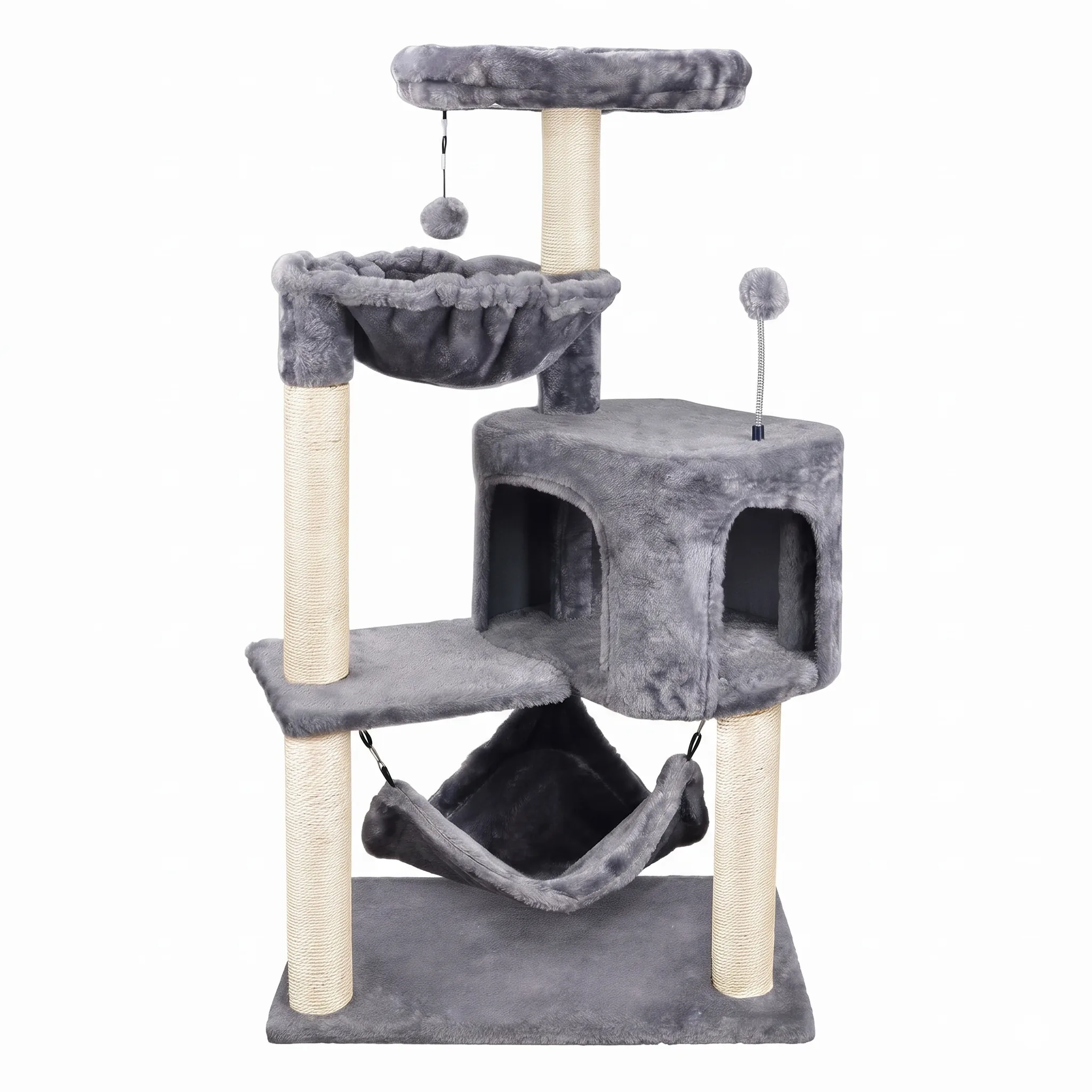
Compact 3-Tier Grey Plush Cat Activity Tree
- Under 3-foot height fits comfortably beneath windows and in studio apartments
- Multiple plush resting surfaces accommodate up to two small-to-medium cats
- Lightweight construction means energetic adult cats should have it placed near a wall for added stability
3. Multi-Cat High-Rise Tower with Double Condos & Ladder
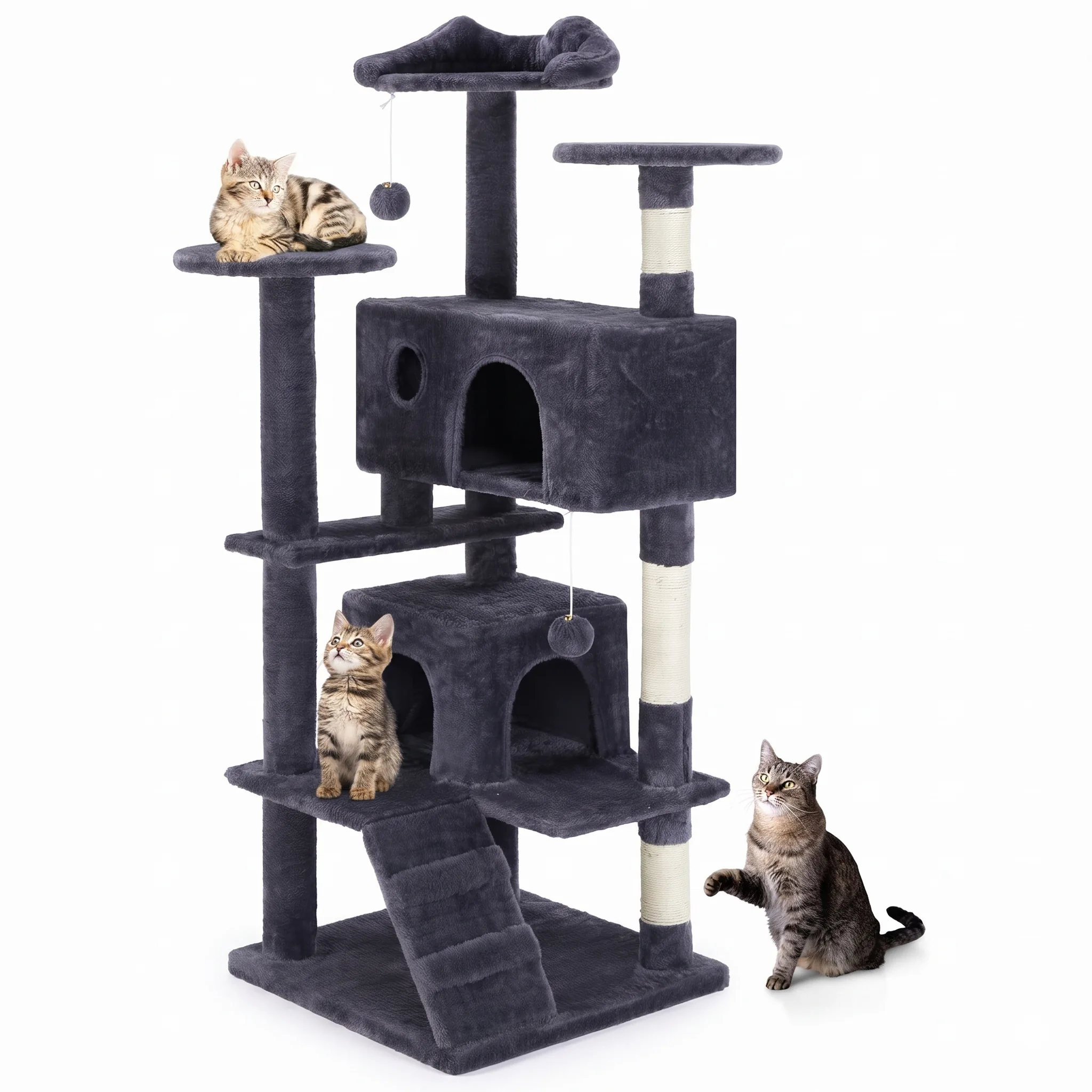
Multi-Cat High-Rise Cat Tower with Dual Condos & Ramp
- Maximizes vertical ceiling space to accommodate 3 or more cats in compact apartments
- Heavyweight tiered base and wall-anchor strap prevent tipping during energetic climbs
- Taller height requires clear vertical ceiling clearance away from hanging light fixtures
4. Cloud Perch Kitten Scratching Post with Sisal Ramp
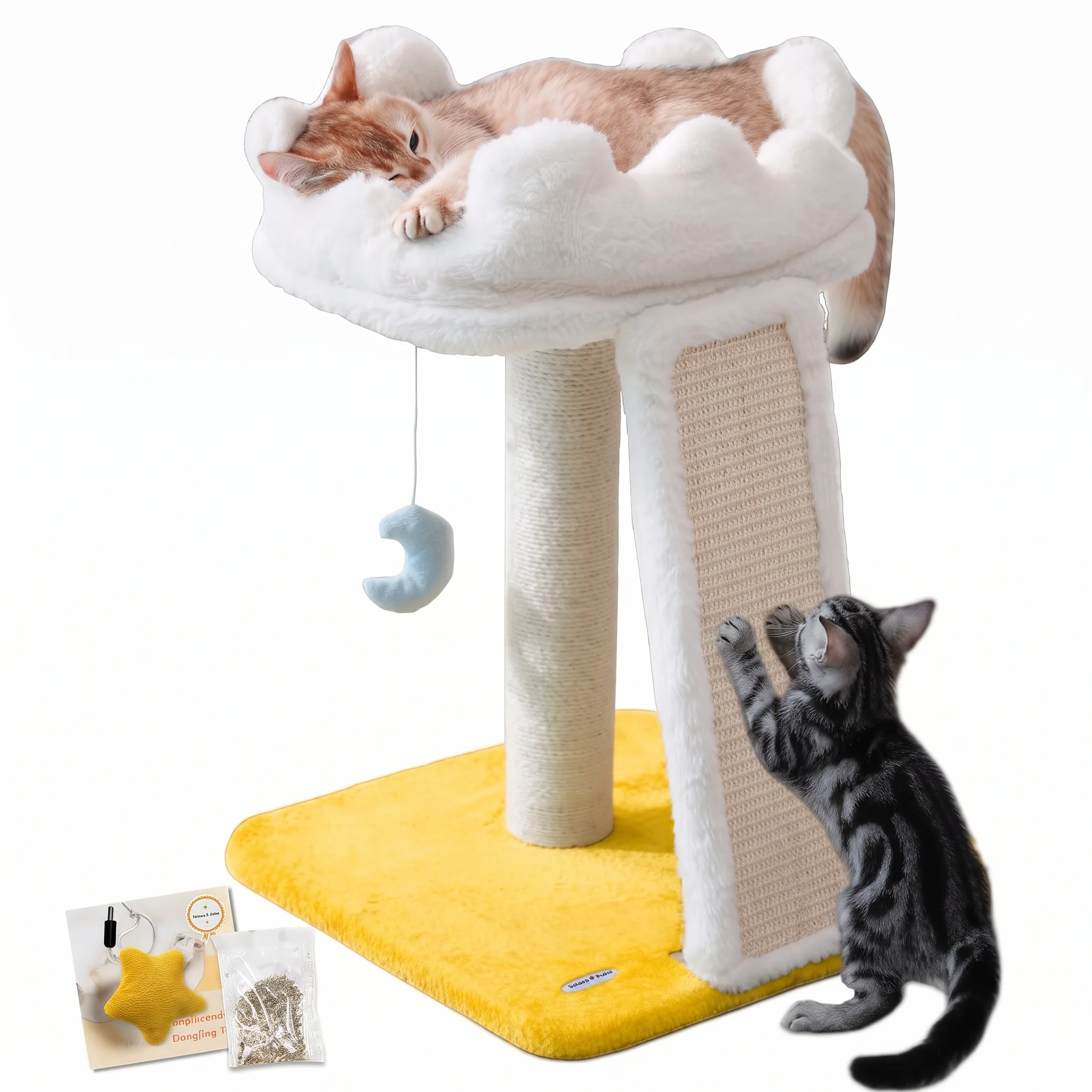
Cloud Perch Kitten Scratching Post with Incline Ramp
- Perfect height for kittens, senior cats, or small spaces where tall towers cannot fit
- Durable sisal mat on the ramp allows satisfying horizontal and angled scratching
- Low climbing height will not satisfy cats that crave high-ceiling vantage points
5. Low-Profile Double-Post Plush Cat Hammock Lounger
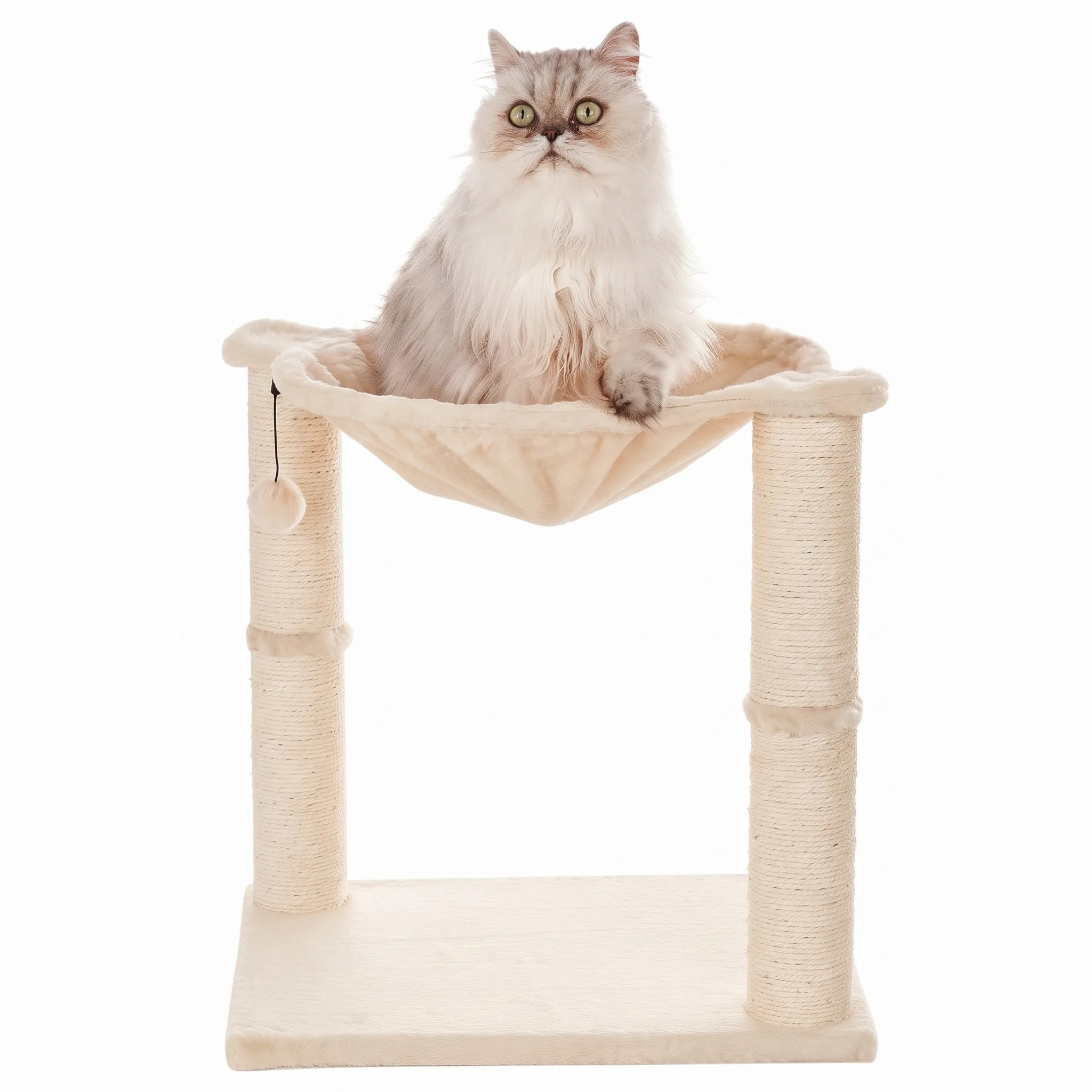
Low-Profile Double-Post Plush Cat Hammock Lounger
- Wide, stable dual-column design will not wobble even when larger cats jump into it
- Ultra-low profile tucks neatly underneath window sills and desks
- Single-level design lacks climbing platforms or enclosed cubby caves
6. Modern Multi-Level Dual-Condo Apartment Cat Tower
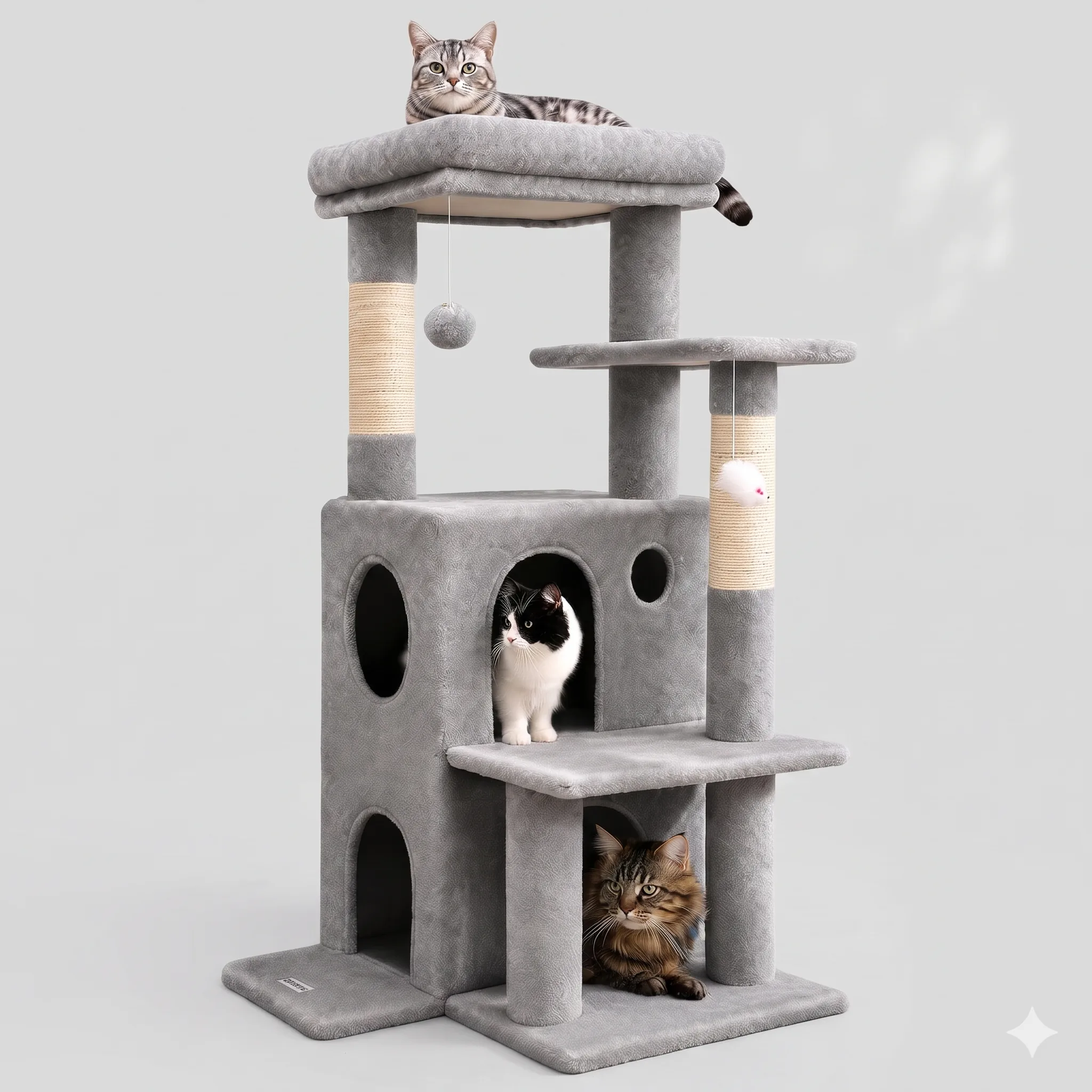
Modern Multi-Level Dual-Condo Apartment Cat Tree
- Step-wise vertical architecture makes every platform accessible without huge leaps
- Solid engineered wood construction supports multiple cats climbing simultaneously
- Requires approximately 30–45 minutes of step-by-step bolt assembly during setup
7. Heavy-Duty Stepped Sisal Scratching Tree with Round Perch
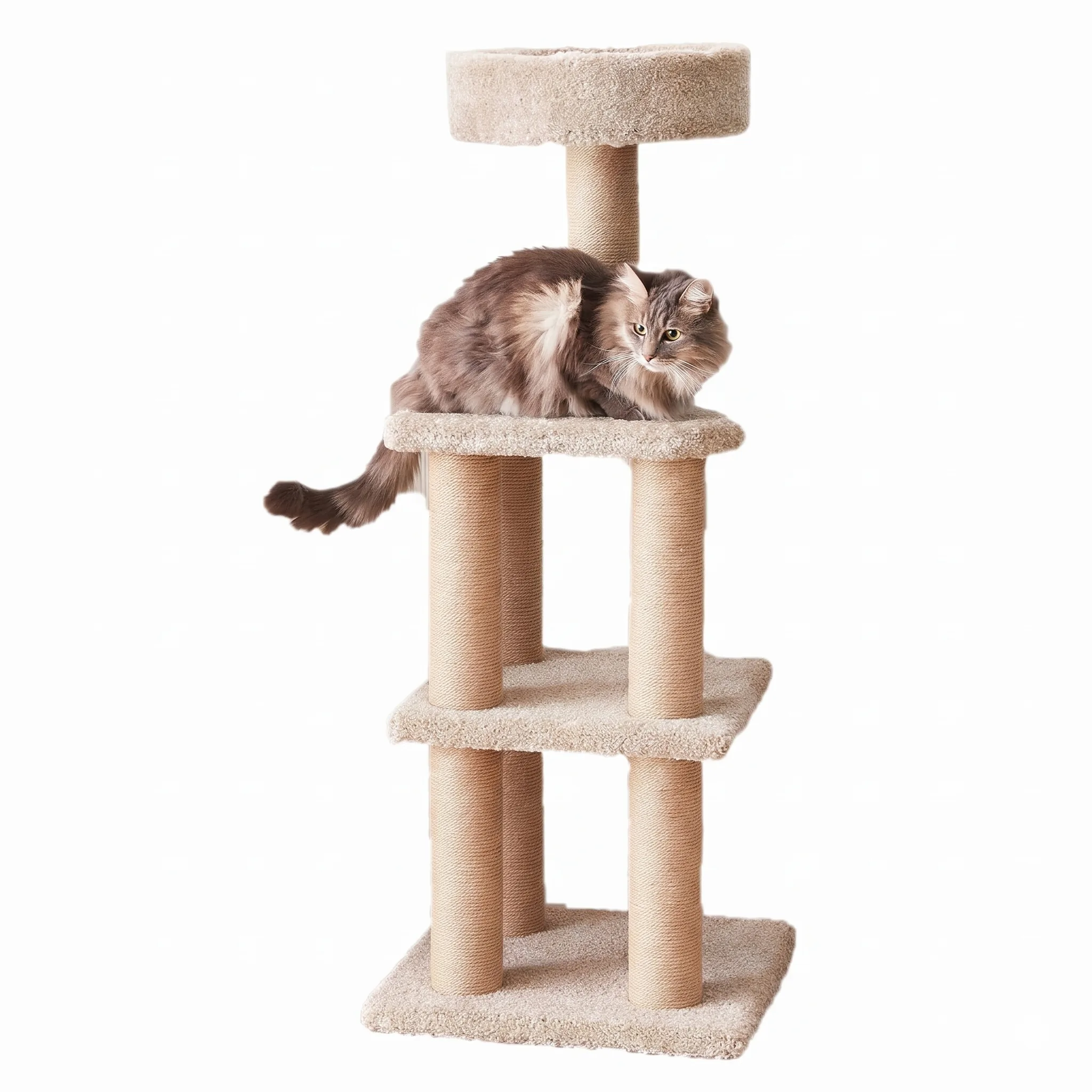
Heavy-Duty Stepped Sisal Scratching Tree with Crown Perch
- Heavyweight base and dual-post engineering make this one of the most stable compact trees
- Warm beige berber-fleece carpet resists fraying and blends easily with home furnishings
- Does not include an enclosed fabric cave for cats that prefer covered sleeping spaces
8. Desert Cactus Themed Multi-Level Cat Tree with Condos
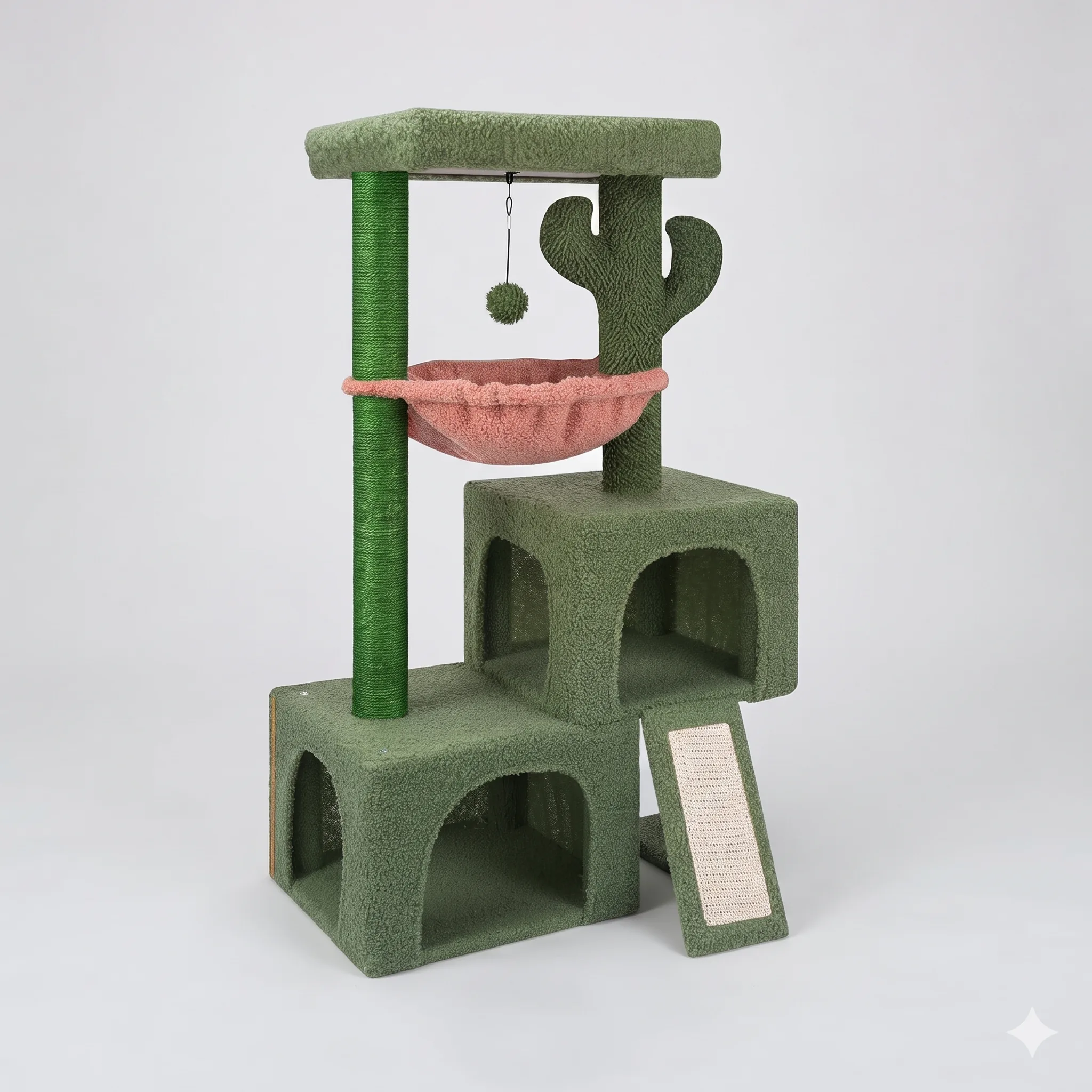
Desert Cactus Themed Multi-Level Cat Tree with Condos
- Fun decorative desert aesthetic doubles as eye-catching apartment decor
- Moabi-green moquette fabric is soft, warm, and highly attractive to cats
- Bold green and pink color scheme may not fit neutral or monochromatic interior palettes
9. Wall-Mounted Wooden Crescent Moon Hammock & Star Steps
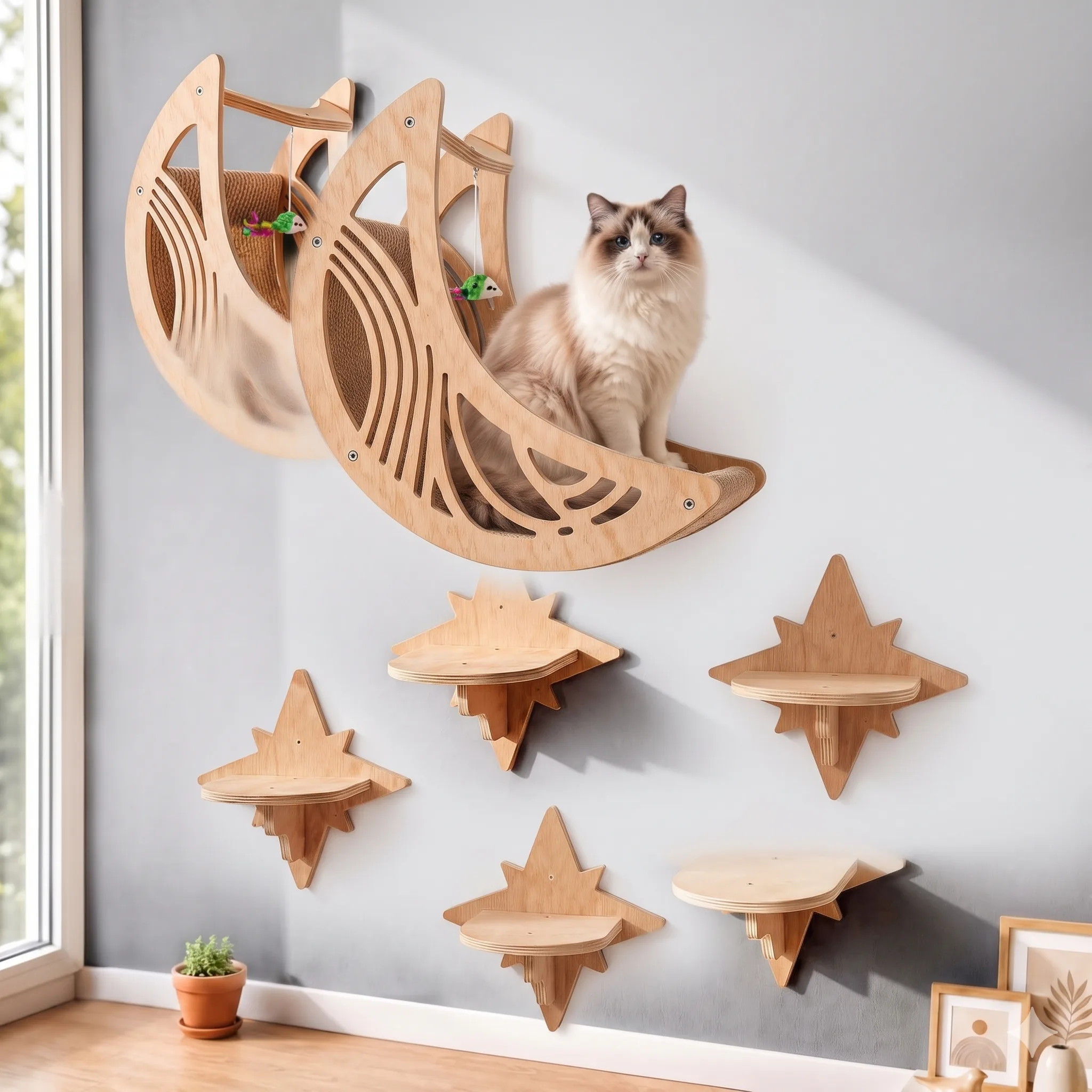
Wall-Mounted Wooden Crescent Moon Hammock & Star Steps
- Zero floor footprint preserves 100% of your apartment's usable walking area
- Artistic Scandinavian celestial woodwork looks like designer wall art
- Requires drilling holes into wall studs or using heavy-duty drywall anchors for safe installation
- Cannot be repositioned as easily as freestanding floor cat trees
10. Ultra-Slim Vertical High-Rise Cat Tower with Dual Condos
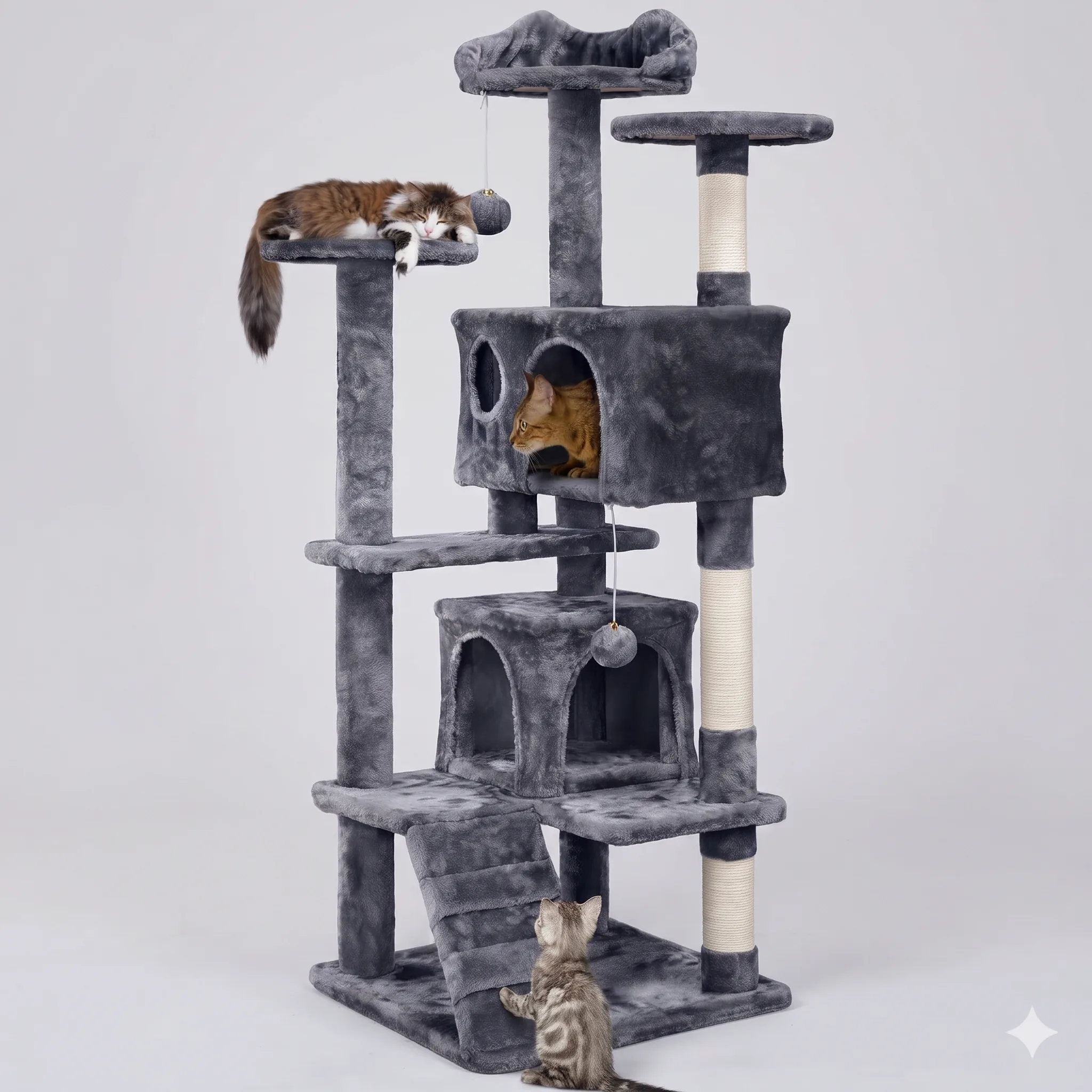
Ultra-Slim Vertical High-Rise Cat Tower with Dual Condos
- Provides towering observation height while occupying less than 2 square feet of floor space
- Included wall safety strap ensures rock-solid stability during high-speed vertical chases
- Condos are best suited for cats up to 13 lbs; giant Maine Coons may prefer wider platforms
Cat Tree Comparison: Features That Matter
Choosing between multiple cat trees becomes easier when you compare the specifications that actually affect everyday use.
Instead of focusing only on appearance, consider the following factors.

| Feature | What to look for | Why it matters |
|---|---|---|
| Floor footprint | Compact base | Saves valuable apartment space |
| Overall height | Suitable vertical design | Provides climbing opportunities |
| Base stability | Strong, balanced construction | Helps prevent tipping |
| Scratching material | Sisal rope or fabric | Supports natural scratching behavior |
| Platform size | Comfortable resting surfaces | Accommodates your cat |
| Weight capacity | Appropriate manufacturer rating | Supports safe everyday use |
| Assembly | Secure connections and clear instructions | Makes setup easier |
| Maintenance | Cleanable surfaces and replaceable parts | Simplifies long-term care |
A useful tip: Measure the available space before comparing prices. A slightly more expensive cat tree that fits your apartment properly may be a better purchase than a cheaper model that occupies too much room.
How to Choose the Right Cat Tree for a Small Apartment
A cat tree should provide your feline friend with enough opportunities to climb, scratch, and rest without making your apartment feel cramped.
Here are six things to consider before purchasing.
1. Measure Your Available Floor Space
In a small apartment, every square foot matters.
Before ordering, measure the area where you plan to place the cat tree. Pay attention to its base width, depth, and the surrounding space needed for your cat to jump on and off comfortably.

Good placement options include:
- An unused corner of your living room.
- A suitable space beside the sofa.
- A quiet bedroom corner.
- An area near a securely protected window.
Avoid placing the cat tree where it blocks walkways, doors, or other frequently used spaces.
2. Prioritize Vertical Climbing Space
When floor space is limited, vertical climbing opportunities become particularly useful.
A thoughtfully designed multi-level cat tree can provide elevated resting areas and climbing platforms without requiring a particularly large footprint.
Look for:
- Multiple accessible platforms.
- Comfortable elevated resting areas.
- Suitable distances between climbing levels.
- A design that allows easy movement between platforms.
However, taller doesn't automatically mean better. Always prioritize stability and accessibility.
3. Check the Base and Overall Stability
Cats don't always climb gently. Some launch themselves onto platforms with surprising enthusiasm!
A poorly balanced cat tree can wobble or tip, potentially frightening or injuring your pet.

Before purchasing, check for:
- A sufficiently wide and sturdy base.
- Strong connecting posts.
- Securely attached platforms.
- Clear weight-capacity information.
- Wall-anchoring hardware when recommended by the manufacturer.
If you have an especially active or larger cat, stability deserves extra attention.
4. Choose Durable Scratching Materials
Scratching is a natural feline behavior. It helps cats maintain their claws, stretch their bodies, and mark their territory.
Sisal rope and sisal fabric are popular materials for cat scratching surfaces because they provide a textured surface that cats can grip.

When comparing products, look for:
- Substantial scratching areas.
- Securely attached scratching material.
- Suitable scratching-post height.
- Replaceable scratching components where available.
A cat tree with integrated scratching areas can provide more functionality without requiring separate scratching furniture.
5. Consider Your Cat's Size and Personality
A small kitten and a large adult cat don't necessarily need the same furniture.
Think about your cat's behavior before choosing a model.
- Active climbers: Look for multiple platforms and accessible climbing routes.
- Relaxed sleepers: Prioritize comfortable resting areas.
- Frequent scratchers: Choose models with substantial scratching surfaces.
- Larger cats: Pay attention to platform dimensions and weight capacity.
- Senior cats: Look for lower platforms and easier access.
Your cat's personality matters just as much as the furniture's appearance.
6. Check Assembly and Cleaning Requirements
A cat tree should make your life easier, not create another maintenance headache.
Before buying, check whether the product has clear assembly instructions, removable cushions, washable covers, or replaceable scratching components.
Regularly vacuum loose fur and inspect connecting screws, platforms, and scratching surfaces to keep the furniture in good condition.

5 Cat Tree Buying Mistakes Apartment Owners Should Avoid
Even an attractive cat tree can turn out to be a poor purchase if it doesn't suit your home.
Watch out for these common mistakes.
1. Choosing Appearance Over Stability
A beautiful cat tree isn't necessarily a safe one. Prioritize sturdy construction, secure connections, and a stable base over decorative features.
2. Ignoring Your Cat's Weight
Some platforms are designed for smaller cats and may not comfortably accommodate larger breeds. Always check the manufacturer's recommended weight capacity.
3. Buying Something Too Large
A massive cat tower can make an already small room feel cramped. Measure your available space and consider how the furniture will affect everyday movement.
4. Forgetting About Scratching Needs
A cat tree without suitable scratching surfaces may not satisfy your cat's natural scratching instincts. Look for a model that provides dedicated scratching areas.
5. Ignoring Placement and Accessibility
A cat tree placed in an isolated or inconvenient location may not attract much attention. Choose a suitable area where your cat can comfortably explore and observe its surroundings.
Do Indoor Cats Really Need a Cat Tree?
While a cat tree isn't essential furniture for every household, it can make an indoor cat's environment considerably more interesting.
Cats naturally enjoy elevated resting places, climbing opportunities, and scratching surfaces. A suitable cat tree provides a dedicated space for these activities while helping redirect some scratching and climbing behavior away from household furniture.
For apartment-dwelling cats, vertical furniture can also make better use of limited living space.
The goal isn't to buy the biggest cat tree available. It's to provide an environment where your cat can comfortably express its natural behaviors.
Frequently Asked Questions About Cat Trees for Small Apartments
What is the best type of cat tree for a small apartment?
A compact cat tree with a stable base, multiple vertical platforms, and integrated scratching areas is generally a practical choice. Look for a design that provides useful climbing space without occupying too much floor area.
How tall should a cat tree be for an apartment?
There isn't one ideal height for every apartment. Consider your available ceiling height, floor footprint, cat's climbing ability, and the stability of the structure before choosing a model.
Are tall cat trees safe for cats?
Tall cat trees can be safe when properly designed, assembled, and positioned. Look for a stable base, secure connections, appropriate weight capacity, and wall anchoring when recommended by the manufacturer.
Do cats actually use cat trees?
Many cats enjoy elevated resting areas, climbing opportunities, and scratching surfaces. However, individual preferences vary. Placing the tree in an interesting location and introducing it gradually can encourage use.
What material is best for cat tree scratching posts?
Sisal rope and sisal fabric are popular choices because they provide textured surfaces for scratching. Check the construction quality and whether the scratching material can be replaced.
Where should I place a cat tree in a small apartment?
A quiet corner near a secure window or in a room where your cat spends time can be a good starting point. Avoid blocking walkways, doors, or access to essential household areas.
Can two cats share one cat tree?
Yes, provided the tree has enough appropriately sized platforms and resting areas. In multi-cat households, additional climbing and resting furniture can help reduce competition for space.
How do I keep a cat tree clean?
Vacuum loose fur regularly, clean removable cushions according to their care instructions, and inspect scratching surfaces and connecting hardware. Replace worn or damaged components when necessary.
Should I anchor a cat tree to the wall?
Some tall or narrow cat trees include wall-anchoring hardware or recommend securing the structure to a wall. Follow the manufacturer's installation instructions, particularly if your cat is active or the furniture is tall.
How much floor space does a cat tree need?
It depends on the model. Check the manufacturer's listed width and depth, then account for enough surrounding clearance for your cat to climb and jump safely.

Final Verdict: Give Your Cat More Space Without Losing Yours!
Living in a small apartment doesn't mean your cat has to miss out on climbing, scratching, and exploring.
The right cat tree can turn an unused corner into a fun activity zone and give your feline friend a comfortable place to relax.
When comparing the 10 options in this guide, prioritize stability, footprint, scratching materials, platform dimensions, and your cat's individual needs.
Our top pick: Choose the model that offers the best combination of stability, usable climbing space, comfortable platforms, and overall construction quality.
Our budget pick: Look for an affordable option that still meets essential requirements for stability, suitable dimensions, and scratching functionality. Don't sacrifice safety just to save a little money.
We'd love to hear from you!
Does your cat prefer climbing to the highest shelf, sleeping by the window, or scratching your favourite sofa? Tell us about your little troublemaker in the comments! 🐾
Your experience might help another cat parent find the perfect little climbing paradise.
Affiliate disclosure: KitCat participates in affiliate marketing programs. We may earn a commission when you purchase through qualifying links, at no additional cost to you. Product availability and prices may change, so check the retailer's listing for the latest information.
Related articles
10 Best Interactive Cat Toys for Indoor Cats (2026 Guide)
Discover the 10 best interactive cat toys for indoor cats in 2026, from automatic chase toys to puzzle feeders and teaser wands. Find the right fit for your cat.

10 Best Automatic Cat Feeders in 2026: Top Picks for Every Cat
Discover the 10 best automatic cat feeders in 2026. Compare feeding schedules, portion control, food storage, smart features, and buying tips to find the right feeder for your cat.

10 Best Cat Toys for Bored Cats (2026): Keep Your Cat Happy, Active & Entertained
Discover 10 cat toys to fight boredom, encourage exercise, stimulate hunting instincts, and keep indoor cats mentally engaged. Find the right toys for your feline friend.